Extendable legs help the concept step over gaps as wide as five feet to reach those in need.
Hyundai is hoping to save lives during natural disasters by designing a walking car that could help climb over tricky terrain to reach those in need.
The South Korean automotive giant is calling its Elevate concept the first Ultimate Mobility Vehicle (UMV), featuring four extendable legs each with wheels, giving it the ability to change the way it moves depending on the situation, offering both mammal and reptile-like walking gaits.
Hyundai, who has been working on the idea with industrial design consultancy firm Sundberg-Ferar for almost three years, says that the electric concept would be able to climb a five foot vertical wall and step over five foot gaps.
“When a tsunami or earthquake hits, current rescue vehicles can only deliver first responders to the edge of the debris field. They have to go the rest of the way by foot,” explained John Suh, Hyundai’s vice president and head of its Cradle division.
“Elevate can drive to the scene and climb right over flood debris or crumbled concrete.”
The company believes that the technology could be used in non-emergency situations as well, particularly helping those with disabilities.
“People living with disabilities worldwide that don’t have access to an ADA ramp could hail an autonomous Hyundai Elevate that could walk up to their front door, level itself, and allow their wheelchair to roll right in,” he continued. “The possibilities are limitless.”
Legs can also be folded away, allowing the vehicle to drive like any other car on the road.
“By combining the power of robotics with Hyundai’s latest EV technology, Elevate has the ability to take people where no car has been before, and redefine our perception of vehicular freedom,” said David Byron, design manager at Sundberg-Ferar.
“Imagine a car stranded in a snow ditch just 10 feet off the highway being able to walk or climb over the treacherous terrain, back to the road potentially saving its injured passengers – this is the future of vehicular mobility.”
Hyundai has been showcasing the concept at CES, the world’s main tech conference which takes place every year in Las Vegas. As with any concept, it is not clear whether Hyundai intends to make the car a reality anytime soon.
Hyundai-owned Boston Dynamics publicly demonstrated its humanoid robot Atlas for the first time Monday at the CES tech showcase, ratcheting up a competition with Tesla and other rivals to build robots that look like people and do things that people do.
“For the first time ever in public, please welcome Atlas to the stage,” said Boston Dynamics' Zachary Jackowski as a life-sized robot with two arms and two legs picked itself up from the floor at a Las Vegas hotel ballroom.
It then fluidly walked around the stage for several minutes, sometimes waving to the crowd and swiveling its head like an owl. An engineer remotely piloted the robot from nearby for the purpose of the demonstration, though in real life Atlas will move around on its own, said Jackowski, the company’s general manager for humanoid robots.
The company said a product version of the robot that will help assemble cars is already in production and will be deployed by 2028 at Hyundai's electric vehicle manufacturing facility near Savannah, Georgia.
The South Korean carmaker holds a controlling stake in Massachusetts-based Boston Dynamics, which has been developing robots for decades and is best known for its first commercial product: the dog-like robot called Spot. A group of four-legged Spot robots opened Hyundai's event Monday by dancing in synchrony to a K-pop song.
Hyundai also announced a new partnership with Google's DeepMind, which will supply its artificial intelligence technology to Boston Dynamics robots. It's a return to a familiar partnership for Google, which bought Boston Dynamics in 2013 before selling it to Japanese tech giant SoftBank several years later. Hyundai acquired it from SoftBank in 2021.
It's rare for leading robot makers to publicly demonstrate their humanoids, in part because fumbles attract unwanted attention — such as when one of Russia's first humanoids fell on its face in November. Robotics startups typically prefer to show off their research prototypes in videos on social media, offering them the opportunity to show the machines at their best and edit out their failings.
At the end of Monday's live Atlas demonstration, which appeared flawless, the humanoid prototype swung its arms in a theatrical gesture to introduce a static model of the new product version of Atlas, which looked slightly different and was blue in color.
Crossover excitement from the commercial AI boom and new technical advances have helped pour huge amounts of money into robotics development, though many experts still think it's a long time before truly human-like robots that can perform many different tasks take root in workplaces or homes.
“I think the question comes back to what are the use cases and where is the applicability of the technology,” said Alex Panas, a partner at consultancy McKinsey who helped lead a CES robotics panel that attracted hundreds of people earlier in the day. “In some cases, it may look more humanoid. In some cases, it may not."
Either way, Panas said, “the software, the chipsets, the communication, all the other pieces of the technology are coming together, and they will create new applications.”
Humanoids don’t yet have enough dexterity to threaten many human jobs, though a debate over their effects on employment is likely to grow as they become more skilled. The same Georgia plant where Hyundai plans to test out Atlas was the site of a federal immigration raid last year that led to the arrests of hundreds of workers, including more than 300 South Korean citizens.
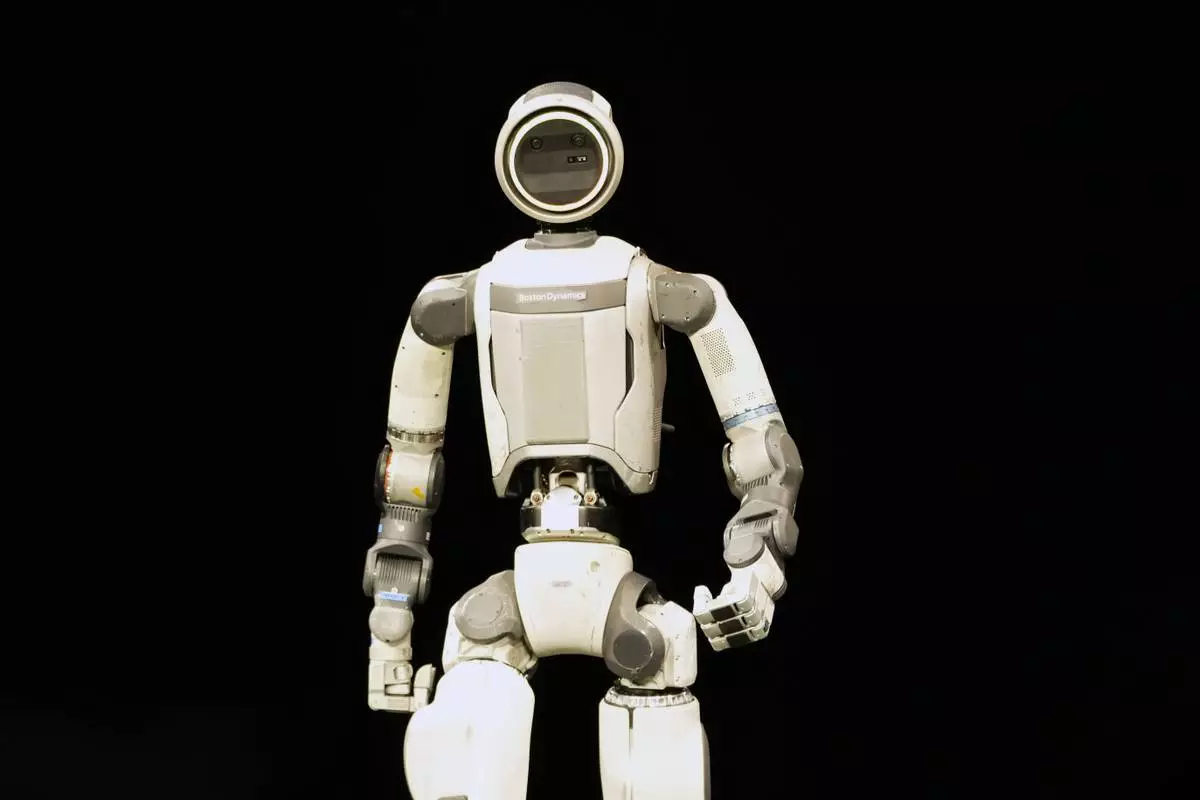
An Atlas robot stands on the stage during a Hyundai and Boston Dynamics news conference ahead of the CES tech show, Monday, Jan. 5, 2026, in Las Vegas. (AP Photo/Abbie Parr)
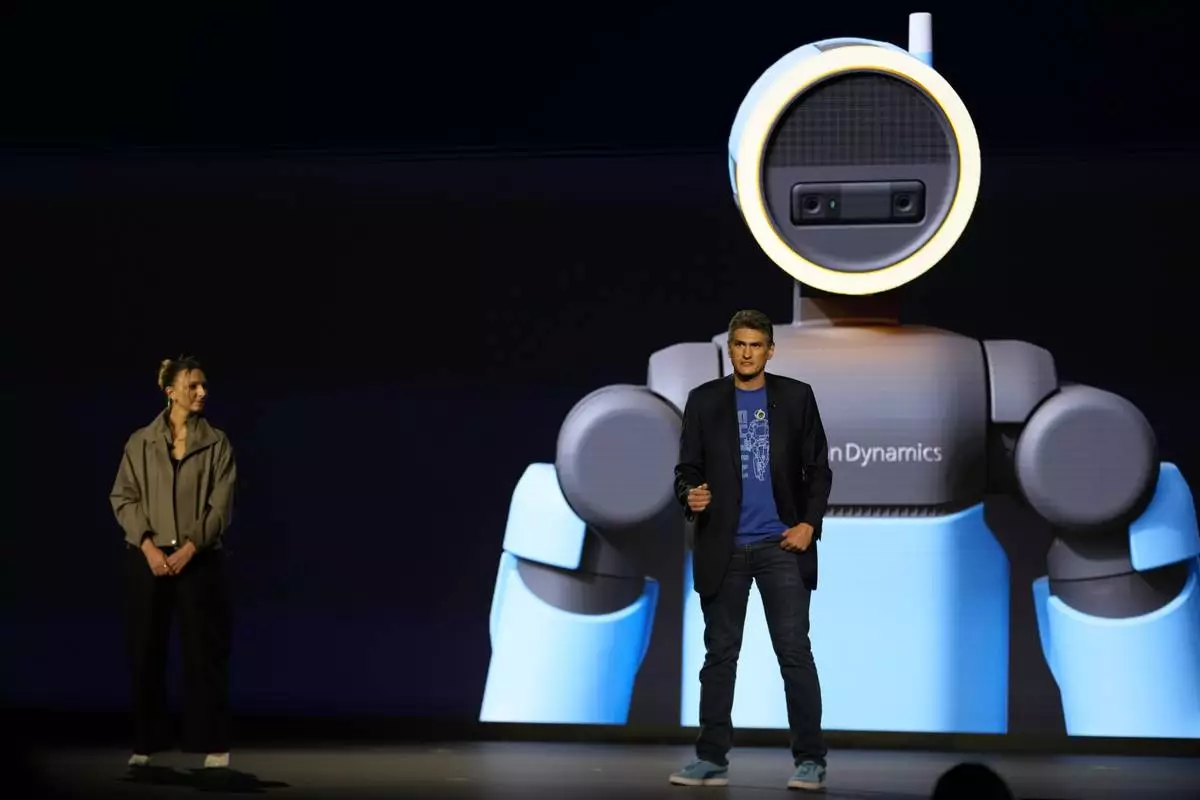
Humanoid application product lead at Boston Dynamics, Aya Durbin, left, and vice president and general manager of Atlas at Boston Dynamics, Zachary Jackowski, talk during a Hyundai and Boston Dynamics news conference ahead of the CES tech show, Monday, Jan. 5, 2026, in Las Vegas. (AP Photo/Abbie Parr)
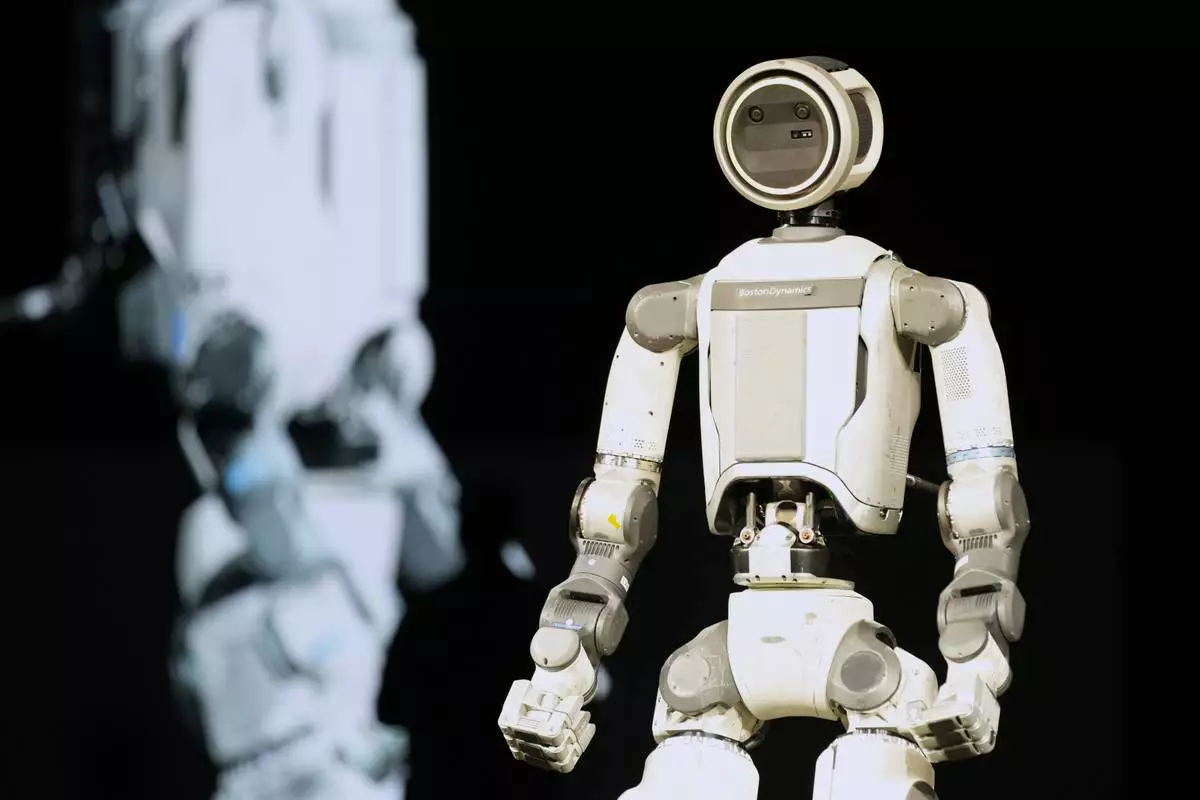
An Atlas robot stands on the stage during a Hyundai and Boston Dynamics news conference ahead of the CES tech show, Monday, Jan. 5, 2026, in Las Vegas. (AP Photo/Abbie Parr)
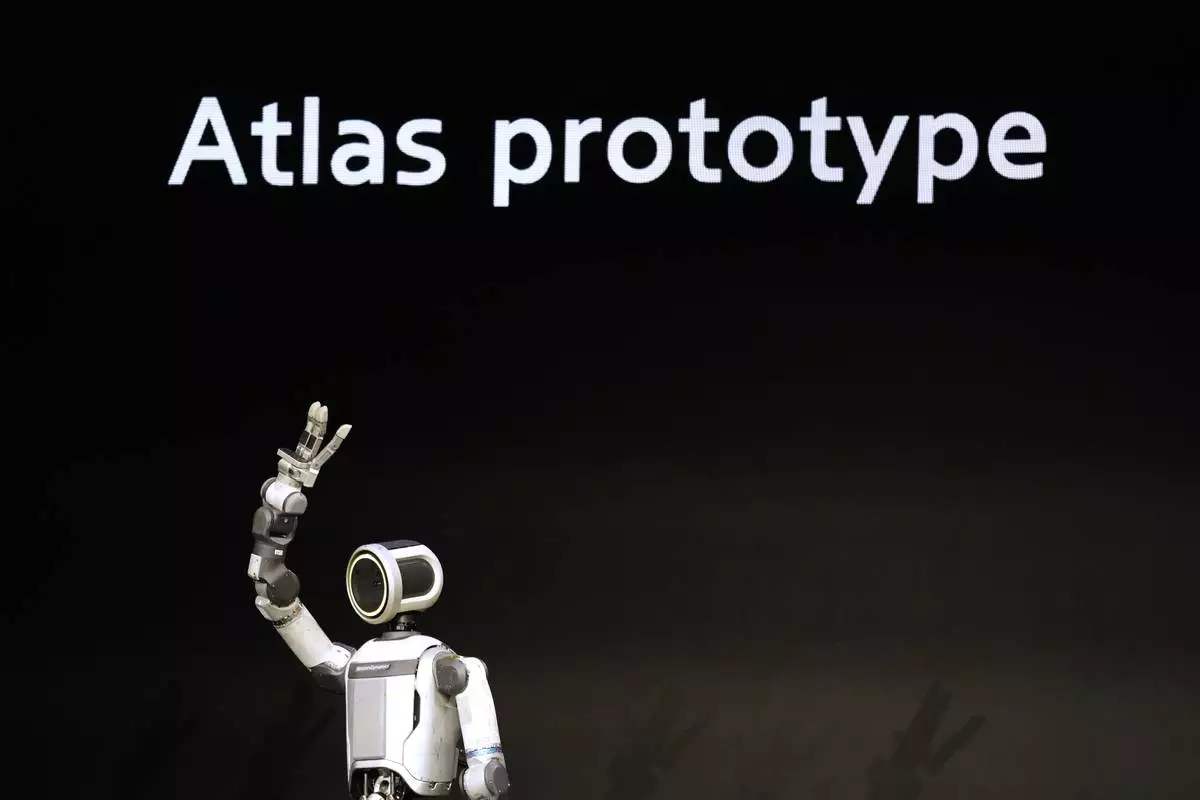
An Atlas robot stands on the stage during a Hyundai and Boston Dynamics news conference ahead of the CES tech show, Monday, Jan. 5, 2026, in Las Vegas. (AP Photo/Abbie Parr)
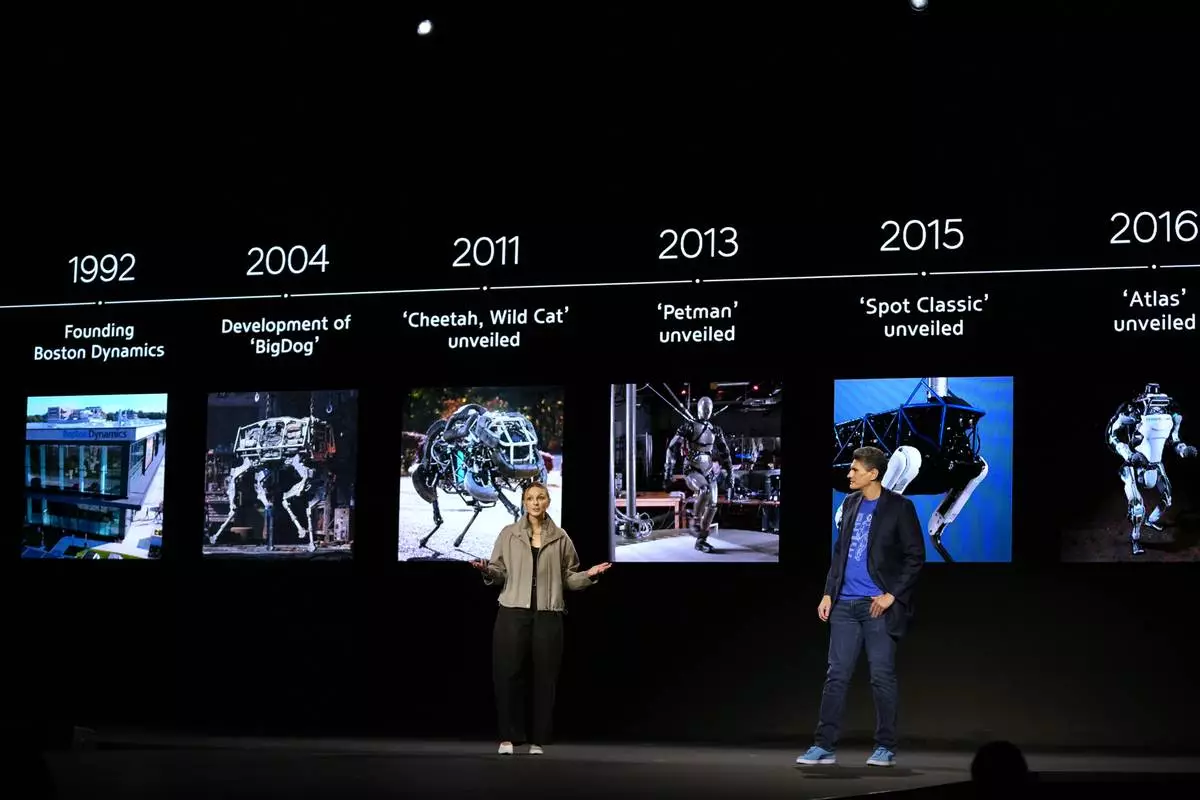
Humanoid application product lead at Boston Dynamics Aya Durbin and vice president and general manager of Atlas at Boston Dynamics Zachary Jackowski talk during a Hyundai and Boston Dynamics news conference ahead of the CES tech show Monday, Jan. 5, 2026, in Las Vegas. (AP Photo/Abbie Parr)
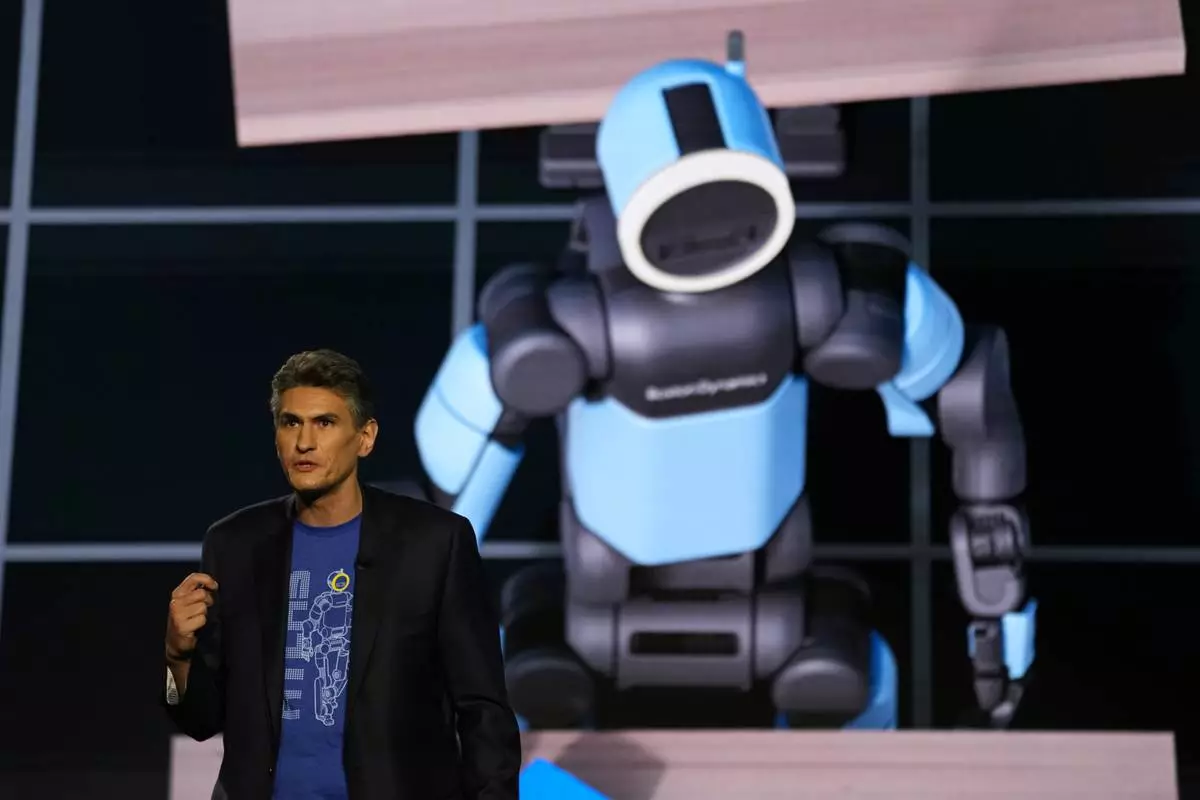
Vice president and general manager of Atlas at Boston Dynamics, Zachary Jackowski, talks during a Hyundai and Boston Dynamics news conference ahead of the CES tech show, Monday, Jan. 5, 2026, in Las Vegas. (AP Photo/Abbie Parr)