Unlike some of her potential rivals, New York Sen. Kirsten Gillibrand will be starting from scratch in early-voting Iowa when she makes her first visit as a 2020 Democratic presidential prospect on Friday.
Gillibrand, who announced her intentions to run on "The Late Show with Stephen Colbert" on Tuesday, is wasting little time getting to the state where the 2020 caucuses launch the Democratic presidential selection process. Still, activists who have already been lavished with attention from other potential candidates say Gillibrand is a virtual unknown to them, especially compared with some of her Senate colleagues.
"I know hardly anything about her," said Sioux City resident Tim Bottaro, among the western Iowa Democrats expected to meet her at a private home gathering with other activists Friday afternoon.
She plans a variety of appearances across the state this weekend, including coffee-shop talks in Sioux City and Ames, a brew pub meeting and speaking slot at the Women's March in the capital, Des Moines, as well as smaller-group introductions in small-town Boone and private meetings with influential Democrats along the way.
Gillibrand's Iowa trip is the beginning of her journey to introduce herself to more Americans outside New York, which she has represented in Washington since 2006, first as a congresswoman and then as a senator, when she replaced Hillary Clinton in 2009. She has distinguished herself in the nation's capital with her outspoken opposition to President Donald Trump and her forceful advocacy for victims of sexual assault and harassment.
Unlike several of the more than a dozen Democrats who have signaled an interest in running, Gillibrand did not visit Iowa in 2018, when Iowa Democrats picked up seats in the U.S. House and the state Legislature in the November midterm elections.
New Jersey Sen. Cory Booker, for instance, wowed hundreds of party activists at the Iowa Democratic Party's annual fall fundraising banquet in October. Likewise, California Sen. Kamala Harris lit up a crowd in Iowa City and met with influential female candidates and activists in suburban Des Moines.
Massachusetts Sen. Elizabeth Warren beat a path to the state quickly this month after announcing the formation of an exploratory committee Dec. 31. Gillibrand's announcement and quickly planned Iowa trip followed what influential Iowa Democrats agreed was a productive trip for Warren, who drew hundreds to events in western and central Iowa.
And Gillibrand may also have to contend with Iowa's traditionally tricky winter weather this weekend. A snowstorm was scheduled to hit western Iowa, where her tour begins, just as she is set to arrive in the state.
By bypassing Iowa last year, Gillibrand, who was seeking re-election in New York, allowed some Iowans to form early impressions of would-be rivals. Booker, for instance, struck Story County Democrat Cindy Paschen as sensitive to the #MeToo movement's fury over sexual misconduct — an issue Gillibrand, in particular, has championed.
"Cory Booker and I had a very interesting #MeToo conversation," Paschen said. "That's one thing that really struck me about him, that he was taking that message very seriously."
Paschen said some Democrats in her political circle in the liberal-leaning college city of Ames are angry that Gillibrand was the Senate's first public advocate for Minnesota Democrat Al Franken to resign. Franken resigned his seat in December 2017 after allegations by women that he had groped them.
Gillibrand's role in Franken's departure has resurfaced as she takes her nascent steps as a presidential prospect, though Paschen says it was the right thing to do. "What he did was not as bad as what a lot of men have done," Paschen said. "But I totally support her for calling him out."
GUANARE, Venezuela (AP) — Freedom came too late for Edilson Torres.
The police officer was buried Tuesday in his humble, rural hometown following his death in a Venezuelan prison, where he was held incommunicado since being detained in December on what his family said were politically motivated accusations.
Torres, 51, died of a heart attack Saturday, just as his family awaited the government's promised release of prisoners following the U.S. capture of then-President Nicolás Maduro. The loss left his family reeling.
Now scores of families — who once hesitated to approach advocacy groups — are coming forward to register their loved ones as “political prisoners" in the hope that they might have a more optimistic future than Torres.
Foro Penal, which tracks and advocates for Venezuelan prisoners, has received a “flood of messages” from families since last week, said Alfredo Romero, director of the nongovernmental organization.
“They didn’t report it out of fear, and now they’re doing it because, in a way, they feel that there is this possibility that their families will be freed,” Romero said. “They see it as hope, but more importantly, as an opportunity.”
The head of Venezuela’s national assembly, Jorge Rodríguez, said last week that a “significant number” of Venezuelan and foreigners imprisoned in the country would be released as a gesture to “seek peace” following the operation that captured Maduro in the early hours of Jan. 3. The U.S. and Venezuela's opposition have long demanded the widespread release of detained opposition figures, activists and journalists, whom they claim are used as a political tool by the ruling party.
Venezuela’s government denies that there are prisoners unjustly detained, accusing them of plotting to destabilize Maduro’s government.
Following Torres' death, Venezuela's Attorney General Tarek William Saab said in a statement that the case had been assigned to a terrorism unit and “was linked to criminal activities detected by state security agencies.” He did not offer any details, but the vague language tracks with past accusations leveled against real or perceived government critics.
Romero said that of the roughly 300 families who reached out to Foro Penal, about 100 cases so far have been confirmed as politically motivated. Most of those reported over the past few days, he said, once worked for Venezuela's military. That is on top of more than 800 people that the organization says continue to be detained for political reasons in Venezuela.
As of Tuesday evening, Foro Penal had confirmed 56 prisoners it said were detained for political reasons had been freed. The group criticized the lack of government transparency over the releases. Venezuela’s government negated the organization's count, and reported a far higher figure of 400 Tuesday afternoon.
But the government did not provide evidence of the releases, a time range in which they were carried out nor identify those freed, making it impossible to determine whether those freed were behind bars for political or other reasons.
Before Torres' funeral on Tuesday, a procession of cars and motorcycles stopped at a local jail, where his wife remains detained on disputed accusations.
“My little brother, my little brother,” Emelyn Torres said between sobs after his casket, cloaked in Venezuela's flag, arrived at her home for the wake. A few feet away, their grandmother nearly fainted as dozens of people crammed into the living room to pay their respects.
Hours earlier, as a minivan transported the body of her brother 267 miles (430 kilometers) from the capital, Caracas, to Guanare, Torres learned that other men linked to the WhatsApp group that led to her brother's arrest had just been released from prison. She wailed.
Among those who have been released are: human rights attorney Rocío San Miguel, who immediately relocated to Spain; Biagio Pilieri, an opposition leader who was part of Nobel Peace Prize winner María Corina Machado’s 2024 presidential campaign; and Enrique Márquez, a former electoral authority and presidential candidate.
Italian businessman Marco Burlò, who was released from prison Monday, told reporters outside a Rome airport Tuesday that he was kept isolated throughout his detention, which he characterized as a “pure and real kidnapping.”
“I can’t say that I was physically abused, but without being able to talk to our children, without the right to defense, without being able to speak to the lawyer, completely isolated, here they thought that I might have died,” he said.
The small set of releases over the past few days continues to fuel criticisms by families, human rights watchdogs at the United Nations and U.S. politicians, who have accused the government of not following through on their word of a wider release.
But the rapid political shifts in the Latin American nation and the distant possibility of release simultaneously marked a rare moment of hope for many families who have spent years wondering if their loved ones would ever be freed.
Part of the reason that Romero said he believed so many people had not come forward is the government's ongoing crackdown on dissent since Venezuela's tumultuous 2024 election, which Maduro claimed to have won despite ample credible evidence to the contrary.
As mass street protests broke out, authorities said they detained more than 2,000 people. In the month after July elections, Venezuela's government passed a law — dubbed the “anti-NGO law” by critics — making it easier for the government to criminalize human rights groups.
That had a chilling effect, Romero said, making families hesitant to come forward — until now.
Janetsky reported from Mexico City.
Follow AP’s coverage of Latin America and the Caribbean at https://apnews.com/hub/latin-america
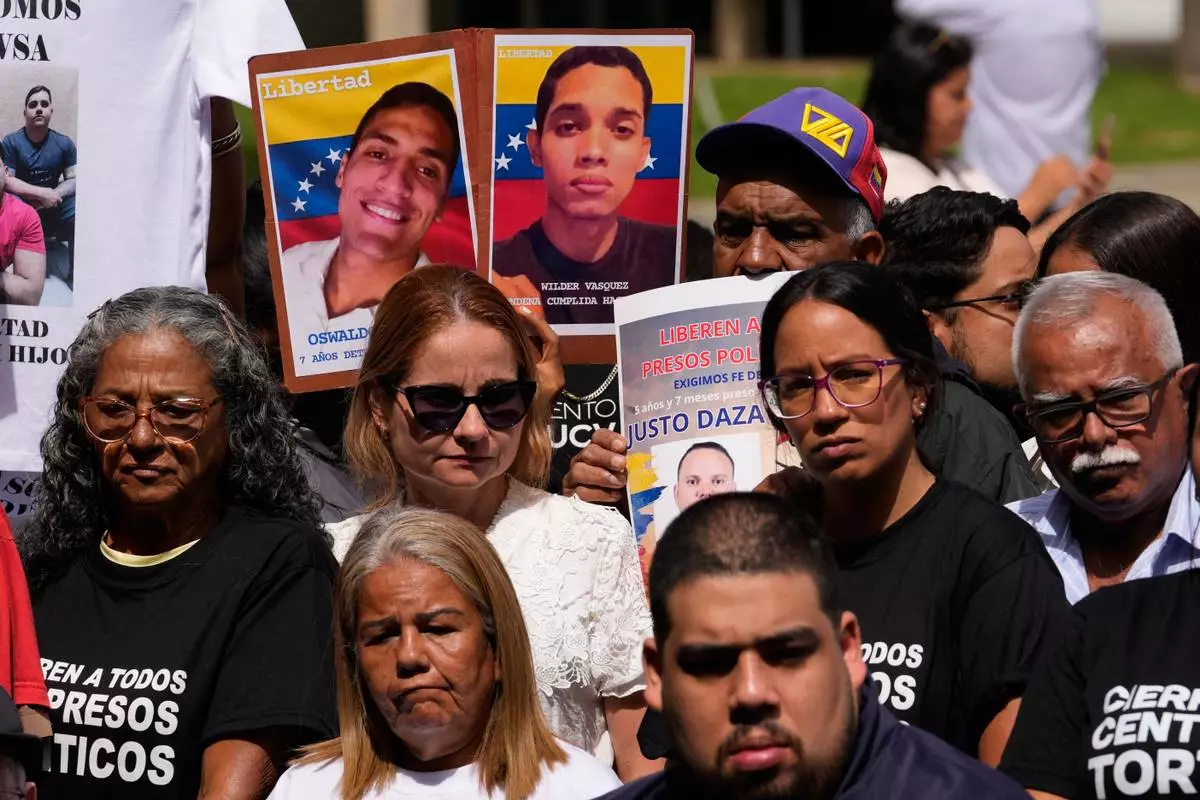
Relatives of political prisoners gather at the Central University of Venezuela to call for their release in Caracas, Venezuela, Tuesday, Jan. 13, 2026. (AP Photo/Matias Delacroix)
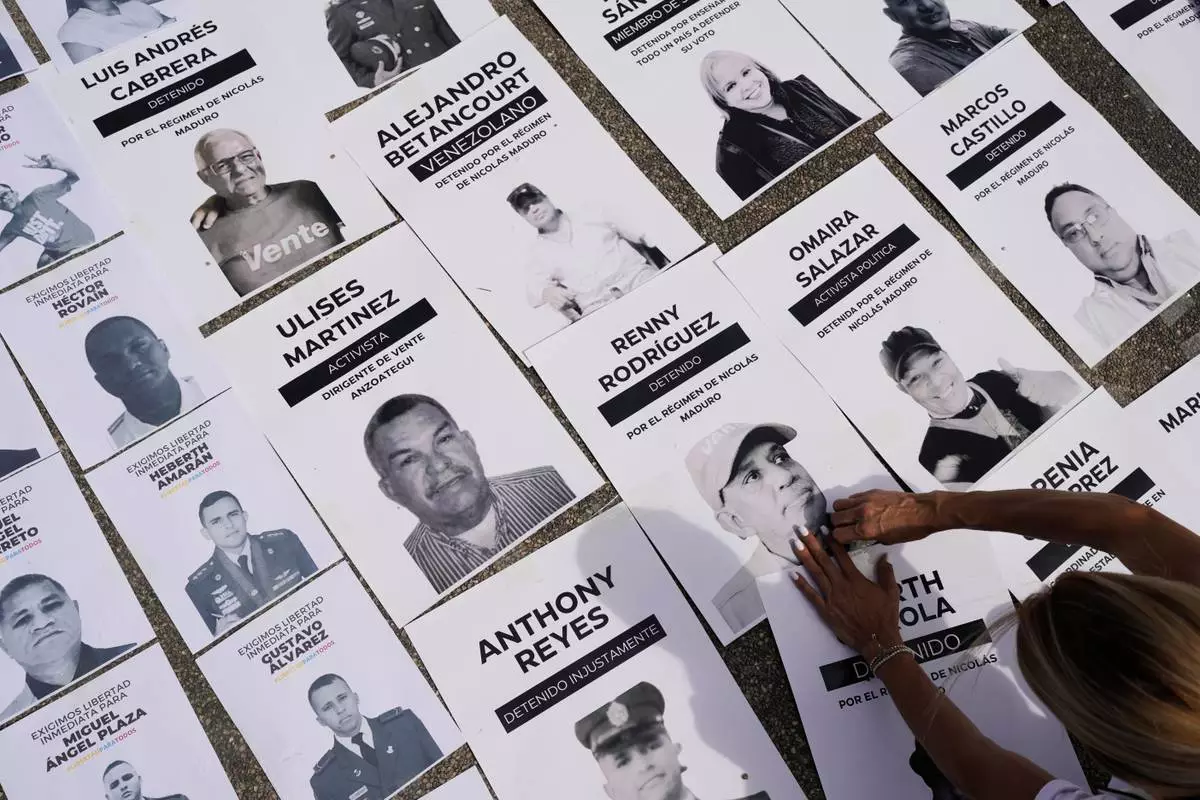
Jacklin Ibarreto, whose father Miguel Ibarreto is detained, lays out photos of political prisoners at the Central University of Venezuela in Caracas, Venezuela, Tuesday, Jan. 13, 2026. (AP Photo/Matias Delacroix)
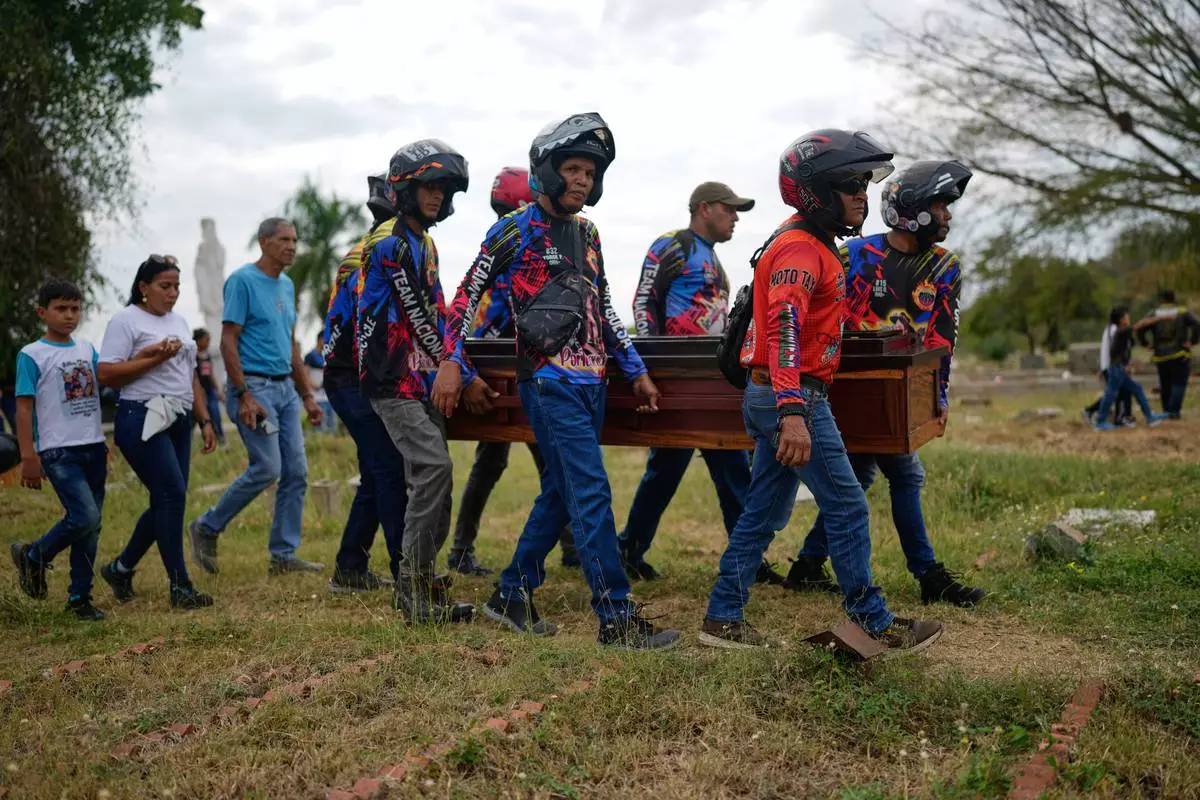
Members of a motorcycle club, friends of Edilson Torres, a Venezuelan police officer who died in prison a month after being arrested on accusations of treason, carry his coffin at a cemetery in Guanare, Venezuela, Tuesday, Jan. 13, 2026. (AP Photo/Ariana Cubillos)
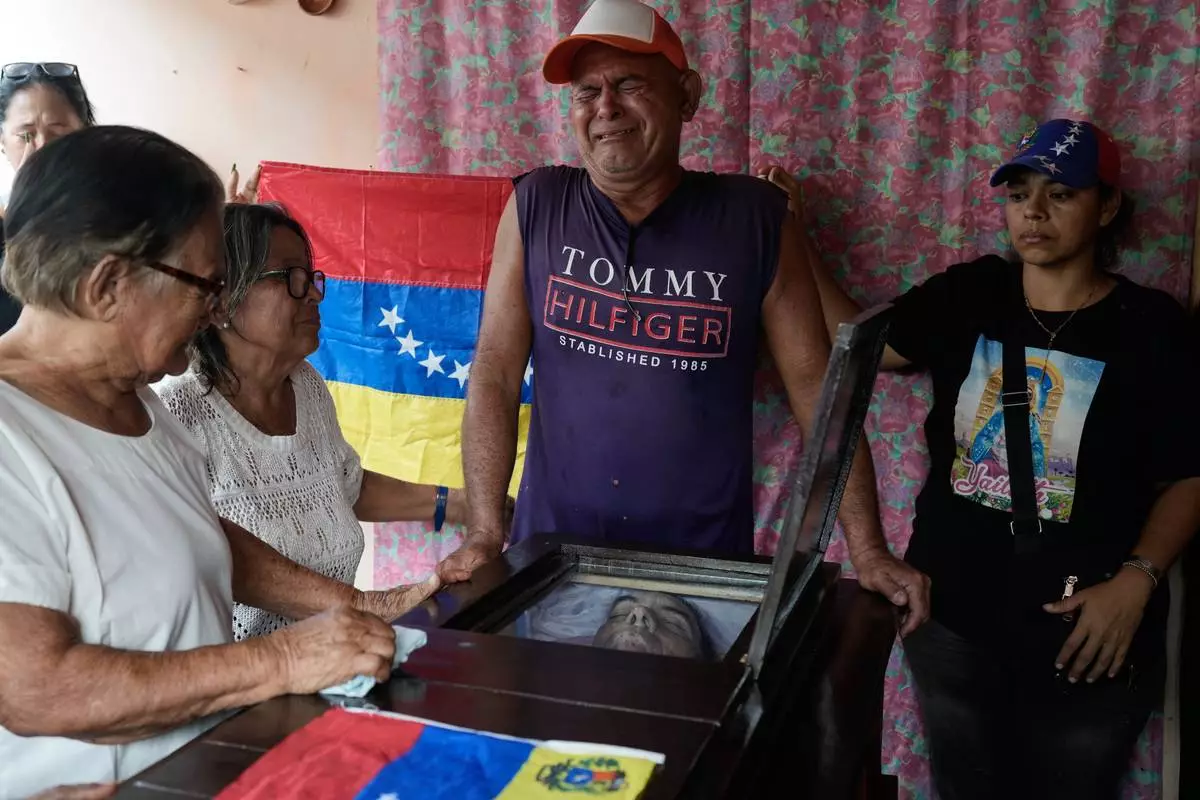
Relatives stand by the coffin of Edilson Torres, a Venezuelan police officer who died in prison a month after being arrested on accusations of treason, in Guanare, Venezuela, Tuesday, Jan. 13, 2026.. (AP Photo/Ariana Cubillos)
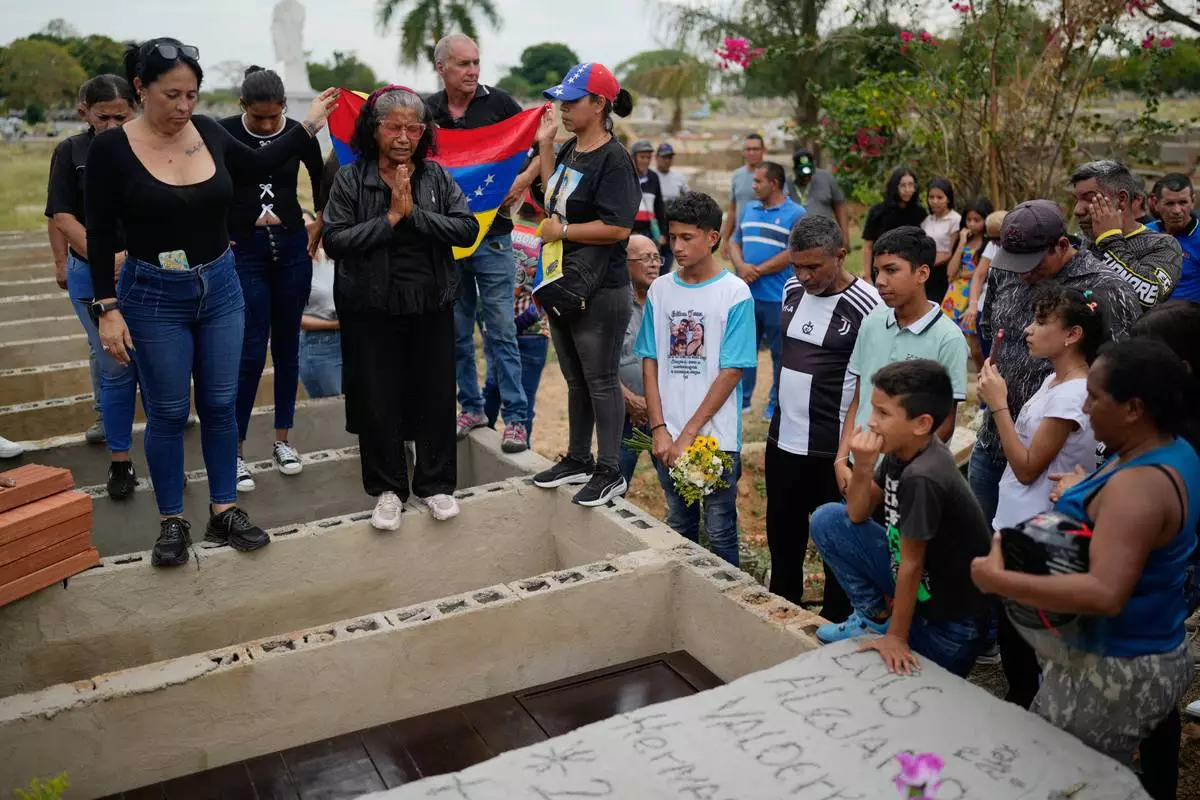
Relatives of Edilson Torres, a Venezuelan police officer who died in prison a month after being arrested on accusations of treason, gather around his grave during his funeral in Guanare, Venezuela, Tuesday, Jan. 13, 2026. (AP Photo/Ariana Cubillos)
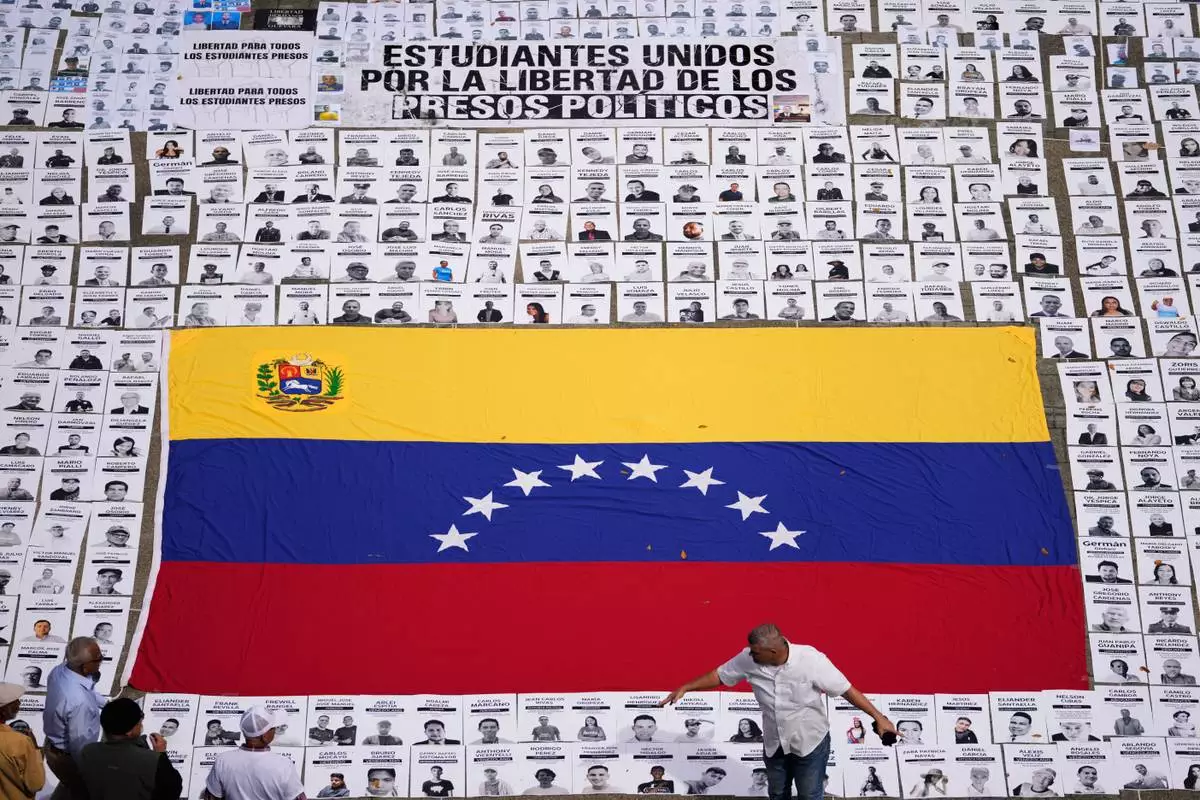
Students lay out photos of people they consider political prisoners at the Central University of Venezuela in Caracas, Venezuela, Tuesday, Jan. 13, 2026. (AP Photo/Matias Delacroix)
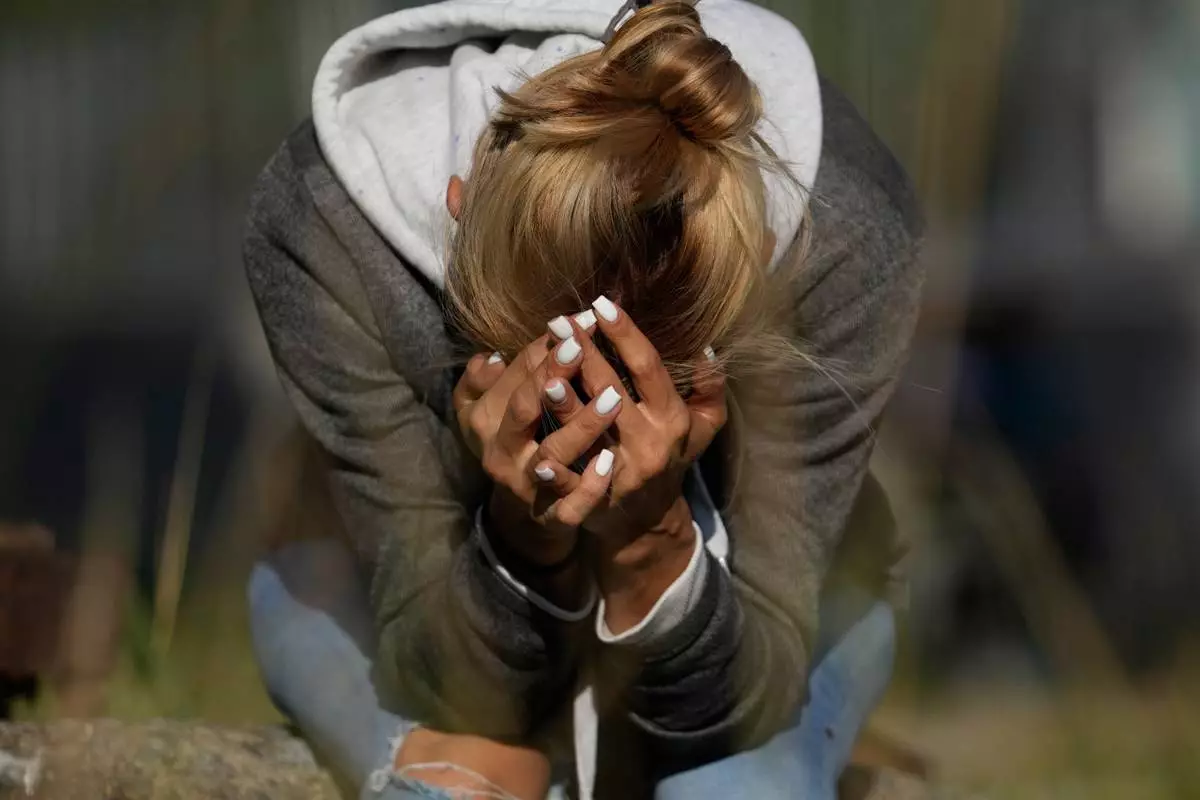
Jacklin Ibarreto, whose father Miguel Ibarreto is detained, waits outside the Rodeo I prison in Guatire, Venezuela, Friday, Jan. 9, 2026, after National Assembly President Jorge Rodriguez said the government would release Venezuelan and foreign prisoners. (AP Photo/Matias Delacroix)
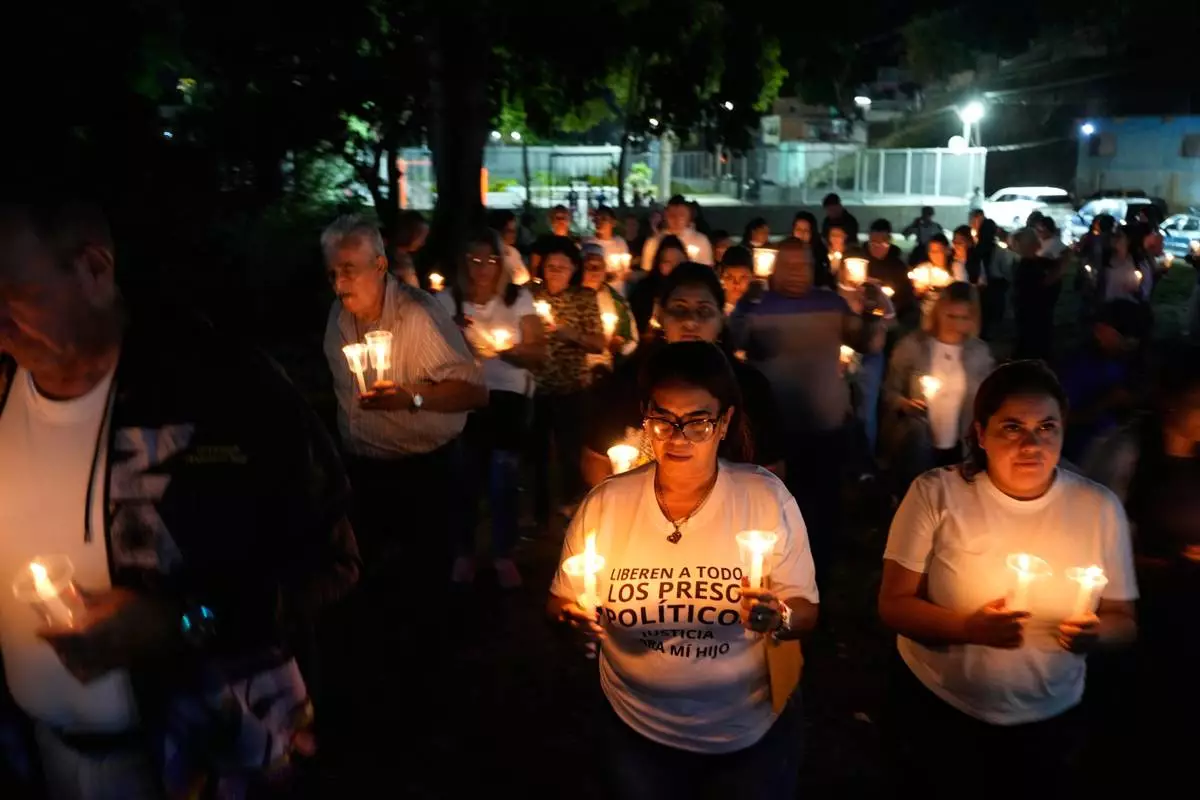
Relatives and friends of political prisoners hold candles calling for their loved ones to be set free outside the Rodeo I prison in Guatire, Venezuela, Friday, Jan. 9, 2026 after the government announced prisoners would be released. (AP Photo/Matias Delacroix)
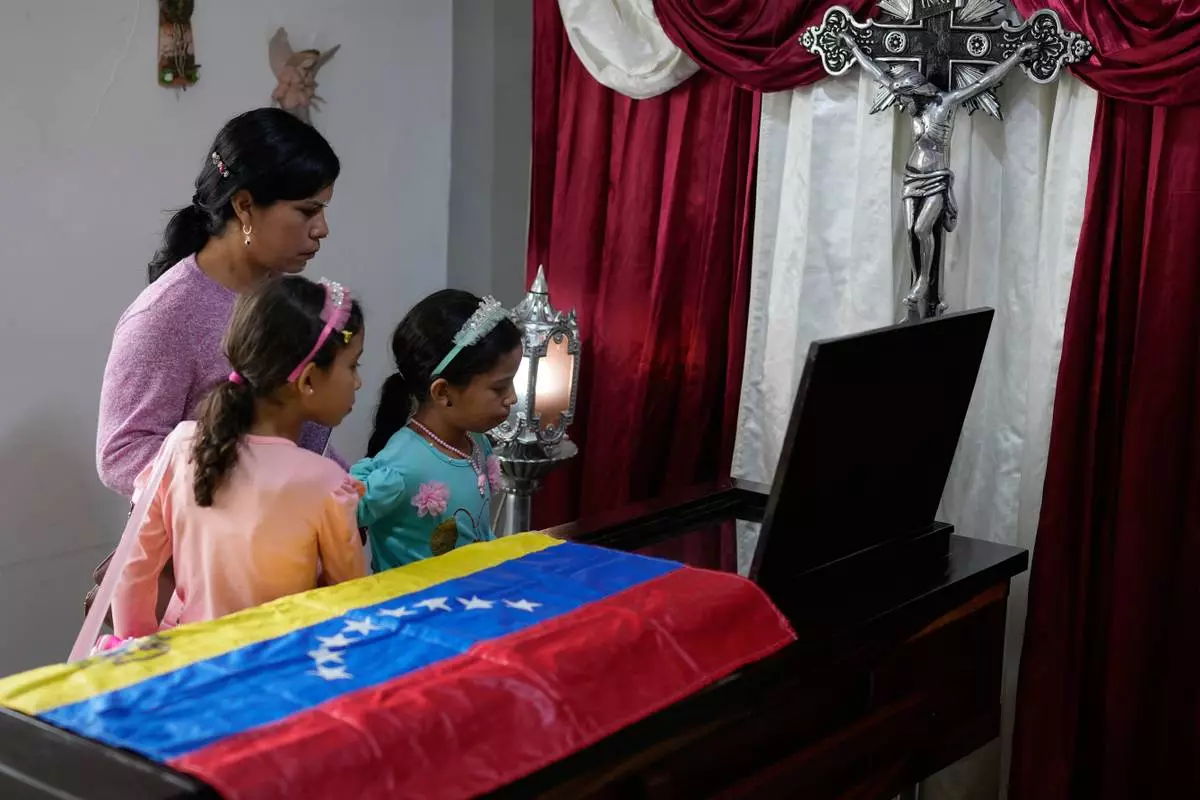
Relatives stand beside the coffin during the wake of Edilson Torres, a Venezuelan police officer who died in prison a month after being arrested on accusations of treason, in Guanare, Venezuela, Tuesday, Jan. 13, 2026. (AP Photo/Ariana Cubillos)
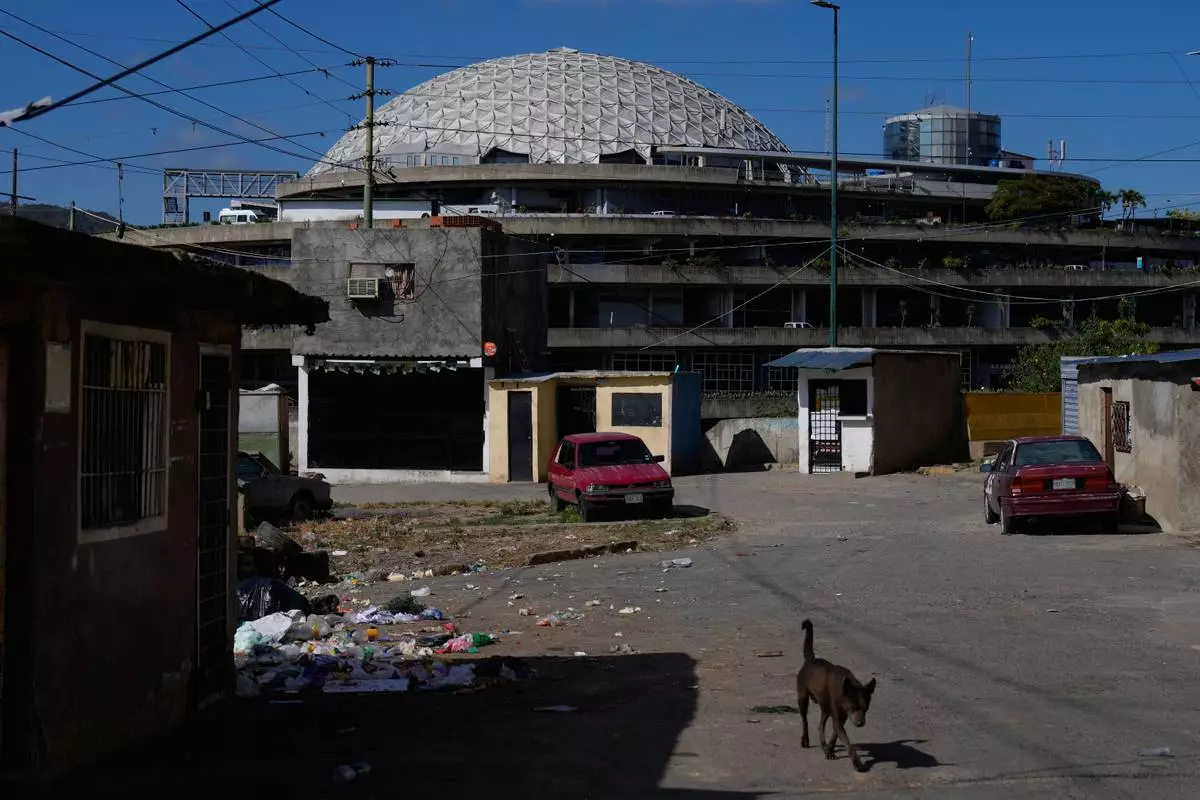
El Helicoide, the headquarters of Venezuela's intelligence service and detention center, stands in Caracas, Venezuela, Friday, Jan. 9, 2026, after National Assembly President Jorge Rodriguez said the government would release Venezuelan and foreign prisoners. (AP Photo/Ariana Cubillos)
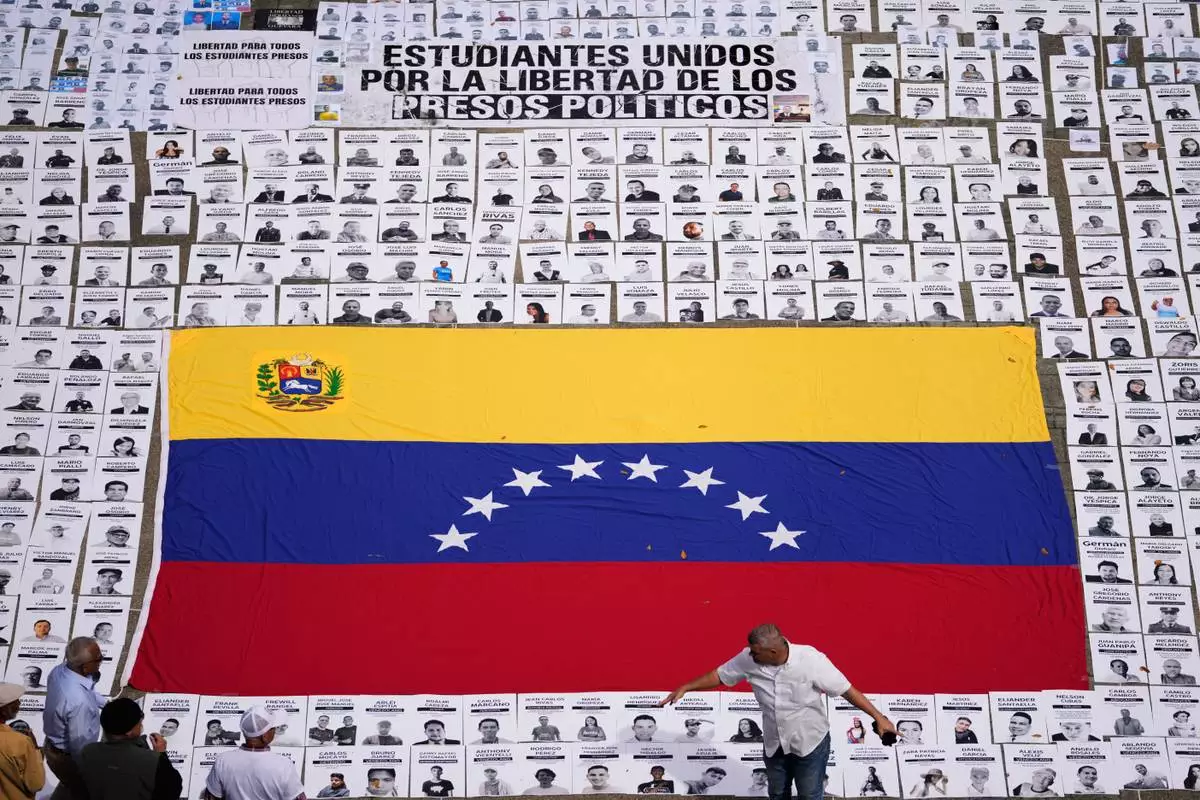
Students lay out photos of people they consider political prisoners at the Central University of Venezuela in Caracas, Venezuela, Tuesday, Jan. 13, 2026. (AP Photo/Matias Delacroix)
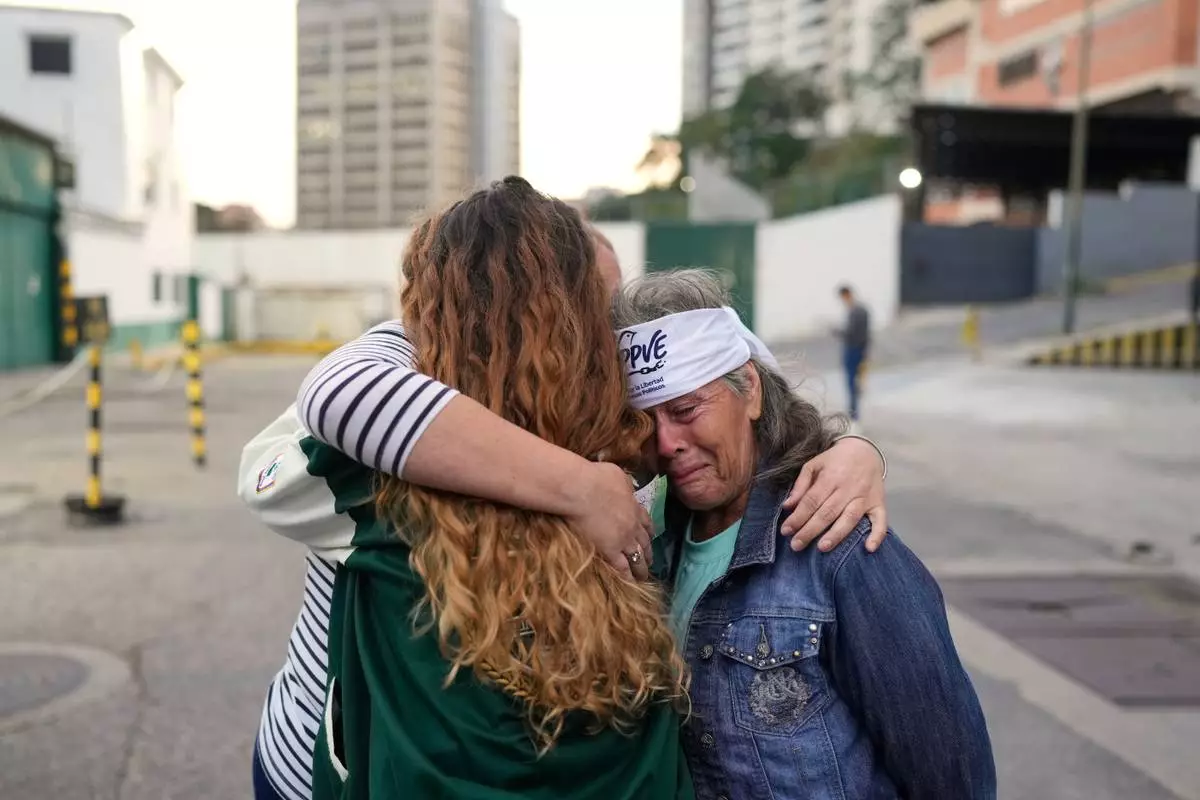
Flor Zambrano, whose son, Rene Chourio, she says is detained at Zone 7 of the Bolivarian National Police for political reasons, embraces relatives of other detainees outside the facility in Caracas, Venezuela, Monday, Jan. 12, 2026. (AP Photo/Matias Delacroix)
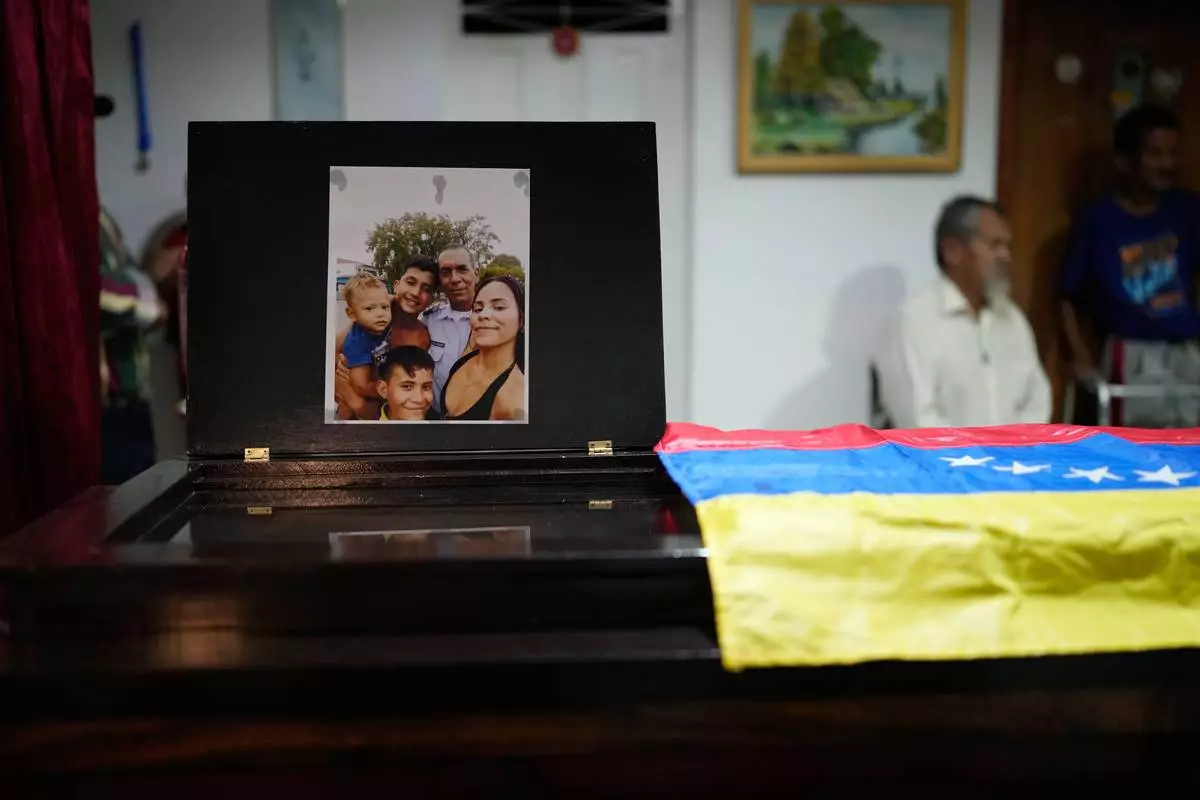
A photo of Edilson Torres, a Venezuelan police officer who died in prison a month after being arrested on accusations of treason, and his family adorns his coffin during his wake at his home in Guanare, Venezuela, Monday, Jan. 12, 2026. (AP Photo/Ariana Cubillos)
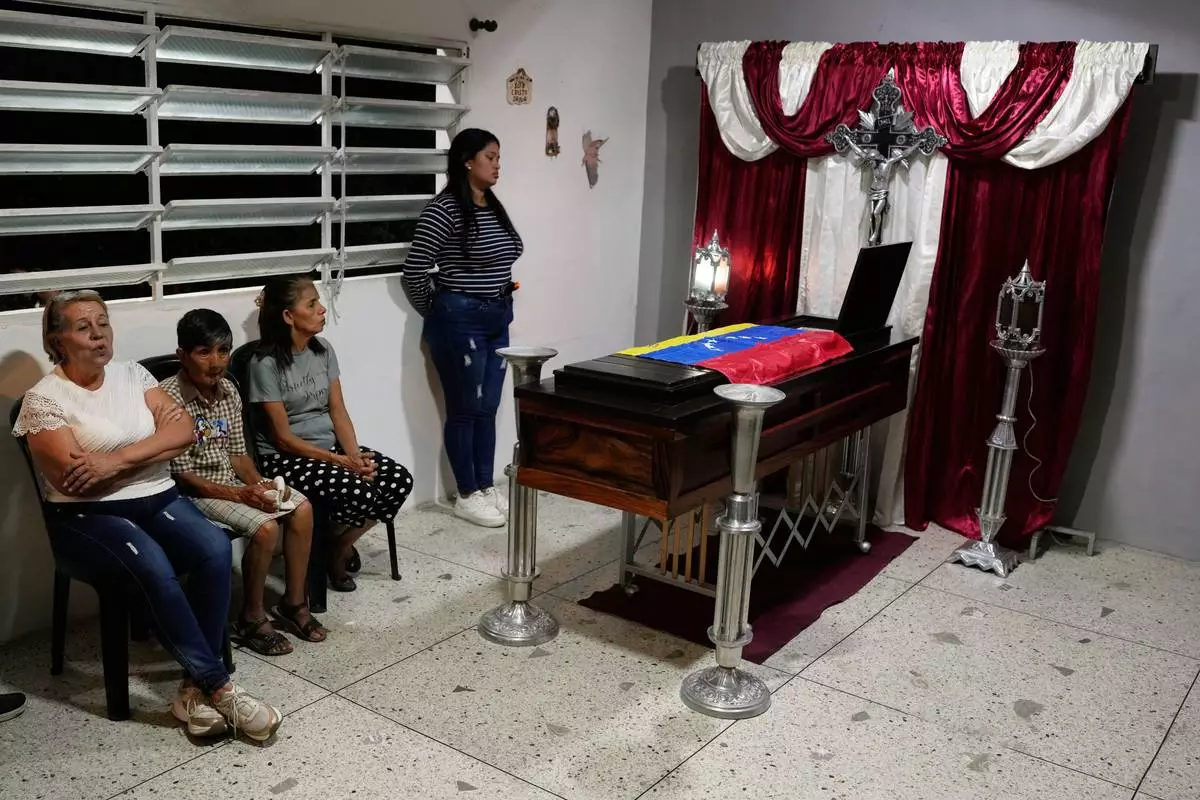
Relatives of Edilson Torres, a Venezuelan police officer who died in prison a month after being arrested on accusations of treason, sit by his coffin during his wake in Guanare, Venezuela, Monday, Jan. 12, 2026. (AP Photo/Ariana Cubillos)
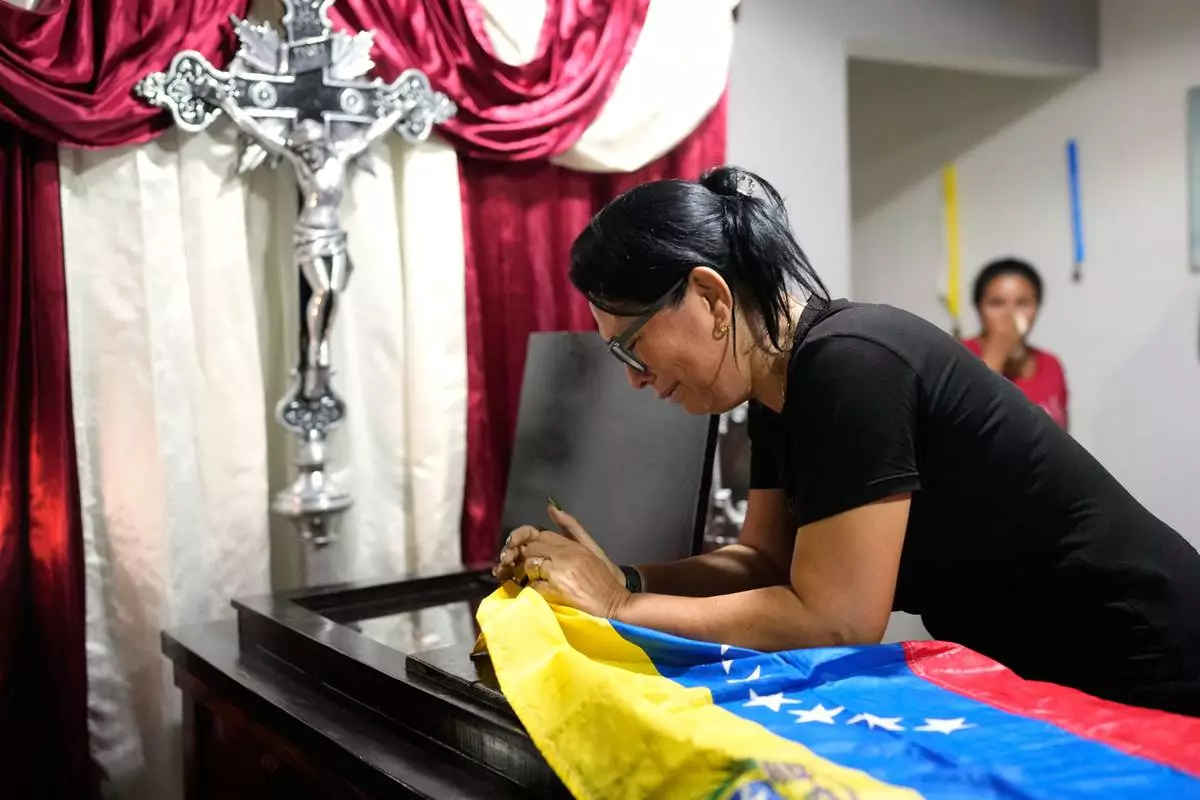
Emelyn Torres leans over the casket of her brother, Edilson Torres, a Venezuelan police officer who died in prison a month after being detained on accusations of treason, during his wake at his home in Guanare, Venezuela, Monday, Jan. 12, 2026. (AP Photo/Ariana Cubillos)
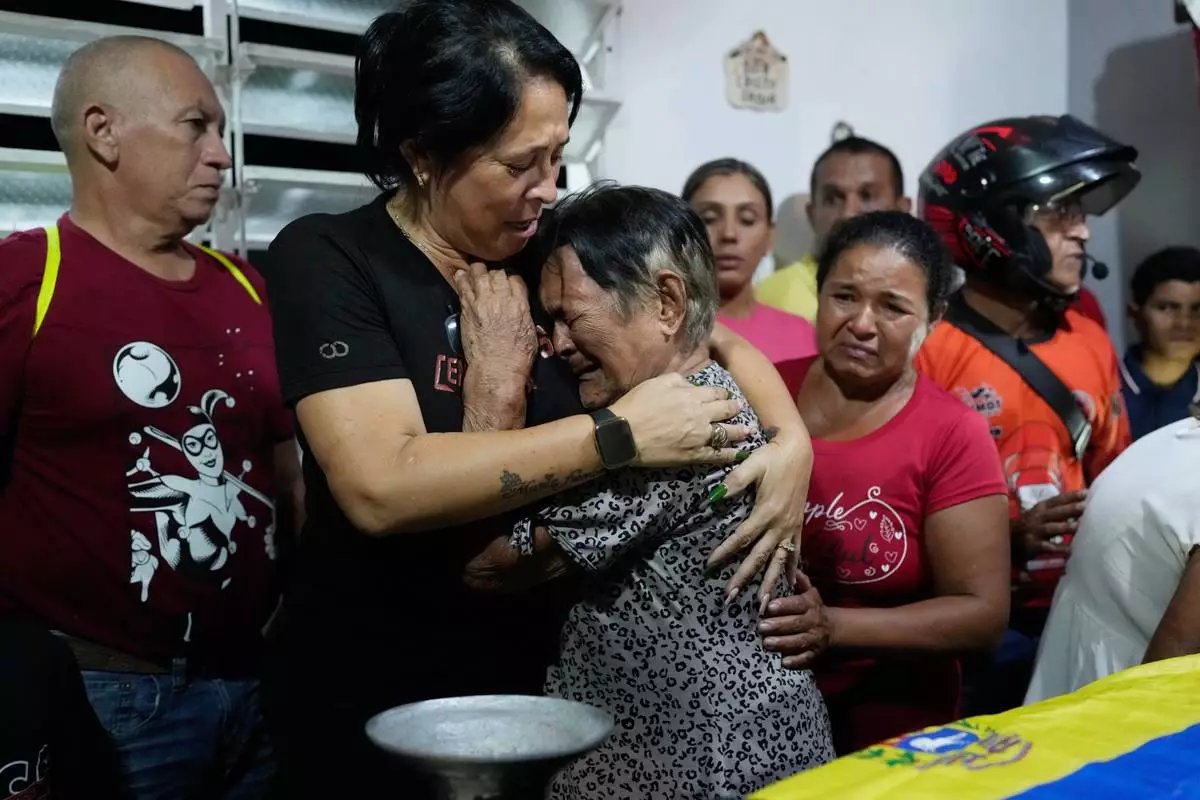
Emelyn Torres and Maria Cristina Fernandez, the sister and grandmother of Edilson Torres, a Venezuelan police officer who died in prison after being detained on accusations of treason, embrace during his wake at his home in Guanare, Venezuela, Monday, Jan. 12, 2026. (AP Photo/Ariana Cubillos)