Skip to Content Facebook Feature Image

America's newest crew capsule rockets toward space station

News

America's newest crew capsule rockets toward space station
News

News

America's newest crew capsule rockets toward space station

2019-03-02 15:53 Last Updated At:16:00

America's newest capsule for astronauts rocketed Saturday toward the International Space Station on a high-stakes test flight by SpaceX.

The only passenger was a life-size test dummy, named Ripley after the lead character in the "Alien" movies. SpaceX needs to nail the debut of its crew Dragon capsule before putting people on board later this year.

More Images
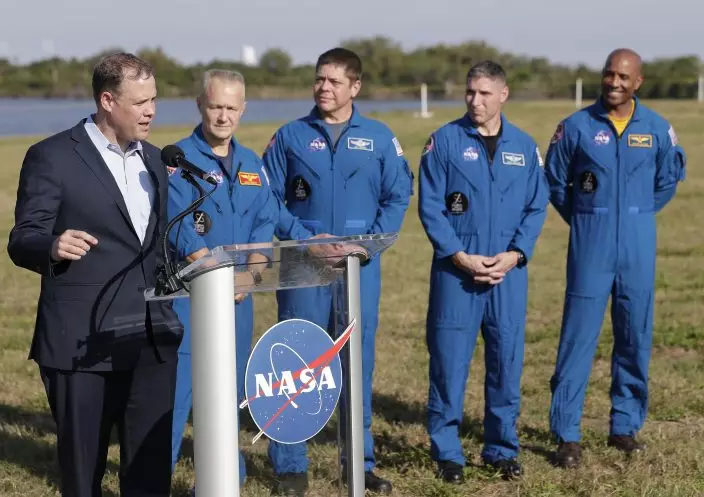
NASA Administrator Jim Bridenstine, left, speaks at a news conference with astronauts, from second left, Doug Hurley, Bob Behnken, Mike Hopkins and Victor Glover before Saturday's Falcon 9 SpaceX Crew Demo-1 rocket launch at the Kennedy Space Center in Cape Canaveral, Fla., Friday, March 1, 2019. (AP PhotoJohn Raoux)
NASA Administrator Jim Bridenstine, left, speaks at a news conference with astronauts, from second left, Doug Hurley, Bob Behnken, Mike Hopkins and Victor Glover before Saturday's Falcon 9 SpaceX Crew Demo-1 rocket launch at the Kennedy Space Center in Cape Canaveral, Fla., Friday, March 1, 2019. (AP PhotoJohn Raoux)

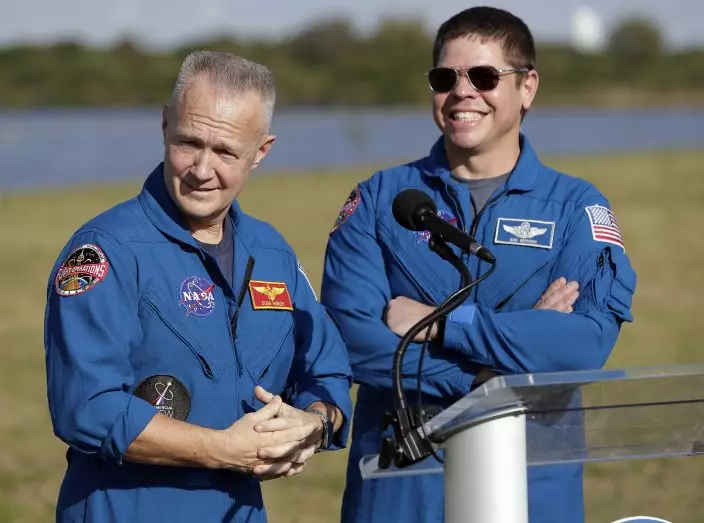
NASA astronauts Doug Hurley, left, and Bob Behnken answer questions during a news conference before the Falcon 9 SpaceX Crew Demo-1 rocket launch at the Kennedy Space Center in Cape Canaveral, Fla., Friday, March 1, 2019. The astronauts are assigned to fly in the SpaceX Demo-2 flight test later this year. (AP PhotoJohn Raoux)
NASA astronauts Doug Hurley, left, and Bob Behnken answer questions during a news conference before the Falcon 9 SpaceX Crew Demo-1 rocket launch at the Kennedy Space Center in Cape Canaveral, Fla., Friday, March 1, 2019. The astronauts are assigned to fly in the SpaceX Demo-2 flight test later this year. (AP PhotoJohn Raoux)

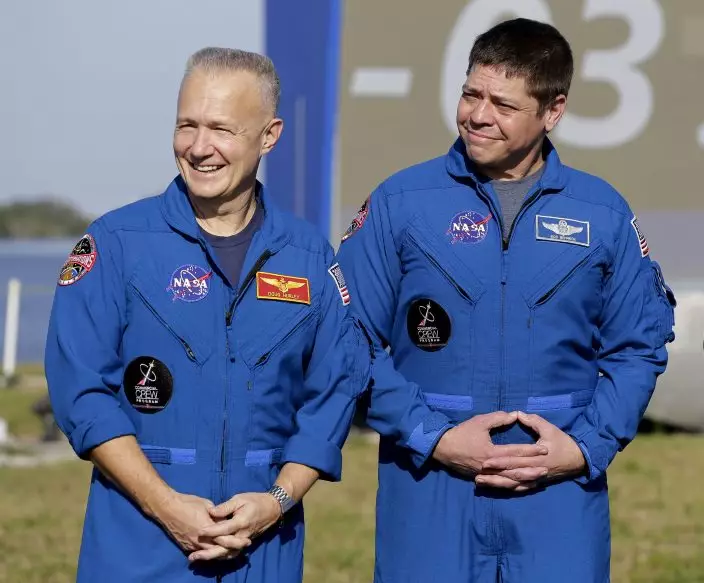
NASA astronauts Doug Hurley, left, and Bob Behnken attend a news conference before the Falcon 9 SpaceX Crew Demo-1 rocket launch at the Kennedy Space Center in Cape Canaveral, Fla., Friday, March 1, 2019. The astronauts are assigned to fly in the SpaceX Demo-2 flight test later this year. (AP PhotoTerry Renna)
NASA astronauts Doug Hurley, left, and Bob Behnken attend a news conference before the Falcon 9 SpaceX Crew Demo-1 rocket launch at the Kennedy Space Center in Cape Canaveral, Fla., Friday, March 1, 2019. The astronauts are assigned to fly in the SpaceX Demo-2 flight test later this year. (AP PhotoTerry Renna)

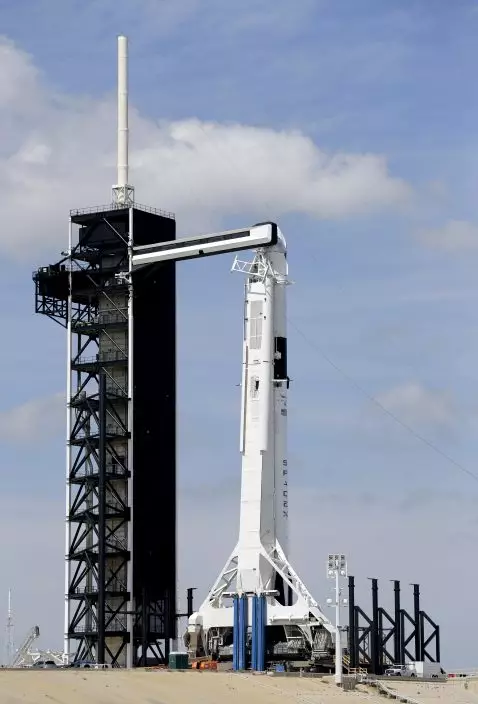
A Falcon 9 SpaceX rocket, ready for launch, sits on pad 39A at the Kennedy Space Center in Cape Canaveral, Fla., Friday, March 1, 2019. The Crew Dragon spacecraft unmanned test flight is scheduled for launch early Saturday morning. (AP PhotoTerry Renna)
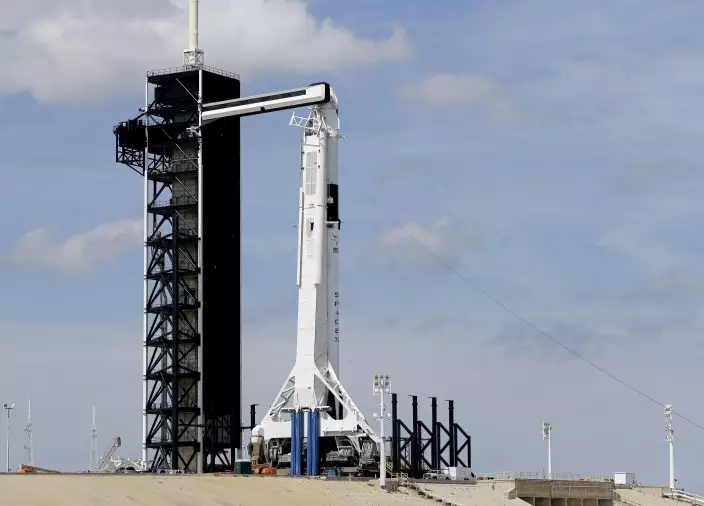
A Falcon 9 SpaceX rocket, ready for launch, sits on pad 39A at the Kennedy Space Center in Cape Canaveral, Fla., Friday, March 1, 2019. The Crew Dragon spacecraft unmanned test flight is scheduled for launch early Saturday morning. (AP PhotoTerry Renna)
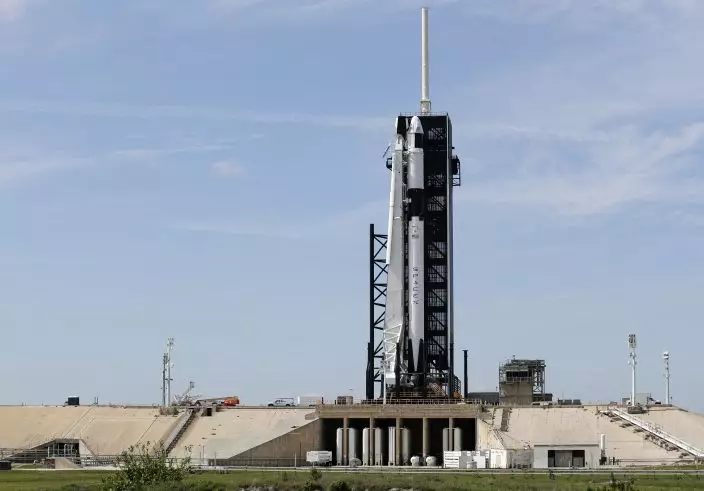
A Falcon 9 SpaceX rocket, ready for launch, sits on pad 39A at the Kennedy Space Center in Cape Canaveral, Fla., Friday, March 1, 2019. The Crew Dragon spacecraft unmanned test flight is scheduled for launch early Saturday morning. (AP PhotoTerry Renna)

A Falcon 9 SpaceX rocket, ready for launch, sits on pad 39A at the Kennedy Space Center in Cape Canaveral, Fla., Friday, March 1, 2019. The Crew Dragon spacecraft unmanned test flight is scheduled for launch early Saturday morning. (AP PhotoTerry Renna)

A Falcon 9 SpaceX rocket, ready for launch, sits on pad 39A at the Kennedy Space Center in Cape Canaveral, Fla., Friday, March 1, 2019. The Crew Dragon spacecraft unmanned test flight is scheduled for launch early Saturday morning. (AP PhotoTerry Renna)

A Falcon 9 SpaceX rocket, ready for launch, sits on pad 39A at the Kennedy Space Center in Cape Canaveral, Fla., Friday, March 1, 2019. The Crew Dragon spacecraft unmanned test flight is scheduled for launch early Saturday morning. (AP PhotoTerry Renna)

A Falcon 9 SpaceX rocket, ready for launch, sits on pad 39A at the Kennedy Space Center in Cape Canaveral, Fla., Friday, March 1, 2019. The Crew Dragon spacecraft unmanned test flight is scheduled for launch early Saturday morning. (AP PhotoJohn Raoux)
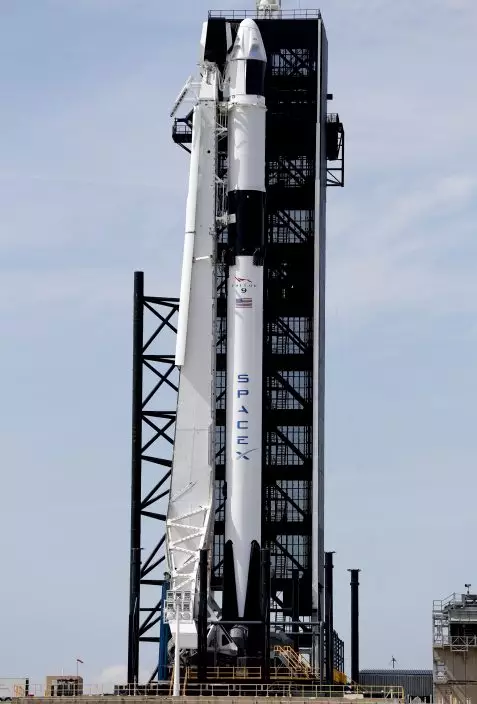
A Falcon 9 SpaceX rocket, ready for launch, sits on pad 39A at the Kennedy Space Center in Cape Canaveral, Fla., Friday, March 1, 2019. The Crew Dragon spacecraft unmanned test flight is scheduled for launch early Saturday morning. (AP PhotoJohn Raoux)
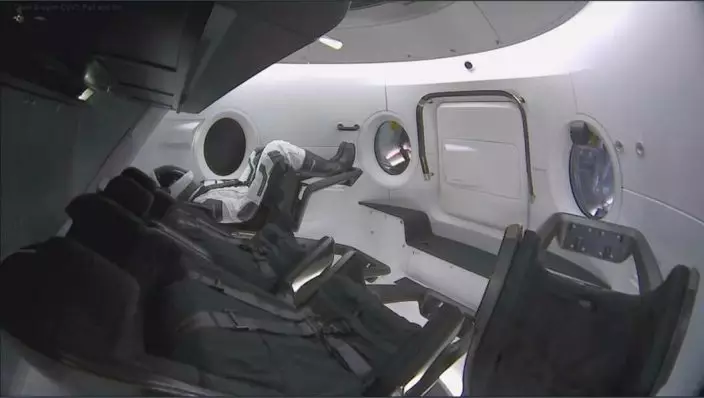
A Falcon 9 SpaceX rocket ready for launch sits on pad 39A at the Kennedy Space Center in Cape Canaveral, Fla., Friday, March 1, 2019. The rocket with the Crew Dragon spacecraft unmanned test flight is scheduled for launch early Saturday morning. (AP PhotoJohn Raoux)

A Falcon 9 SpaceX rocket ready for launch sits on pad 39A at the Kennedy Space Center in Cape Canaveral, Fla., Friday, March 1, 2019. The rocket with the Crew Dragon spacecraft unmanned test flight is scheduled for launch early Saturday morning. (AP PhotoJohn Raoux)

This photo provided by SpaceX shows a test dummy in the new Dragon capsule designed for astronauts.  A six-day test flight will be real in every regard, beginning with a Florida liftoff Saturday, March 2, 2019 and a docking the next day with the International Space Station. The capsule won't carry humans, rather a test dummy, named Ripley after the tough heroine in the "Alien" films, in the same white SpaceX spacesuit that astronauts will wear.  (SpaceX via AP)

This photo provided by SpaceX shows a test dummy in the new Dragon capsule designed for astronauts. A six-day test flight will be real in every regard, beginning with a Florida liftoff Saturday, March 2, 2019 and a docking the next day with the International Space Station. The capsule won't carry humans, rather a test dummy, named Ripley after the tough heroine in the "Alien" films, in the same white SpaceX spacesuit that astronauts will wear. (SpaceX via AP)

This latest, flashiest Dragon is on a fast track to reach the space station Sunday morning, just 27 hours after liftoff.

NASA Administrator Jim Bridenstine, left, speaks at a news conference with astronauts, from second left, Doug Hurley, Bob Behnken, Mike Hopkins and Victor Glover before Saturday's Falcon 9 SpaceX Crew Demo-1 rocket launch at the Kennedy Space Center in Cape Canaveral, Fla., Friday, March 1, 2019. (AP PhotoJohn Raoux)

NASA Administrator Jim Bridenstine, left, speaks at a news conference with astronauts, from second left, Doug Hurley, Bob Behnken, Mike Hopkins and Victor Glover before Saturday's Falcon 9 SpaceX Crew Demo-1 rocket launch at the Kennedy Space Center in Cape Canaveral, Fla., Friday, March 1, 2019. (AP PhotoJohn Raoux)

It will spend five days docked to the orbiting outpost, before making a retro-style splashdown in the Atlantic next Friday — all vital training for the next space demo, possibly this summer, when two astronauts strap in.

"This is critically important ... We're on the precipice of launching American astronauts on American rockets from American soil again for the first time since the retirement of the space shuttles in 2011," said NASA Administrator Jim Bridenstine. He got a special tour of the pad on the eve of launch, by SpaceX founder and chief executive Elon Musk.

An estimated 5,000 NASA and contractor employees, tourists and journalists gathered in the wee hours at Kennedy Space Center with the SpaceX launch team, as the Falcon 9 rocket blasted off from the same spot where Apollo moon rockets and space shuttles once soared.

NASA astronauts Doug Hurley, left, and Bob Behnken answer questions during a news conference before the Falcon 9 SpaceX Crew Demo-1 rocket launch at the Kennedy Space Center in Cape Canaveral, Fla., Friday, March 1, 2019. The astronauts are assigned to fly in the SpaceX Demo-2 flight test later this year. (AP PhotoJohn Raoux)

NASA astronauts Doug Hurley, left, and Bob Behnken answer questions during a news conference before the Falcon 9 SpaceX Crew Demo-1 rocket launch at the Kennedy Space Center in Cape Canaveral, Fla., Friday, March 1, 2019. The astronauts are assigned to fly in the SpaceX Demo-2 flight test later this year. (AP PhotoJohn Raoux)

Looking on were the two NASA astronauts who will strap in as early as July for the second space demo, Doug Hurley and Bob Behnken. It's been eight years since Hurley and three other astronauts flew the last space shuttle mission, and human launches from Florida ceased.

NASA turned to private companies, SpaceX and Boeing, and has provided them $8 billion to build and operate crew capsules to ferry astronauts to and from the space station. Now Russian rockets are the only way to get astronauts to the 250-mile-high outpost. Soyuz tickets have skyrocketed over the years; NASA currently pays $82 million per seat.

Boeing aims to conduct the first test flight of its Starliner capsule in April, with astronauts on board possibly in August.

NASA astronauts Doug Hurley, left, and Bob Behnken attend a news conference before the Falcon 9 SpaceX Crew Demo-1 rocket launch at the Kennedy Space Center in Cape Canaveral, Fla., Friday, March 1, 2019. The astronauts are assigned to fly in the SpaceX Demo-2 flight test later this year. (AP PhotoTerry Renna)

NASA astronauts Doug Hurley, left, and Bob Behnken attend a news conference before the Falcon 9 SpaceX Crew Demo-1 rocket launch at the Kennedy Space Center in Cape Canaveral, Fla., Friday, March 1, 2019. The astronauts are assigned to fly in the SpaceX Demo-2 flight test later this year. (AP PhotoTerry Renna)

Bridenstine said he's confident that astronauts will soar on a Dragon or Starliner — or both — by year's end. But he stressed there's no rush.

"We are not in a space race," he said. "That race is over. We went to the moon and we won. It's done. Now we're in a position where we can take our time and make sure we get it right."

SpaceX already has made 16 trips to the space station using cargo Dragons. The white crew Dragon is slightly bigger — 27 feet (8 meters) tip to tip — and considerably fancier and safer.

A Falcon 9 SpaceX rocket, ready for launch, sits on pad 39A at the Kennedy Space Center in Cape Canaveral, Fla., Friday, March 1, 2019. The Crew Dragon spacecraft unmanned test flight is scheduled for launch early Saturday morning. (AP PhotoTerry Renna)

A Falcon 9 SpaceX rocket, ready for launch, sits on pad 39A at the Kennedy Space Center in Cape Canaveral, Fla., Friday, March 1, 2019. The Crew Dragon spacecraft unmanned test flight is scheduled for launch early Saturday morning. (AP PhotoTerry Renna)

It features four seats, three windows, touch-screen computer displays and life-support equipment, as well as eight abort engines to pull the capsule to safety in the event of a launch emergency. Solar cells are mounted on the spacecraft for electrical power, as opposed to the protruding solar wings on cargo Dragons.

"It's an incredibly sleek looking vehicle from the inside and it's very easy to operate," Hurley told reporters just hours before liftoff. He marvels at how the Dragon has just 30 buttons and touch screens, compared with the space shuttle cockpit's 2,000 switches and circuit breakers.

For the test, the Ripley dummy was strapped into the far left seat, wearing the company's snappy white spacesuit. The other seats were empty, save for a small plush toy resembling Earth that was free to float once reaching zero-gravity. "Super high tech zero-g indicator added just before launch!" Musk tweeted.

A Falcon 9 SpaceX rocket, ready for launch, sits on pad 39A at the Kennedy Space Center in Cape Canaveral, Fla., Friday, March 1, 2019. The Crew Dragon spacecraft unmanned test flight is scheduled for launch early Saturday morning. (AP PhotoTerry Renna)

A Falcon 9 SpaceX rocket, ready for launch, sits on pad 39A at the Kennedy Space Center in Cape Canaveral, Fla., Friday, March 1, 2019. The Crew Dragon spacecraft unmanned test flight is scheduled for launch early Saturday morning. (AP PhotoTerry Renna)

As many as seven astronauts could squeeze in, although four will be the norm once flights get going, allowing for a little cargo room. About 450 pounds (200 kilograms) of supplies are going up on this flight.

The capsule is designed to dock and undock automatically with the space station. Cargo Dragon must be maneuvered with the station's robot arm.

Like Ripley, the capsule is rigged with sensors. Engineers will be carefully watching sound, vibration and other stresses on the spacecraft, while monitoring the life-support, communication and propulsion systems. Some of the equipment needs more work — possibly even redesign — before serving human passengers.

A Falcon 9 SpaceX rocket, ready for launch, sits on pad 39A at the Kennedy Space Center in Cape Canaveral, Fla., Friday, March 1, 2019. The Crew Dragon spacecraft unmanned test flight is scheduled for launch early Saturday morning. (AP PhotoTerry Renna)

A Falcon 9 SpaceX rocket, ready for launch, sits on pad 39A at the Kennedy Space Center in Cape Canaveral, Fla., Friday, March 1, 2019. The Crew Dragon spacecraft unmanned test flight is scheduled for launch early Saturday morning. (AP PhotoTerry Renna)

"We're going to learn a ton from this mission," said NASA's commercial crew program manager, Kathy Lueders.

Flight operations team members — some of them new to this — also need the six-day trial run, according to Kennedy Space Center's director, Robert Cabana.

The objective is to make the next demo flight, with Hurley and Behnken, as safe as possible. The more immediate goal is to avoid harming the space station and its three occupants: an American, Canadian and Russian.

A Falcon 9 SpaceX rocket, ready for launch, sits on pad 39A at the Kennedy Space Center in Cape Canaveral, Fla., Friday, March 1, 2019. The Crew Dragon spacecraft unmanned test flight is scheduled for launch early Saturday morning. (AP PhotoJohn Raoux)

A Falcon 9 SpaceX rocket, ready for launch, sits on pad 39A at the Kennedy Space Center in Cape Canaveral, Fla., Friday, March 1, 2019. The Crew Dragon spacecraft unmanned test flight is scheduled for launch early Saturday morning. (AP PhotoJohn Raoux)

Despite SpaceX's success at recovering and reusing its rockets, NASA is insisting on brand new boosters from SpaceX for the crew capsule flights. The first-stage booster used Saturday aimed for a floating platform in the Atlantic, following the predawn liftoff. SpaceX plans to recycle the newly flying capsule for a high-altitude abort test this spring, along with a booster launched and retrieved a week ago.

The Associated Press Health & Science Department receives support from the Howard Hughes Medical Institute's Department of Science Education. The AP is solely responsible for all content.

A Falcon 9 SpaceX rocket ready for launch sits on pad 39A at the Kennedy Space Center in Cape Canaveral, Fla., Friday, March 1, 2019. The rocket with the Crew Dragon spacecraft unmanned test flight is scheduled for launch early Saturday morning. (AP PhotoJohn Raoux)

A Falcon 9 SpaceX rocket ready for launch sits on pad 39A at the Kennedy Space Center in Cape Canaveral, Fla., Friday, March 1, 2019. The rocket with the Crew Dragon spacecraft unmanned test flight is scheduled for launch early Saturday morning. (AP PhotoJohn Raoux)

This photo provided by SpaceX shows a test dummy in the new Dragon capsule designed for astronauts.  A six-day test flight will be real in every regard, beginning with a Florida liftoff Saturday, March 2, 2019 and a docking the next day with the International Space Station. The capsule won't carry humans, rather a test dummy, named Ripley after the tough heroine in the "Alien" films, in the same white SpaceX spacesuit that astronauts will wear.  (SpaceX via AP)

This photo provided by SpaceX shows a test dummy in the new Dragon capsule designed for astronauts. A six-day test flight will be real in every regard, beginning with a Florida liftoff Saturday, March 2, 2019 and a docking the next day with the International Space Station. The capsule won't carry humans, rather a test dummy, named Ripley after the tough heroine in the "Alien" films, in the same white SpaceX spacesuit that astronauts will wear. (SpaceX via AP)

HAVANA (AP) — Cuban soldiers wearing white gloves marched out of a plane on Thursday carrying urns with the remains of the 32 Cuban officers killed during a stunning U.S. attack on Venezuela as trumpets and drums played solemnly at Havana's airport.

Nearby, thousands of Cubans lined one of Havana’s most iconic streets to await the bodies of colonels, lieutenants, majors and captains as the island remained under threat by the administration of U.S. President Donald Trump.

The soldiers' shoes clacked as they marched stiff-legged into the headquarters of the Ministry of the Armed Forces, next to Revolution Square, with the urns and placed them on a long table next to the pictures of those killed so people could pay their respects.

Thursday’s mass funeral was only one of a handful that the Cuban government has organized in almost half a century.

Hours earlier, state television showed images of more than a dozen wounded people described as “combatants” accompanied by Cuban Foreign Minister Bruno Rodríguez arriving Wednesday night from Venezuela. Some were in wheelchairs.

Those injured and the remains of those killed arrived as tensions grow between Cuba and the U.S., with Trump recently demanding that the Caribbean country make a deal with him before it is “too late.” He did not explain what kind of deal.

Trump also has said that Cuba will no longer live off Venezuela's money and oil. Experts warn that the abrupt end of oil shipments could be catastrophic for Cuba, which is already struggling with serious blackouts and a crumbling power grid.

Officials unfurled a massive flag at Havana's airport as President Miguel Díaz-Canel, clad in military garb as commander of Cuba's Armed Forces, stood silent next to former President Raúl Castro, with what appeared to be the relatives of those killed looking on nearby.

Cuban Interior Minister Lázaro Alberto Álvarez Casa said Venezuela was not a distant land for those killed, but a “natural extension of their homeland.”

“The enemy speaks to an audience of high-precision operations, of troops, of elites, of supremacy,” Álvarez said in apparent reference to the U.S. “We, on the other hand, speak of faces, of families who have lost a father, a son, a husband, a brother.”

Álvarez called those slain “heroes,” saying that they were an example of honor and “a lesson for those who waver.”

“We reaffirm that if this painful chapter of history has demonstrated anything, it is that imperialism may possess more sophisticated weapons; it may have immense material wealth; it may buy the minds of the wavering; but there is one thing it will never be able to buy: the dignity of the Cuban people,” he said.

Thousands of Cubans lined a street where motorcycles and military vehicles thundered by with the remains of those killed.

“They are people willing to defend their principles and values, and we must pay tribute to them,” said Carmen Gómez, a 58-year-old industrial designer, adding that she hopes no one invades given the ongoing threats.

When asked why she showed up despite the difficulties Cubans face, Gómez replied, “It’s because of the sense of patriotism that Cubans have, and that will always unite us.”

Cuba recently released the names and ranks of 32 military personnel — ranging in age from 26 to 60 — who were part of the security detail of Venezuelan President Nicolás Maduro during the raid on his residence on January 3. They included members of the Revolutionary Armed Forces and the Ministry of the Interior, the island’s two security agencies.

Cuban and Venezuelan authorities have said that the uniformed personnel were part of protection agreements between the two countries.

A demonstration was planned for Friday across from the U.S. Embassy in an open-air forum known as the Anti-Imperialist Tribune. Officials have said they expect the demonstration to be massive.

“People are upset and hurt. There’s a lot of talk on social media; but many do believe that the dead are martyrs” of a historic struggle against the United States, analyst and former diplomat Carlos Alzugaray told The Associated Press.

In October 1976, then-President Fidel Castro led a massive demonstration to bid farewell to the 73 people killed in the bombing of a Cubana de Aviación civilian flight financed by anti-revolutionary leaders in the U.S. Most of the victims were Cuban athletes.

In December 1989, officials organized “Operation Tribute” to honor the more than 2,000 Cuban combatants who died in Angola during Cuba’s participation in the war that defeated the South African army and ended the apartheid system. In October 1997, memorial services were held following the arrival of the remains of guerrilla commander Ernesto “Che” Guevara and six of his comrades, who died in 1967.

The latest mass burial is critical to honor those slain, said José Luis Piñeiro, a 60-year-old doctor who lived four years in Venezuela.

“I don’t think Trump is crazy enough to come and enter a country like this, ours, and if he does, he’s going to have to take an aspirin or some painkiller to avoid the headache he’s going to get,” Piñeiro said. “These were 32 heroes who fought him. Can you imagine an entire nation? He’s going to lose.”

A day before the remains of those killed arrived in Cuba, U.S. Secretary of State Marco Rubio announced $3 million in aid to help the island recover from the catastrophic Hurricane Melissa, which struck in late October.

The first flight took off from Florida on Wednesday, and a second flight was scheduled for Friday. A commercial vessel also will deliver food and other supplies.

“We have taken extraordinary measures to ensure that this assistance reaches the Cuban people directly, without interference or diversion by the illegitimate regime,” Rubio said, adding that the U.S. government was working with Cuba's Catholic Church.

The announcement riled Cuban Foreign Minister Bruno Rodríguez.

“The U.S. government is exploiting what appears to be a humanitarian gesture for opportunistic and politically manipulative purposes,” he said in a statement. “As a matter of principle, Cuba does not oppose assistance from governments or organizations, provided it benefits the people and the needs of those affected are not used for political gain under the guise of humanitarian aid.”

Coto contributed from San Juan, Puerto Rico.

Follow AP’s coverage of Latin America and the Caribbean at https://apnews.com/hub/latin-america

Military members pay their last respects to Cuban officers who were killed during the U.S. operation in Venezuela that captured Venezuelan President Nicolas Maduro, at the Ministry of the Revolutionary Armed Forces where the urns containing the remains are displayed during a ceremony in Havana, Cuba, Thursday, Jan. 15, 2026. (AP Photo/Ramon Espinosa)

Military members pay their last respects to Cuban officers who were killed during the U.S. operation in Venezuela that captured Venezuelan President Nicolas Maduro, at the Ministry of the Revolutionary Armed Forces where the urns containing the remains are displayed during a ceremony in Havana, Cuba, Thursday, Jan. 15, 2026. (AP Photo/Ramon Espinosa)

A motorcade transports urns containing the remains of Cuban officers, who were killed during the U.S. operation in Venezuela that captured Venezuelan President Nicolas Maduro, through Havana, Cuba, Thursday, Jan. 15, 2026. (AP Photo/Ramon Espinosa)

A motorcade transports urns containing the remains of Cuban officers, who were killed during the U.S. operation in Venezuela that captured Venezuelan President Nicolas Maduro, through Havana, Cuba, Thursday, Jan. 15, 2026. (AP Photo/Ramon Espinosa)

Soldiers carry urns containing the remains of Cuban officers, who were killed during the U.S. operation in Venezuela that captured Venezuelan President Nicolas Maduro, at the Ministry of the Revolutionary Armed Forces in Havana, Cuba, Thursday, Jan. 15, 2026. (Adalberto Roque /Pool Photo via AP)

Soldiers carry urns containing the remains of Cuban officers, who were killed during the U.S. operation in Venezuela that captured Venezuelan President Nicolas Maduro, at the Ministry of the Revolutionary Armed Forces in Havana, Cuba, Thursday, Jan. 15, 2026. (Adalberto Roque /Pool Photo via AP)

A motorcade transports urns containing the remains of Cuban officers, who were killed during the U.S. operation in Venezuela that captured Venezuelan President Nicolas Maduro, through Havana, Cuba, Thursday, Jan. 15, 2026. (AP Photo/Ramon Espinosa)

A motorcade transports urns containing the remains of Cuban officers, who were killed during the U.S. operation in Venezuela that captured Venezuelan President Nicolas Maduro, through Havana, Cuba, Thursday, Jan. 15, 2026. (AP Photo/Ramon Espinosa)

A motorcade transports urns containing the remains of Cuban officers, who were killed during the U.S. operation in Venezuela that captured Venezuelan President Nicolas Maduro, through Havana, Cuba, Thursday, Jan. 15, 2026. (AP Photo/Ramon Espinosa)

A motorcade transports urns containing the remains of Cuban officers, who were killed during the U.S. operation in Venezuela that captured Venezuelan President Nicolas Maduro, through Havana, Cuba, Thursday, Jan. 15, 2026. (AP Photo/Ramon Espinosa)

People line the streets of Havana, Cuba, Thursday, Jan. 15, 2026, to watch the motorcade carrying urns containing the remains of Cuban officers killed during the U.S. operation in Venezuela that captured Venezuelan President Nicolas Maduro. (AP Photo/Ramon Espinosa)

People line the streets of Havana, Cuba, Thursday, Jan. 15, 2026, to watch the motorcade carrying urns containing the remains of Cuban officers killed during the U.S. operation in Venezuela that captured Venezuelan President Nicolas Maduro. (AP Photo/Ramon Espinosa)

Workers fly the Cuban flag at half-staff at the Anti-Imperialist Tribune near the U.S. Embassy in Havana, Cuba, Monday, Jan. 5, 2026, in memory of Cubans who died two days before in Caracas, Venezuela during the capture of Venezuelan President Nicolas Maduro by U.S. forces. (AP Photo/Ramon Espinosa)

Workers fly the Cuban flag at half-staff at the Anti-Imperialist Tribune near the U.S. Embassy in Havana, Cuba, Monday, Jan. 5, 2026, in memory of Cubans who died two days before in Caracas, Venezuela during the capture of Venezuelan President Nicolas Maduro by U.S. forces. (AP Photo/Ramon Espinosa)

Recommended Articles