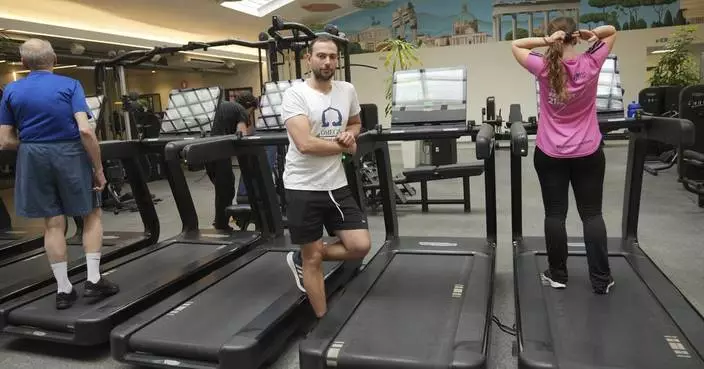
Morgan Hurd is an inspiration for young American gymnasts — and anyone who wears eyeglasses and practices sports — that some have dressed up in leotards and her trademark glasses for Halloween.
The costume surprised her because the 2017 all-around world champion and Tokyo 2020 Olympic hopeful still feels like any other 18-year-old.
"Honestly, it feels kind of crazy because I still think of myself as almost no one — I'm just me," Hurd told The Associated Press. "When people ask me for my autograph, I go like, 'wow! Why would they do that?' But I'm glad that I can inspire a generation, and I hope that I can be a good role model for them."

The U.S. women's gymnastics team waves as they take the medals podium to receive gold in the women's gymnastics team final at the Pan American Games in Lima, Peru, Saturday, July 27, 2019. From left, are Kara Eaker, Aleah Finnegan, Morgan Hurd, Riley McCusker, and Leanne Wong. (AP PhotoRebecca Blackwell)
All eyes seemed to be on Hurd at the Pan American Games during her Saturday debut, where her performance contributed to the U.S. team's gold medal, although she failed to advance to the all-around and individual finals in the Peruvian capital.
"It definitely wasn't my best competition, and I'm a bit disappointed at myself, but I'm glad that I can contribute even slightly to team USA, and moving forward, I'm just going to go back to the gym and work even harder."
The U.S. won its fifth-consecutive women's team gold title at the Pan Am Games at an arena packed with local fans waiving red and white Peruvian flags and loudly cheered on the hosts.
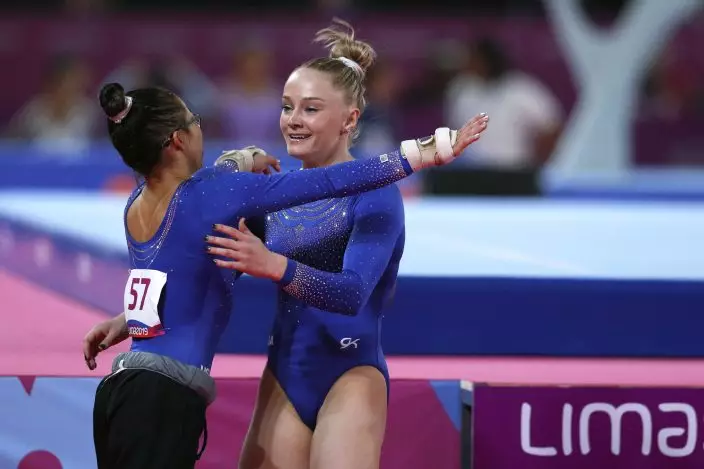
Riley McCusker of the U.S., right, is embraced by teammate Morgan Hurd, after competing on floor in the women's gymnastics qualification and team final at the Pan American Games in Lima, Peru, Saturday, July 27, 2019. (AP PhotoRebecca Blackwell)
"Even though they just came from a national meet in America, it's different when you're in an international meet, especially with a lot of good countries. The crowd was really in favor of Peru, which was exciting. There was a lot of energy," said Thomas Forster, the national performance team coordinator.
"I was a bit surprised that (Morgan) felt some nerves because she has good experience, but all athletes do. So, it was a good opportunity for her to learn how to manage it. It was good overall. I'm glad that they hit all 16 routines. That was the hope."
The members of the U.S. team who advanced to the all-around and individual event finals included: all-around, Riley McCusker and Kara Eaker; vault, Aleah Finnegan; uneven bars, McCusker and Leanne Wong; and balance beam and floor exercise, McCusker and Eaker. The Americans posted a team score of 171.00 in winning Saturday, ahead of Canada, the silver medalist, and Brazil, which won the bronze.
"It feels amazing. We have a very nice and hard working group. To do so well is just great," said McCusker, who led the U.S. team to the victory with a first place in the all-around.
Hurd recently won the parallel bars at the U.S. Classic. She also won the 2017 world championship, while Simone Biles took a long-deserved break, and finished third behind her in 2018. Her only goal now is to win an Olympic medal in Tokyo next year.
"The strength that she has is that she's a good team leader and we know that she's gonna hit," Forster said. "The weaknesses that she has are making sure that all the little things are connected in a routine — but she'll fix those."
Growing up, Hurd faced uncomfortable questions, and in her words, "stuck out like a sore thumb" as one of the few gymnasts to compete with glasses. But she wants to set an example and change that for good.
"There's a lot more now, I will say that, but before, even when I was younger, there was hardly any high-level athlete who wore glasses," she said. "I know there are a lot of parents out there telling their kids, 'you can't do gymnastics or any sport really with your glasses, you need get contacts.' But contacts aren't just for everyone."
More AP sports: https://apnews.com/apf-Sports and https://twitter.com/AP_Sports
In the fitness class Jessie Syfko created for a nationwide gym chain, exercisers wear weighted vests that add a challenge to their workouts.
“People start to realize how good it feels to work just a little bit harder and a little bit smarter” without actually changing what they’re doing, said Syfko, senior vice president for Life Time gyms.
Weighted vests are increasingly showing up in fitness classes and on jogging tracks, touted by social media influencers as a way to keep bones healthy, improve performance and even accelerate weight loss. They are exactly what they sound like – vests that add resistance to the torso through pockets with removable weights.
But there's a lack of robust research on their benefits, experts say, so it's unclear how much of the hype is justified. And some people, such as seniors or those who are pregnant, should be cautious about using them.
When you think about how exercise works, the idea that a weighted vest will help you meet fitness goals like weight loss, muscle growth or preventing bone loss might make sense on the surface. Adding weight to the vest adds resistance to your everyday activities without changing up your patterns.
The vests may, in fact, offer benefits for healthy adults, experts say – although no one should expect transformative or instant results. Jeff Monaco, a certified strength coach who teaches medical fitness at the University of Texas at Austin, said while you may not lose a lot more calories during a weighted vest exercise, resistance from the vest may result in better sports performance over time.
“There are a lot of studies looking at (the weighted vest) from a speed perspective in different athletics, like soccer, with changing direction, agility and speed and so forth,” he said.
You’ll start to see those benefits by adding about 10% of your body weight to the vest, he said. If you weigh 150 pounds, for example, that would mean adding a total of 15 pounds to the vest.
But the research outside of sports isn’t as clear.
One 2020 study from Wake Forest University School of Medicine in North Carolina found that adults between 60 and 85 years old who wore weighted vests at times during the day when they were most active lost about the same amount of weight as those who didn’t wear them. They also lost the same amount of bone density, which happens as we age but can be slowed by building muscle.
Experts urge people to use weighted vests safely.
It’s best to start out by adding between five to 10 percent of your body weight. Wearing a vest that’s too heavy can put unnecessary strain on your joints, back and hips. That extra load can throw off your posture, lead to poor form or even result in stress fractures over time.
Some people should consult with a doctor before they throw on a vest, said Dr. Elizabeth Gardner, a team physician for athletes at Yale University. They include people who are pregnant, suffer from heart and breathing conditions or have back or neck injuries.
You'll have to use the muscles in your abdomen to use a weighted vest effectively, Gardner said, and this can be tougher for those already managing back pain.
Before starting to use a vest, Monaco said it's always helpful to get guidance from someone who has experience with them, “just to make sure that your movements are good, your form is good, that you have enough muscular upper body, muscular strength and endurance to support that during your movements.”
But as long as you use it correctly, he said, a weighted vest can be “a good tool to have in your toolbox.”
The Associated Press Health and Science Department receives support from the Howard Hughes Medical Institute’s Department of Science Education and the Robert Wood Johnson Foundation. The AP is solely responsible for all content.
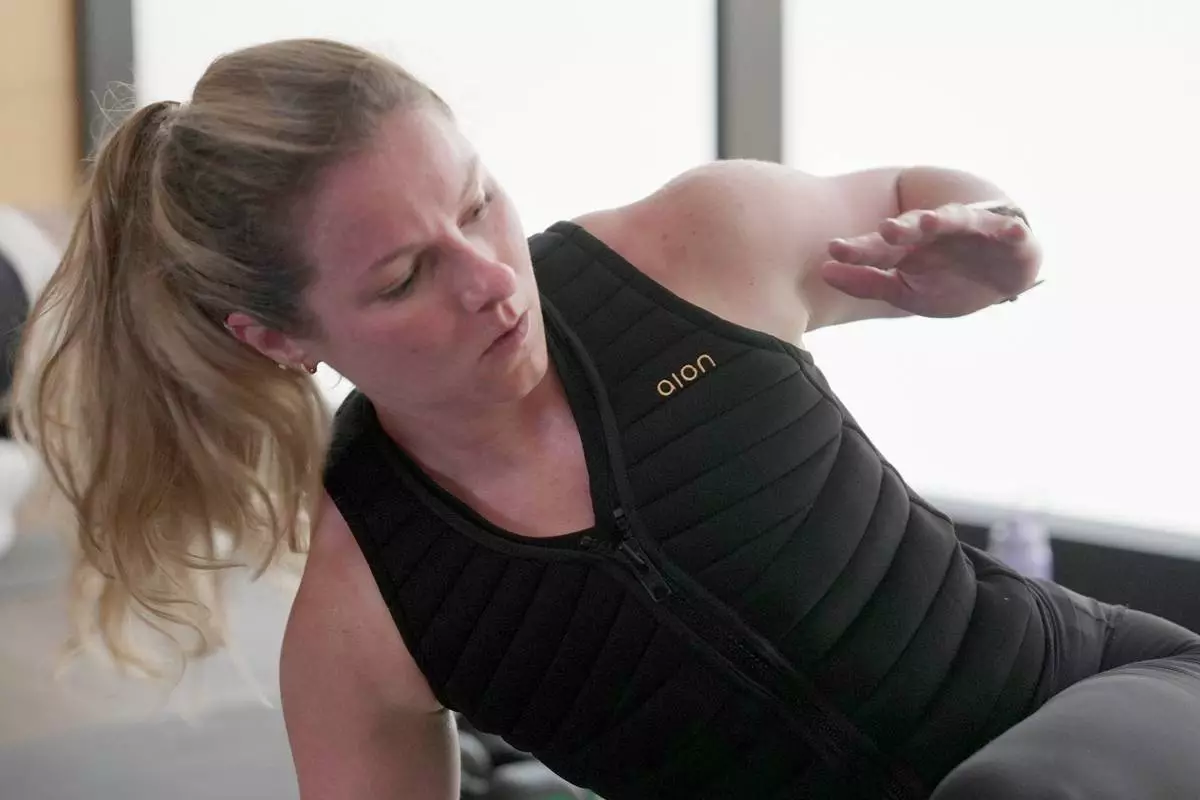
CORRECTS YEAR TO 2025, NOT 2024 - Nora Capocci wears a weighted vest during an MB360 workout class at the Life Time health club in New York on Wednesday, Aug. 13, 2025. (AP Photo/Shelby Lum)
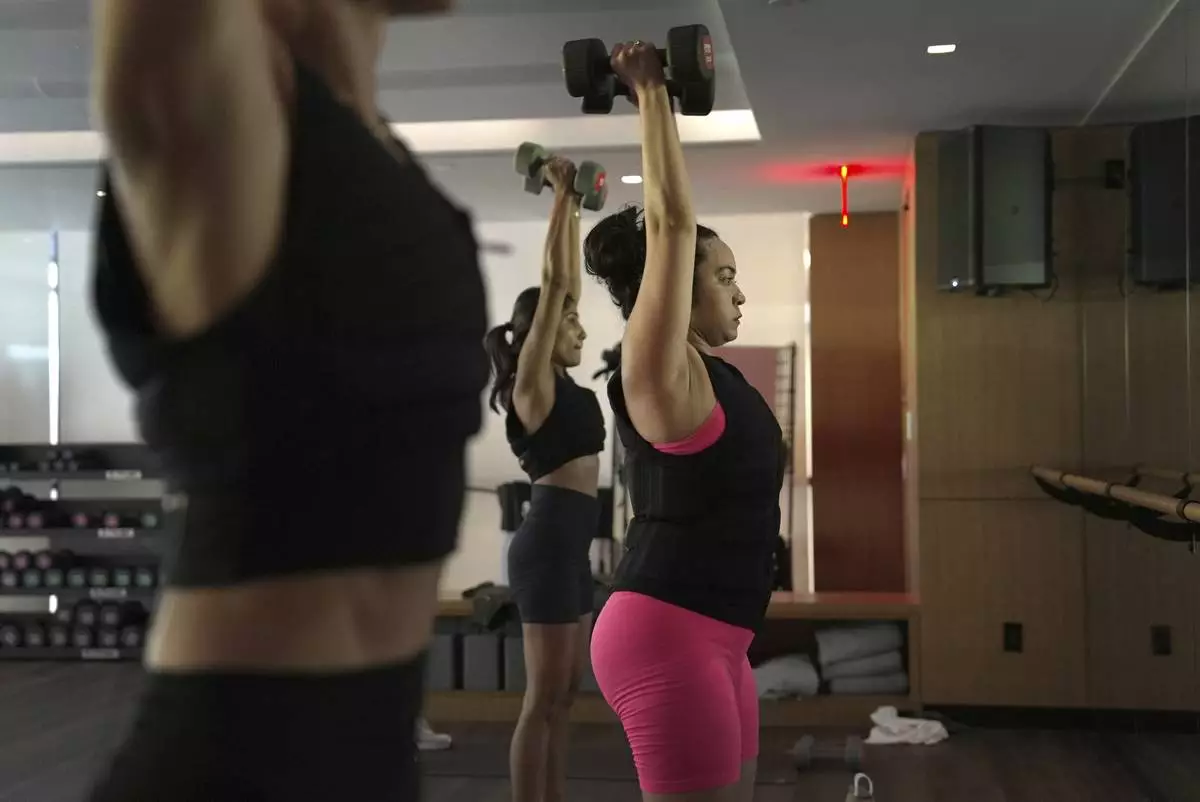
CORRECTS YEAR TO 2025, NOT 2024 - Jannelliz Barragan, center, wears a weighted vest during an MB360 workout class at the Life Time health club in New York on Wednesday, Aug. 13, 2025. (AP Photo/Shelby Lum)
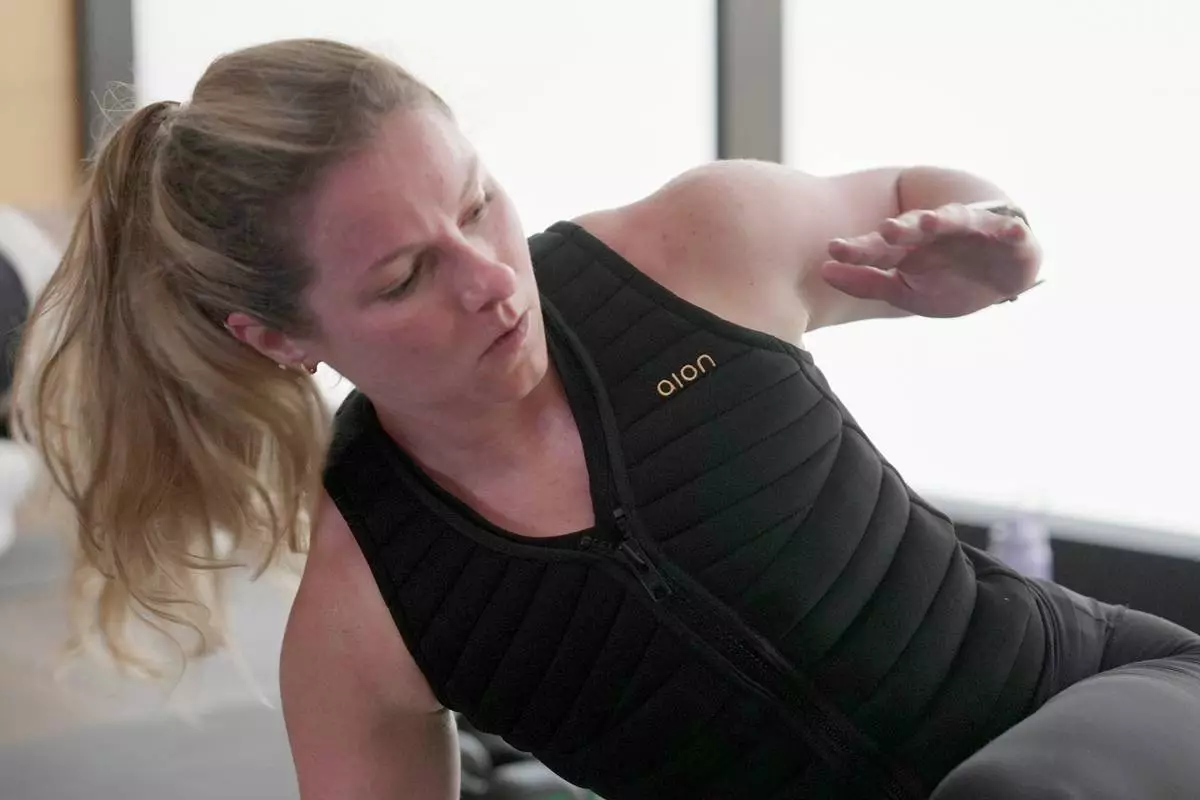
Nora Capocci wears a weighted vest during an MB360 workout class at the Life Time health club in New York on Wednesday, Aug. 13, 2024. (AP Photo/Shelby Lum)
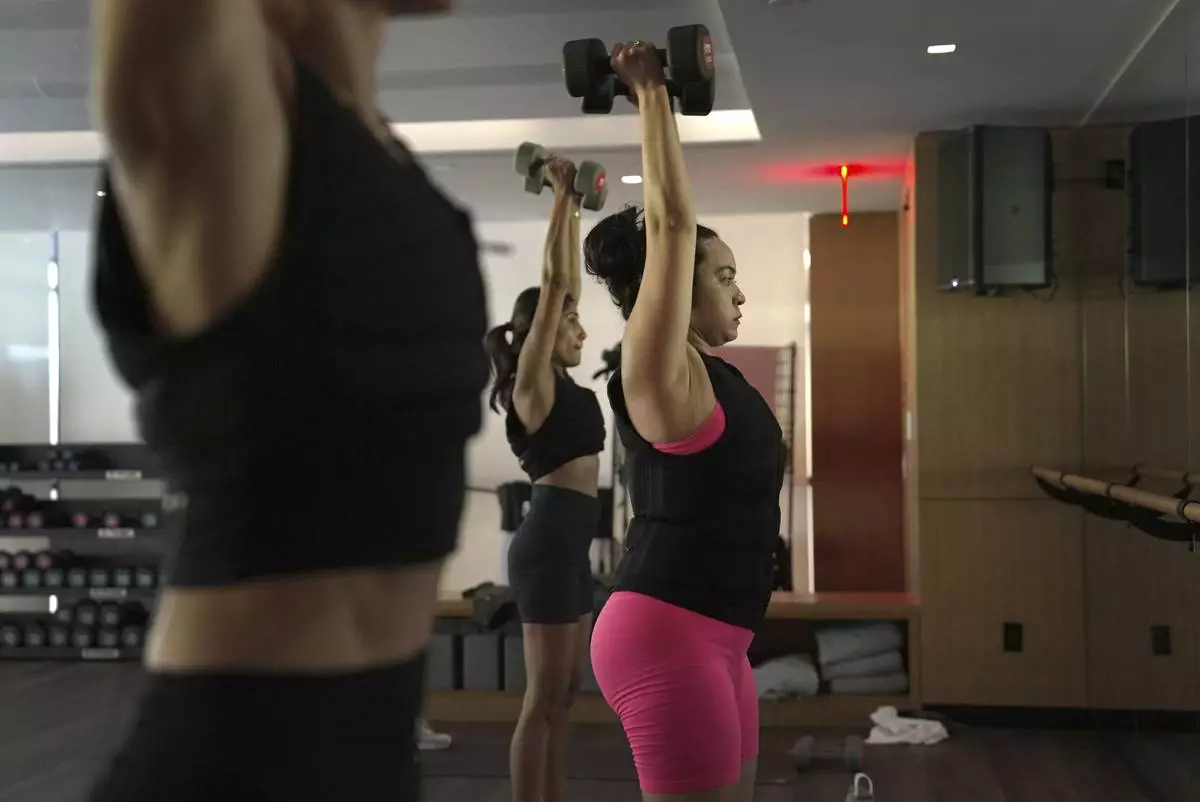
Jannelliz Barragan, center, wears a weighted vest during an MB360 workout class at the Life Time health club in New York on Wednesday, Aug. 13, 2024. (AP Photo/Shelby Lum)