If filmmaking is a war, then "Apocalypse Now" was very nearly Francis Ford Coppola's Waterloo.
The battles Coppola fought while making his 1979 epic nearly destroyed him. A typhoon wrecked a major set. Harvey Keitel was replaced by Martin Sheen. Coppola searched desperately for an ending. He worked even harder to coax a few lines out of Marlon Brando.
Click to Gallery
This image provided by Zoetrope Corp. shows Martin Sheen in a scene from "Apocalypse Now Final Cut," directed by Francis Ford Coppola. The movie releases in theaters on Aug. 15, 2019. (Chas GerretsenNederlands FotomuseumZoetrope Corp. via AP)
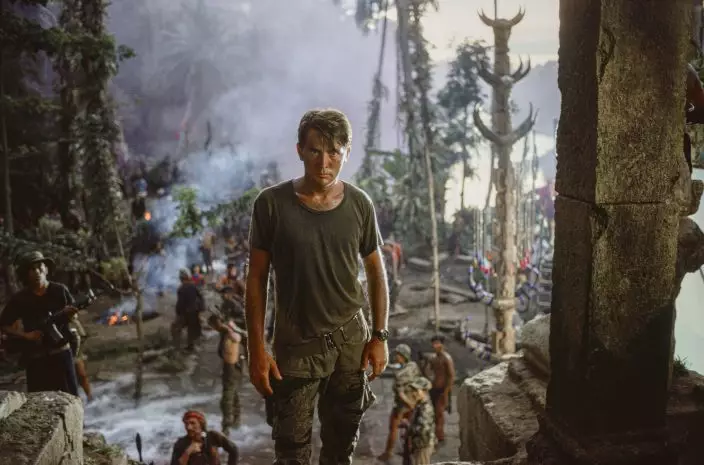
This image provided by Zoetrope Corp. shows Martin Sheen in a scene from "Apocalypse Now Final Cut," directed by Francis Ford Coppola. The movie releases in theaters on Aug. 15. (Chas GerretsenNederlands FotomuseumZoetrope Corp. via AP)
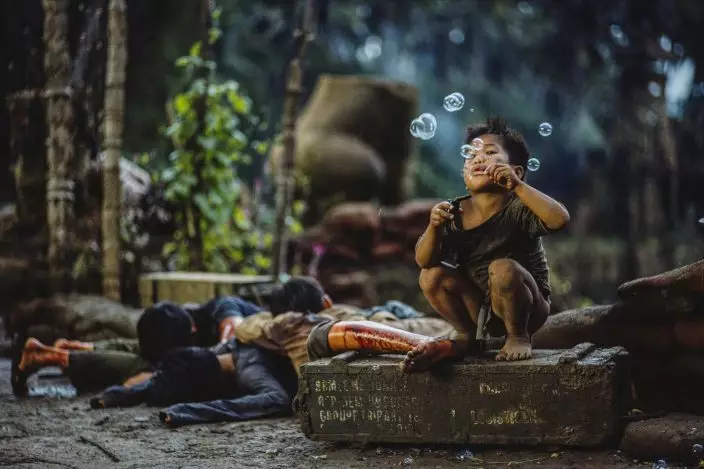
This image provided by Zoetrope Corp. shows a scene from "Apocalypse Now Final Cut," directed by Francis Ford Coppola. The movie releases in theaters on Aug. 15, 2019. (Chas GerretsenNederlands FotomuseumZoetrope Corp. via AP)
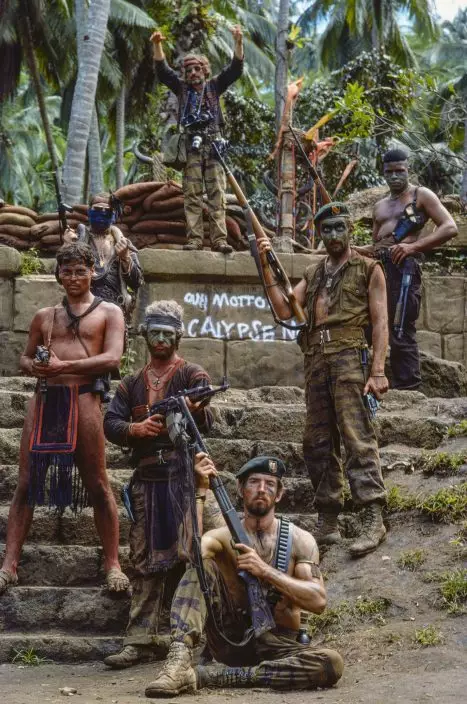
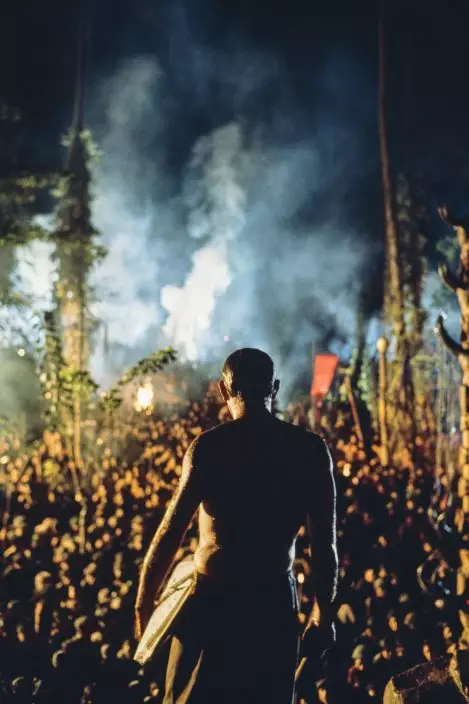
This image provided by Zoetrope Corp. shows Kurtz's army on the steps of his jungle compound in a scene from "Apocalypse Now Final Cut," directed by Francis Ford Coppola. The movie releases in theaters on Aug. 15, 2019. (Chas GerretsenNederlands FotomuseumZoetrope Corp. via AP)
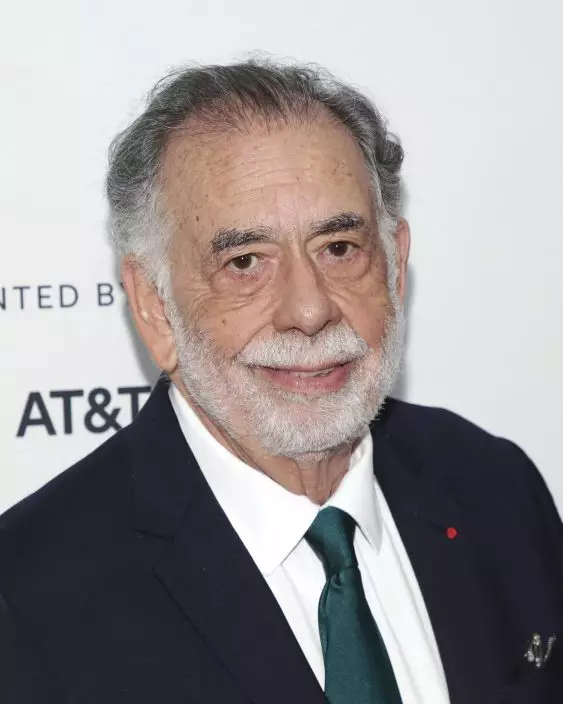
FILE - In this Sunday, April 28, 2019 file photo, director Francis Ford Coppola attends a screening of the "40th Anniversary and World Premiere of Apocalypse Now Final Cut" during the 2019 Tribeca Film Festival at the Beacon Theatre, in New York. The film releases in theaters on Aug. 15. (Photo by Brent N. ClarkeInvisionAP)
But out of that tumult Coppola created a masterpiece. And 40 years later, "Apocalypse Now" has never looked so good.
This image provided by Zoetrope Corp. shows Martin Sheen in a scene from "Apocalypse Now Final Cut," directed by Francis Ford Coppola. The movie releases in theaters on Aug. 15, 2019. (Chas GerretsenNederlands FotomuseumZoetrope Corp. via AP)
Coppola has supervised a 4K restoration of the film and, for the second time, tweaked the cut. Having perhaps gone too far in his 2001 "Redux," which added 53 minutes, "Apocalypse Now Final Cut," which opens in theaters Friday and on home video August 27, splits the difference at 183 minutes.
In its present and restored form, the majesty and madness of "Apocalypse Now" is more vivid and hallucinatory than ever. Coppola considers it the definitive version. It completes a four decade journey turning what was almost a mess into the masterwork he envisioned from the start.
Coppola, 80, has lately been busy with equally audacious plans.
This image provided by Zoetrope Corp. shows Martin Sheen in a scene from "Apocalypse Now Final Cut," directed by Francis Ford Coppola. The movie releases in theaters on Aug. 15. (Chas GerretsenNederlands FotomuseumZoetrope Corp. via AP)
In 2017, he published a book, "Live Cinema and its Techniques," about his experiments and hopes for a new art form that combines cinema, television and theater in a live experience. He's also recently returned to a long delayed passion project, "Megalopolis," a sprawling sci-fi, New York-set epic. Coppola has been working on the script and casting, and searching for production partners. "Or maybe now it's at the stage I can do it by myself, I don't know," he says.
In a recent interview, Coppola spoke about "Apocalypse Now" then and now, why he was "terrified" after making it and why he has trouble letting go of his films.
AP: You've talked before about the theatrical version of "Apocalypse Now" missing some of the "weirdness" you wanted. What did you mean?
This image provided by Zoetrope Corp. shows a scene from "Apocalypse Now Final Cut," directed by Francis Ford Coppola. The movie releases in theaters on Aug. 15, 2019. (Chas GerretsenNederlands FotomuseumZoetrope Corp. via AP)
Coppola: In the 1979 version when it first opened, the various people who had sponsored it and were distributing it felt that it was too long and too weird. So we went through a tough few evenings trying to make it shorter and trying to make it appear more normal as opposed to "weird." So we took some things out. Some of them were just 30 seconds long or a minute long but generally we were trying to make it shorter and less weird, which I guess is another word for "surreal." After it was clear the movie had survived — meaning, you never know when you make a movie if its opening is going to be the last you heard of it or it's going to have a life after that — I was looking at it on television and it didn't seem so weird or surreal. It stuck out less as something unusual. For that reason, people kept saying to me, "Maybe you should have put back what you took out."
AP: Did you consciously want to put your stamp on the war movie?
Coppola: The Vietnam War was different than other American wars. It was a West Coast sensibility rather than an East Coast sensibility. In war movies before "Apocalypse," there was always a sort of Brooklyn character, an East Coast and Midwest personality. In "Apocalypse Now," it was LA and it was surfing and it was drugs and it was rock 'n' roll so it was more of a West Coast ambiance to the war. In addition, there were many sort of odd contradictions that related to the morality involved. There was a line I once read that's not in the film but to me it sums up the meaning of the movie. It was: "We teach the boys to drop fire on people yet we won't let them write the word 'f---' on their airplanes because it's obscene."
This image provided by Zoetrope Corp. shows Kurtz's army on the steps of his jungle compound in a scene from "Apocalypse Now Final Cut," directed by Francis Ford Coppola. The movie releases in theaters on Aug. 15, 2019. (Chas GerretsenNederlands FotomuseumZoetrope Corp. via AP)
AP: You've gone back and made changes to a number of your films. For you, is a film ever really finished?
Coppola: The only reason I'm in a position to go back and evaluate some of these decisions is because I own the film, which is the same reason George Lucas looks at some of his movies. Obviously most filmmakers don't own their films and would not be permitted to change a cut. But the version that you open with, you're very concerned that it will have some longevity. And so you may do things for the opening that you'd rather not do but you don't want to risk a negative reception because a film that opens with a negative reception is dead. If you can get it to be a positive reception or even a qualified positive reception then it has a chance of surviving. If you look at all the films I made, only "The Godfather" was just a runaway creative hit. Most of the other films were highly qualified and that meant that I was trying to nurse them into persisting and surviving. Later on, since I own them, I very often decided to undo things that were pushed on me by distributors or people at the time, and do what I wanted to do.
AP: Eleanor Coppola, your wife, wrote in her "Notes" that you took on some of Kurtz' megalomania while making "Apocalypse Now."
FILE - In this Sunday, April 28, 2019 file photo, director Francis Ford Coppola attends a screening of the "40th Anniversary and World Premiere of Apocalypse Now Final Cut" during the 2019 Tribeca Film Festival at the Beacon Theatre, in New York. The film releases in theaters on Aug. 15. (Photo by Brent N. ClarkeInvisionAP)
Coppola: Whenever I made a movie, I was always personally compared to the main character. When I was doing "The Godfather," I was Michael Corleone, Machiavellian and sly. When I made "Apocalypse Now," I was the megalomaniac. When I made "Tucker," I was the innovative entrepreneur. The truth of the matter is all my life if I have been anything I've been enthusiastic and imaginative. I don't have talent that I wish I had. My talent was more enthusiasm and imagination and a kind of prescient sense, a sense of knowing what's going to happens before it happens. Other than that, my talent is limited.
AP: A recent Film Comment essay lamented the film's portrayal of the Vietnam as "a spectacular but soulless backdrop."
Coppola: It would have been interesting and good if the movie had been made in Vietnam. But the truth of the matter is when we were making "Apocalypse Now," the Vietnamese War was only winding down. We did not have access to going there. We were making it in the Philippines and although we did have some Vietnamese people with us, it wasn't the same as making it in Vietnam which would have made it possible to give an impression of the Vietnamese people, who I have only the highest regard for. When you make a war film, it's from one side unless it's "Tora! Tora! Tora!" and you're deliberately deciding to depict both sides equally. This film was specifically about these young California Americans participating in this war, and that was the lens this film was made through.
AP: Did you emerge from "Apocalypse Now" a different filmmaker?
Coppola: Yeah, but no more than I was after the extreme experience of the "Godfather" movie. Every film I have made has been a new sheet of paper. I rarely would repeat a style. Every movie I worked on, I came out of it being a different person.
AP: How did you feel after "Apocalypse Now"?
Coppola: I was terrified. For one thing, I was on the hook for the whole budget personally — that's why I came to own it. In addition, in those days interest was over 25, 27%. So it looked as though, especially given the controversy and all the bogus articles being written about a movie that no one knew anything about but were predicting it was "the heralded mess" of that year, it looked as though I was never going to get out of the jeopardy I was in. I had kids, I was young. I had no family fortune behind me. I was scared stiff. It was no different after "Godfather." ''Godfather" was a project I was constantly about to be fired from, that the studio hated what I was doing looked like. I didn't think I was going to survive that. All of those movies, which were these monumental attempts at art, left me in a different place when I finished than when I started. But then it was followed by another one that was a similar challenge. I'm 80 now but from age 25 to 60, my life was one crisis after another.
AP: Do you think you thrive in that kind of tumultuous environment?
Coppola: When you attempt something that you don't exactly know how to do but you still long to attempt it, you're setting the stage for a certain style and struggle in life. Clearly if after I made the gangster movie that was successful, if I had just spent my entire career making gangster pictures, that would have been a more tranquil life. I wanted to learn. I realize now that one of my fundamental aspirations is learning. There's nothing more pleasurable than learning something you don't know how to do.
AP: Is going back to your films to get them just right for you part of preserving your legacy? Do you think about how you want you and your work to be remembered?
Coppola: I'm not so crazy about my legacy. I want people to know that I liked little kids and I was a good camp counselor when I was a camp counselor in 1957, that I have a family with wonderful children that I find so fascinating and very talented. But ultimately, to me, the greatest legacy you can have is that someone somewhere saw one of the things you did and it inspired them to do something that goes and then inspired someone else in the future. In a way, it's a form of immortality.
AP: Today, most directors would only have the opportunity of "Apocalypse Now"-like scale in a superhero film. Do you sympathize for them?
Coppola: Absolutely. I feel now we have this bifurcated cinema in our country being of independent films where we have the most wonderful wealth of talent and then the industry films which are pretty much superhero films. One has too much money — the studio, Marvel comic-type movies. They're basically making the same movie over and over again, and seducing all of the talent. Everyone is hoping to get a small part in one of those movies because that's where the money is. And as opposed, the wonderful, unusual, exotic, interesting, provocative and beautiful independent films have no money. The budget for the craft service of one of those superhero films could more than be a budget for some of these brilliant young — and not only young — filmmakers. That is a tragedy.
AP: The long life your films have had can lead to strange places. Prosecutors wanted to show "The Godfather" during Roger Stone's trial. Donald Trump has cited "Godfather II" as one of his favorite films.
Coppola: The list of fans of the "Godfather" films not only includes the gentleman you speak of but also Saddam Hussein and Gaddafi. Just go through all of the toughest dictators in the modern world and their favorite movie is "The Godfather."
AP: What do you make of that?
Coppola: Because "The Godfather" is an American story of an immigrant family that ultimately finds success in America. Success is not a bad thing but it depends on how you define it. If you define success as wealth, influence, power and fame, you have to know that does not bring happiness. We could go through the famous top 1% who have all the things we just mentioned and you'll find some of the most unhappy people on Earth. What brings happiness is friendship, learning, creativity. We know what brings happiness. But what are you going to do when every nation in the world is pointing its main objective toward something that does not add up?
Follow AP Film Writer Jake Coyle on Twitter at: http://twitter.com/jakecoyleAP