Historians have presented a collection of photos kept by the deputy commander of the Nazis' Sobibor death camp that they say appears to include images of John Demjanjuk, the retired Ohio auto worker who was tried in Germany for his alleged time as a Sobibor guard.
The collection unveiled Tuesday at Berlin's Topography of Terror museum comprises 361 photos as well as written documents illustrating Johann Niemann's career. Niemann was the deputy commander of Sobibor from September 1942 until he was killed on Oct. 14, 1943 in an uprising by Jewish inmates.
Unlike in many other cases, the photos were not destroyed after World War II in fear of legal proceedings, and they remained in the possession of Niemann's family. The collection is being handed over to the U.S. Holocaust Memorial Museum.
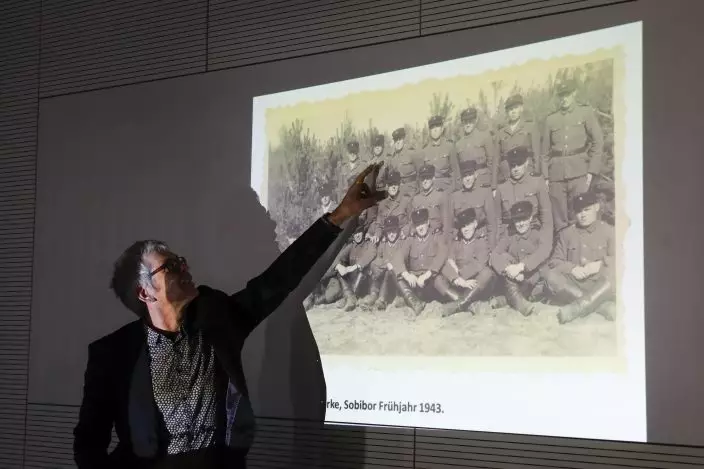
Historican Martin Cueppers points at a man, presumably former security guard John Demjanjuk, at the Nazi death camp Sobibor during a news conference of newly discovered photos from the Sobibor camp in Berlin, Germany, Tuesday, Jan. 28, 2020. (AP PhotoMarkus Schreiber)
Experts say the collection enhances historians' knowledge of what Sobibor looked like. So far, they knew of only two photos taken of the camp while it existed. The Niemann collection adds another 49.
Anne Lepper, whose grandparents were murdered on arrival at Sobibor from the Netherlands in 1943, said it was “very courageous” of Niemann's descendants to release the photos. She said it was “a breathtaking experience” to see the images after frequently having seen the site.
The collection may also shed more light on Demjanjuk, who was convicted in 2011 as an accessory to murder on allegations he served as a Sobibor guard. Demjanjuk always denied the accusations and died in 2012 before his appeal against the ruling by a Munich court could be heard, making the verdict not legally binding.
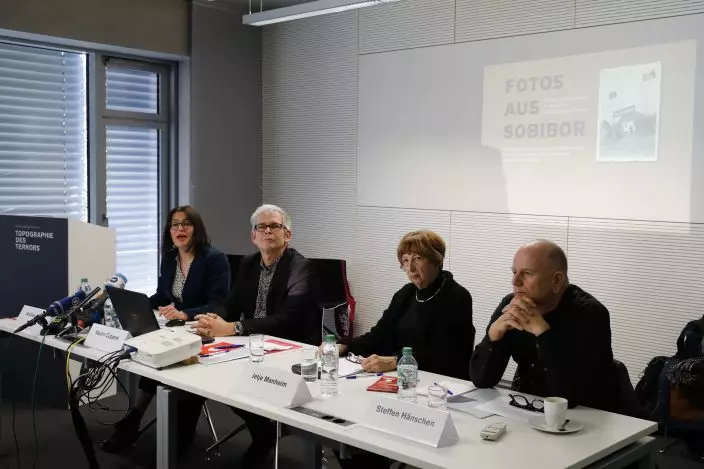
From left: The director of the foundation Topography of Terror Andrea Riedel, historican Martin Cueppers, granddaughter of a Sobibor survivor Jette Manheim and Steffen Haenschen of the education centre Bildungswerk Stansilaw Hanz, attend the podium during a news conference of newly discovered photos from Sobibor Nazi death camp in Berlin, Germany, Tuesday, Jan. 28, 2020. (AP PhotoMarkus Schreiber)
Two photos in the collection may depict a young Iwan Demjanjuk, as he was known before anglicizing his name to John, among other former prisoners of war who were trained at an SS camp and were deployed at Sobibor, according to historians. If they do, they would be the first to prove that he was at the camp.
Martin Cueppers, a Holocaust historian at the University of Stuttgart, said researchers concluded that Demjanjuk is “probably” depicted at least in one case in conjunction with the criminal police office in Germany's Baden-Wuerttemberg state, whose biometric department agreed to examine the historical photos.
But Demjanjuk's son, John Demjanjuk Jr., said of the newly unveiled photos that “it’s a baseless theory to claim they prove anything at all regarding my father.”
The collection as a whole is “of significant historical value" regarding the Holocaust and Sobibor, he said in a statement emailed to The Associaed Press. But “the photos are not proof of my father being in Sobibor and may even exculpate him once forensically examined.”
The Ukrainian-born Demjanjuk was a Soviet Red Army soldier captured by the Germans in Crimea in 1942. He was accused of agreeing to serve as a "Wachmann," or guard, the lowest rank of the "Hilfswillige," former POWs who were subordinate to German SS men, and training in a camp known as Trawniki.
The Munich court said the evidence showed he was a part of the Nazis' "machinery of destruction" and served in Sobibor from March 27, 1943 until mid-September that year.
Integral to the prosecution's case was an SS identity card that allegedly shows a picture of a young Demjanjuk and indicates he trained at the SS Trawniki camp and was posted to Sobibor.
Though court experts said the card appears genuine, Demjanjuk's defense attorneys argued it was a fake produced by the Soviet KGB.
The prosecution also produced evidence including transfer lists indicating a guard named Demjanjuk with the same Trawniki number was sent to serve in Sobibor and elsewhere, but there was never any photographic proof he was there.
Between March 1942 and October 1943, about 167,000 people were killed at Sobibor, almost all Jews, according to the U.S. Holocaust Memorial Museum. Following the 1943 uprising, the Nazi guards shot the remaining prisoners and razed the camp in occupied Poland.
Demjanjuk always maintained he was a victim of the Nazis; first wounded as a Soviet soldier and then captured and held as a prisoner of war under brutal conditions before joining the Vlasov Army, a force of anti-communist Soviet POWs and others formed to fight with the Germans against the Soviets in the war's final months.
If the newly surfaced photographs turn out not to picture Demjanjuk, it wouldn't be the first time his identity has been mistaken.
In the 1980s, Demjanjuk stood trial in Israel after he was accused of being the notoriously brutal guard "Ivan the Terrible" at the Treblinka extermination camp. After Treblinka survivors identified him as their tormentor, he was convicted and sentenced to death — but then freed when an Israeli court overturned the ruling, saying the evidence showed he was the victim of mistaken identity.
David Rising in Dubai, United Arab Emirates, contributed to this report.
Iran eased some restrictions on its people and, for the first time in days, allowed them to make phone calls abroad via their mobile phones on Tuesday. It did not ease restrictions on the internet or permit texting services to be restored as the death toll from days of bloody protests against the state rose to at least 2,000 people, according to activists.
Although Iranians were able to call abroad, people outside the country could not call them, several people in the capital told The Associated Press.
The witnesses, who spoke on condition of anonymity for fear of reprisal, said SMS text messaging still was down and internet users inside Iran could not access anything abroad, although there were local connections to government-approved websites.
It was unclear if restrictions would ease further after authorities cut off all communications inside the country and to the outside world late Thursday.
Here is the latest:
European Commission President Ursula von der Leyen says the new sanctions will be imposed on Iranian officials over the crackdown on protestors.
“The rising number of casualties in Iran is horrifying. I unequivocally condemn the excessive use of force and continued restriction of freedom,” von der Leyen said in a post on social media.
She said that in cooperation with EU foreign policy chief Kaja Kallas “further sanctions on those responsible for the repression will be swiftly proposed. We stand with the people of Iran who are bravely marching for their liberty.”
The EU has already imposed sanctions on members of the Revolutionary Guard Corps and others over past concerns about human rights abuses in Iran.
Kaja Kallas said in Berlin Tuesday that the Iranian government might go the way of former President Bashar Assad’s government in Syria, which fell swiftly in late 2024 in a “surprise for everybody.” But she added that “very often these regimes are very, very resilient.”
Kallas said that “right now … it is not clear whether the regime is going to fall or not.” She said it would ultimately have to be up to the Iranian people to make decisions.
The U.S.-based Human Rights Activists News Agency, which has been accurate in previous unrest in recent years, gave the latest death toll on Tuesday.
It said 1,847 of the dead were protesters and 135 were government-affiliated.
This came a day after the European Parliament announced it would ban Iranian diplomats and representatives.
“Iran does not seek enmity with the EU, but will reciprocate any restriction,” Foreign Minister Abbas Araghchi wrote Tuesday on X.
He also criticized the European Parliament for not taking any significant action against Israel for the more than two-year war in Gaza that has killed more than 71,400 Palestinians, while banning Iranian diplomats after just “a few days of violent riots.”
Dutch Foreign Minister David van Weel said he summoned Iran’s ambassador to the Netherlands “to formally protest the excessive violence against peaceful protesters, large-scale arbitrary arrests, and internet shutdowns, calling for immediate restoration of internet access inside the Islamic Republic.
In a post on X, Weel also said the Dutch government supports EU sanctions against “human rights violators in Iran.”
The United Nations human rights chief is calling on Iranian authorities to immediately halt violence and repression against peaceful protesters, citing reports of hundreds killed and thousands arrested in a wave of demonstrations in recent weeks.
“The killing of peaceful demonstrators must stop, and the labelling of protesters as ‘terrorists’ to justify violence against them is unacceptable,” U.N. High Commissioner for Human Rights Volker Türk said in a statement Tuesday.
Alluding to a wave of protests in Iran in 2022, Türk said demonstrators have sought “fundamental changes” to governance in the country, “and once again, the authorities’ reaction is to inflict brutal force to repress legitimate demands for change.”
“This cycle of horrific violence cannot continue,” he added.
It was also “extremely worrying” to hear some public statements from judicial officials mentioning the prospect of the use of the death penalty against protesters through expedited judicial proceedings, Türk said.
“Iranians have the right to demonstrate peacefully. Their grievances need to be heard and addressed, and not instrumentalized by anyone,” Türk said.
Finland’s foreign minister says she is summoning the Iranian ambassador after authorities in Tehran restricted internet access.
“Iran’s regime has shut down the internet to be able to kill and oppress in silence," Elina Valtonen wrote in a social media post Tuesday, adding, “this will not be tolerated. We stand with the people of Iran — women and men alike.”
Finland is “exploring measures to help restore freedom to the Iranian people” together with the European Union, Valtonen said.
Separately, Finnish police said they believe at least two people entered the courtyard of the Iranian embassy in Helsinki without permission Monday afternoon and tore down the Iranian flag. The embassy’s outer wall was also daubed with paint.
Iranian security forces arrested what a state television report described as “terrorist groups” linked to Israel in the southeastern city of Zahedan.
The report, without providing additional details, said the group entered through Iran’s eastern borders and carried U.S.-made guns and explosives that the group had planned to use in assassinations and acts of sabotage.
The Israeli military did not immediately comment on the allegations.
The Nobel Peace Prize laureate hailed people who have “long warned about this repression, at great personal risk.”
“The protests in Iran cannot be separated from the long-standing, state-imposed restrictions on girls’ and women’s autonomy, in all aspects of public life including education. Iranian girls, like girls everywhere, demand a life with dignity,” Yousafzai wrote on X.
“(Iran’s) future must be driven by the Iranian people, and include the leadership of Iranian women and girls — not external forces or oppressive regimes,” she added.
Yousafzai was awarded the peace prize in 2014 at the age of 17 for her fight for girls’ education in her home country, Pakistan. She is the youngest Nobel laureate.
The French Foreign Ministry said it has “reconfigured” its embassy in Tehran after reports that the facility's nonessential staff left Iran earlier this week.
The embassy's nonessential staff left the country Sunday and Monday, French news agency Agence France-Presse reported.
The ambassador remained on site and the embassy continued to function, the ministry said late Monday night.
Associated Press writer Angela Charlton contributed from Paris.
German Chancellor Friedrich Merz said he believes the Iranian government is in its “final days and weeks,” as he renewed a call for Iranian authorities to end violence against demonstrators immediately.
“If a regime can only keep itself in power by force, then it’s effectively at the end,” Merz said Tuesday during a visit to Bengaluru, India. “I believe we are now seeing the final days and weeks of this regime. In any case, it has no legitimacy through elections in the population. The population is now rising up against this regime.”
Merz said he hoped there is “a possibility to end this conflict peacefully," adding that Germany is in close contact with the U.S. and European governments.
The Israeli military said it continues to be “on alert for surprise scenarios” due to the ongoing protests in Iran, but has not made any changes to guidelines for civilians, as it does prior to a concrete threat.
“The protests in Iran are an internal matter,” Israeli military spokesperson Brig. Gen. Effie Defrin wrote on X.
Israel attacked Iran’s nuclear program over the summer, resulting in a 12-day war that killed nearly 1,200 Iranians and almost 30 Israelis. Over the past week, Iran has threatened to attack Israel if Israel or the U.S. attacks.
Mobile phones in Iran were able to call abroad Tuesday after a crackdown on nationwide protests in which the internet and international calls were cut. Several people in Tehran were able to call The Associated Press.
The AP bureau in Dubai, United Arab Emirates, was unable to call those numbers back.
Witnesses said the internet remained cut off from the outside world. Iran cut off the internet and calls on Thursday as protests intensified.
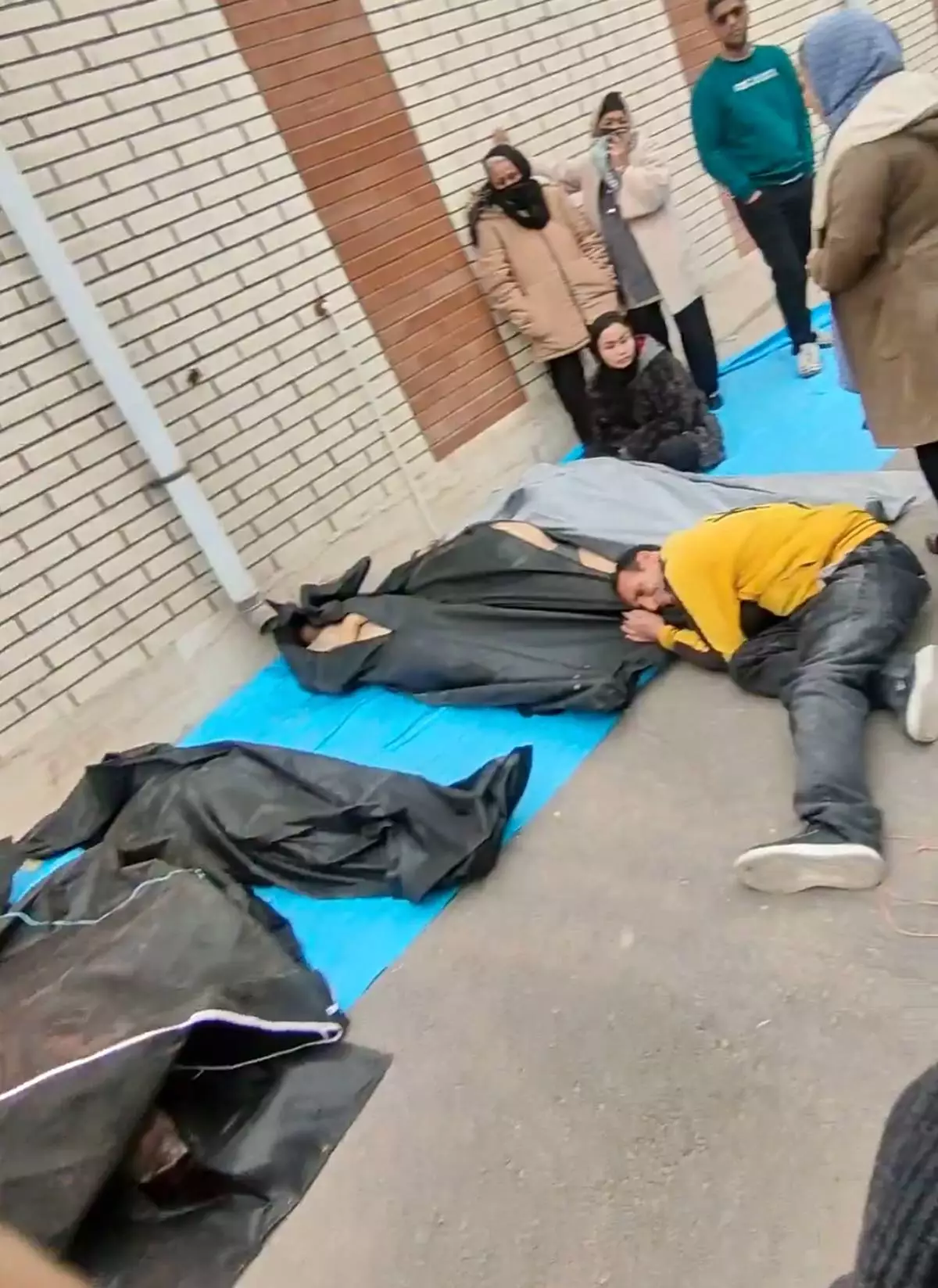
This frame grab from videos taken between Jan. 9 and Jan. 11, 2026, and circulating on social media purportedly shows images from a morgue with dozens of bodies and mourners after crackdownon the outskirts of Iran's capital, in Kahrizak, Tehran Province. (UGC via AP)
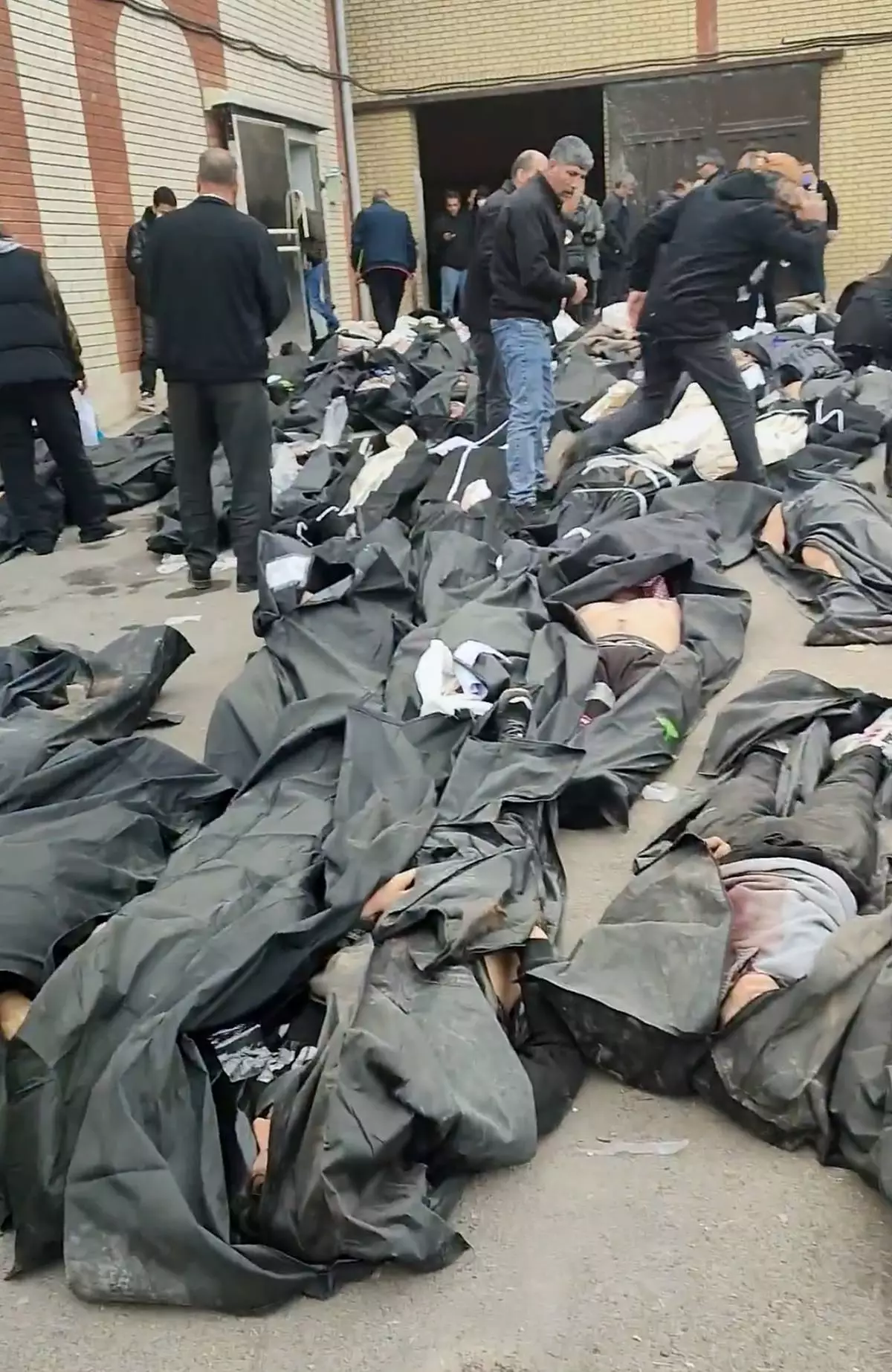
This frame grab from videos taken between Jan. 9 and Jan. 11, 2026, and circulating on social media purportedly shows images from a morgue with dozens of bodies and mourners after crackdown on the outskirts of Iran's capital, in Kahrizak, Tehran Province. (UGC via AP)
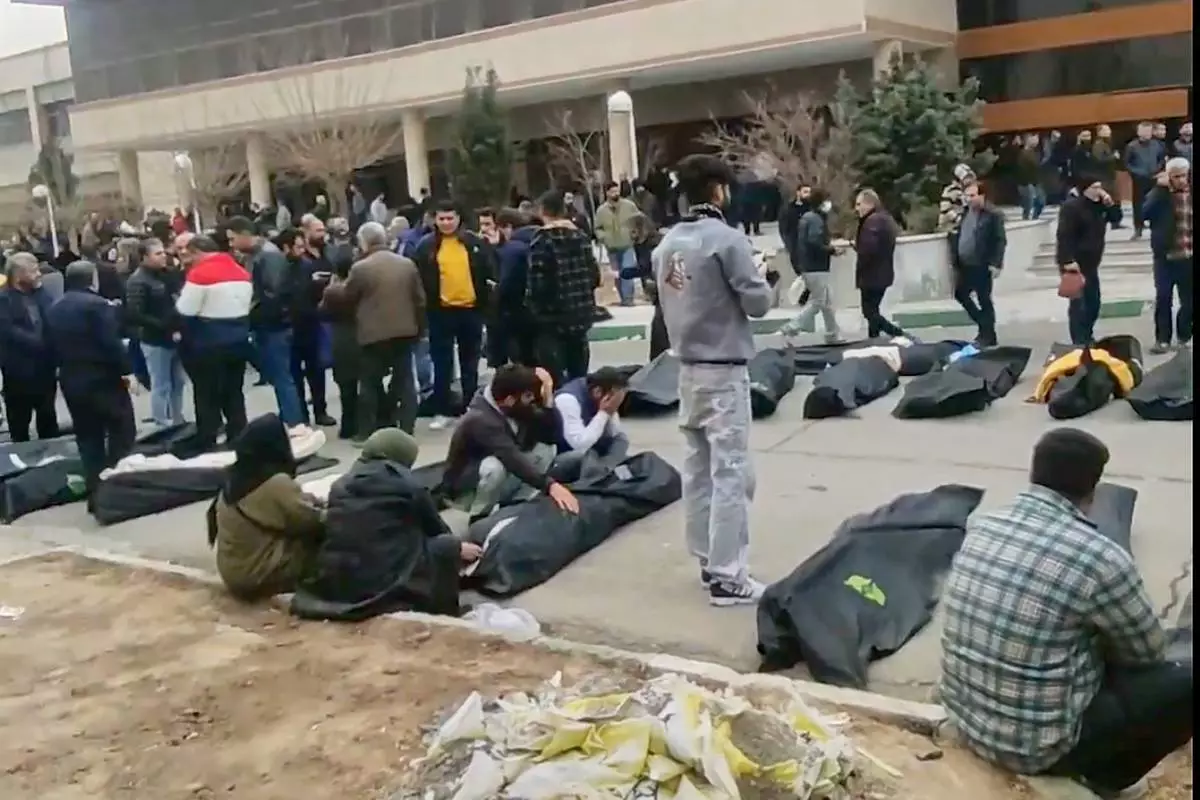
This frame grab from videos taken between Jan. 9 and Jan. 11, 2026, and circulating on social media purportedly shows images from a morgue with dozens of bodies and mourners after crackdown on the outskirts of Iran's capital, in Kahrizak, Tehran Province. (UGC via AP)
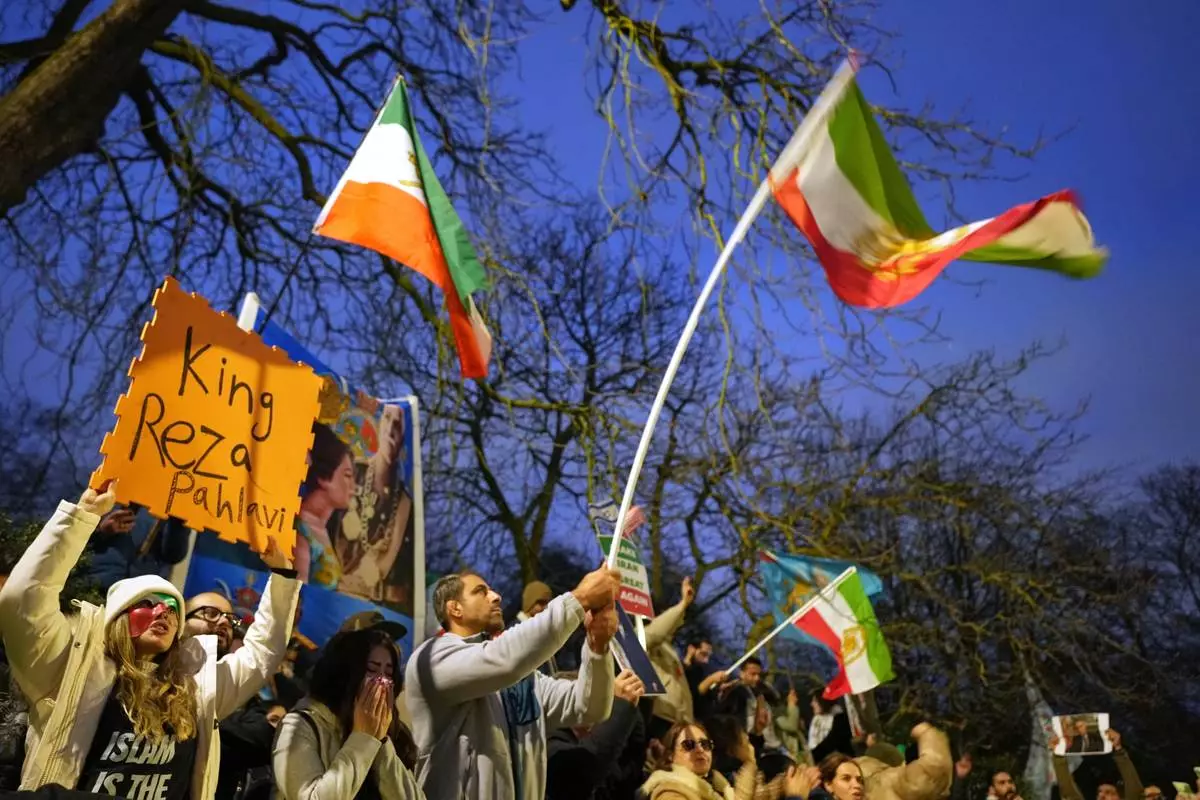
Protesters hold up placards and flags as they demonstrate outside the Iranian Embassy in London, Monday, Jan. 12, 2026. (AP Photo/Alastair Grant)
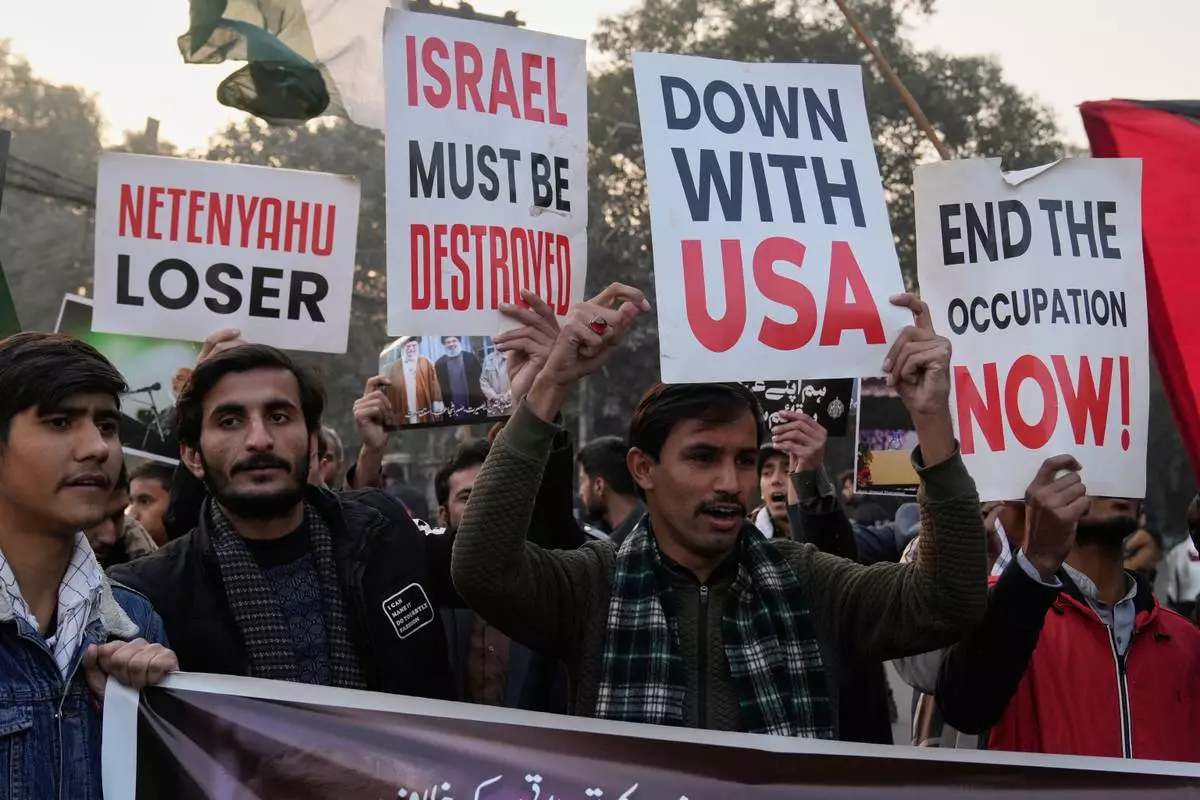
Shiite Muslims hold placards and chant slogans during a protest against the U.S. and show solidarity with Iran in Lahore, Pakistan, Sunday, Jan. 11, 2026. (AP Photo/K.M. Chaudary)
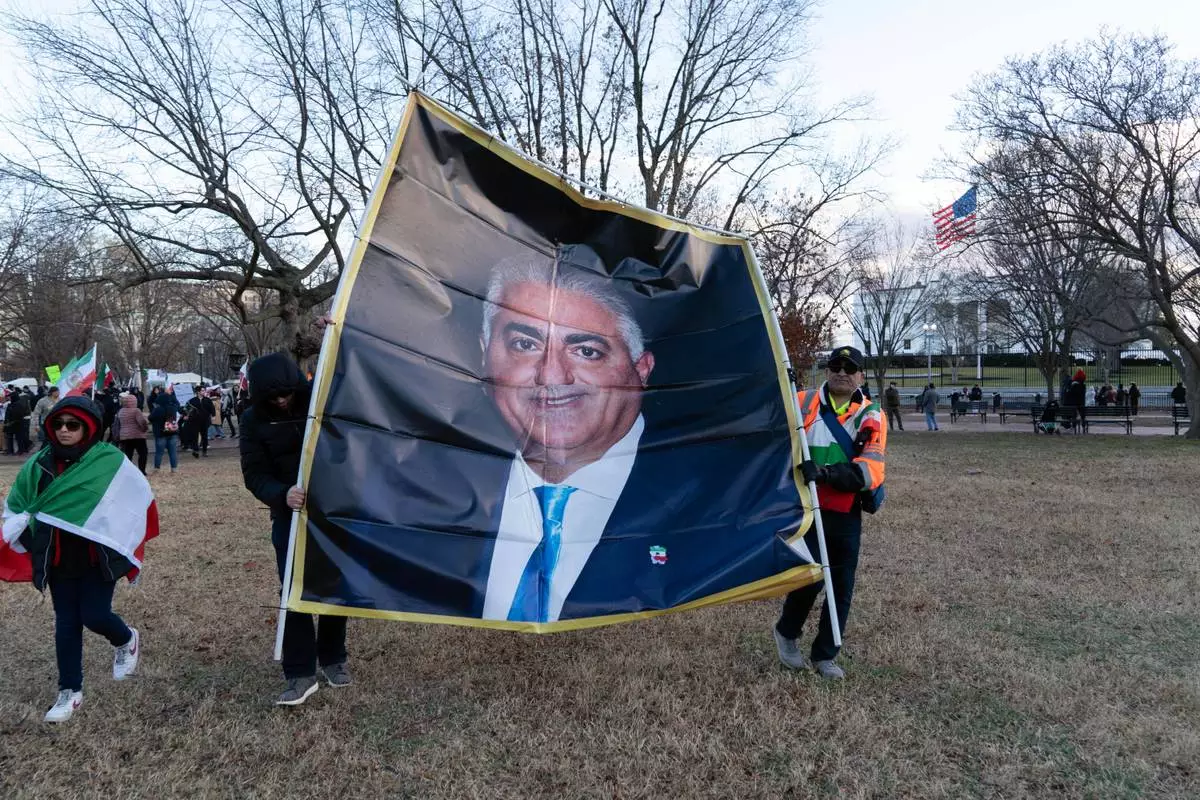
Activists carrying a photograph of Reza Pahlavi take part in a rally supporting protesters in Iran at Lafayette Park, across from the White House, in Washington, Sunday, Jan. 11, 2026. (AP Photo/Jose Luis Magana)
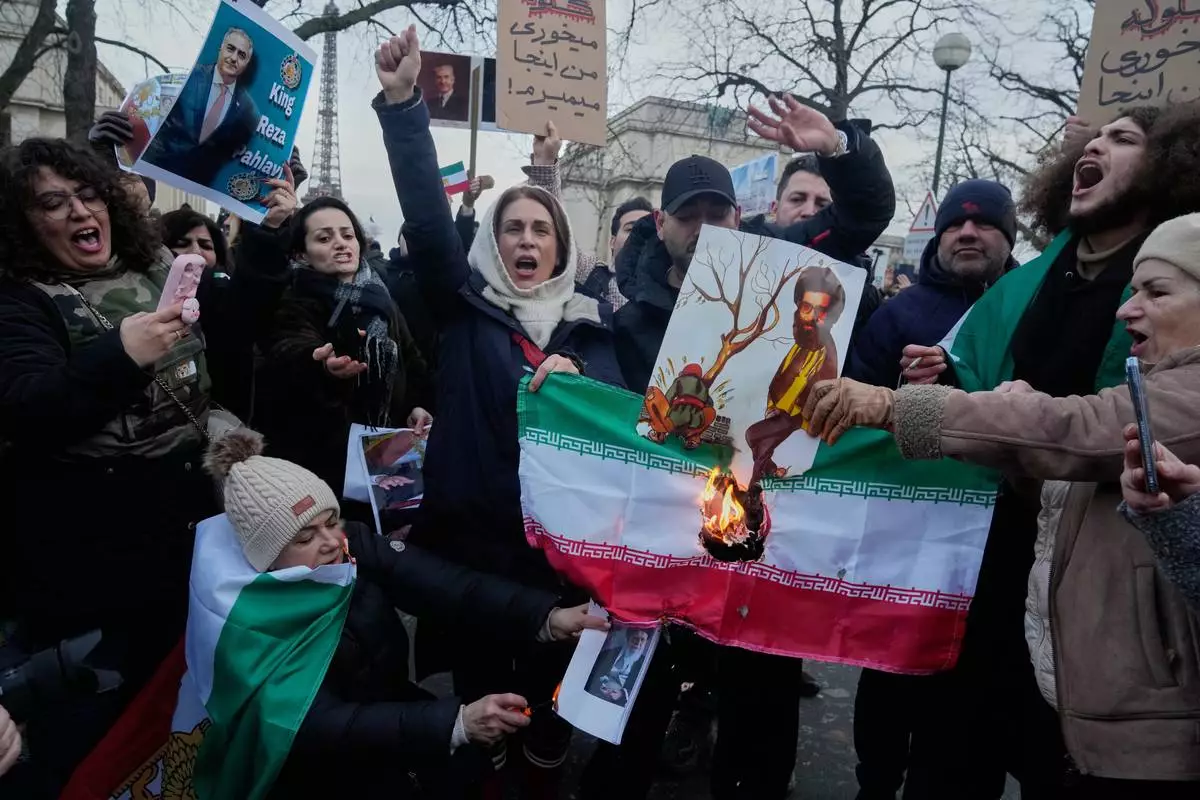
Protesters burn the Iranian national flag during a rally in support of the nationwide mass demonstrations in Iran against the government in Paris, Sunday, Jan. 11, 2026. (AP Photo/Michel Euler)
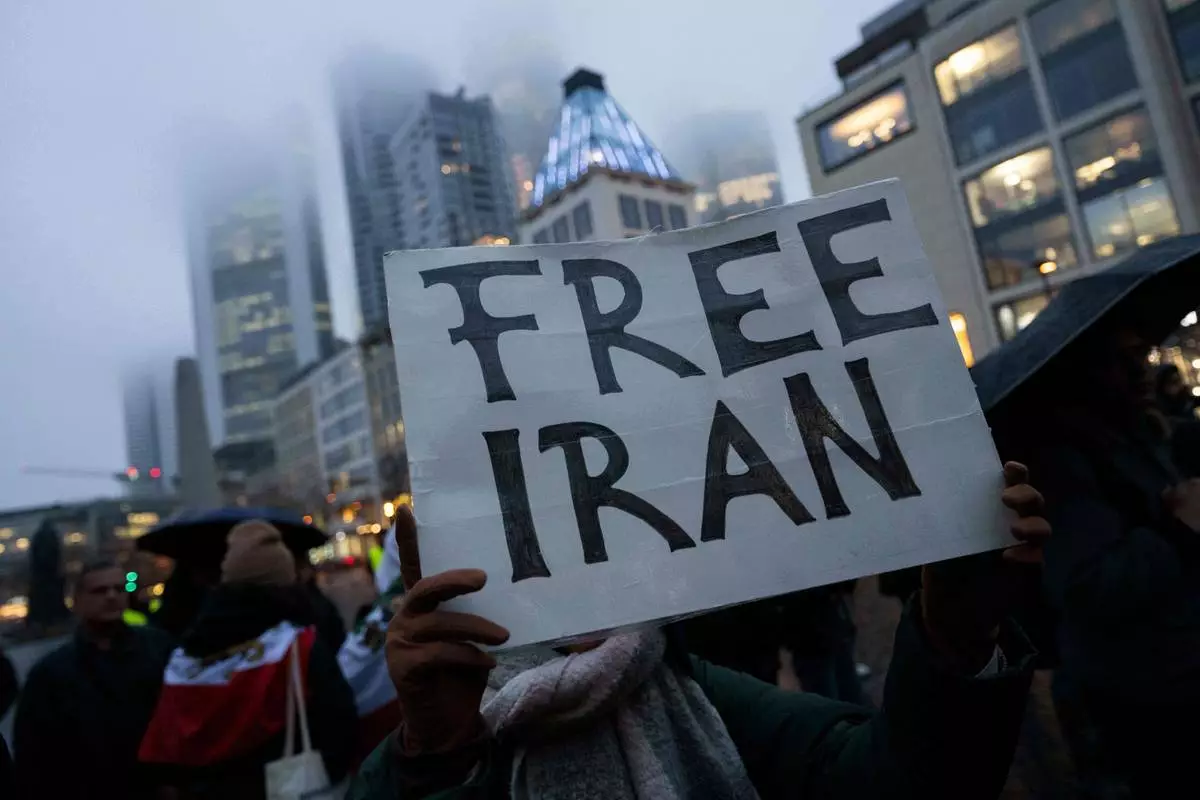
People attend a rally in Frankfurt, Germany, Monday, Jan. 12, 2026. (Boris Roessler/dpa via AP)
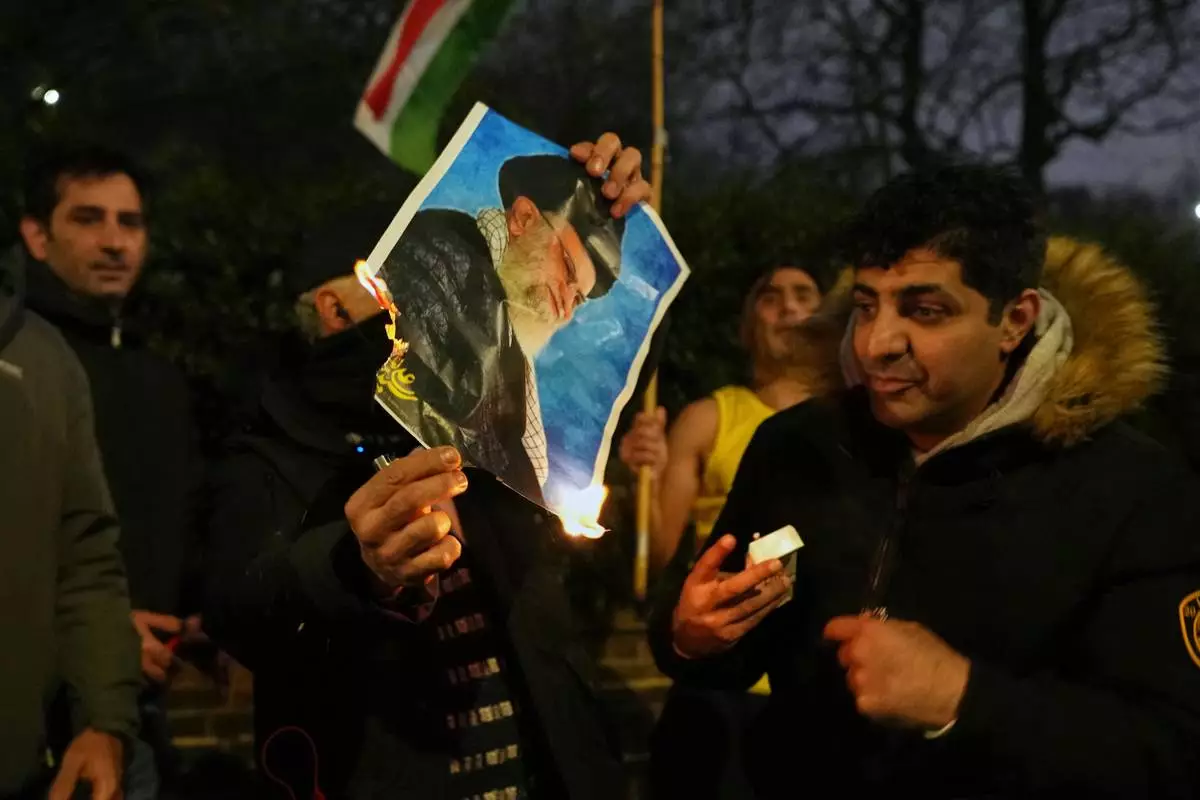
A picture of Ayatollah Ali Khamenei is set alight by protesters outside the Iranian Embassy in London, Monday, Jan. 12, 2026. (AP Photo/Alastair Grant)