Four South Sudanese athletes are already training in Japan for this year's Tokyo Olympics and Paralympics. They are trying to get a head start but, even so, they aren't likely to win any medals.
Unlike most of the 11,000 athletes who will be in Tokyo for the Olympics, and thousands more for the Paralympics, they will be able to speak Japanese.
Click to Gallery
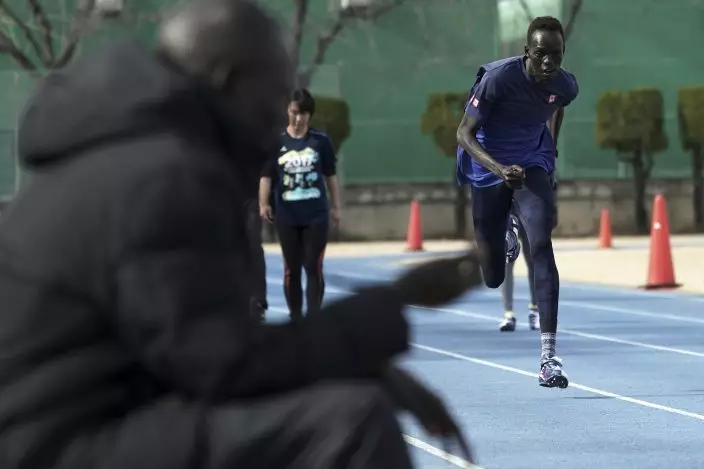
In this Feb. 12, 2020, photo, Joseph Akoon Akoon, of the South Sudan team practices as coach Joseph Omirok, marks time of runs during their training ifor the Tokyo 2020 Olympics and Paralympics in Maebashi, Gunma Prefecture, north of Tokyo. (AP PhotoEugene Hoshiko)
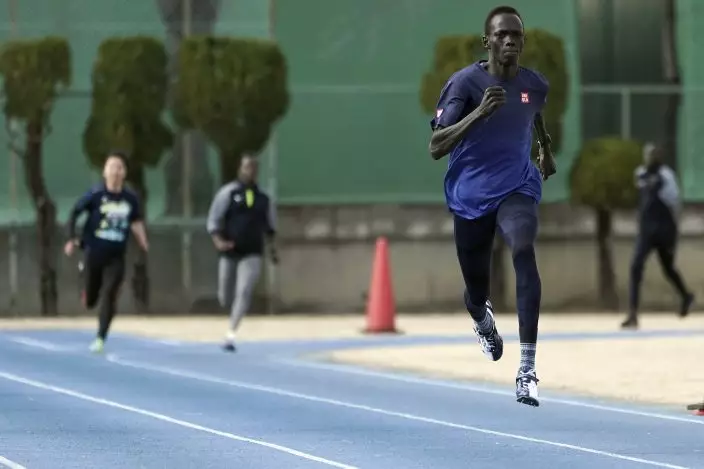
In this Feb. 12, 2020 photo, Joseph Akoon Akoon, right, and other of the South Sudan team practice together during training for the Tokyo 2020 Olympics and Paralympics in Maebashi, Gunma Prefecture, north of Tokyo. (AP PhotoEugene Hoshiko)
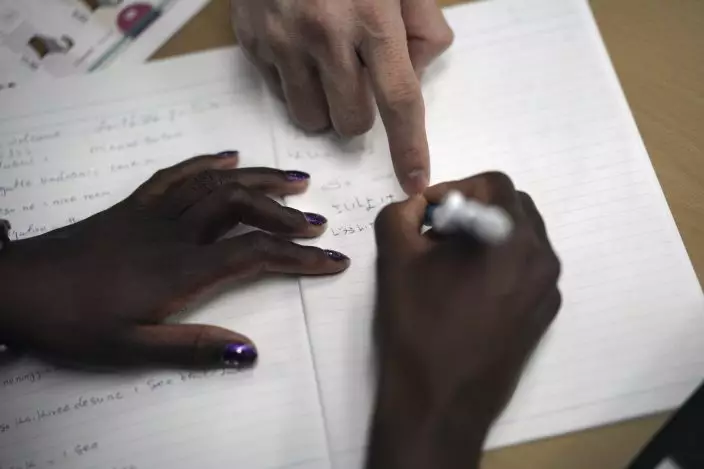
In this Feb. 12, 2020, photo, 100m sprinter Lucia Moris, bottom, of the South Sudan team practices the Japanese language as part of their training for the Tokyo 2020 Olympics and Paralympics in Maebashi, Gunma Prefecture, north of Tokyo. Four South Sudanese athletes are already training in Japan for the Olympics. They are getting a head start. And although they aren't likely to win any medals they will be ahead of most of the other 11,000 athletes who will be in Tokyo this summer for the Olympics. (AP PhotoEugene Hoshiko)
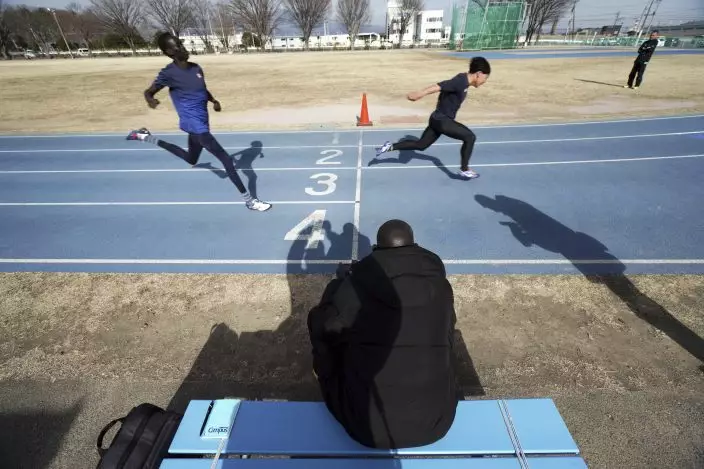
In this Feb. 12, 2020, photo, Joseph Akoon Akoon, left, of the South Sudan team and Japanese athlete Mizuki Obuchi, right, practice together during their training for the Tokyo 2020 Olympics and Paralympics in Maebashi, Gunma Prefecture, north of Tokyo. (AP PhotoEugene Hoshiko)
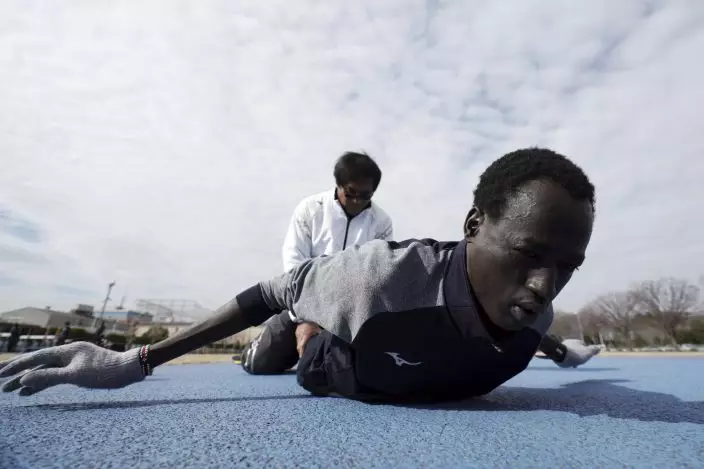
In this Feb. 12, 2020 photo, Abraham Majok, a South Sudanese 1500m runner, trains practice with Japanese volunteers during training for the Tokyo 2020 Olympics in Maebashi, Gunma Prefecture, north of Tokyo. Four South Sudanese athletes are already training in Japan for the Olympics. They are getting a head start. And although they aren't likely to win any medals they will be ahead of most of the other 11,000 athletes who will be in Tokyo this summer for the Olympics. (AP PhotoEugene Hoshiko)
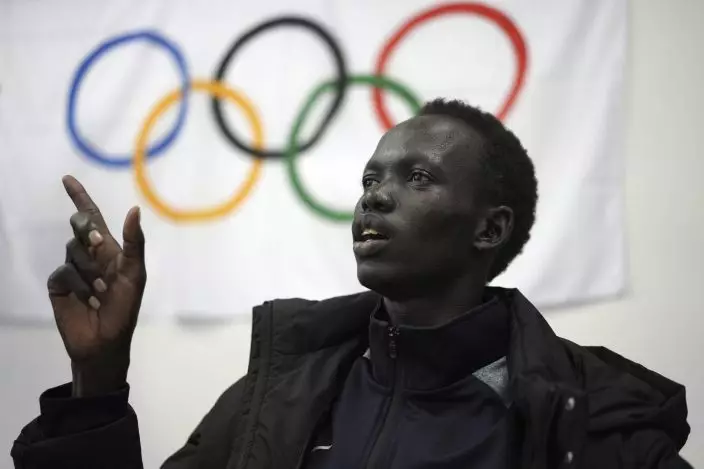
In this Feb. 12, 2020, photo, Joseph Akoon Akoon and other compatriot athletes of the South Sudan team participate in a Japanese language lesson during training for the Tokyo 2020 Olympics and Paralympics in Maebashi, Gunma Prefecture, north of Tokyo. (AP PhotoEugene Hoshiko)

In this Feb. 12, 2020, photo, athletes of the South Sudan team warm up near a banner saying in Japanese "South Sudan" during their training for the Tokyo 2020 Olympics and Paralympics in Maebashi, Gunma Prefecture, north of Tokyo. (AP PhotoEugene Hoshiko)

In this Feb. 12, 2020 photo, Abraham Majok and other compatriot athletes of the South Sudan team participate during Japanese language lesson during their training for the Tokyo 2020 Olympics and Paralympics in Maebashi, Gunma Prefecture, north of Tokyo. (AP PhotoEugene Hoshiko)

In this Feb. 12, 2020, photo, Abraham Majok and other compatriot athletes of the South Sudan team participate in a Japanese language lesson as part of their training for the Tokyo 2020 Olympics and Paralympics in Maebashi, Gunma Prefecture, north of Tokyo. (AP PhotoEugene Hoshiko)
“Just the language itself, I love it," said Abraham Majok, a 1,500-meter runner who arrived in Japan in November with three other South Sudanese athletes and a coach. “And it’s nice and since we started learning it. It’s not so difficult, and also not so easy. But, you know, we are moving well with it and we just love it.”
In this Feb. 12, 2020, photo, Joseph Akoon Akoon, of the South Sudan team practices as coach Joseph Omirok, marks time of runs during their training ifor the Tokyo 2020 Olympics and Paralympics in Maebashi, Gunma Prefecture, north of Tokyo. (AP PhotoEugene Hoshiko)
They are training about 100 kilometers (60 miles) northwest of Tokyo in the city of Maebashi, supported mainly by donations from the Japanese public.
Majok is training and thinking of his country, which gained independence from Sudan in 2011 but descended into a civil war two years later. The conflict has killed an estimated 400,000 people and forced millions from their homes.
“As you know, for every battle that you are going for, you always go to look for success and you don’t go to look for failures," Majok said. “I have been having this dream to come for the Olympics and to compete and get something good for myself and for my country as well.”
In this Feb. 12, 2020 photo, Joseph Akoon Akoon, right, and other of the South Sudan team practice together during training for the Tokyo 2020 Olympics and Paralympics in Maebashi, Gunma Prefecture, north of Tokyo. (AP PhotoEugene Hoshiko)
Maebashi city official Kazuhiko Kuwabara has watched the four train in person. But the real thrill will come in about 5 1/2 months when the Olympics open.
“I think more important than their records is to see them running on the track (at the Tokyo Olympics) wearing their uniform with South Sudan’s national flag," Kuwabara said. “We together with people of Maebashi would like to support them to achieve that.”
Akoon Akoon, a 400-meter hurdler, pointed out the distinct advantage of training in Maebashi. The city has a track.
In this Feb. 12, 2020, photo, 100m sprinter Lucia Moris, bottom, of the South Sudan team practices the Japanese language as part of their training for the Tokyo 2020 Olympics and Paralympics in Maebashi, Gunma Prefecture, north of Tokyo. Four South Sudanese athletes are already training in Japan for the Olympics. They are getting a head start. And although they aren't likely to win any medals they will be ahead of most of the other 11,000 athletes who will be in Tokyo this summer for the Olympics. (AP PhotoEugene Hoshiko)
“Before I go to the Olympics, I can get enough training here in Maebashi with the coaches and the track here,” he said, pausing. “Because there (South Sudan), we don’t have tracks.”
South Sudan coach Joseph Omirok wants to return home when the Olympics and Paralympics end, and he plans to take some of Japan back with him.
“I learned a lot,” he said. “I'm getting not only sport. I'm learning a lot; the language, how Japanese people are. The are actually good people.”
In this Feb. 12, 2020, photo, Joseph Akoon Akoon, left, of the South Sudan team and Japanese athlete Mizuki Obuchi, right, practice together during their training for the Tokyo 2020 Olympics and Paralympics in Maebashi, Gunma Prefecture, north of Tokyo. (AP PhotoEugene Hoshiko)
More AP sports: https://apnews.com/apf-sports and https://twitter.com/AP_Sports
In this Feb. 12, 2020 photo, Abraham Majok, a South Sudanese 1500m runner, trains practice with Japanese volunteers during training for the Tokyo 2020 Olympics in Maebashi, Gunma Prefecture, north of Tokyo. Four South Sudanese athletes are already training in Japan for the Olympics. They are getting a head start. And although they aren't likely to win any medals they will be ahead of most of the other 11,000 athletes who will be in Tokyo this summer for the Olympics. (AP PhotoEugene Hoshiko)
In this Feb. 12, 2020, photo, Joseph Akoon Akoon and other compatriot athletes of the South Sudan team participate in a Japanese language lesson during training for the Tokyo 2020 Olympics and Paralympics in Maebashi, Gunma Prefecture, north of Tokyo. (AP PhotoEugene Hoshiko)
In this Feb. 12, 2020, photo, athletes of the South Sudan team warm up near a banner saying in Japanese "South Sudan" during their training for the Tokyo 2020 Olympics and Paralympics in Maebashi, Gunma Prefecture, north of Tokyo. (AP PhotoEugene Hoshiko)
In this Feb. 12, 2020 photo, Abraham Majok and other compatriot athletes of the South Sudan team participate during Japanese language lesson during their training for the Tokyo 2020 Olympics and Paralympics in Maebashi, Gunma Prefecture, north of Tokyo. (AP PhotoEugene Hoshiko)
In this Feb. 12, 2020, photo, Abraham Majok and other compatriot athletes of the South Sudan team participate in a Japanese language lesson as part of their training for the Tokyo 2020 Olympics and Paralympics in Maebashi, Gunma Prefecture, north of Tokyo. (AP PhotoEugene Hoshiko)