Skip to Content Facebook Feature Image

In Morocco, tiny Jewish community grapples with virus

News

In Morocco, tiny Jewish community grapples with virus
News

News

In Morocco, tiny Jewish community grapples with virus

2020-06-05 00:10 Last Updated At:00:30

When the phone rang on the second day of Passover, Chabad-Lubavitch Rabbi Levi Banon figured it must be an emergency.

Electronic devices were prohibited during the holiday. Any call must be urgent. It was.

More Images
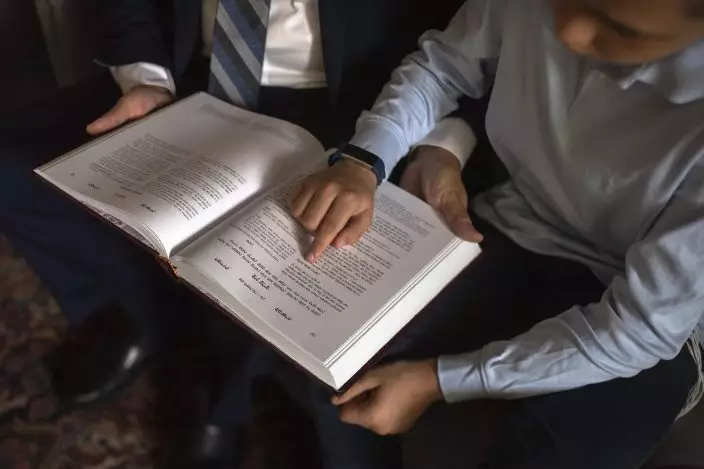
Chabad-Lubavitch Rabbi Levi Banon and his son Mendel, 12, read a religious text at their home library in Casablanca, Morocco, Thursday, May 28, 2020. (AP PhotoMosa'ab Elshamy)
Chabad-Lubavitch Rabbi Levi Banon and his son Mendel, 12, read a religious text at their home library in Casablanca, Morocco, Thursday, May 28, 2020. (AP PhotoMosa'ab Elshamy)

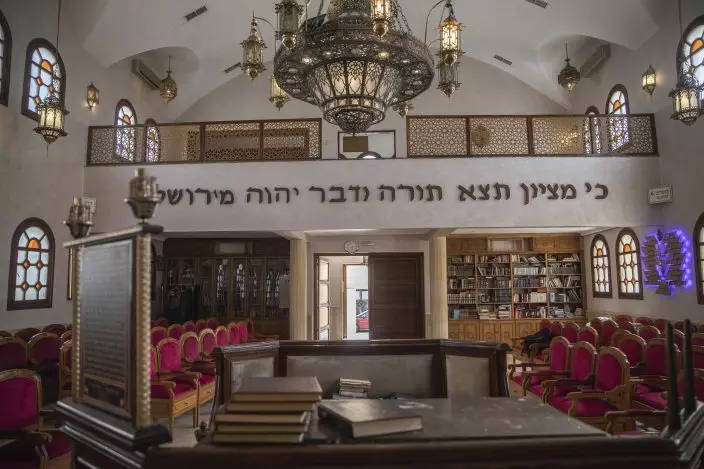
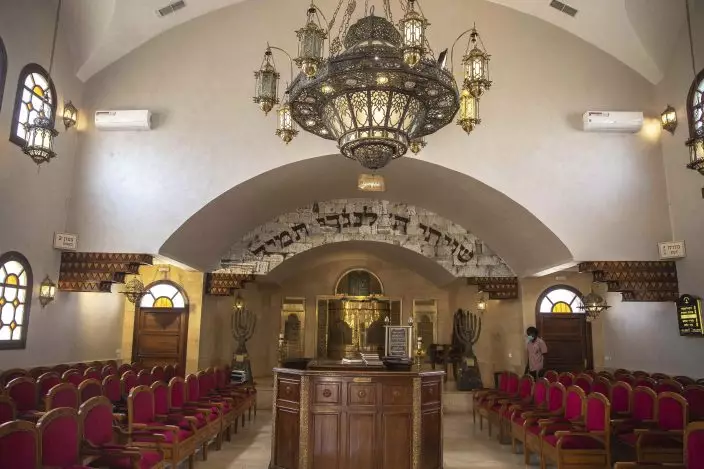
A view inside the David Hemelekh Synagogue, which has been closed since the outbreak of Coronavirus, in Casablanca, Morocco, Thursday, May 28, 2020. The city boasts about 15 functioning synagogues, 10 kosher butchers and five kosher restaurants, said Berdugo, an ambassador at-large for Morocco's king and former tourism minister. (AP PhotoMosa'ab Elshamy)
A view inside the David Hemelekh Synagogue, which has been closed since the outbreak of Coronavirus, in Casablanca, Morocco, Thursday, May 28, 2020. The city boasts about 15 functioning synagogues, 10 kosher butchers and five kosher restaurants, said Berdugo, an ambassador at-large for Morocco's king and former tourism minister. (AP PhotoMosa'ab Elshamy)

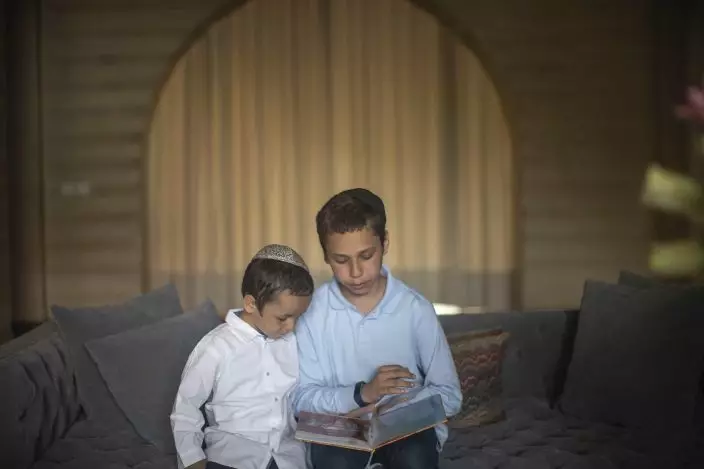
Mendel Banon, 12, right, reads to his brother Sroly, 5, in their home in Casablanca, Morocco, Thursday, May 28, 2020. (AP PhotoMosa'ab Elshamy)
Mendel Banon, 12, right, reads to his brother Sroly, 5, in their home in Casablanca, Morocco, Thursday, May 28, 2020. (AP PhotoMosa'ab Elshamy)

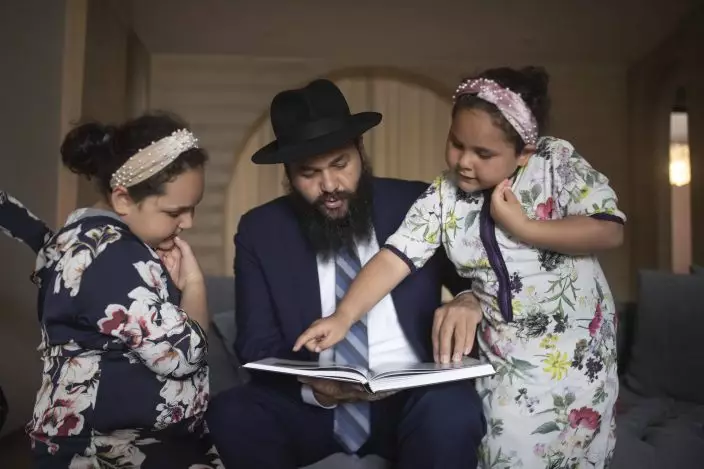
Rabbi Levi Banon and his daughters read a book inside their home in Casablanca, Morocco, Thursday, May 28, 2020. (AP PhotoMosa'ab Elshamy)
Rabbi Levi Banon and his daughters read a book inside their home in Casablanca, Morocco, Thursday, May 28, 2020. (AP PhotoMosa'ab Elshamy)

A view inside the Synagogue David Hemelekh, which has been closed since the outbreak of Coronavirus, in Casablanca, Morocco, Thursday, May 28, 2020. The city boasts about 15 functioning synagogues, 10 kosher butchers and five kosher restaurants, said Berdugo, an ambassador at-large for Morocco's king and former tourism minister. (AP PhotoMosa'ab Elshamy)
A view inside the Synagogue David Hemelekh, which has been closed since the outbreak of Coronavirus, in Casablanca, Morocco, Thursday, May 28, 2020. The city boasts about 15 functioning synagogues, 10 kosher butchers and five kosher restaurants, said Berdugo, an ambassador at-large for Morocco's king and former tourism minister. (AP PhotoMosa'ab Elshamy)
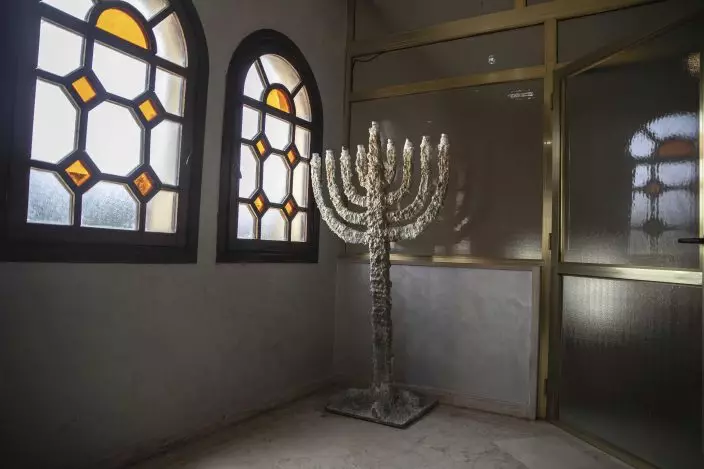
A menorah is seen inside David Hemelekh Synagogue, which has been closed since the outbreak of Coronavirus, in Casablanca, Morocco, Thursday, May 28, 2020. The city boasts about 15 functioning synagogues, 10 kosher butchers and five kosher restaurants, said Berdugo, an ambassador at-large for Morocco's king and former tourism minister. (AP PhotoMosa'ab Elshamy)

A menorah is seen inside David Hemelekh Synagogue, which has been closed since the outbreak of Coronavirus, in Casablanca, Morocco, Thursday, May 28, 2020. The city boasts about 15 functioning synagogues, 10 kosher butchers and five kosher restaurants, said Berdugo, an ambassador at-large for Morocco's king and former tourism minister. (AP PhotoMosa'ab Elshamy)

Musya Banon, right, and her sisters Nina, left, and Sara, center, bake challah bread for Shabbat, in their home in Casablanca, Morocco, Thursday, May 28, 2020. (AP PhotoMosa'ab Elshamy)
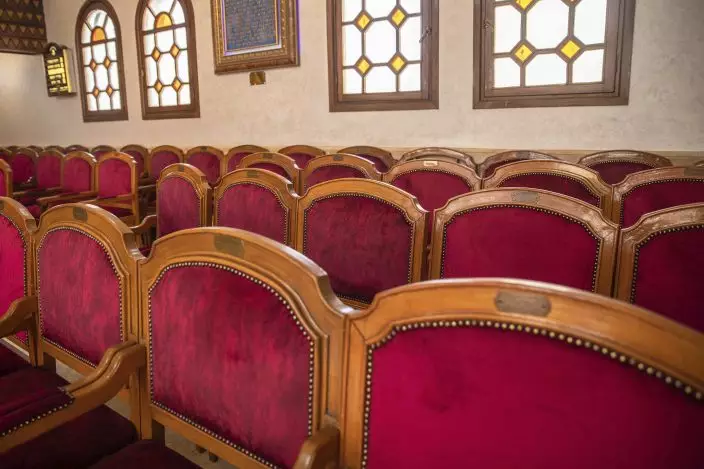
Musya Banon, right, and her sisters Nina, left, and Sara, center, bake challah bread for Shabbat, in their home in Casablanca, Morocco, Thursday, May 28, 2020. (AP PhotoMosa'ab Elshamy)

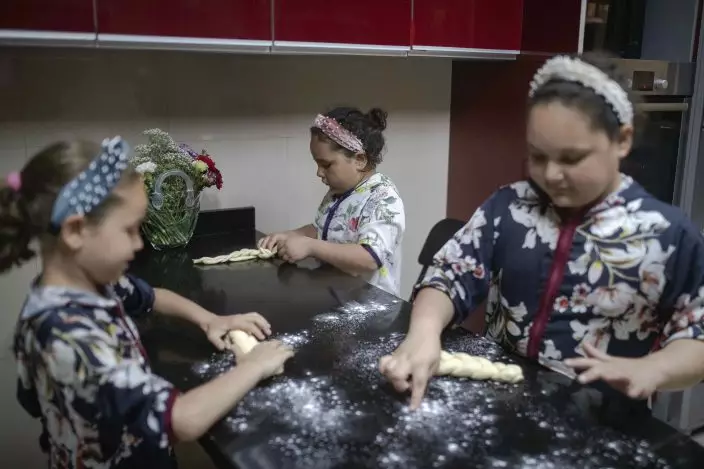
A view inside the empty Synagogue David Hemelekh, which has been closed since the outbreak of Coronavirus, in Casablanca, Morocco, Thursday, May 28, 2020. The city boasts about 15 functioning synagogues, 10 kosher butchers and five kosher restaurants, said Berdugo, an ambassador at-large for Morocco's king and former tourism minister. (AP PhotoMosa'ab Elshamy)

A view inside the empty Synagogue David Hemelekh, which has been closed since the outbreak of Coronavirus, in Casablanca, Morocco, Thursday, May 28, 2020. The city boasts about 15 functioning synagogues, 10 kosher butchers and five kosher restaurants, said Berdugo, an ambassador at-large for Morocco's king and former tourism minister. (AP PhotoMosa'ab Elshamy)

Rabbi Sholom Eidelman, his godfather and a longtime Jewish leader in the Muslim country of Morocco, had died after contracting the coronavirus. It was the second virus death in as many days, Banon said. Once again, he left home to perform the funeral.

Chabad-Lubavitch Rabbi Levi Banon and his son Mendel, 12, read a religious text at their home library in Casablanca, Morocco, Thursday, May 28, 2020. (AP PhotoMosa'ab Elshamy)

Chabad-Lubavitch Rabbi Levi Banon and his son Mendel, 12, read a religious text at their home library in Casablanca, Morocco, Thursday, May 28, 2020. (AP PhotoMosa'ab Elshamy)

There have been many funerals as the new coronavirus --in its early days in Morocco--hit a Jewish community that is a shadow of what it once was numerically.

“There’s a lot of old people in the community,” said Banon. “That made it very alarming.”

Some days have brought news of more than one coronavirus-related death, he said. One funeral, broadcast over zoom, had two caskets--the deceased, unrelated in life, united in death, both struck down by the virus.

A view inside the David Hemelekh Synagogue, which has been closed since the outbreak of Coronavirus, in Casablanca, Morocco, Thursday, May 28, 2020. The city boasts about 15 functioning synagogues, 10 kosher butchers and five kosher restaurants, said Berdugo, an ambassador at-large for Morocco's king and former tourism minister. (AP PhotoMosa'ab Elshamy)

A view inside the David Hemelekh Synagogue, which has been closed since the outbreak of Coronavirus, in Casablanca, Morocco, Thursday, May 28, 2020. The city boasts about 15 functioning synagogues, 10 kosher butchers and five kosher restaurants, said Berdugo, an ambassador at-large for Morocco's king and former tourism minister. (AP PhotoMosa'ab Elshamy)

At one point Banon hosted two kids until their parents were released from the hospital. At another, he comforted a young man after his father died while his mother was hospitalized.

“We’ve been hit very badly because we’re a family and now we’re all working very, very hard to stay confined and to stay separate,” Banon said.

Serge Berdugo, head of the Council of the Jewish Communities of Morocco, said 12 community members died in the country between late March and late April after contracting the virus. That's nearly six percent of the 206 coronavirus-related deaths that Morocco, a country of about 36 million, announced as of June 2.

Mendel Banon, 12, right, reads to his brother Sroly, 5, in their home in Casablanca, Morocco, Thursday, May 28, 2020. (AP PhotoMosa'ab Elshamy)

Mendel Banon, 12, right, reads to his brother Sroly, 5, in their home in Casablanca, Morocco, Thursday, May 28, 2020. (AP PhotoMosa'ab Elshamy)

Like many Muslim majority Arab countries with once-flourishing Jewish communities, the number of Jews in Morocco has dwindled. Roy Mittelman, director of the Jewish studies program at The City College of New York estimates it is about 1,500 today, mostly in the city of Casablanca. Berdugo put the figure at around 2,500.

Jewish presence in Morocco dates back at least two millennia, with a large wave of arrivals later as a result of the Spanish Inquisition, Mittelman said. The community numbered around 270,000 before the 1948 creation of Israel and waves of departures spurred by geopolitical tensions, Arab-Israeli wars and periods of uncertainty, he said.

In Casablanca, the community that remains is vibrant. The city boasts about 15 functioning synagogues and five kosher restaurants, said Berdugo, an ambassador at-large for Morocco's king.

Rabbi Levi Banon and his daughters read a book inside their home in Casablanca, Morocco, Thursday, May 28, 2020. (AP PhotoMosa'ab Elshamy)

Rabbi Levi Banon and his daughters read a book inside their home in Casablanca, Morocco, Thursday, May 28, 2020. (AP PhotoMosa'ab Elshamy)

Officials and community leaders tout Jewish life in Morocco as a model for Jewish-Muslim co-existence and a testament to Morocco embracing a diverse heritage. They point to renovations of Jewish sites—which attract tourists and others— and a constitutional recognition since 2011 of “Hebraic” influences.

While “moments of tension” can be sparked by Middle East conflicts, they tend to blow over quickly, said Vanessa Paloma Elbaz, a University of Cambridge research associate who has also been collecting oral histories of Moroccan Jews.

In Rabat, David Toledano, president of Rabat’s Jewish community of about 100 people, said he lost a “close friend” and a “pillar of the community” in Rabat to the virus.

A view inside the Synagogue David Hemelekh, which has been closed since the outbreak of Coronavirus, in Casablanca, Morocco, Thursday, May 28, 2020. The city boasts about 15 functioning synagogues, 10 kosher butchers and five kosher restaurants, said Berdugo, an ambassador at-large for Morocco's king and former tourism minister. (AP PhotoMosa'ab Elshamy)

A view inside the Synagogue David Hemelekh, which has been closed since the outbreak of Coronavirus, in Casablanca, Morocco, Thursday, May 28, 2020. The city boasts about 15 functioning synagogues, 10 kosher butchers and five kosher restaurants, said Berdugo, an ambassador at-large for Morocco's king and former tourism minister. (AP PhotoMosa'ab Elshamy)

The man ran Rabat’s only kosher restaurant, performed Jewish burial rites and helped at the synagogue, often calling others to make sure they show up for services, he said.

“He loved to sing and he loved to lead,” he said. “The loss is heavy.”

Why the virus has pummeled the community early on is open to debate.

A menorah is seen inside David Hemelekh Synagogue, which has been closed since the outbreak of Coronavirus, in Casablanca, Morocco, Thursday, May 28, 2020. The city boasts about 15 functioning synagogues, 10 kosher butchers and five kosher restaurants, said Berdugo, an ambassador at-large for Morocco's king and former tourism minister. (AP PhotoMosa'ab Elshamy)

A menorah is seen inside David Hemelekh Synagogue, which has been closed since the outbreak of Coronavirus, in Casablanca, Morocco, Thursday, May 28, 2020. The city boasts about 15 functioning synagogues, 10 kosher butchers and five kosher restaurants, said Berdugo, an ambassador at-large for Morocco's king and former tourism minister. (AP PhotoMosa'ab Elshamy)

Berdugo said he believed infections started at a Jewish wedding in the south which had people coming from France. Days later, a Purim gathering at a Casablanca synagogue, attended by some guests from the wedding, likely helped spread the virus, he said. Purim, celebrated this past March, celebrates the saving of the Jews from a threatened massacre in ancient Persia.

Banon rejects theories that any one event could have spread infections.

At a different Purim celebration organized by Jeunesse Chabad of Morocco of which Banon is the director, revelers decked out in costumes for the occasion donned gloves as they danced, he said. Alcohol gels were given out and people stayed “more spread out than usual” in a “very spacious and very airy” tent, he said.

Musya Banon, right, and her sisters Nina, left, and Sara, center, bake challah bread for Shabbat, in their home in Casablanca, Morocco, Thursday, May 28, 2020. (AP PhotoMosa'ab Elshamy)

Musya Banon, right, and her sisters Nina, left, and Sara, center, bake challah bread for Shabbat, in their home in Casablanca, Morocco, Thursday, May 28, 2020. (AP PhotoMosa'ab Elshamy)

The gathering was held before Morocco announced later in March a health emergency, restricting movement across the country, and attracted about 400 to 500 people, Banon said. “We took all the precautions.”

The virus cast a grim pall over Passover.

Ordinarily, Toledano hosts young Americans, in Morocco to learn Arabic for the holiday. This year, he spent it alone with his wife. Like many in the community, his children left to study abroad and have since started new lives there.

A view inside the empty Synagogue David Hemelekh, which has been closed since the outbreak of Coronavirus, in Casablanca, Morocco, Thursday, May 28, 2020. The city boasts about 15 functioning synagogues, 10 kosher butchers and five kosher restaurants, said Berdugo, an ambassador at-large for Morocco's king and former tourism minister. (AP PhotoMosa'ab Elshamy)

A view inside the empty Synagogue David Hemelekh, which has been closed since the outbreak of Coronavirus, in Casablanca, Morocco, Thursday, May 28, 2020. The city boasts about 15 functioning synagogues, 10 kosher butchers and five kosher restaurants, said Berdugo, an ambassador at-large for Morocco's king and former tourism minister. (AP PhotoMosa'ab Elshamy)

In Casablanca, Rabbi Jacquy Sebag spent Passover at a hotel after he was released from a hospital where he was treated for the virus. In his solitude, he reflected. The bottom line, he said, is to understand that “only the almighty God is driving and leading His world,” and “to do the best we can do for others; it doesn’t matter Jewish or non-Jewish.”

Passover was on Rabbi Eidelman’s mind. He wanted to ensure that the holiday staple known as “shmurah matzah” was brought in time from France, Banon said.

Born in Soviet Russia, Eidelman had been in Morocco since 1958 as an emissary for Chabad-Lubavitch, an Orthodox Jewish Hasidic movement.

For his work mentoring and training others --from rabbis to rabbinical judges to kosher slaughterers--Eidelman became known among students as “the rabbi of rabbis,” Banon said.

“Chief rabbis of...different countries and rabbis of a lot of different communities around the world are his pupils,” he said. “He spent his time working and giving the credit to others.” There are three Lubavitch households in Morocco, Banon said, including his and Eidelman’s.

Amid the loss, Banon takes heart in the solidarity of the tight-knit community.

“We are grieving right now and we’re hoping for better days.”

Associated Press religion coverage receives support from the Lilly Endowment through the Religion News Foundation. The AP is solely responsible for this content.
ATLANTA (AP) — Eliminating state income taxes sounds great to many voters, but Republicans backing the push in multiple states still face questions about whether such big tax cuts can be made without raising other taxes or sharply cutting state funding for education, health care and other services.

Georgia on Wednesday became the latest state to launch a bid to abolish its personal income tax, with Republican leaders in the Senate backing a proposal to zero it out by 2032. This year, Georgia's personal income tax is projected to collect about $16.5 billion, or 44% of the state's general revenue.

The push is driven by politics. Lt. Gov. Burt Jones, the Republican who leads the state Senate, has made eliminating income taxes a centerpiece of his 2026 campaign for governor. State Sen. Blake Tillery, a Vidalia Republican who led a committee to abolish the tax, is among candidates to succeed Jones as lieutenant governor.

“This is the first vote that we are going to get to take to address affordability,” Tillery said.

But it's unclear if the proposal will pass. Georgia House Republicans may want to continue nibbling away at the tax in smaller bites, preferring a “measured” approach. Republican House Speaker Jon Burns of Newington said Wednesday that his big 2026 goal is to eliminate property taxes for homeowners, but said he's willing to consider the Senate plan.

Republican Gov. Brian Kemp, serving his last year, has been cool to total elimination of the income tax. He declined to comment Wednesday on the Senate plan, but spokesperson Carter Chapman said Kemp wants "to continue lowering taxes and putting more money in Georgians’ pockets as he has throughout his term.”

The state's Democratic minority opposes the move, saying it would mostly benefit high earners and the state needs money to provide services.

Iowa, Kentucky, Mississippi and Missouri have all set goals to abolish the personal income tax, joining eight other states that don't tax personal income. Eight other states besides Georgia are cutting personal income tax rates this year, according to the Tax Foundation, a Washington, D.C., group generally skeptical of higher taxes.

“We've seen a lot of states cut their income tax rates in the last four or five years, especially during the COVID-19 pandemic and coming out of it,” said Aravind Boddupalli, senior researcher at the Urban-Brookings Tax Policy Center in Washington, D.C.

Supporters say cuts help a state compete for new residents and businesses, pointing to growth in Texas and Florida, two states without personal income taxes.

“Your income tax is a tax on productivity,” said Manish Bhatt, who studies state taxes for the Tax Foundation. “If you are taxing productivity, you are potentially losing out on economic gains.”

Georgia has already been cutting income taxes, taking what was once a top income tax rate of 6% and lowering it to a 5.19% flat rate. Republicans broadly support a further cut for individual and corporate taxpayers to 4.99% this year, worth an estimated $800 million in foregone tax revenue.

The Senate plan would then freeze the corporate rate and focus on individual tax cuts. It proposes in 2027 to exempt the first $50,000 of income for a single person or $100,000 for a married couple, up from $12,000 and $24,000 now.

Faced with Democratic criticism about affordability, the big increase in exempt income is central to Republicans' own arguments about how they can make money stretch farther. About 70% of Georgians reported less than $100,000 of taxable income in 2024, according to state figures.

“It is a plan that gives benefits first to hardworking families,” Tillery said.

The initial rate cut, plus the exemption proposal, would lower Georgia revenue by $3.8 billion in its 2027 budget year. Tillery says the state could pay by using surplus tax revenue and shifting back to paying for capital expenditures through borrowing instead of cash. But those moves probably wouldn't cover the foregone revenue even in the first year, much less $13 billion more in cuts to get to zero.

Tillery said revenue should be bolstered by trimming business income and sales tax breaks, saying legislators should reduce “corporate welfare.” But lawmakers and Kemp have balked at curtailing those measures in recent years.

Tax cuts haven't always been a political bonanza. In Kansas, after Republicans under Gov. Sam Brownback cut income taxes steeply more than a decade ago, voters revolted at budget cuts and lawmakers imposed multiple tax increases to cover persistent budget shortfalls, including restoring some income tax cuts. Democratic Gov. Laura Kelly won her first term in 2018 by framing the race as a referendum on Brownback’s policies.

“State income taxes are only bad if you fundamentally don't believe that the services, the public investments that state governments provide, are worth anything,” said Matt Gardner, a senior fellow with the left-leaning Institute on Taxation and Economic Policy .

In Missouri, Republican Gov. Mike Kehoe and GOP legislative leaders have made phasing out the state’s income tax a top priority for the session starting Wednesday. They're looking to expand sales taxes to services which currently are untaxed to help offset lost revenue.

“We want to do this in a smart, efficient way that’s not going to have the state go off some sort of fiscal cliff,” Missouri House Majority Leader Alex Riley told The Associated Press on Tuesday.

But expanding sales taxes could fall more heavily on poorer taxpayers. The liberal-leaning Georgia Budget and Policy Institute estimated that if Georgia doesn't expand its sales tax, the combined state and local sales tax rate would have to rise sharply from the current 7.42% to recover revenue losses.

All that leads to questions about income-tax elimination plans, even from Republicans. Burns, the Georgia House speaker, said he's “open” to any plan that benefits Georgians.

“But we've got to have the details, and it has to work,” Burns said. “We need to make sure we can continue to do vital services — health care, public safety, education, all the things we talked about.”

Associated Press writer David Lieb contributed from Jefferson City, Missouri.

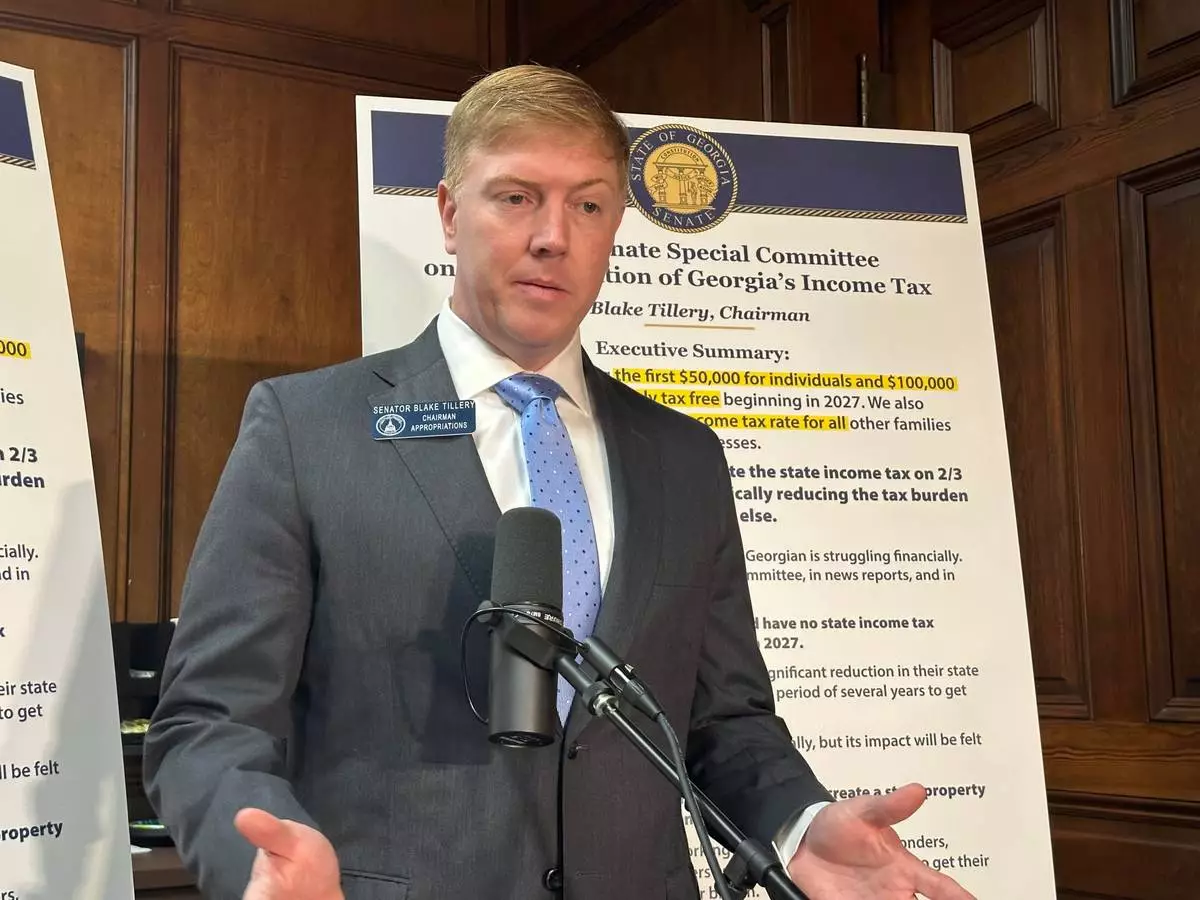
Georgia State Sen. Blake Tillery, R-Vidalia, speaks to reporters about a proposal to eliminate the state's personal income tax on Wednesday, Jan. 7, 2026, at the Capitol in Atlanta. (AP Photo/Jeff Amy)

Georgia State Sen. Blake Tillery, R-Vidalia, speaks to reporters about a proposal to eliminate the state's personal income tax on Wednesday, Jan. 7, 2026, at the Capitol in Atlanta. (AP Photo/Jeff Amy)

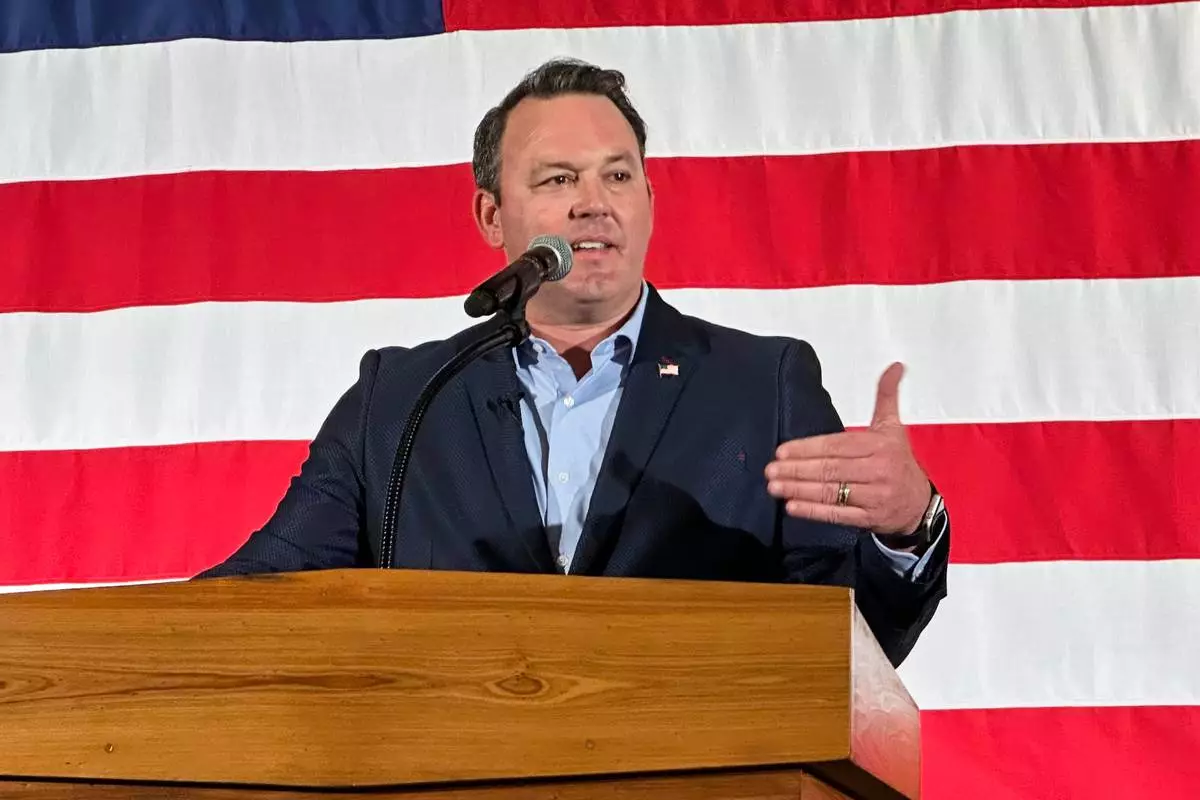
FILE - Georgia Republican Lt. Gov. Burt Jones speaks at a rally kicking off his 2026 campaign for governor, Aug. 26, 2025, in Flovilla, Ga. (AP Photo/Jeff Amy, File)

FILE - Georgia Republican Lt. Gov. Burt Jones speaks at a rally kicking off his 2026 campaign for governor, Aug. 26, 2025, in Flovilla, Ga. (AP Photo/Jeff Amy, File)

Recommended Articles