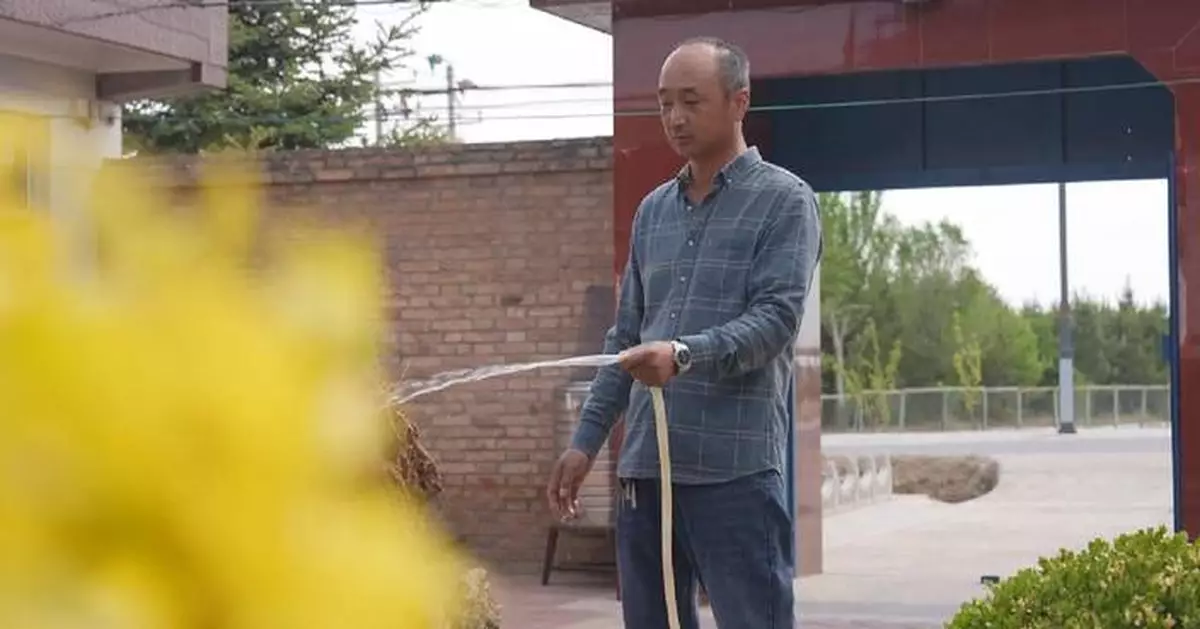
China plans to invest 100 billion yuan (about 14.1 billion U.S. dollars) to improve its rural water supply and raise the coverage of piped water in rural areas to 92 percent of households and businesses in 2024, according to the Ministry of Water Resources.
"[This year] we will strive to complete the investment of 100 billion yuan (about 14.1 billion U.S. dollars) in the construction of rural water supply projects throughout the year. By the end of 2024, the penetration rate of piped water in rural areas nationwide will reach 92 percent," said Xu Dezhi, deputy director of the Department of Rural Water Resources and Hydropower of the Ministry of Water Resources.
The penetration rate of piped water in China's rural areas has increased from 83 percent in 2020 to 90 percent in 2023.
The Ministry of Finance and the Ministry of Water Resources will also provide 4 billion yuan (about 564 million U.S. dollars) this year in subsidies for the repair and maintenance of existing rural water supply systems.
The ministries will also allocate 3 billion yuan (about 423 million U.S. dollars) to support the construction of small-scale water diversion and transfer projects in 60 rural counties across the country to solve the problems of unstable water supply and insufficient pipeline capacity.

China to invest 100 bln yuan to improve rural water supply in 2024
The UN Security Council on Friday held its sixth straw poll on candidates vying to become the next UN secretary-general.
"The sixth round of straw polls has taken place," said Aglaia Balta, Greece's permanent representative to the United Nations, whose country holds the rotating presidency of the Security Council for the month of October.
Each candidate will be informed of the results through the permanent representatives of nominating member states. The president of the UN General Assembly will also be informed that the poll has been conducted, Balta told reporters after the secret vote.
Security Council straw polls on secretary-general candidates are informal closed-door ballots used to determine the viability of the candidates. Their results are not officially released.
Through the polls, the Security Council selects a candidate to recommend to the General Assembly for appointment as the next UN secretary-general.
Security Council members were believed to receive one ballot per candidate, containing the candidate's name followed by three options: "encouraged," "discouraged" and "no opinion expressed."
To win the Security Council's recommendation, a candidate needs to gain at least nine "encouraged" votes and no "discouraged" votes from any of the five permanent members of the council.
Seven candidates remain in the race: Ivonne A-Baki, a former Ecuadorian minister and diplomat; Maria Fernanda Espinosa, a former president of the UN General Assembly and former foreign minister and defense minister of Ecuador; Rafael Grossi of Argentina, current director general of the International Atomic Energy Agency; Rebeca Grynspan, a former vice president of Costa Rica and current secretary-general of the UN Conference on Trade and Development; Olara Otunnu of Uganda, a former UN under-secretary-general; Carolyn Rodrigues-Birkett, Guyana's permanent representative to the United Nations; Macky Sall, a former president of Senegal.
Current UN Secretary-General Antonio Guterres' term expires at the end of this year. His successor is scheduled to take office on Jan. 1, 2027.
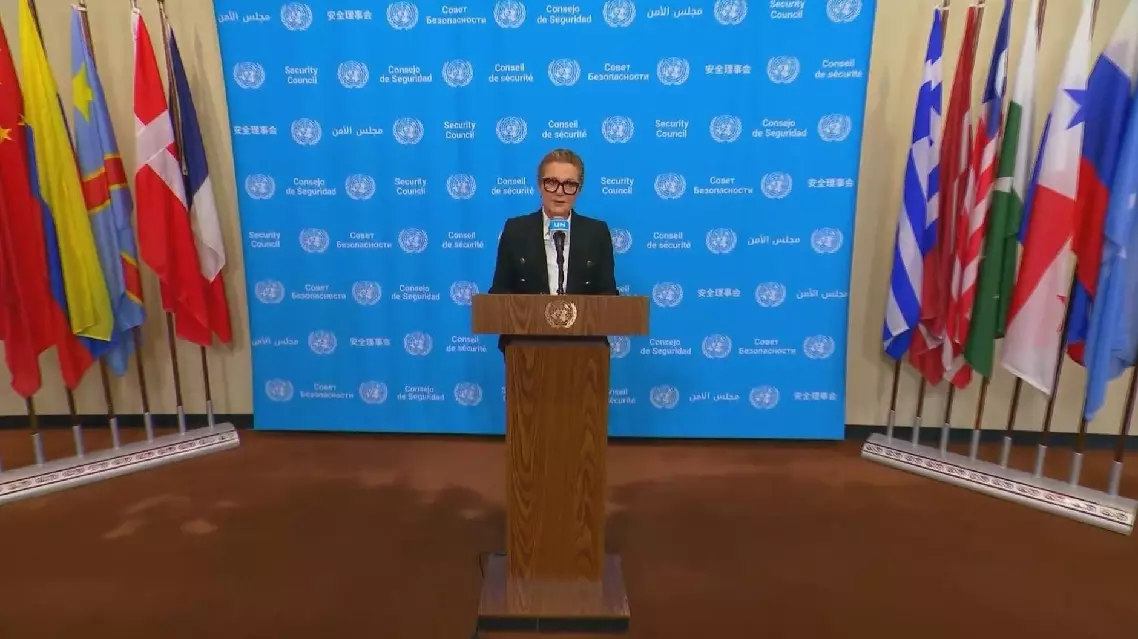
UN Security Council holds 6th straw poll on secretary-general candidates