A dragon boat race will be held as a demonstration sport at the upcoming Paris 2024 Olympics, said Thomas Konietzko, president of the International Canoe Federation (ICF) recently.
Konietzko has credited the inclusion to collaborative efforts between the ICF and China Media Group (CMG), supported by the International Olympic Committee.
At a launch ceremony of CMG's gala celebrating Dragon Boat Festival held in Beijing on Thursday, Konietzko conveyed his best wishes to the Chinese people via video link and celebrated the global popularity of dragon boat race, as well as the upcoming ICF Dragon Boat World Cup and the first International Super Cup of Canoe and Kayak in China.
The ICF Dragon Boat World Cup is scheduled to take place in Zigui County, central China's Hubei Province in October. Zigui is renowned as the birthplace of Qu Yuan (about 340 BC-278 BC), a loyal statesman and a patriotic poet in Chu, which was a major state in the Warring States Period (475 BC-221 BC). The Dragon Boat Festival is a day to commemorate Qu Yuan. The first International Super Cup of Canoe and Kayak will be held in Hangzhou, east China's Zhejiang Province, in October.
This year's CMG's dragon boat race will kick off in the city of Yancheng, east China's Jiangsu Province, during the Dragon Boat Festival holiday, which runs from June 8 to 10.
As a representative of Chinese culture, the dragon boat race serves as a traditional practice during the Dragon Boat Festival to honor the life and legacy of poet Qu Yuan. This festival falls on the fifth day of the fifth month of the lunar Chinese calendar.
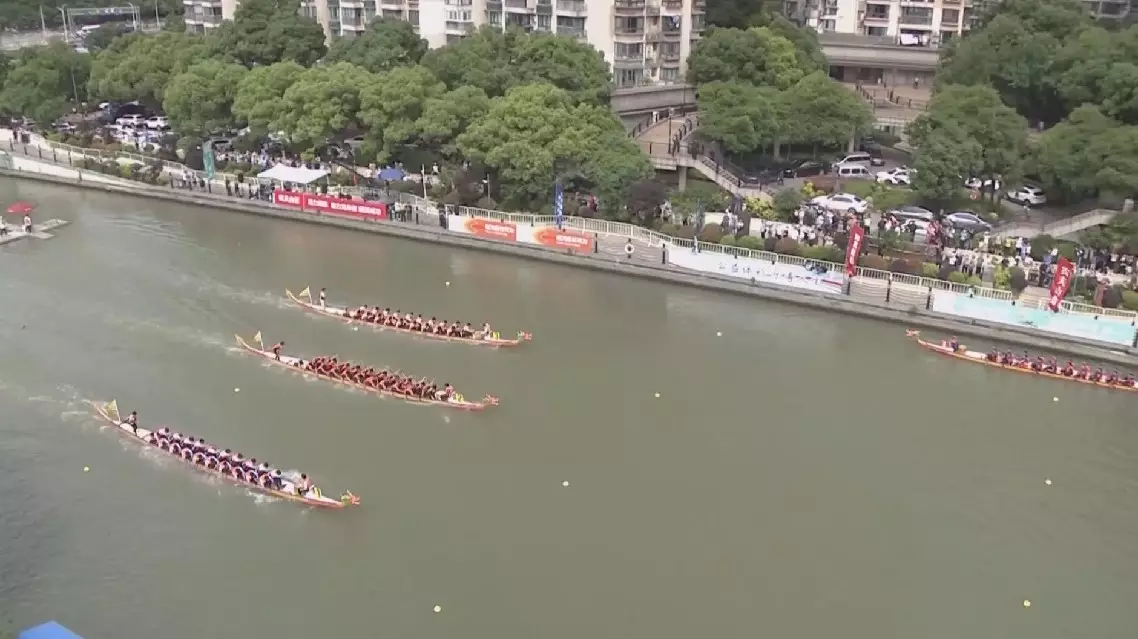
Dragon boat race listed as demonstration sport at Paris Olympics
Russia said Saturday that its forces had taken control of eight more settlements in Ukraine, while Ukraine, on the same day, said it downed 1,396 Russian drones.
In a daily report, the Russian Defense Ministry said that over the 24 hours, the Russian forces seized eight Ukrainian settlements in areas including the Kharkiv region, and struck Ukrainian military transport infrastructure, drone storage sites, and temporary deployment points.
It also said that the Russian air defense systems downed 654 Ukrainian fixed-wing drones and a HIMARS rocket, and that Russia's Black Sea Fleet destroyed a Ukrainian naval unmanned boat in the Black Sea.
Meanwhile, Russia's Defense Ministry said that in the early hours of Saturday, Russian forces used high-precision land-, air-, and sea-based weapons and attack drones to launch large-scale strikes on metallurgical plants, transformer factories, and energy facilities in Ukraine's city of Kryvyi Rih, the Zaporizhzhia region, and the Zhytomyr region that provide support to the Ukrainian military.
The ministry also said the Russian forces struck a dry cargo ship transporting military supplies to Ukraine's Odesa port in the Black Sea.
Also on Saturday, the General Staff of the Armed Forces of Ukraine said that over the past day, Ukraine's air force, missile units, and artillery struck targets including Russian troop concentrations and drone command posts, destroying one Russian tank, two armored vehicles, and 1,396 drones, among other weapons and equipment.
The Ukrainian air force said Saturday that from Friday night to Saturday morning, its air defense forces intercepted 293 aerial targets, including four Kalibr cruise missiles and 289 drones of various types.
Ukrainian President Volodymyr Zelensky said that Russia used more than 320 drones and various types of missiles to attack Ukraine's energy facilities and multiple cities and communities, with more than 15 key power generation and transmission facilities across Ukraine being hit.
Zelensky said that Russia is trying to disrupt Ukraine's energy supply before winter and cause widespread power outages.
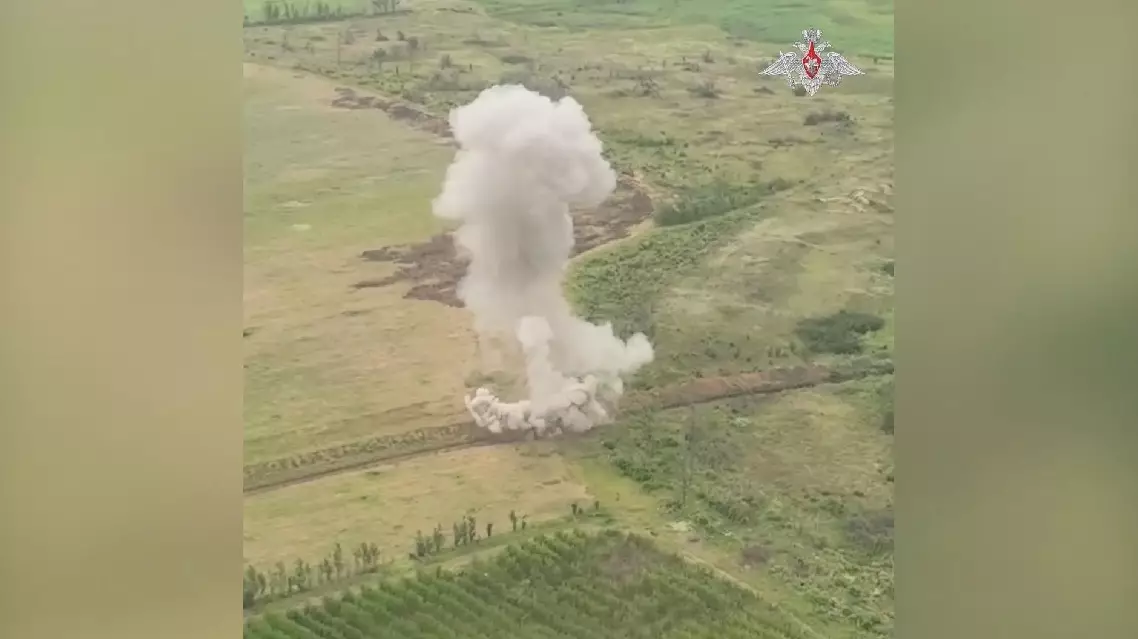
Russia claims seizing more Ukrainian settlements, Ukraine says downing 1396 Russian drones