Government urges clp power hong kong to address power outage concerns: calls for independent review and fundamental improvements to ensure stable and reliable power supply
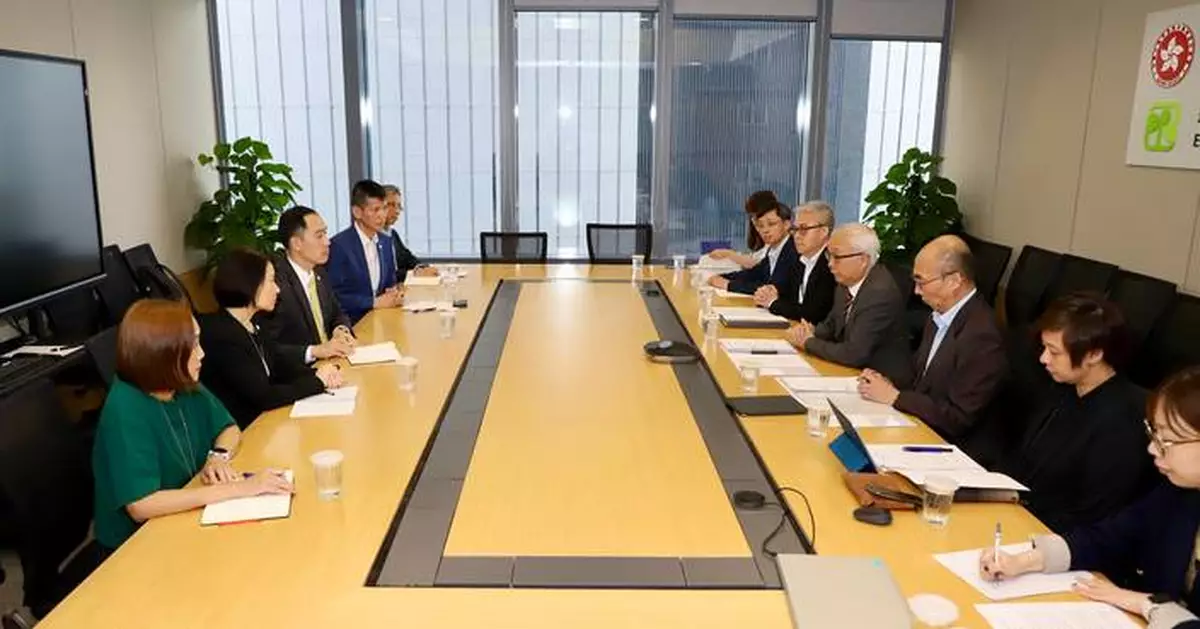
The Secretary for Environment and Ecology, Mr Tse Chin-wan, met with the Managing Director of CLP Power Hong Kong Limited (CLP) today (June 13) to express deep concern over the power outage incident that occurred in the Wong Tai Sin area last night (June 12).
Stable and reliable power supply is very important to the daily lives of the public and every level of economic activities in Hong Kong. Recently, there have been a number of voltage dips and power supply interruption incidents, and the frequency of these incidents has led to concerns about whether CLP's service quality is on the decline. This incident should not be treated as an isolated event, and CLP needs to examine its company culture and management system for the entire power supply system to identify the root causes of the problem, make fundamental improvements to reduce the chances of similar incidents in the future, and maintain the stable and reliable power supply that Hong Kong has always been proud of.
At the meeting, Mr Tse made a request to the Managing Director ofCLP for CLP to allocate resources for an independent consultant. The Electrical and Mechanical Services Department (EMSD) will be responsible for engaging an independent consultant, who will report to the Director of Electrical and Mechanical Services (DEMS) after:
(1) Conducting a re-examination of all voltage dips and power supply interruption incidents that occurred in the past three years, listing the causes, improvement measures, implementation status of the measures, and their effectiveness;
(2) Conducting a comprehensive review of the safety design of the power supply system, its capability to withstand the impact of external factors, the arrangements for maintenance and preventive maintenance, the procurement and inspection system for materials, the supervision and quality assurance standards, as well as personnel qualification, training and retraining requirements; and
(3)Providing comprehensive recommendations on how to enhance the stability and reliability of the power supply, and reduce the chances of similar incidents in the future.
The EMSD will form a task force with CLP to work on the above requirements, with a view to completing the tasks and submitting a report within 12 months. The DEMS will also invite local experts and scholars to establish a steering committee to work together in supervising the work of the independent consultant and advise on the report. At the same time, the Environment and Ecology Bureau will continue to negotiate with CLP on modifying the Scheme of Control Agreement by introducing terms of penalty to facilitate a reduction in the occurrence of electrical incidents.
Furthermore, the EMSD has requested that CLP identify the cause of the power supply incident last night and submit a detailed report within four weeks in accordance with the Electricity Ordinance (Cap. 406).
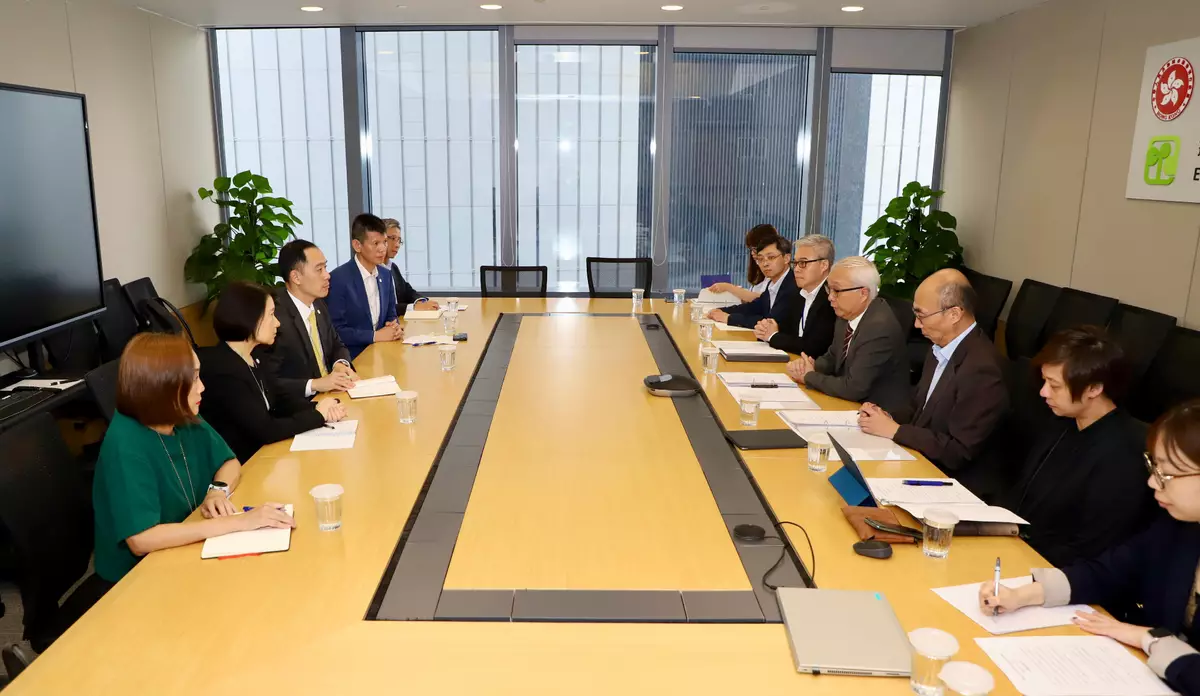
SEE meets Managing Director of CLP regarding power outage incident in Wong Tai Sin area Source: HKSAR Government Press Releases
Results of monthly survey on business situation of small and medium-sized enterprises for August 2026
The Census and Statistics Department (C&SD) released today (September 9) the results of the Monthly Survey on Business Situation of Small and Medium-sized Enterprises (SMEs) for August 2026.
The current diffusion index (DI) on business receipts amongst SMEs increased from 43.8 in July 2026 in the contractionary zone to 44.1 in August 2026, whereas the one-month’s ahead (i.e. September 2026) outlook DI on business receipts was 47.6. Analysed by sector, the current DIs on business receipts amongst SMEs for some surveyed sectors rose in August 2026 as compared with previous month, particularly for the restaurants (from 40.2 to 44.0) and real estate (from 45.2 to 48.5).
The current DI on new orders for the import and export trades decreased from 45.0 in July 2026 to 44.8 in August 2026, whereas the outlook DI on new orders in one month’s time (i.e. September 2026) was 47.4.
Commentary
A Government spokesman said that business sentiment among SMEs improved in August. The current diffusion index on business receipts reached a three-month high, and the outlook index rose to a six-month high. While the real estate sector outlook index remained above the 50-point threshold in the expansionary zone, the restaurants and retail trade sectors recorded the largest improvements in business outlook among various sectors. Meanwhile, the overall employment situation was largely steady.
Looking ahead, solid growth in the Hong Kong economy will provide continued support to business confidence. However, external headwinds are still evolving. The Government will continue to closely monitor the situation.
Further information
The Monthly Survey on Business Situation of Small and Medium-sized Enterprises aims to provide a quick reference, with minimum time lag, for assessing the short-term business situation faced by SMEs. SMEs covered in this survey refer to companies with fewer than 50 persons engaged. Respondents were asked to exclude seasonal fluctuations in reporting their views. Based on the views collected from the survey, a set of diffusion indices (including current and outlook diffusion indices) is compiled. A reading above 50 indicates that the business condition is generally favourable, whereas that below 50 indicates otherwise. As for statistics on the business prospects of prominent companies in Hong Kong, users may refer to the publication entitled "Report on Quarterly Business Tendency Survey" released by the C&SD.
The results of the survey should be interpreted with care. The survey solicits feedback from a panel sample of about 600 SMEs each month and the survey findings are thus subject to sample size constraint. Views collected from the survey refer only to those of respondents on their own companies rather than those on the respective sectors they are engaged in. Besides, in this type of opinion survey on expected business situation, the views collected in the survey are affected by the events in the community occurring around the time of enumeration, and it is difficult to establish precisely the extent to which respondents' perception of the business situation accords with the underlying trends. For this survey, main bulk of the data were collected around the last week of the reference month.
More detailed statistics are given in the "Report on Monthly Survey on the Business Situation of Small and Medium-sized Enterprises". Users can browse and download the publication at the website of the C&SD (www.censtatd.gov.hk/en/EIndexbySubject.html?pcode=B1080015&scode=300).
Users who have enquiries about the survey results may contact Industrial Production Statistics Section of the C&SD (Tel: 3903 7246; email: sme-survey@censtatd.gov.hk).
Source: AI-found images