The first industrial park jointly developed by Malaysia and China has helped entrepreneurs capitalize on the Southeast Asian country's highly-educated workforce and provided quality jobs for Malaysians, according to business community leaders.
Partnership between twin industrial parks in Malaysia and China has greatly boosted economic integration between the two countries over the past decade. Known as the "Two Countries, Twin Parks" program, the parks constitute a flagship project of cooperation under the China-proposed Belt and Road Initiative.
Founded in February 2013, the Malaysia-China Kuantan Industrial Park (MCKIP), together with its sister park, the China-Malaysia Qinzhou Industrial Park situated in China's southern Guangxi Zhuang Autonomous Region, has set an innovative example of bilateral economic cooperation under the program's model.
Among the Chinese companies in the MCKIP, Camel Power is the park's newest tenant. It produces about 15,000 car-starter batteries per day, with a mostly local workforce, providing vast high-quality job opportunities to the country's fast-developing east coast region.
"We select the employee that's highly educated, for example, from the diploma holder and some bachelor, some higher like a master or even doctorate degree. So, that's easier for our transfer of the knowhow to local manpower," said Jerry Xue Shihua, Camel Power Malaysia.
The East Coast Economic Region Development Council is also tasked with spurring socioeconomic development in the region.
"We look at all the economic sectors that could support the region and this includes manufacturing, oil and gas and petrochemicals, agriculture as it has been a generally agrarian society, tourism because of the natural endowments that are there, and human capital development," said Ragu Sampasivam, COO of the development council.
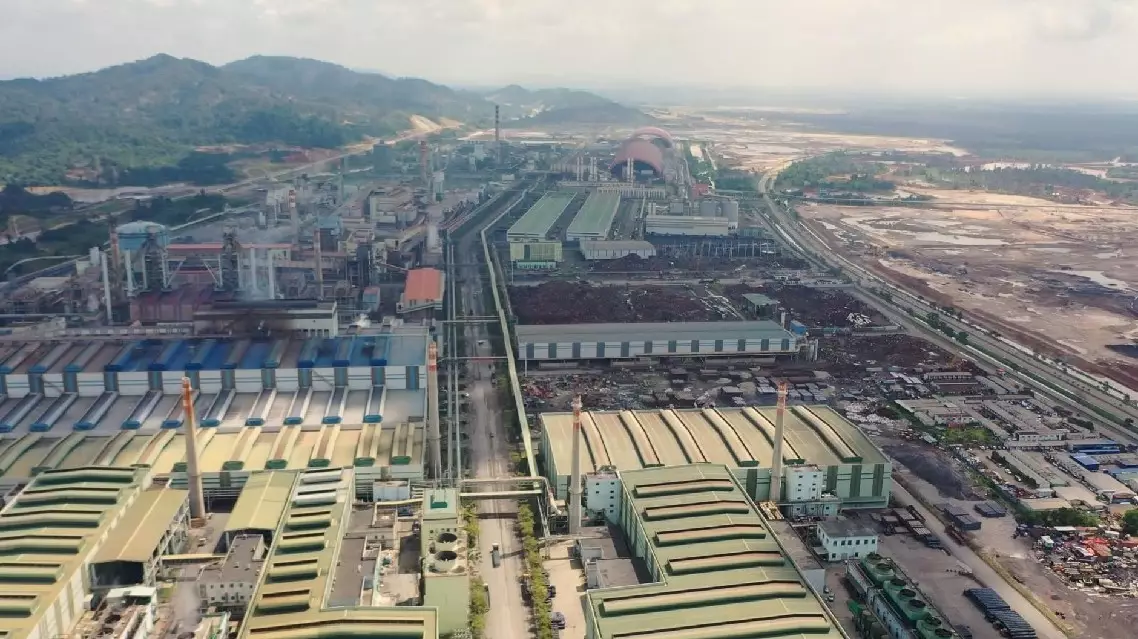
Also in the industrial park, the vast Chinese-owned Alliance Steel plant is employing nearly 3,000 Malaysian workers. Alliance exports its products from the park across Southeast Asia, and to Africa, Europe and the Americas.
"We chose this location because the Malaysia-China Kuantan Industrial Park is a special collaboration between the two countries. Also, this place has relatively rich mineral resources, and the advantage of having good human resources," said Steve Hu Jiulin, chief technology officer of Alliance Steel Malaysia. The steel firm also vigorously boosts the business of the Kuantan port, with further growth momentum expected with the undertaking of another China-Malaysia joint venture, the 665-km long East Coast Rail Link (ECRL).
Undertaken by the China Communications Construction Company, the mega rail project is expected to connect Port Klang near capital Kuala Lumpur and other cities and major ports along the east coast by 2027 to bring more balanced economic development to the country.
"All this is going to help to increase the employment opportunities, entrepreneurial opportunities for local parties to be suppliers. We also think that it will help local industries to move up a level up because these are huge investments which need our local suppliers to also expand their operation," said Sampasivam.
Entrepreneurial opportunities abound in industrial park co-built by Malaysia, China