The Caixin Robotics Industry Index (RII) was released at the Inaugural AI High-Quality Development Conference held in Hangzhou City, east China's Zhejiang Province, on Saturday.
The index, a comprehensive benchmark dedicated to the robotics sector, reached 125.1 last month, up nearly 25 percent from two years ago.
According to Caixin, Beijing topped the city robotics industry index, which measures the share of robotics-related industrial inputs in a city's overall economic inputs.
Nanjing, Xi'an, Hangzhou, and Suzhou also ranked among the top five.
In 2025, China produced more than 770,000 industrial robots and over 18 million service robots, with output expected to continue rising in the years ahead.
The climb of the index comes as robotics has been elevated in China's national planning, underscoring the sector's growing role in industrial transformation and future economic strategy, according to Wang Zhe, senior economist with the Caixin Insight, the compiler of the index.
"The robotics industry was mentioned in both the 14th Five-Year Plan (2021-2025), and the 15th Five-Year Plan (2026-2030) . Over the past five years, this industry has fully developed. From these two plans, we can see that the position of this sector has been upgraded. Five years ago, robots were just part of manufacturing upgrades, but now and looking ahead to the next five years, robotics, alongside many other emerging industries, is poised to grow into a pillar industry for China," said Wang.

Climb of robot industry index point to industrial growth
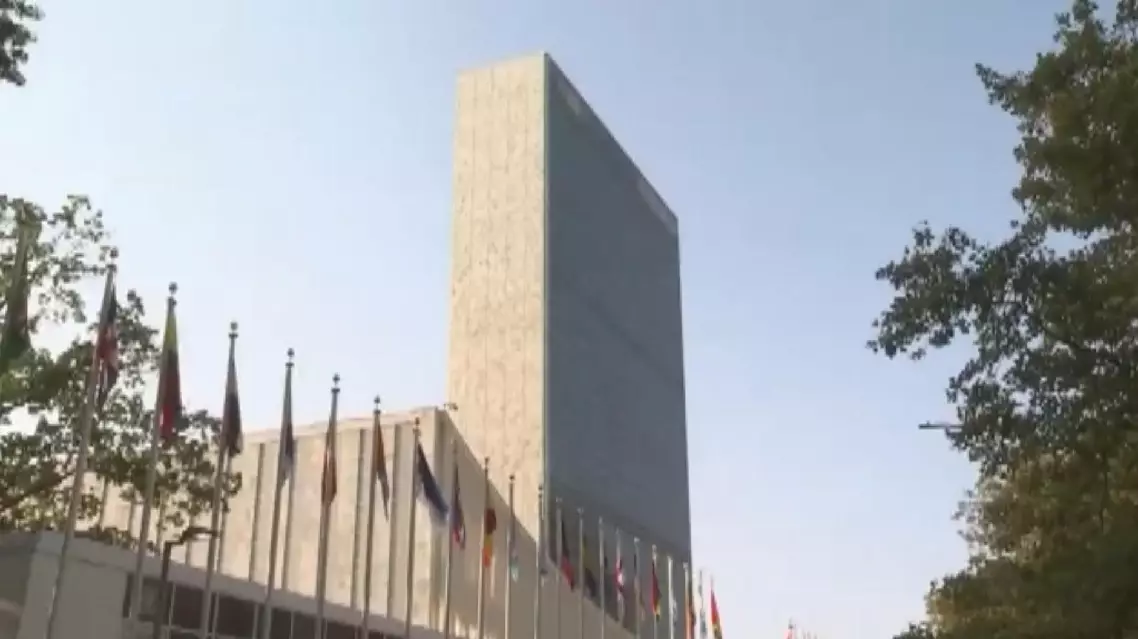
The United Nations Secretary-General Antonio Guterres is deeply concerned by increased fighting in Yemen and wanted the sides to de-escalate tensions, his deputy spokesperson Farhan Haq said Monday.
"The secretary-general has wanted the sides to de-escalate tensions, and he continues to want that. He does not believe the further militarization of the conflict, including involvement by the outside powers, will be helpful," said Haq.
According to the International Organization for Migration, more than 180,000 people have been displaced in the country since Aug. 1.
The UN Office for the Coordination of Humanitarian Affairs (OCHA) said the UN and its partners continue to support the humanitarian response wherever conditions allow, as escalating hostilities are causing more civilian casualties.
Since the start of August, at least 46 civilians have been killed, 24 of them children, and more than 130 others have been injured, including 84 women and children, OCHA said, citing the UN Human Rights Office.
According to OCHA, humanitarian partners have reported damage to civilian infrastructure, including homes and farms, as well as health, water and education facilities.
OCHA continues to assess people's needs and the impact of the hostilities, it said.
The latest developments came amid an escalation in clashes between the Houthi group and Saudi-backed Yemeni government forces across southwestern Yemen.
Yemen's conflict broke out in late 2014, when the Houthis seized the Sanaa and much of the country's north, forcing the internationally recognized government out of the capital. A Saudi-led coalition intervened in 2015 in support of the government. The recent clashes marked the sharpest escalation since a UN-brokered truce in 2022 largely halted major hostilities in the war-torn country.
UN chief voices deep concern over conflict escalation in Yemen