ST. AUGUSTINE, Fla., June 27, 2024 /PRNewswire/ -- Ellie, a leading innovator in baby monitoring technology, is excited to launch the world's first non-WiFi baby monitor with the most comprehensive AI features - Ellie Baby Plus, which allows parents to enjoy smart AI features on a dedicated screen without needing WiFi, while also supporting a WiFi connection to a phone app for simultaneous use. The innovative device is now available for purchase at its official website. This launch is part of a series of breakthroughs from Ellie. Recently, its parent company, SimShine, secured $20 million in funding, marking the largest investment in the AI maternal and infant industry in the past two years.
"The Ellie Baby Plus baby monitor is perfect for parents who seeking advanced AI features without the privacy concerns that come with traditional WiFi-based monitors." said Joe Tham, President of Ellie. "With Ellie Baby Plus, parents can receive alerts, track sleep, and access other AI functions on the separate screen without needing WiFi. Plus, it also supports phone app connection for extra convenience."
Ellie Baby Plus non-wifi baby monitor stands apart from its competitors as the world's first non-Wifi AI smart baby monitor, with built-in AI technology and emphasis on privacy with local SD card storage, making it an ideal choice for parents who prioritize safety and privacy.
Key Features of Ellie Baby Plus Non-Wifi AI Smart Baby Monitor:
- A Breakthrough in Non-Wifi Connectivity: Unlike traditional AI smart baby monitors that rely on Wi-Fi connectivity, the camera and the dedicated screen operate on a dedicated closed-circuit network.
- Exclusive Face Covering and Rollover Alerts: Ellie Baby Plus is currently the only non-wifi baby monitor on the market with a face cover alert feature, thanks to the Ellie team's years of expertise in AI technology and it's unwavering pursuit for baby safety.
- Dedicated Screen Care: The dedicated screen can connect to up to four monitors simultaneously, allowing parents to watch multiple babies or rooms on one screen.
- Comprehensive AI functions: Parents can use all AI features without any subscription fee. This includes cry detection, cry soothing, danger zone detection, photo capture, face covering and rollover alerts, and sleep tracking and report, available on both the dedicated screen and the phone app.
- 24-Hour Playback with AI Notification Check: Parents can review video footage and AI notifications from the past 24 hours, ensuring they don't miss any important events.
- Unmatched Safety and Security:The point-to-point connection technology without WiFi and the SD card storage provide an additional layer of security and privacy.
- Real-Time Monitoring with HD Video: With 2.5K ultra-high-definition video, parents can see their baby clearly day or night. Infrared night vision ensures visibility even in complete darkness.
- Two-Way Communication: The monitor's two-way communication feature enable parents to easily stay connected with their baby, even when they're meters away in another room.
The Ellie Baby Plus blends innovation with practicality, giving parents the best tools to monitor and care for their babies securely and conveniently.
About Ellie:
Ellie is a leading innovator in parenting technology, providing peace of mind with reliable and trustworthy baby care products, simplifying the journey of parenthood. With a focus on privacy and advanced AI capabilities, Ellie's products revolutionize the way parents monitor their little ones.
For more information, please contact:
Ellie Customer Service: support@elliehello.com
Visit Official Website: https://www.elliehello.com/
** The press release content is from PR Newswire. Bastille Post is not involved in its creation. **

Ellie Baby Plus Launched - World's First Non-Wifi Baby Monitor with the Most Comprehensive AI Features
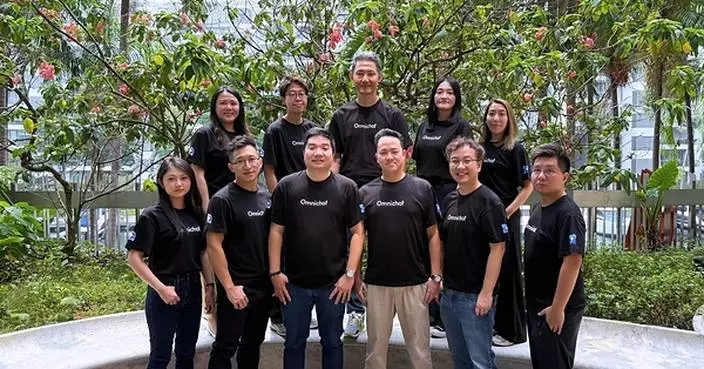
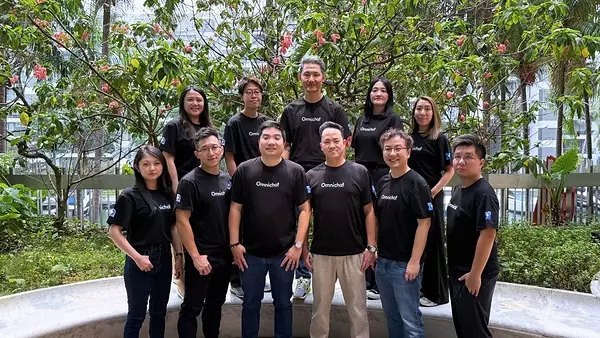
HONG KONG, Oct. 27, 2026 /PRNewswire/ -- Omnichat, an AI-native marketing and customer experience platform, today announced a US$10 million Series A funding round led by Openspace Capital, with participation from Darwin Ventures and Acorn Pacific Ventures. The company will use the funding to scale its Agentic AI platform, deepen R&D on Omni AI Agents, and accelerate global expansion.
The round will scale Omni AI Agents, the suite of AI agents Omnichat launched in 2026, to do the core work of marketing, sales and service teams inside the chat:
- AI Marketing Agent: Builds customer segments and generates complete messaging campaigns from a single prompt.
- AI Sales Agent: Recommends products and closes orders inside the chat.
- AI Customer Service Agent: Resolves customer enquiries 24/7.
- OmniClaw: An AI business analyst that tracks customer behaviour, chat trends and store-level revenue attribution in real time.
Brands have adopted the agents quickly. OmniClaw was taken up by around 300 brands within two months of its June launch. The number of brands using the Marketing Agent tripled over the same period.
Unlike shared-inbox tools that only aggregate chats, Omnichat unifies marketing, sales and customer service on a single customer profile. Omnichat also attributes revenue back to the conversation, including purchases completed in physical stores. Its agents run across WhatsApp, LINE, Facebook Messenger, Instagram, WeChat, KakaoTalk and TikTok.
Omnichat's platform has delivered measurable results for enterprises worldwide, with clients including global brands such as Dyson, FILA, Watsons, L'OCCITANE, VF Corporation, SMCP and Mead Johnson. Having helped 5,000 clients generate over US$100 million in revenue, Omnichat is now building on this foundation with agentic AI, helping businesses grow revenue without growing headcount.
"This Series A marks an important step as we transition from conversational commerce to AI-driven commerce," said Alan Chan, Founder and CEO of Omnichat. "Traditional customer messaging tools still need heavy human intervention to drive sales. With our Omni AI Agent platform, enterprises can deploy agents that sell, market, and support customers around the clock. Partnering with Openspace Capital, Darwin Ventures, and Acorn Pacific Ventures gives us the support to scale this approach across APAC and globally."
Building on its operational footprint across Asia Pacific, Omnichat will deploy its Series A capital to scale its market presence globally.
About Omnichat Limited
Omnichat is a leading AI-native agentic customer experience platform, empowering more than 5,000 global brands with an autonomous digital workforce. Through its comprehensive AI Social CRM ecosystem, the platform unifies marketing automation, sales conversion, and customer support. As a Meta Business Partner, WhatsApp Business Solution Provider, and LINE Biz-Solutions Tech Partner, Omnichat bridges conversational engagement with agentic execution across WhatsApp, LINE, Facebook Messenger, Instagram, WeChat, KakaoTalk and TikTok, converting everyday customer conversations into measurable revenue. For more information, please visit www.omnichat.ai and connect with us on LinkedIn, Facebook and Instagram.
About Openspace Capital
Openspace Capital is a multi-strategy asset manager with a long-established specialist focus on Southeast Asia. The firm operates funds across early-stage, growth stage, frontier tech, and public equities. It is headquartered in Singapore with offices throughout the region. The team comprises investment, corporate and operational specialists with capabilities in data, technology, brand, people, ESG and growth capital structuring. With an extensive portfolio built up over a decade of investing in Southeast Asia, Openspace Capital has made notable investments into GoJek (GoTo), Kredivo, Fano, Video Rebirth and TradeGecko.
For Media Enquiries:
Omnichat Limited
Lily Yeung, Regional Vice President of Communications
Macy Chun, Senior Communications Manager
Email: press@omnichat.ai
** This press release is distributed by PR Newswire through automated distribution system, for which the client assumes full responsibility. **
Omnichat Raises US$10M Series A Led by Openspace Capital to Scale AI Agent Platform and Drive Global Expansion