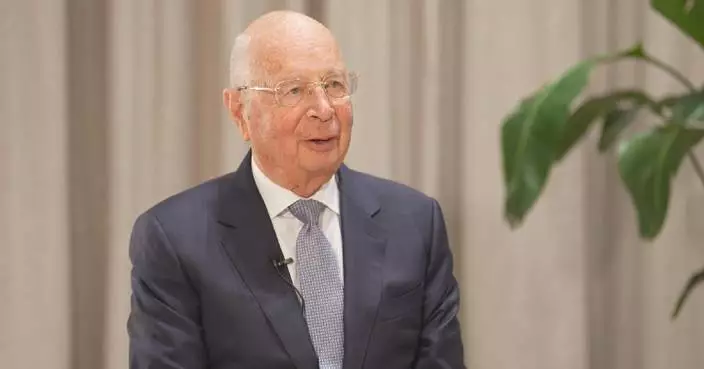
China and Tajikistan have achieved fruitful outcomes in bilateral cooperation on transportation and infrastructure, according to Tajik Transport Minister Azim Ibrohim.
In an interview with the China Global Television Network (CGTN) prior to Chinese President Xi Jinping's arrival in Dushanbe on Thursday to pay a state visit to Tajikistan, Ibrohim said that this year marks the 20th anniversary of the opening of the crossing called Kulma Karasu on the common border between China and Tajikistan -- a key infrastructure project built and operated in fruitful bilateral cooperation.
"Over the past three decades, Tajikistan has implemented many strategic plans with our neighbor China, particularly in relation to transport projects, which are very important. In 1996, an initiative was taken to open a temporary crossing called Kulma Karasu, and in 1997 the point of connection for this crossing was determined, and the construction of roads began. Finally, on May 25, 2004, this crossing was opened, and recently representatives from our two countries celebrated the 20th anniversary of this crossing," said Ibrohim.
Ibrohim said multinational frameworks such as the Belt and Road Initiative and the Shanghai Cooperation Organization have facilitated the advancement of transportation infrastructure in Tajikistan, and promoted regional integration.
"The Belt and Road Initiative, proposed by [Chinese President] Xi Jinping, was supported by our president, and today, within the framework of this initiative, many works are being carried out in Tajikistan. For example, one of the multimodal routes from China through Tajikistan, Uzbekistan, Turkey, and Europe is located on this route. And today we strive to meet international standards for this road," said the minister.
Ibrohim also said the cooperation of transportation infrastructure projects stimulated job creation and fostered economic growth in the regions.
"About 11 Chinese companies operate in Tajikistan, and if 10 to 15 percent of [the staff on] these projects are Chinese specialists, the remaining 80 to 85 to 90 percent are all local employees who receive good salaries. This, of course, ensures jobs and decent living conditions," he said.
Xi landed in Dushanbe after attending the 24th Meeting of the Council of Heads of State of the Shanghai Cooperation Organization in Astana, and a state visit to Kazakhstan.

China,Tajikistan in fruitful cooperation on transport: minister
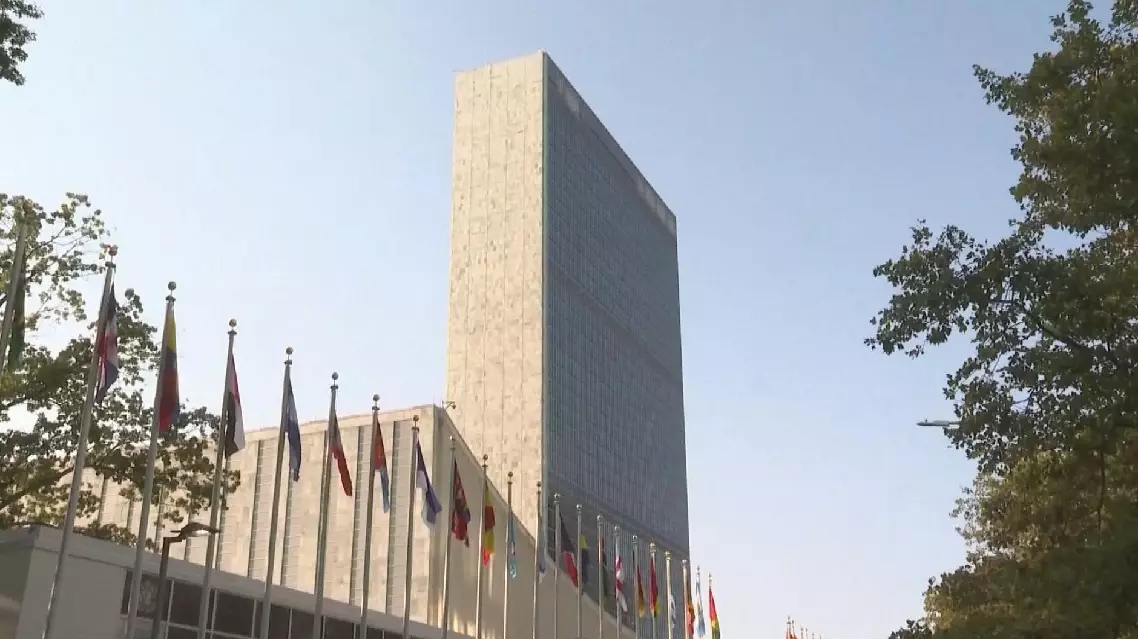
On the 55th anniversary of the restoration of the lawful seat of the People's Republic of China (PRC) in the United Nations (UN), China is highlighting its push for global civilizational dialogue, with the UN having adopted a China-proposed resolution designating June 10 as the International Day for Dialogue among Civilizations.
On October 25, 1971, the 26th Session of the UN General Assembly adopted Resolution 2758, restoring all the lawful rights of the PRC in the UN.
Today the UN has 193 member states, each with its own language, culture and history. Stephane Dujarric, spokesperson for the secretary-general, who has served the UN for more than 25 years, said understanding across those differences begins with giving every voice room to be heard.
"I've been in the UN now for almost for more than 25 years and I've learned so much. And what has helped me learn about different people and different cultures is listening, right? And it's taken me a long time to learn that listening is the most important thing. And what I've learned is to listen and to ensure that people who may not speak are given the space to speak," said Dujarric.
To deepen understanding among countries with different histories and cultures, China proposed the Global Civilization Initiative in 2023. A year later, it put forward a proposal at the UN to establish an international day for dialogue among civilizations.
In June 2024, the 78th Session of the UN General Assembly adopted by consensus the China-proposed resolution, designating June 10 as the International Day for Dialogue among Civilizations.
Fu Cong, China's permanent representative to the UN, recalled the scene inside the General Assembly hall when the resolution passed.
"What I remember vividly is the moment in the General Assembly hall when the president struck the gavel and announced the resolution had been adopted by consensus, and all member states burst into warm applause. This is a successful practice of China's implementation of the Global Civilization Initiative, and it fully demonstrates that Chinese concepts are increasingly expanding into international consensus, showing strong leadership and vitality," he said.
The resolution has since moved from paper to practice, with the first commemorative event for the International Day for Dialogue among Civilizations held at UN Headquarters in 2025.
On June 10 this year, China joined several permanent missions and partners, including the UN Alliance of Civilizations and the UN Educational, Scientific and Cultural Organization (UNESCO), in hosting another high-level event that drew nearly 300 representatives.
"China is working with all parties to actively implement the spirit of the relevant UN General Assembly resolution and strive to build platforms for equal dialogue among different civilizations. A series of colorful commemorative events at UN Headquarters and around the world are like trickling streams converging into a river of understanding and mutual trust," Fu said.
China committed to promoting dialogue among civilizations in UN