The Ningxia Hui Autonomous Region in northwest China has witnessed a high-quality development in its dairy sector by leveraging its ideal climate and pioneering technologies.
Located in the eastern foothills of the Helan Mountains, which run along the 38th parallel north, the Earth's golden ratio line, Ningxia boasts a favorable climate with abundant sunshine, mild winters, and cool summers, which is widely recognized in the industry as an ideal area for raising high-quality dairy cows. Capitalizing on these natural advantages, Ningxia's dairy industry has experienced robust growth, earning it the moniker of a "golden milk source belt" .
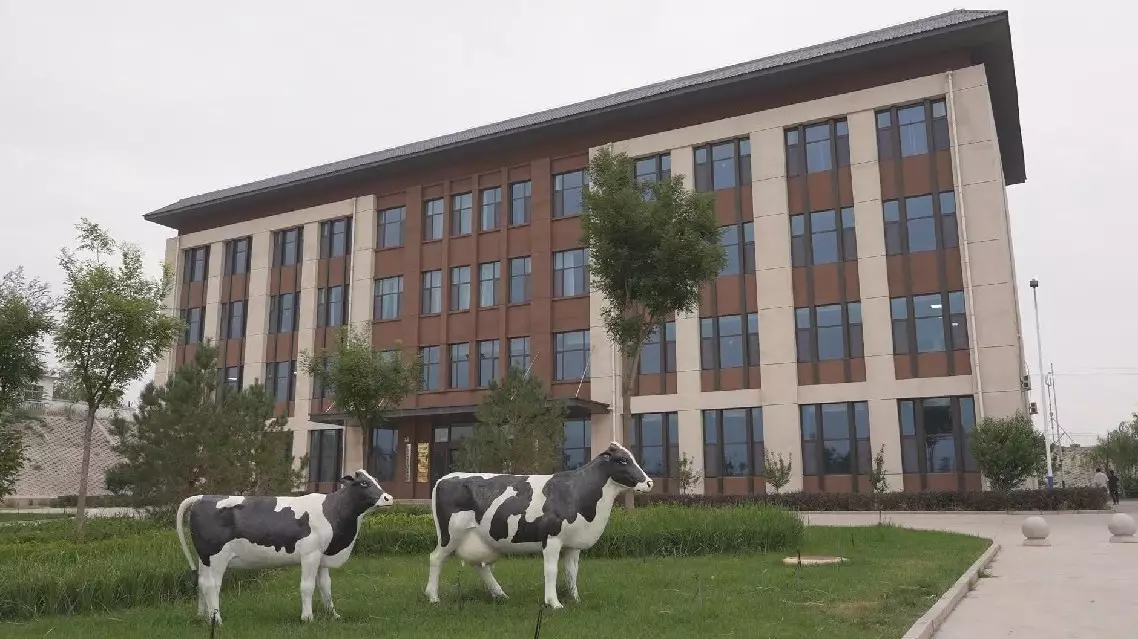
In May 2023, Chinese dairy giant Inner Mongolia Mengniu Dairy (Group) Co., Ltd. established the world's first fully intelligent dairy factory in Ningxia. This cutting-edge facility can produce one million tons of liquid milk annually, generating 10 billion yuan in output value with a workforce of just 100 employees.
The factory's advanced automatic and intelligent manufacturing systems handle every aspect of production, from planning to scheduling, decision-making and troubleshooting, independently.
In a traditional packaging workshop, such operations would typically require over 300 workers, but this factory needs just two maintenance personnel.
By connecting products, materials, and equipment through a 5G-powered Internet of Things, the facility has drastically reduced manpower while boosting efficiency.
Complementing the smart factory is the country's first fully automated intelligent laboratory for dairy product testing, which holds over 110 patents, including the laboratory itself.
The lab's analyses have found that many of Ningxia's raw milk samples exceed the national protein content standard by more than 15 percent, underscoring the exceptional quality of the region's dairy source.
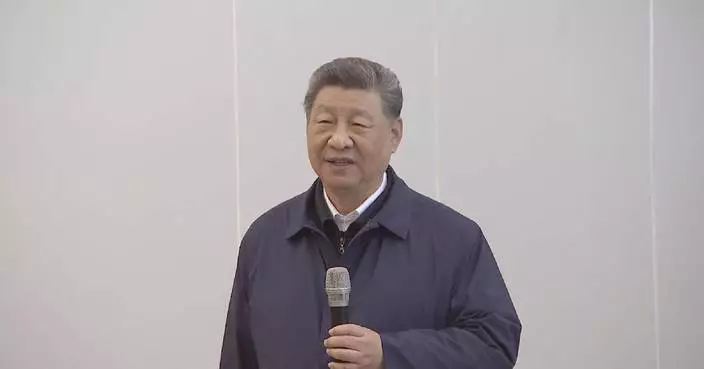
The high-quality milk can be attributed to Ningxia's pioneering work in dairy cow breeding. The region is home to the first ranch in China to widely apply cloning technology, successfully producing a herd of seven cloned cows. "We conducted a large-scale screening across the country. First, we selected 'super dairy cows' with a lifetime milk production exceeding 100 tons. We collected ear tissue samples from these super dairy cows and isolated fibroblasts. Then, we used somatic cell nuclear transfer technology to clone them," said Dr. Yang Mingmao of Northwest Agriculture and Forestry University.
Ningxia's breakthrough in cloning high-yield dairy cows has enabled the region to establish a herd of superior germplasm.
The next step is to develop a breed of high-quality, genetically valuable breeding bulls through stem cell cloning technology, which could help China break the foreign monopoly on advanced dairy genetics, according to Dr. Wei Yaochang of Northwest Agriculture and Forestry University,
"Our main task for this year is to transplant the cloned embryos into surrogate cows at our farm. If we can successfully deliver these cloned bulls, it will mean that we have achieved a breakthrough. This is just the first one, but we will produce many more in the future. Once we establish a population, we are confident that we can break the foreign monopoly and achieve independent breeding," said Dr. Wei.
Ningxia's dairies achieve high-quality development with smart factories, advanced breeding techniques
Chinese mainland markets wrapped up their first full trading week since the National Day holiday with mixed results, capped by a dramatic last-minute recovery in the benchmark Shanghai Composite Index amid signs of major investor intervention, according to a market analyst.
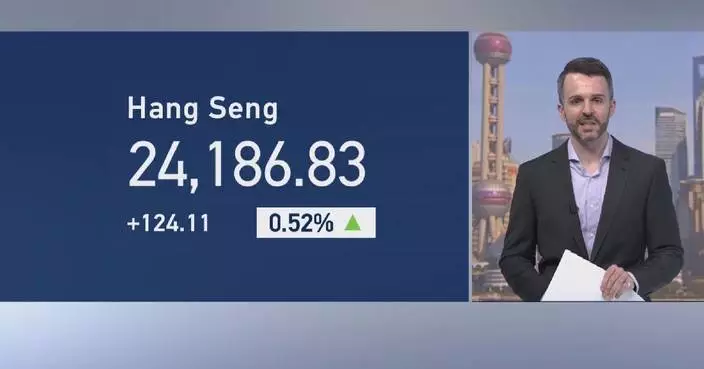
The Shanghai Composite Index rose 0.24 percent to close at 3,716.28 points on Friday, while the Shenzhen Component Index dropped 0.12 percent to settle at 11,802.46 points. The ChiNext Index, tracking China's Nasdaq-style board for growth enterprises, lost 0.39 percent to finish at 2,772.38 points.
Timothy Pope, a market analyst at China Global Television Network (CGTN), said the session was a roller coaster for mainland investors.
"It's been a bit of a mixed end to the first full trading week since China's National Day holiday, and today's session was quite the roller coaster for the Chinese mainland markets. We had a strong morning rally, followed by a sharp afternoon reversal and then an extraordinary last-minute recovery for the Shanghai Composite Index. It finished 0.25 percent higher, having recovered almost a full percentage point in just the final 15 minutes of trading. The Shenzhen Component [Index] was down 0.1 percent and the ChiNext board, though, was down 0.4 percent -- both though having recovered from some steeper losses in the afternoon. Real estate, energy and consumer stocks were among the stronger performers. We had healthcare, technology and financial shares really struggling, though," he said.
Pope attributed the extraordinary late-session bounce in the Shanghai Composite partially to the expiration of stock index futures and options contracts, which often triggers significant portfolio repositioning. However, he also pointed to possible intervention by large institutional investors.
"One possible explanation for the last-minute bounce is the stock index futures and options contracts expired today. That can trigger some significant repositioning towards the end of the session. But there's also growing speculation that China's so-called national team of state-backed investment firms is returning to the market to put a floor under share prices. Bloomberg and Chinese financial media have reported some really extraordinary activity in exchange-traded funds (ETFs) this week. On Thursday alone, one ETF tracking the CSI 300 attracted almost 19 billion yuan (about 2.84 billion U.S. dollars) in net inflows. And there was some even more tremendous activity in broader equity ETFs as well. And almost 90 percent of the trading in that single CSI 300 fund happened in just the last half hour of the session. So there are certainly some signs of very big investors stepping in to support the market, although no confirmation yet that those buyers are from the big state-backed funds," he said.
Growing concerns over AI valuations and the massive capital costs of building AI infrastructure continue to weigh on tech shares, Pope noted, even as investors brace for a heavy week of macroeconomic data.
"The weakness that we saw in tech shares also fits with what we've seen across global markets this month. There's growing concern about AI company valuations and the enormous costs of building out AI infrastructure, and whether future revenues can really justify that spending. And those concerns extend to companies supplying the AI industry as well, and China has plenty of those. What was interesting about today's session is that the stronger contributions to the Shanghai Composite [Index] came from companies like Petro China, Zijin Mining and Kweichow Moutai rather than a broad recovery or a buyback into the technology sector. Looking ahead, we've got China's third-quarter GDP figures due on Monday along with retail sales, industrial production and investment data. And those are certainly going to give investors plenty to chew on when the markets open on Monday," said the analyst.
Chinese mainland markets stage last-minute recovery amid speculation of big-investor support: analyst