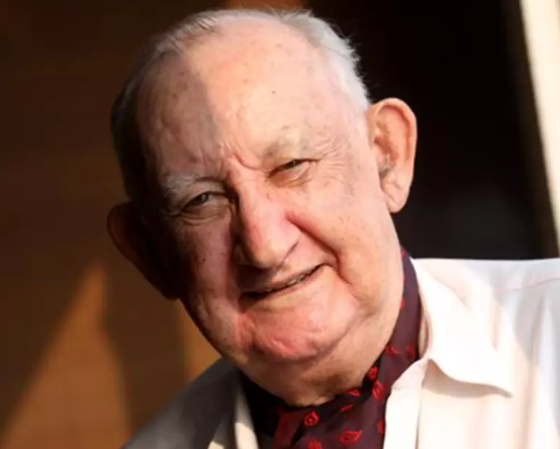
Mark Pinkstone/Former Chief Information Officer of HK government
The argument about press freedom in Hong Kong continues with the latest press freedom report compiled by the Hong Kong Journalists Association (HKJA). Its results are not surprising as the emotions of journalists are well known, even in their writings. They are a sensitive lot and very protective of their industry.
That is fair enough as it is, after all, their bread and butter. But their emotions spill over to the international stage and used to weaponize Hong Kong as it licks its wounds from the 2019-20 riots.
The HKJA report says the press rating has dropped to 25 points out of 100, its lowest since the survey started in 2013. The Index survey was conducted between March and April this year to evaluate the state of press freedom in 2022. The survey was composed of two parts, with responses collected from the public and journalists. The HKJA sent out 678 questionnaires to journalists, of which 249 responded. A second part of the survey involved the public and was conducted by the Hong Kong Public Opinion Research Institute and involved 1,026 residents.
Among respondents in the public sector, 49 per cent believed arresting and charging several senior members of the media with violating the National Security Law or with sedition was quite or very damaging to press freedom.
Among journalist respondents, 97 per cent believe charging Stand News editors with sedition was damaging to press freedom, of which 90 per cent believe it to be very damaging. Further, 96 per cent of journalists believe charging media tycoon Jimmy Lai under the National Security Law was quite or very damaging to press freedom.
The root cause of this discontent appears to centre around the National Security Law and the term “sedition.” Journalists fail to accept sedition and subversion as against the State, anywhere. They believe they have a right to report and promote sedition and subversion, including independence, without acknowledgement of the consequences.
This is something that the journalism training courses at our universities should pay close attention to.
Sedition’s history dates to the Elizabethan era around 1590 and is applicable in all Common Law states (UK, New Zealand, Australia, Canada, USA, etc.) and other parts of the world. Even the bible recognises sedition in Romans 13:1-2: “Let every person be subject to the governing authorities…Therefore whoever resists the authorities… will incur judgment.”
Sedition refers to overt actions written or by speech which expresses discontent against the establishment with the aim to incite violence or hatred against it.
Therefore, the arrests of senior media personnel, including Jimmy Lai, on sedition charges should not be regarded as “damaging to press freedom,” but rather as criminal acts according to international laws.
But because many of those arrested are from the Fourth Estate, the media cries foul and call the arrests a clamp down on press freedom. They are wrong and their emotions cloud their judgement when answering the HKJA survey questionnaire.
However, the damage has been done and already the international media is playing up erosion of press freedom in Hong Kong. “Birds of a feather, flock together,” as the saying goes.
Despite what the media portrays, Hong Kong still enjoys a flourishing press. According to the online encyclopaedia, Wikipedia, Hong Kong is the home to many of Asia's biggest English and Chinese language newspapers. The territory has one of the world's largest press industries and is a major centre for print journalism. It added that Apple Daily had one of the highest circulations before its closure in 2021. It had a feisty, tabloid style, concentrating on celebrity gossip and paparazzi photography, with sensationalist news reportage and a noted anti-government political position.
In Hong Kong, as at December 31, 2023, there were 90 daily newspapers and 376 periodicals (including numerous electronic newspapers), three domestic free television programme services, one domestic pay television programme service, nine non-domestic television programme services, one public service broadcaster, and two sound broadcasting licensees. The availability of the latest telecommunications technology attracted many international news agencies, newspapers with international readership and overseas broadcasting corporations to establish regional headquarters or representative offices in Hong Kong. International media including The Economist, The Financial Times, The New York Times, The Nikkei, The Wall Street Journal, Agence France-Presse, Associated Press, Bloomberg and Thomson Reuters have a presence in Hong Kong. International broadcasters with operations in Hong Kong include the BBC, CNBC, CNN, CGTV, CAN, DW, Al Jazeera and NHK. The Overseas Public Relations Sub-division of the Government Information Services Department liaises closely with more than 60 foreign media organisations based in Hong Kong, handling press enquiries, disseminating news and arranging briefings and interviews. The local newspapers are published in Chinese, English, Japanese, Korean, Indonesian, Filipino and Nepalese to cater for the entire community.
Only Two of the publications, Apple Daily and Stand News, closed down due to their implications in the National Security Law and the subsequent arrest of their owners on subversion charges.
So to say that the media in Hong Kong is eroding, is a misplacement of fact. It is alive and thriving as demanded by the public. The media is free to question the governance of Hong Kong and to investigate and expose malpractices. However, it is not free to incite hatred against the administration.
Mark Pinkstone
** 博客文章文責自負,不代表本公司立場 **