Togo's aim to enhance its connectivity in the region has been supported by the notable upgrade of its Lomé International Airport, now recognized as a key airport in West Africa. This improvement is a clear outcome of the collaborative efforts between China and Togo, facilitated by the Forum on China-Africa Cooperation.
The airport's renovation, which began in 2012 with Chinese support, has played a significant role in Togo's modernization. A central figure in this journey is Dr. S. Antoine Batcha, who was contacted by the Chinese company leading the renovation during his doctoral studies in China. Despite initial reluctance, he chose to return to Togo to contribute to a project of national significance.
"Given the importance of the project, also realizing that they saw that I have some skills to be able to support the project, I decided to come back," he said.
Within the framework of the Forum on China-Africa Cooperation, the project to redevelop and extend the Lomé International Airport is expected to help Togo build an air hub in the West African region.
Batcha also shared his excitement when he joined the project.
"I was delighted, very impressed. If this massive plan can be implemented quickly in Lomé, then Lomé will be ahead of the other West African Economic and Monetary Union countries," he said.
According to Lu Xinyong, the project's Chinese manager, Batcha's involvement has been crucial, especially in managing a 2013 labor dispute that could have impacted the project's progress.
"I was particularly impressed by an event that happened in 2013. There was a strike at the construction site. Dr. Batcha learned about the requests of the Chinese company and the local employees, and then, through active communication with both parties, he managed to settle the situation. He has become a bridge that facilitates communication between the Chinese company and local employees," the manager said.
The inauguration of the new terminal in April 2016 marked a significant milestone, with the facility not only expanding the airport's capacity but also meeting high environmental standards, earning it a carbon accreditation.
"When carrying out the work, we took all possible measures to respect green construction guidelines -- in particular the curtain walls, which are highly ecological. And thanks to the respect shown to environmental standards, Lomé airport today has succeeded in the carbon accreditation of airports," Batcha said.
The success of the airport has sparked discussions for further expansion, including plans for a second terminal, highlighting its growing importance to Togo's economy.
"The terminal has become a lung for the national economy. This terminal has put Togo back at the center of international activities. We end up with an airport terminal that is getting small. And so I think that with this Sino-Togolese cooperation, we will be able to build other buildings," said Abdou Ahabou Idrissou, director general of the National Civil Aviation Agency of Togo.
The ongoing collaboration between China and Togo at Lomé International Airport exemplifies how international partnerships can lead to substantial improvements in infrastructure and economic development.
"Togo has developed very rapidly in recent years. I am very honored, as part of a Chinese company, to have had the opportunity to come and participate in the construction of Togo," said Liang Pengfang, a Chinese civil engineer of the project.
"I am very honored, very happy -- together with the Chinese teams to contribute towards the modernization of Togo's infrastructure," Batcha said.
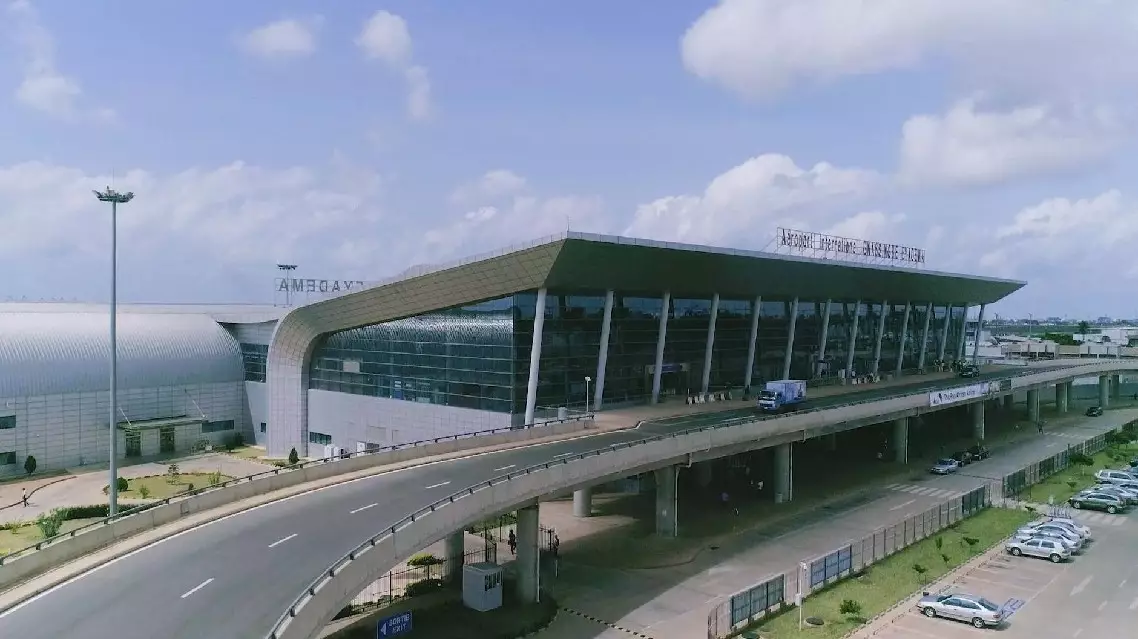
Revamp of Togo's Lomé International Airport showcases China-Africa Cooperation