Chinese contestants secured the top spot at the 47th WorldSkills Competition medal tally by winning 36 of the 59 gold medals, as the competition concluded in Lyon, France on Sunday night.
In addition to their gold medals, the Chinese team won nine silvers, four bronzes and eight medallions of excellence. They also achieved their fifth successive championship in CNC Milling and forth successive championship in the Bricklaying and Fashion Technology, respectively.
Two Chinese participants in the Industry 4.0 competition were honored with the prestigious Albert Vidal Award for achieving the highest overall score in the event.
"We won gold medals in 36 of the 59 events in the competition. We made many breakthroughs this year. We maintained our leading position in Manufacturing and Engineering Technology and Construction and Building Technology. And we also made breakthroughs in Information and Communication Technology and Social and Personal Services, which is really not easy," said Wu Liduo, deputy head of the Chinese delegation.
At the closing ceremony, the WorldSkills flag was officially passed from Lyon to the Chinese city of Shanghai, which will host the 48th edition of the competition.
This year's event, held on Sept 10-15 with the events running on Sept 11-14, drew around 1,400 participants from nearly 70 countries and regions to compete in the 59 skill categories. Sixty-eight Chinese contestants participated in all the skill categories.
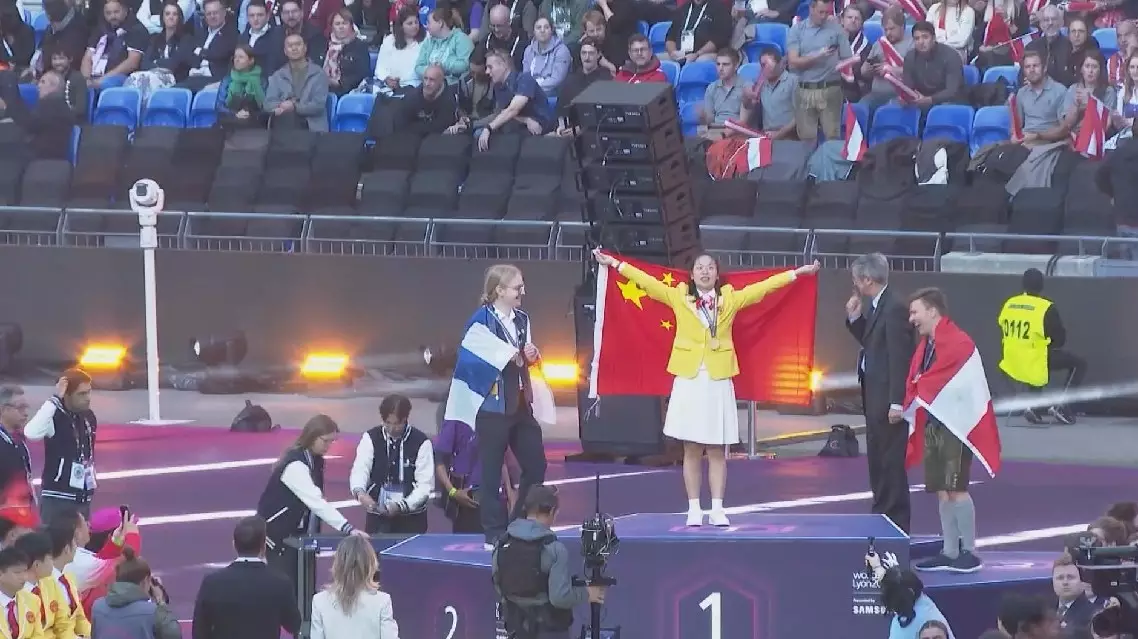
China tops 47th WorldSkills Competition medal tally
Yemen's Houthi group said that it had carried out multiple attacks on Saudi and Saudi-led coalition targets, while the Saudi-led coalition said it intercepted a Houthi missile, and Yemeni government forces reported operations against the group on several fronts.
In a statement released early Thursday, the Houthis said they used a surface-to-air missile to hit a Saudi Typhoon fighter jet. The aircraft, they said, had taken off from Saudi Arabia's Taif Air Base and was hit over Yemen's Sa'adah Province. Saudi Arabia has not yet responded to the claim.
Earlier on Wednesday, the Houthis said they launched a large-scale attack using ballistic missiles, cruise missiles and drones against oil facilities of energy giant Saudi Aramco in Dhahran in eastern Saudi Arabia, as well as King Khalid International Airport and a Saudi Aramco refinery in the Saudi capital, Riyadh.
The Houthis said in a separate statement released Wednesday evening that the group had fired one more ballistic missile at King Khalid International Airport and launched three ballistic missiles at Saudi-led coalition targets in southern Yemen.
Turki al-Maliki, spokesman for the Saudi-led coalition, said on Wednesday that they had intercepted and destroyed a Houthi ballistic missile fired toward Riyadh. Saudi Arabia's General Directorate of Civil Defense said in a statement on Wednesday that fragments from the intercepted missile fell in Riyadh, injuring one person.
Meanwhile, the Houthi-run al-Masirah TV reported that late on Wednesday the Saudi-led coalition carried out an airstrike on a residential building in the Al Maravi'ah area of Hodeidah province, which is under Houthi control. Early on Thursday, al-Masirah also reported that Yemen's capital, Sanaa, had come under Saudi attack.
According to a Houthi statement issued on Wednesday evening, the Saudi-led coalition launched 42 airstrikes and missile attacks on Houthi-controlled areas in the previous 24 hours. The Houthis said that Saudi attacks on islands in the Bab el-Mandeb Strait directly threatened the safety of maritime shipping routes.
Separately, Yemeni government forces said on Wednesday that they continued to strike Houthi targets and personnel on the eastern and southern fronts.
Yemen has been mired in conflict since late 2014, when the Houthis seized the capital Sanaa and much of northern Yemen, prompting a Saudi-led coalition to intervene in 2015 in support of the Yemeni government.
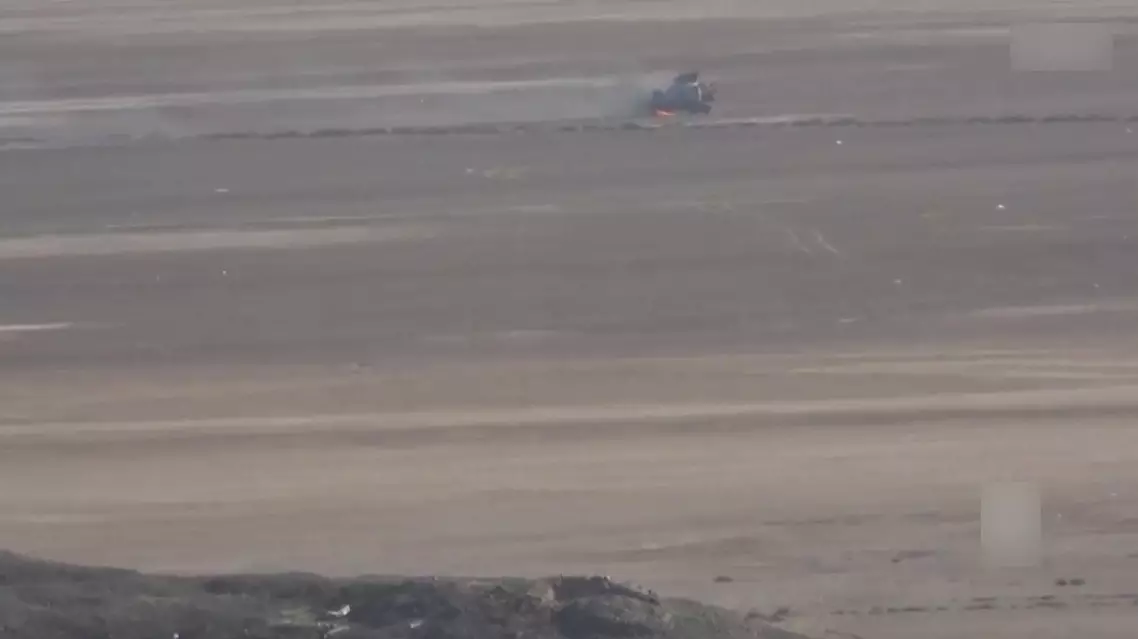
Houthis, Saudi-led coalition report fresh military actions against each other