High waves and spectacular tidal bores were galloping forward as the Qiantang River tidal bores smashed dams in east China's Zhejiang Province on Wednesday, presenting thrilling and gorgeous scenes that stunned countless viewers.
A tidal bore is a phenomenon where the leading edge of an incoming tide creates a wave that surges up a river against the flow.
The Qiantang River is known for having one of the world's largest tidal bores, which has been dubbed the "Silver Dragon" by locals.
The tides usually reach their peak between the 15th to the 18th day of the eighth lunar month, which falls on Tuesday to Friday this year, as the full moon reaches its peak, with spectacular scenes to be marveled at by countless visitors.
The height of the tidal bore on Wednesday is forecasted to reach 1.4 to 1.6 meters.
The tidal bore is mainly caused by the gravitational pull of the moon.
The centrifugal force produced by the rotation of the Earth and the trumpet shape of the Hangzhou Bay in Zhejiang makes it easy for the tide to come in, but difficult to ebb, thus giving rise to the largest tidal bore.
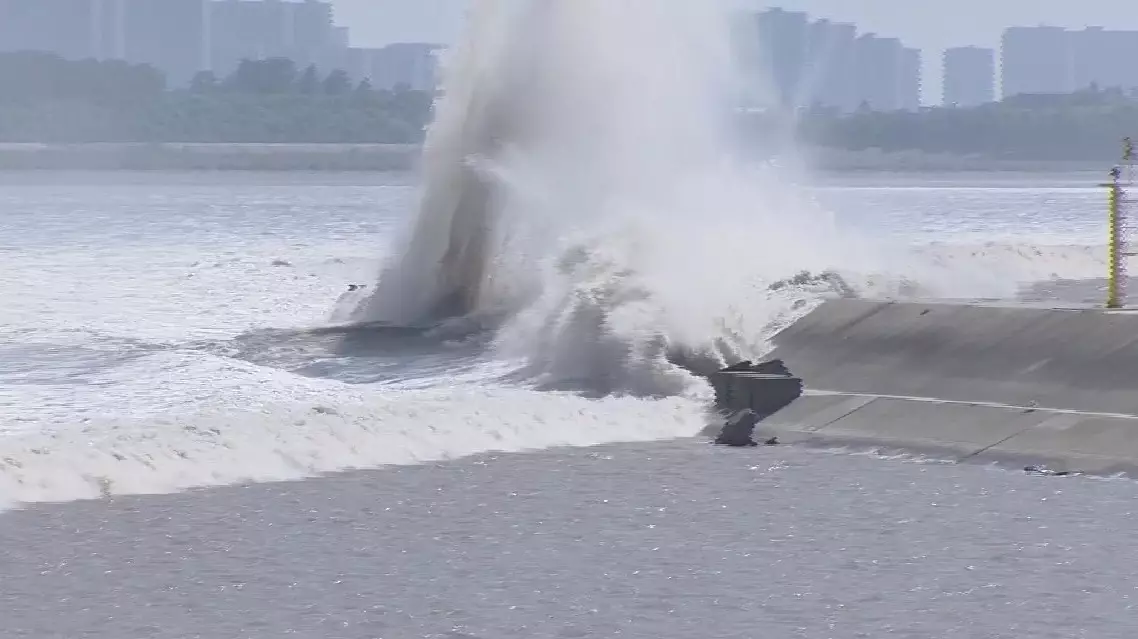
Aerial footage captures spectacular tidal bore on Qiantang River
Some Iranians in Türkiye are crossing back over the border, driven by worry and desperation, as a nationwide communications blackout in Iran has left them cut off from their loved ones.
Protests have erupted in many Iranian cities since Dec. 28. They initially began with Tehran bazaar merchants demonstrating against the sharp devaluation of the national currency rial, and soaring inflation, before spreading to other cities. The unrest has led to casualties among both security forces and civilians.
At the Turkish-Iranian border, many are returning with no certainty about what awaits them, filled instead with questions and growing fear for those on the other side of the border.
"I went to Van yesterday for internet. I urgently needed to use the internet. I got it done. Now I'm heading straight back. There are protests everywhere. We can't get any news. We can't communicate with our families. And it's not just me, there are many Iranians outside the country who can't reach their families," said Feriste, an Iranian citizen.
With communications blacked out across Iran, those outside the country feel powerless to check on the situation back home. For some, this silence has prompted them to return across the border, even as tensions continue to rise.
"We can't get any news. There is no internet. Everything is shut down. I want to search. I want to find out. I want to see my brother. I'm going to see my family," said Husnu, an Iranian citizen.
"I work in Türkiye, and I have no news from Iran at all. I'm going back because I'm worried about my family. It's been days since I last heard from them, and because I'm worried, I'm returning to Iran now. Of course, we are concerned about our safety. We don't know what awaits us there," said another Iranian.
With protests escalating and government blackouts still in place, many Iranians are caught between staying in safety abroad and risking everything to reconnect with their families.
"We had to come to Türkiye because we couldn't reach our families. Schools were closed already. All official institutions were shut down. We have no information about other cities either, because there is no communication network there. There is no television, no internet. We can't even check Twitter," said Nazlican, another Iranian citizen.
Iranians in Türkiye return home, fearing for their families amid unrest in Iran