CHP investigates case of severe paediatric influenza A infection
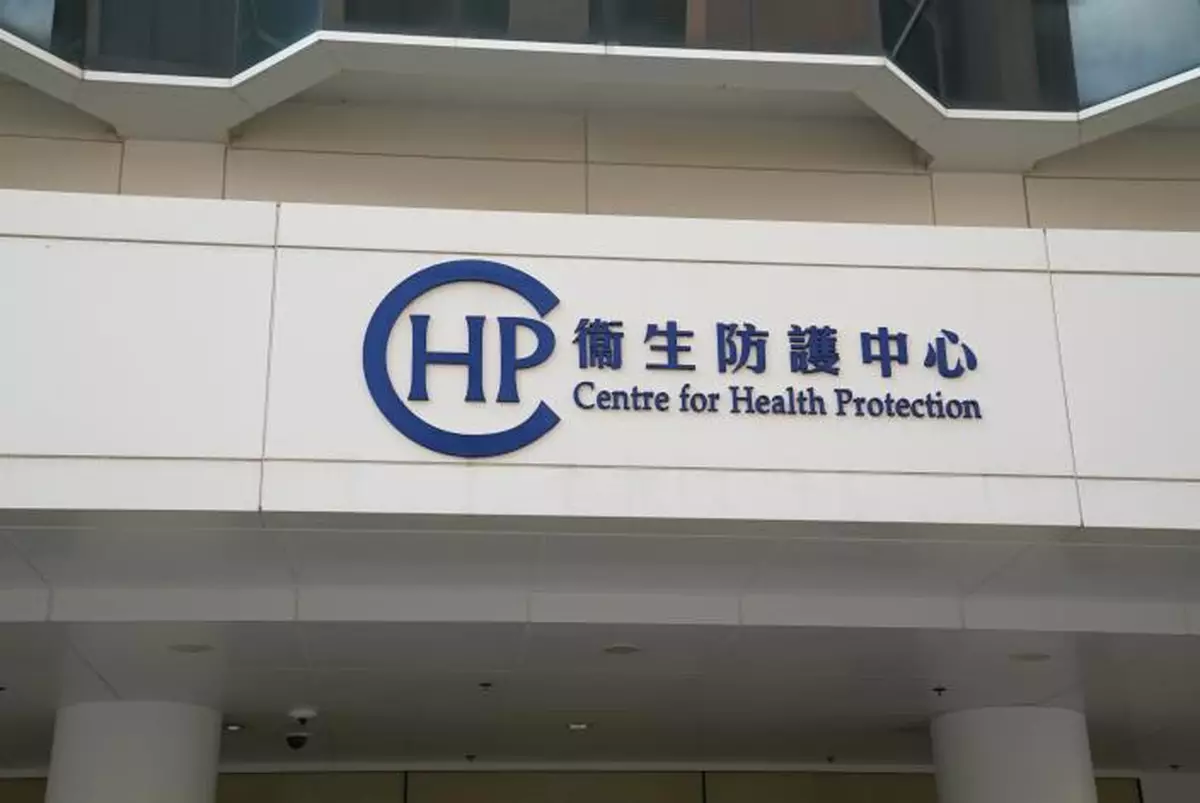
The Centre for Health Protection (CHP) of the Department of Health is today (September 20) investigating a case of severe paediatric influenza A infection and reminded the community to heighten vigilance against influenza. The 2024/25 Seasonal Influenza Vaccination Programmes will begin on September 26 and the CHP urged the public to receive the seasonal influenza vaccination (SIV) to better protect themselves during the coming influenza season.
The case involves a 9-year-old boy with good past health. He developed a sore throat since September 17 and sought medical attention froma private doctor on the same day. He developed a fever, cough and shortness of breath on September 18 and was brought to Kwong Wah Hospital and was admitted on the same day. He is now at the Paediatric Intensive Care Unit of the hospital for treatment and is now in serious condition. His nasopharyngeal swab specimen was positive for influenza A (H1) virus upon laboratory testing. The clinical diagnosis was influenza A infection complicated with severe pneumonia.
Initial enquiries by the CHP revealed that the patient had no travel history during the incubation period. One of his home contacts is currently symptomatic. The CHP's investigations are ongoing.
A spokesman for the CHP said, "Influenza can cause serious illnesses in high-risk individuals and even healthy persons. SIV is one of the most effective means to prevent seasonal influenza and its complications, as well as reducing influenza-related hospitalisation and death. SIV is recommended for all persons aged 6 months or above except those with known contraindications. Persons at higher risk of getting influenza and its complications, including the elderly and children, should receive SIV early. The 2024/25 Seasonal Influenza Vaccination Programmes will begin on September 26. As it takes about two weeks to develop antibodies, members of the public are advised to receive SIV early for protection against seasonal influenza. Please see details of the vaccination schemes on theCHP's website.
A person who gets influenza and COVID-19 at the same time may be more seriously ill and would have a higher risk of death. It is important to receive both SIV and COVID-19 vaccination as soon as possible, in particular for children and elderly persons residing in the community or residential care homes. The public should also maintain good personal and environmental hygiene against influenza and other respiratory illnesses, and note the following:
- Surgical masks can prevent transmission of respiratory viruses from ill persons. It is essential for persons who are symptomatic (even if having mild symptoms) to wear a surgical mask;
- For high-risk persons (e.g. persons with underlying medical conditions or persons who are immunocompromised), wear a surgical mask when visiting public places. The public should also wear a surgical mask when taking public transport or staying in crowded places. It is important to wear a mask properly, including performing hand hygiene before wearing and after removing a mask;
- Avoid touching one's eyes, mouth and nose;
- Wash hands with liquid soap and water properly whenever possibly contaminated;
- When hands are not visibly soiled, clean them with 70 to 80 per cent alcohol-based handrub;
- Cover the mouth and nose with tissue paper when sneezing or coughing. Dispose of soiled tissue paper properly into a lidded rubbish bin, and wash hands thoroughly afterwards;
- Maintain good indoor ventilation;
- When having respiratory symptoms, wear a surgical mask, refrain from work or attending classes at school, avoid going to crowded places and seek medical advice promptly; and
- Maintain a balanced diet, perform physical activity regularly, take adequate rest, do not smoke and avoid overstress.
The public may visit the CHP'sinfluenza pageand weeklyCOVID-19 & Flu Expressfor more information.
Speech by CE at Hong Kong Association of Banks Distinguished Speaker Luncheon
Following is the speech by the Chief Executive, Mr John Lee, at the Hong Kong Association of Banks Distinguished Speaker Luncheon today (September 4):
Mr Sun Yu (Chairperson of the Hong Kong Association of Banks), distinguished guests, ladies and gentlemen,
Good afternoon. I am delighted to join you, for the fourth time now, the Hong Kong Association of Banks' annual Distinguished Speaker Luncheon.
This annual gathering brings together prominent leaders of Hong Kong's banking and financial sectors. Indeed, the Association now represents nearly 150 member banks from 28 countries and regions.
Your continuing dedication, expert counsel and long-standing support for banking, and business in general, are central to Hong Kong's financial resilience and long-term prosperity.
This year alone, more than 3 000 professionals from your member banks have participated in business and professional education workshops held by the Association. And I understand that the Association's Kazakhstan Forum, held here in Hong Kong this April, brought together nearly 200 industry leaders and professionals to hear about opportunities in Kazakhstan, and the broader Central Asia.
I am pleased to note the Association's Hong Kong Banking 2030 report, produced together with Deloitte. It will respond to, and champion, Hong Kong's First Five-Year Plan, which I will unveil on the 16th of September.
The Plan will mark a defining moment for our city. Launched in the first year of the period of the National 15th Five-Year Plan, it responds to Hong Kong's compelling need for strategic and forward-looking planning, both for our economic and social development. At the same time, it has been created to integrate into, and serve, our country's national development.
The Plan will leverage Hong Kong's unparalleled roles as a "super connector" and a "super value-adder", linking Mainland capital and enterprises with global markets, while bringing in international capital, technology and talent.
The banking sector is our crucial partner in realising this strategic vision - bringing it to our dynamic life. Allow me now to highlight four key areas where the HKSAR (Hong Kong Special Administrative Region) Government and the banking industry can work together to drive Hong Kong's prosperity and contribute to our country's development.
First, expanding the offshore Renminbi business and deepening financial connectivity. The National 15th Five-Year Plan charts the country's course for high-level opening up, and the internationalisation of the Renminbi stands as a strategic priority.
Hong Kong, the world's largest offshore Renminbi business hub, is uniquely positioned to spearhead this effort. We are committed to enriching the Renminbi liquidity pool, expanding offshore Renminbi investment and risk management products, and reinforcing our financial market infrastructure.
We will expand the mutual market access schemes with the Mainland. That includes Stock Connect, Bond Connect, Wealth Management Connect and Swap Connect.
And the Government looks forward to working closely with banks - with you - to innovate Renminbi-denominated products, enable cross-boundary trade settlement and broaden the global use of Renminbi.
Second, empowering the real economy and encouraging innovation and technology through finance. Strategic growth hinges on technological self-reliance and high-quality development.
That very much includes the Northern Metropolis. With the support of the National 15th Five-Year Plan, the Northern Metropolis development will integrate university town areas, innovation and technology, and industry, providing an environment suitable for living, working and travelling. In short, it will become a breakthrough points for our city's rapid development.
I am pleased to note that the Hong Kong Association of Banks, together with the Hong Kong Monetary Authority, jointly established the Northern Metropolis Financial Advisory Taskforce in April.
The Taskforce, which currently counts 23 participating banks, formalises communication and collaboration with the Government, while exploring ways to support the Northern Metropolis through financing.
I am confident that the Association, and the banking sector in general, will play an instrumental role in financing large-scale infrastructure projects in the Northern Metropolis, unlocking opportunities created by this boundless new economic engine for Hong Kong and the Greater Bay Area.
Developing commodity trading is the third area we can make a difference, working together. With the clear support in the National 15th Five-Year Plan, the HKSAR Government is pursuing developments in this area, with the gold market as our entry point.
In July, we reached a milestone, launching the trial operation of Hong Kong's central clearing and settlement system for gold.
And I am grateful for the staunch support we received from banks participating directly in the clearing system.
That banking support goes well beyond infrastructure, let me add. It also includes issuing gold-backed investment products and market development, as well as vaulting. I encourage you all to join us on this golden journey of opportunities.
And fourth, strengthening financial security and market integrity. A thriving international financial centre must be anchored in a safe, trusted and secure environment.
Guided by the principle of "same activity, same risk, same regulation", the HKSAR Government believes that while innovation lights our future, sound oversight ensures lasting progress.
As technologies rapidly evolve, so do unforeseen vulnerabilities and emerging risks. The Government will continue to partner with the banking industry to promote responsible technology adoption through such initiatives as practical guidance and sandbox schemes, safeguarding our financial system and upholding public trust.
Ladies and gentlemen, the National 15th Five-Year Plan opens up vast horizons, unlimited opportunities, for Hong Kong. And Hong Kong's First Five-Yer Plan will help us capitalise on these strategic strengths. It helps that, under "one country, two systems", our institutional strengths - our common law system, free flow of capital, simple and low tax regime and seamless connectivity with global standards - remain rock-solid. Hong Kong's strengths are what businesses can always bank on as they pursue diversification and development.
Government strategies set the direction, but it is the energy, enterprise and expertise of our banking sector that turn vision into reality. As Hong Kong aligns its strengths with the country's development, I am confident that the vital partnership between the Government and the banking industry will continue to serve as the primary engine for Hong Kong's economic dynamism.
I know you will enjoy today's luncheon, and I wish you all the best of business, finance and banking in the rest of this year – and long into the future. Thank you.
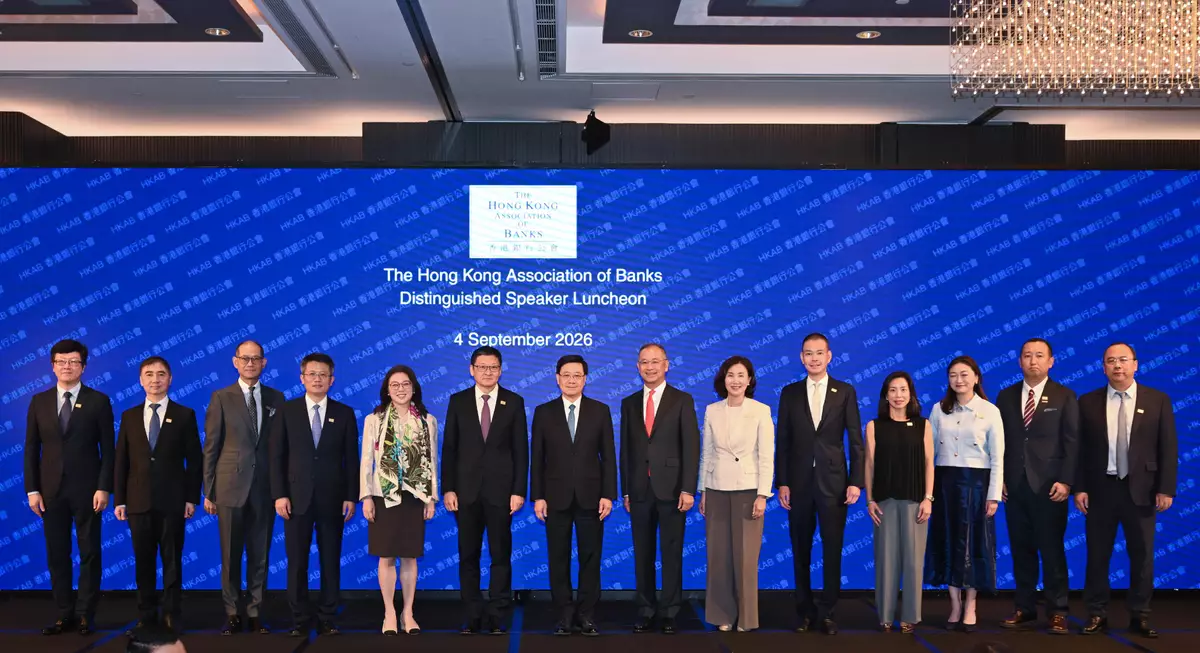
Speech by CE at Hong Kong Association of Banks Distinguished Speaker Luncheon Source: HKSAR Government Press Releases
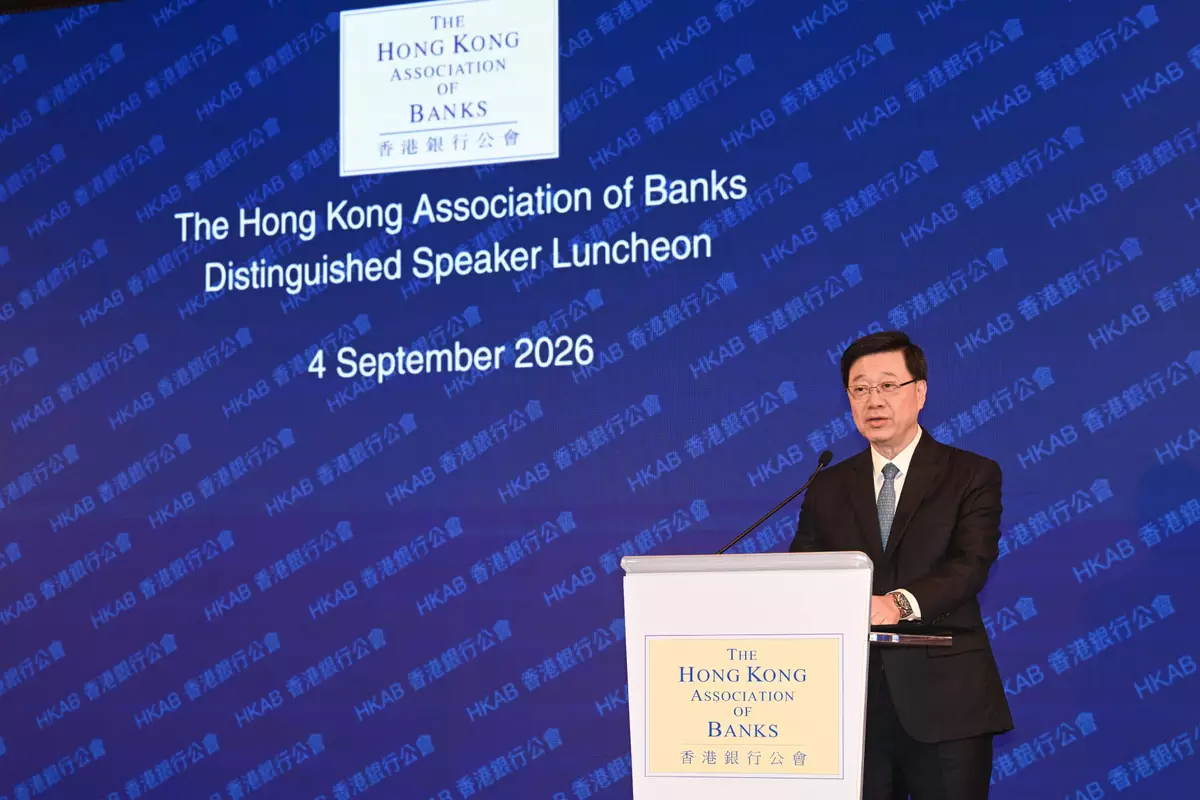
Speech by CE at Hong Kong Association of Banks Distinguished Speaker Luncheon Source: HKSAR Government Press Releases