TINMEL, Morocco (AP) — The hand-carved domes and brick-laid arches had almost all been put back together when an earthquake shook Morocco so violently that they caved in on themselves and crashed to the earth.
After nearly 900 years, the Great Mosque of Tinmel lay in pieces — its minaret toppled, its prayer hall full of rubble, its outer walls knocked over.
Click to Gallery
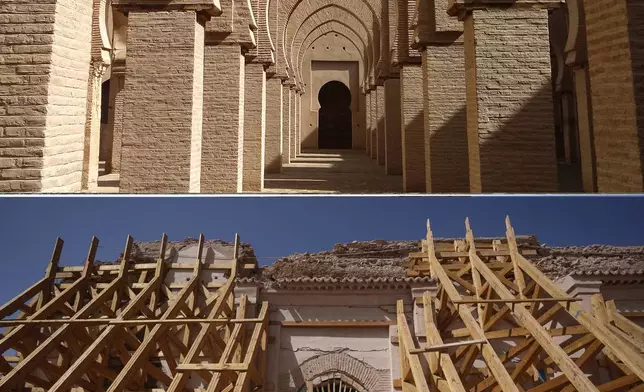
This combination of 2022 and Sept. 5, 2024 photos shows the interior of the Great Mosque of Tinmel which suffered significant damage during a 2023 earthquake in the Atlas mountain village of Tinmel, outside of Marrakech, Morocco. (AP Photo/Mosa'ab Elshamy)
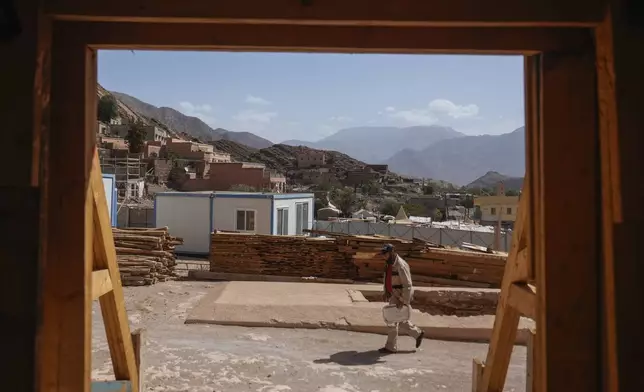
A construction worker walks outside the Great Mosque of Tinmel which dates back to the 12th century and suffered significant damage during a 2023 earthquake, in the Atlas mountain village of Tinmel, outside of Marrakech, Morocco, Thursday, Sept. 5, 2024. (AP Photo/Mosa'ab Elshamy)
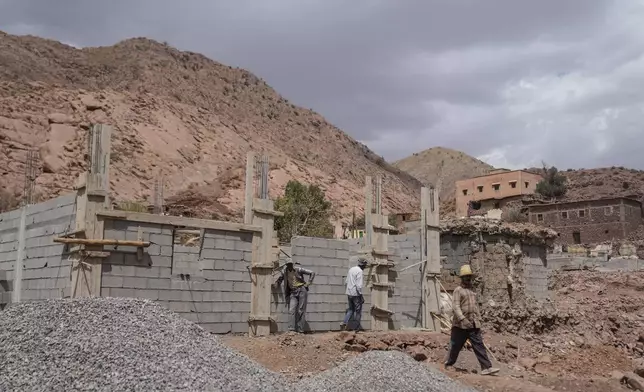
Construction workers build a house in the Atlas mountain village of Tinmel, Morocco, Thursday, Sept. 5, 2024, which was significantly hit during a 2023 earthquake. (AP Photo/Mosa'ab Elshamy)
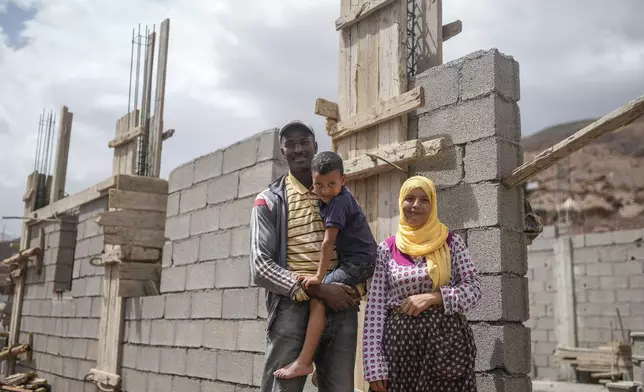
Redwan Ait Salah stands with his son, Tarik, and wife, Khadija Diwan, outside a house they are building, after their home was destroyed in a 2023 earthquake, in the Atlas mountain village of Tinmel, outside of Marrakech, Morocco, Thursday, Sept. 5, 2024. (AP Photo/Mosa'ab Elshamy)
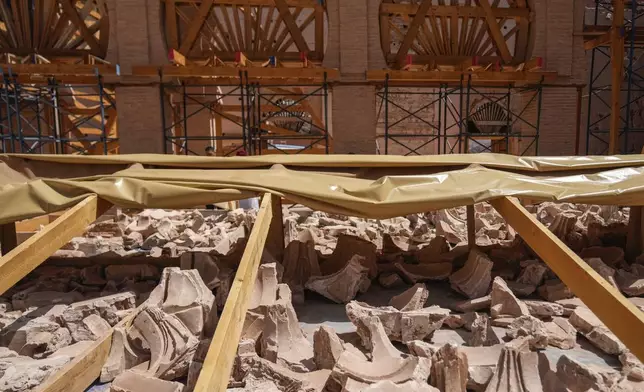
Recovered pieces of the Great Mosque of Tinmel, which suffered significant damage during a 2023 earthquake, are collected in the Atlas mountain village of Tinmel, outside of Marrakech, Morocco, Thursday, Sept. 5, 2024. (AP Photo/Mosa'ab Elshamy)
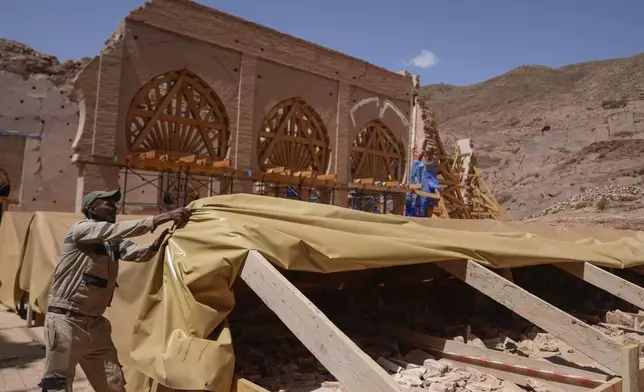
A construction worker unveils recovered pieces from the Great Mosque of Tinmel, which dates back to the 12th century and suffered significant damage during a 2023 earthquake, in the Atlas mountain village of Tinmel, outside of Marrakech, Morocco, Thursday, Sept. 5, 2024. (AP Photo/Mosa'ab Elshamy)
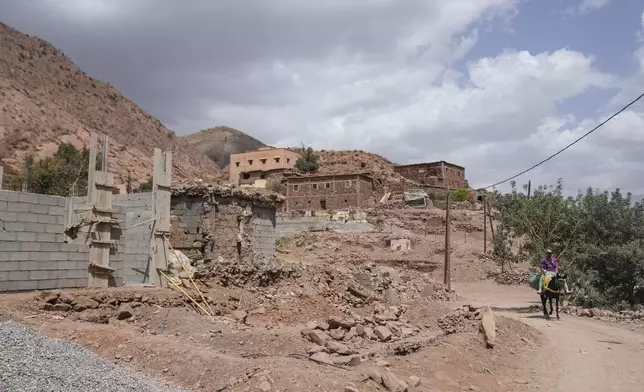
A worker transports construction material on a mule in the village of Tinmel, which suffered significant damage in a 2023 earthquake, in the Atlas mountain village of Tinmel, outside of Marrakech, Morocco, Thursday, Sept. 5, 2024. (AP Photo/Mosa'ab Elshamy)
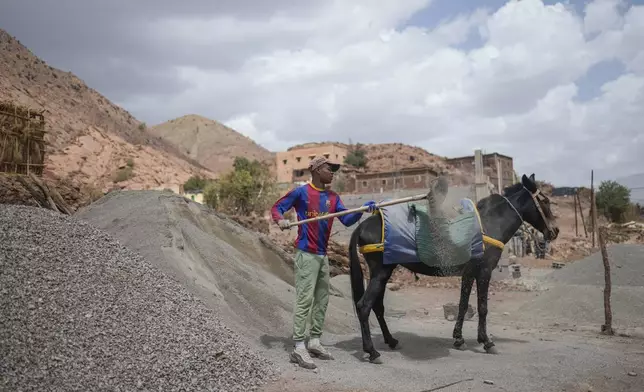
A construction worker loads material on a donkey during reconstruction of a home that was damaged in a 2023 earthquake , Thursday, Sept. 5, 2024, in the Atlas mountain village of Tinmel, outside of Marrakech, Morocco, Thursday, Sept. 5, 2024. (AP Photo/Mosa'ab Elshamy)
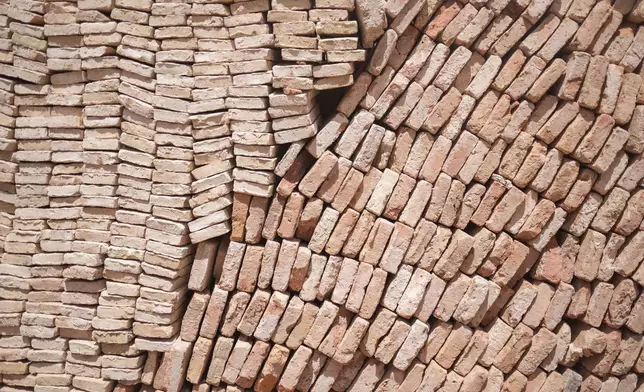
Construction materials are stacked outside the Great Mosque of Tinmel, which suffered significant damage during a 2023 earthquake, in the Atlas mountain village of Tinmel, outside of Marrakech, Morocco, Thursday, Sept. 5, 2024. (AP Photo/Mosa'ab Elshamy)
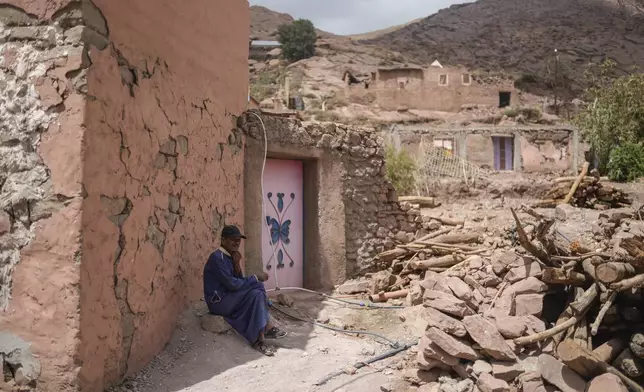
A man sits outside a home which was damaged in a 2023 earhquake, Thursday, Sept. 5, 2024, in the Atlas village of Tinmel, outside of Marrakech, Morocco. (AP Photo/Mosa'ab Elshamy)
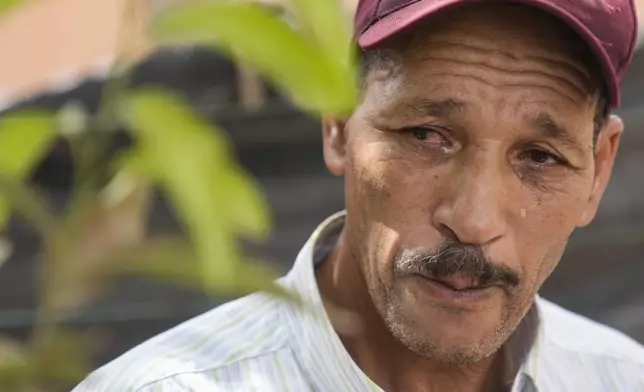
Mohamed Hartatouch, a 52-year-old construction worker, mourns his son Abdelkarim, who died in the 2023 earthquake, during an interview Thursday, Sept. 5, 2024, in the Atlas village of Tinmel, outside of Marrakech, Morocco. (AP Photo/Mosa'ab Elshamy)
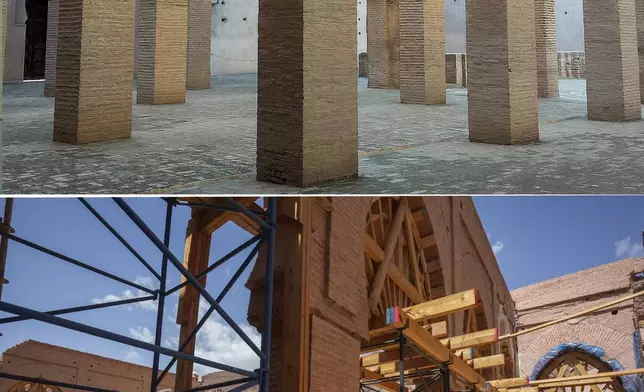
This combination of 2022 and Sept. 5, 2024 photos shows the interior of the Great Mosque of Tinmel which suffered significant damage during a 2023 earthquake in the Atlas mountain village of Tinmel, outside of Marrakech, Morocco. (AP Photo/Mosa'ab Elshamy)
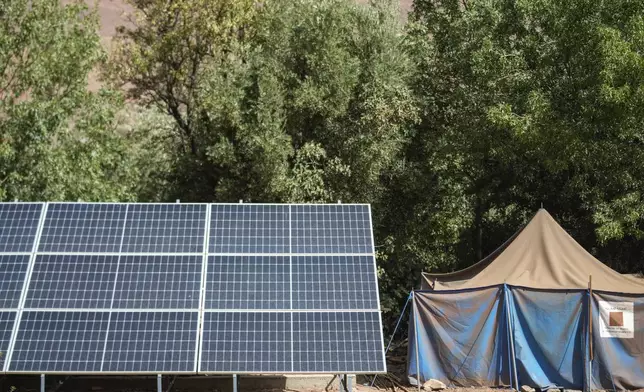
A tent for people displaced by the 2023 earthquake sits next to solar panels, in the Atlas mountain village of Tinmel, outside of Marrakech, Morocco, Thursday, Sept. 5, 2024. (AP Photo/Mosa'ab Elshamy)
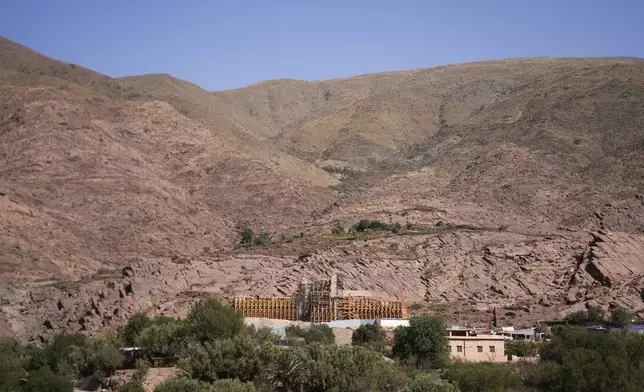
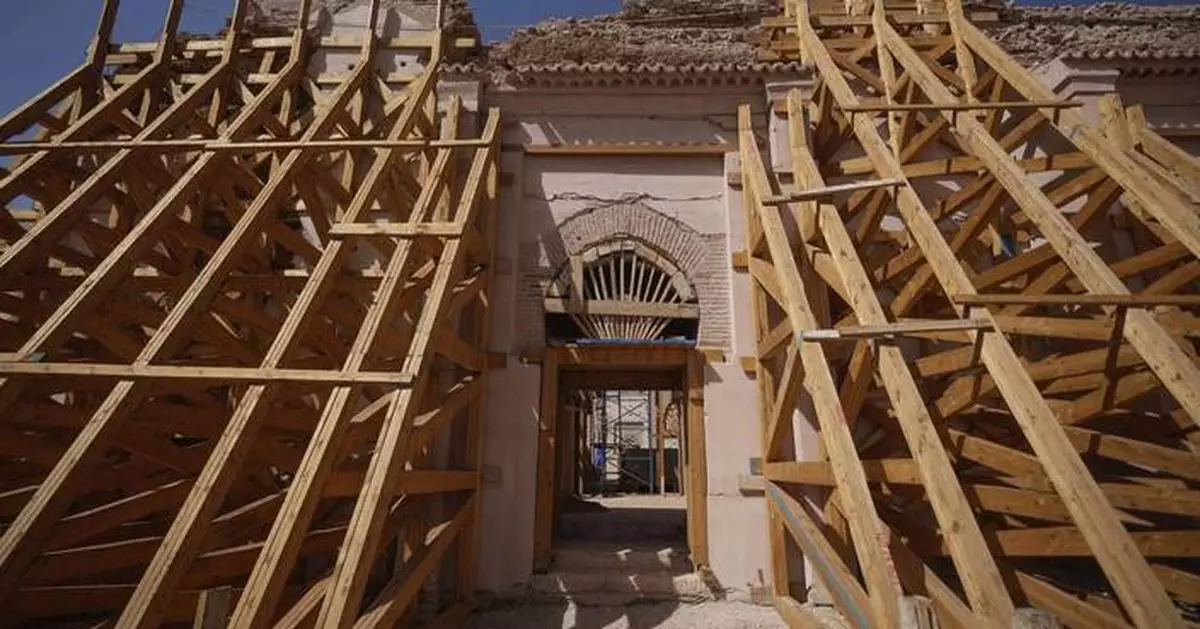
A wooden structure supports the Great Mosque of Tinmel, which dates back to the 12th century and suffered significant damage during a 2023 earthquake, in the Atlas mountain village of Tinmel, outside of Marrakech, Morocco, Thursday, Sept. 5, 2024. (AP Photo/Mosa'ab Elshamy)
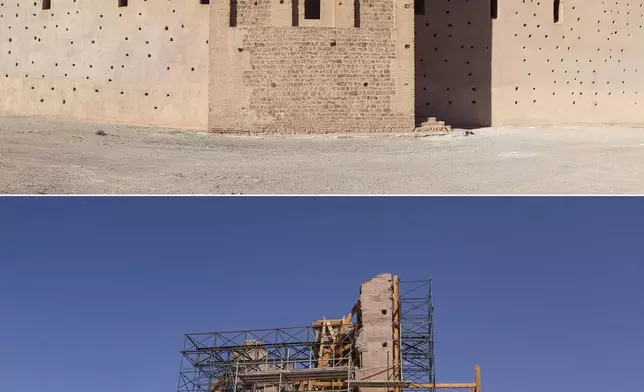
This combination of 2022 and Sept. 5, 2024 photos shows the Great Mosque of Tinmel which suffered significant damage during a 2023 earthquake in the Atlas mountain village of Tinmel, outside of Marrakech, Morocco. (AP Photo/Mosa'ab Elshamy)
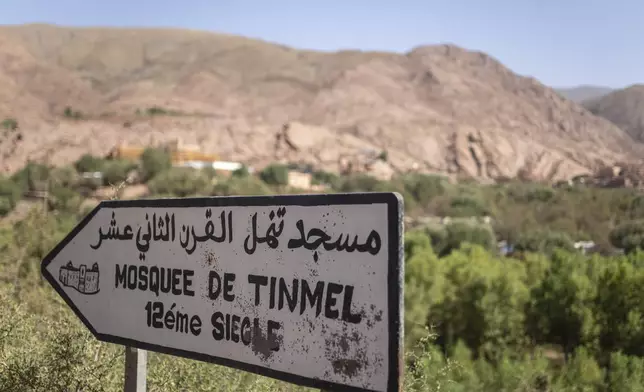
A sign on a road leading to the Great Mosque of Tinmel, which suffered significant damage during a 2023 earthquake, in the Atlas mountain village of Tinmel, outside of Marrakech, Morocco, Thursday, Sept. 5, 2024. Sign reads in Arabic and French "Tinmel Mosque, 12th century." (AP Photo/Mosa'ab Elshamy)
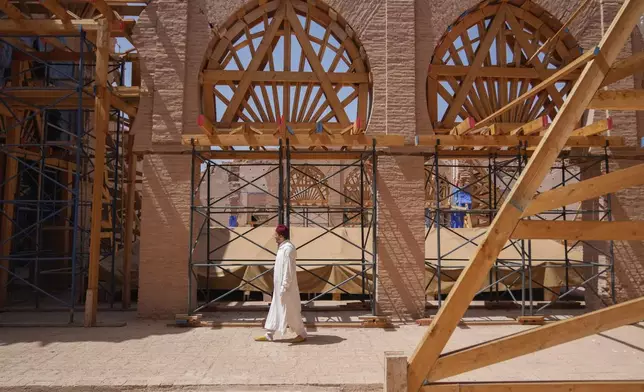
Hassan Ait Ali Ouhamous, a religious scholar from the region of Al-Haouz, inspects restoration works at the Great Mosque of Tinmel, which dates back to the 12th century and suffered significant damage during a 2023 earthquake, in the Atlas mountain village of Tinmel, outside of Marrakech, Morocco, Thursday, Sept. 5, 2024. (AP Photo/Mosa'ab Elshamy)
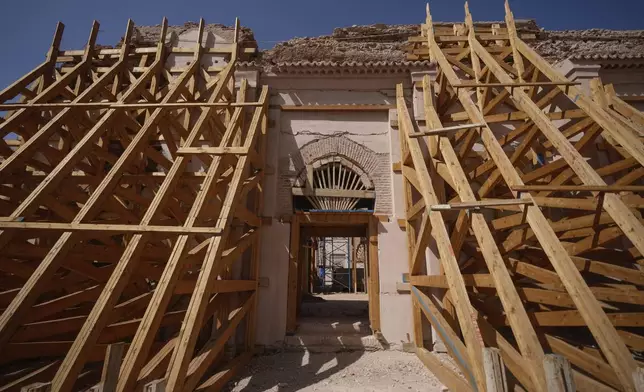
A wooden structure supports the Great Mosque of Tinmel which dates back to the 12th century and suffered significant damage during a 2023 earthquake, in the Atlas mountain village of Tinmel, outside of Marrakech, Morocco, Thursday, Sept. 5, 2024. (AP Photo/Mosa'ab Elshamy)
But even in ruins, it remained holy ground for the residents of Tinmel. Villagers carried the sheet-laden bodies of the 15 community members killed in the quake down the hillside and placed them in front of the decimated mosque.
Among the mourners was Mohamed Hartatouch, who helped carry the remains of his son Abdelkrim. A 33-year-old substitute teacher, he died under bricks and collapsed walls while the village waited a day and a half for rescue crews to arrive.
“It looked like a storm. I wasn’t able to feel anything,” the grieving father said, remembering the day after the quake.
One year later, the rubble near Hartatouch’s half-standing home has been swept aside and Tinmel residents are eager to rebuild their homes and the mosque. They say the sacred site is a point of pride and source of income in a region where infrastructure and jobs were lacking long before the earthquake hit.
“It’s our past,” Redwan Aitsalah, a 32-year-old construction worker, said the week before the earthquake’s anniversary as he reconstructed his home overlooking the mosque.
The September 2023 quake left a path of destruction that will take Morocco years to recover from. It killed nearly 3,000 people, knocked down almost 60,000 homes and leveled at least 585 schools. The damage will cost about $12.3 billion to rebuild, according to government estimates.
Stretches of road were left unnavigable, including Tizi N’Test, the steep mountain pass that weaves from Marrakech to Tinmel and some of the hardest-hit villages near the earthquake’s epicenter.
Workers are now sifting through the rubble searching for the mosque's puzzle pieces. They are stacking useable bricks and sorting the fragments of remaining decorative elements arch by arch and dome by dome, preparing to rebuild the mosque using as much of the remains as possible.
Though incomparable to the human loss and suffering, the restoration effort is among Morocco’s priorities as it attempts to rebuild.
The country’s Ministry of Islamic Affairs and Ministry of Culture have recruited Moroccan architects, archaeologists and engineers to oversee the project. To assist, the Italian government has sent Moroccan-born architect Aldo Giorgio Pezzi, who had also consulted on Casablanca’s Hassan II Mosque, one of Africa's largest.
“We will rebuild it based on the evidence and remains that we have so it returns to how it was,” Morocco’s Minister of Islamic Affairs Ahmed Toufiq told The Associated Press.
The Great Mosque was a marvel of North African architecture with lobed arches, hand-carved moldings and the adobe-style bricks made of rammed earth used to construct most the area’s structures.
It was undergoing an 18-month-long restoration project when the quake struck, causing its ornate domes and pillars to cave in. Its clay-colored remnants lay in pieces beneath scaffolding erected by restoration workers from villages throughout the region, five of whom also died.
“The mosque withstood centuries. It’s the will of God,” Nadia El Bourakkadi, the site’s conservationist, told local media. The temblor leveled it months before repairs and renovations were to be completed.
Like in many of the area’s villages, residents of Tinmel today live in plastic tents brought in as temporary shelter post-earthquake. Some are there because it feels safer than their half-ruined homes, others because they have nowhere else to go.
Officials have issued more than 55,000 reconstruction permits for villagers to build new homes, including for most of the homes in Tinmel. The government has distributed financial aid in phases. Most households with destroyed homes have received an initial $2,000 installment of rebuilding aid, but not more.
Many have complained that isn’t enough to underwrite the initial costs of rebuilding. Less than 1,000 have completed rebuilding, according to the government’s own figures.
Despite the extent of their personal losses, Moroccans are also mourning the loss of revered cultural heritage. Centuries-old mosques, shrines, fortresses and lodges are scattered throughout the mountains. Unlike Tinmel, many have long been neglected as Morocco focuses its development efforts elsewhere.
The country sees Tinmel as the cradle of one of its most storied civilizations. The mosque served as a source of inspiration for widely visited sacred sites in Marrakech and Seville. Pilgrims once trekked through the High Atlas to pay their respects and visit. Yet centuries ago it fell into disrepair as political power shifted to Morocco’s larger cities and coastline.
“It was abandoned by the state, but materials were never taken from it,” said Mouhcine El Idrissi, an archaeologist working with Morocco’s Ministry of Culture. “People here have long respected it as a witness to their glorious and spiritual past.”
Some of the historic sites of the High Atlas have long been a lure to tourists. But the earthquake shone a spotlight on the vast disparities plaguing the primarily agricultural region. Long marginalized, poverty and illiteracy rates are higher than the nationwide average, according to census data and an October 2023 government report on the five earthquake-hit provinces.
“The mountainous areas most affected were those already suffering from geographical isolation,” Civil Coalition for the Mountain, a group of Moroccan NGOs, said in a statement on the earthquake’s anniversary. “The tragedy revealed structural differences, and a situation caused by development policies that have always kept the mountains outside the scope of their objectives.”
“There’s a Morocco that exists in Rabat and Marrakech, but we’re talking about another Morocco that’s in the mountains,” added Najia Ait Mohannad, the group’s regional coordinator. “Right now, the most urgent need is rebuilding houses.”
The government has promised “a well-thought-out, integrated and ambitious program" for the reconstruction and general upgrading of the affected regions, both in terms of infrastructure reinforcement and improving public services. It has also pledged to rebuild “in harmony with the region’s heritage and respecting its unique architectural features” and “to respect the dignity and customs” of the population.
For the village’s residents, the landmark could stand as a symbol of reinvestment in one of Morocco’s poorest regions, as well as a tribute to a glorious past.
For now, it stands in disrepair, its enchanting ruins upheld by wooden scaffolding, while down the hill, villagers hang laundry and grow vegetables amid the remnants of their former homes and the plastic tents where they now live.
Associated Press religion coverage receives support through the AP’s collaboration with The Conversation US, with funding from Lilly Endowment Inc. The AP is solely responsible for this content.
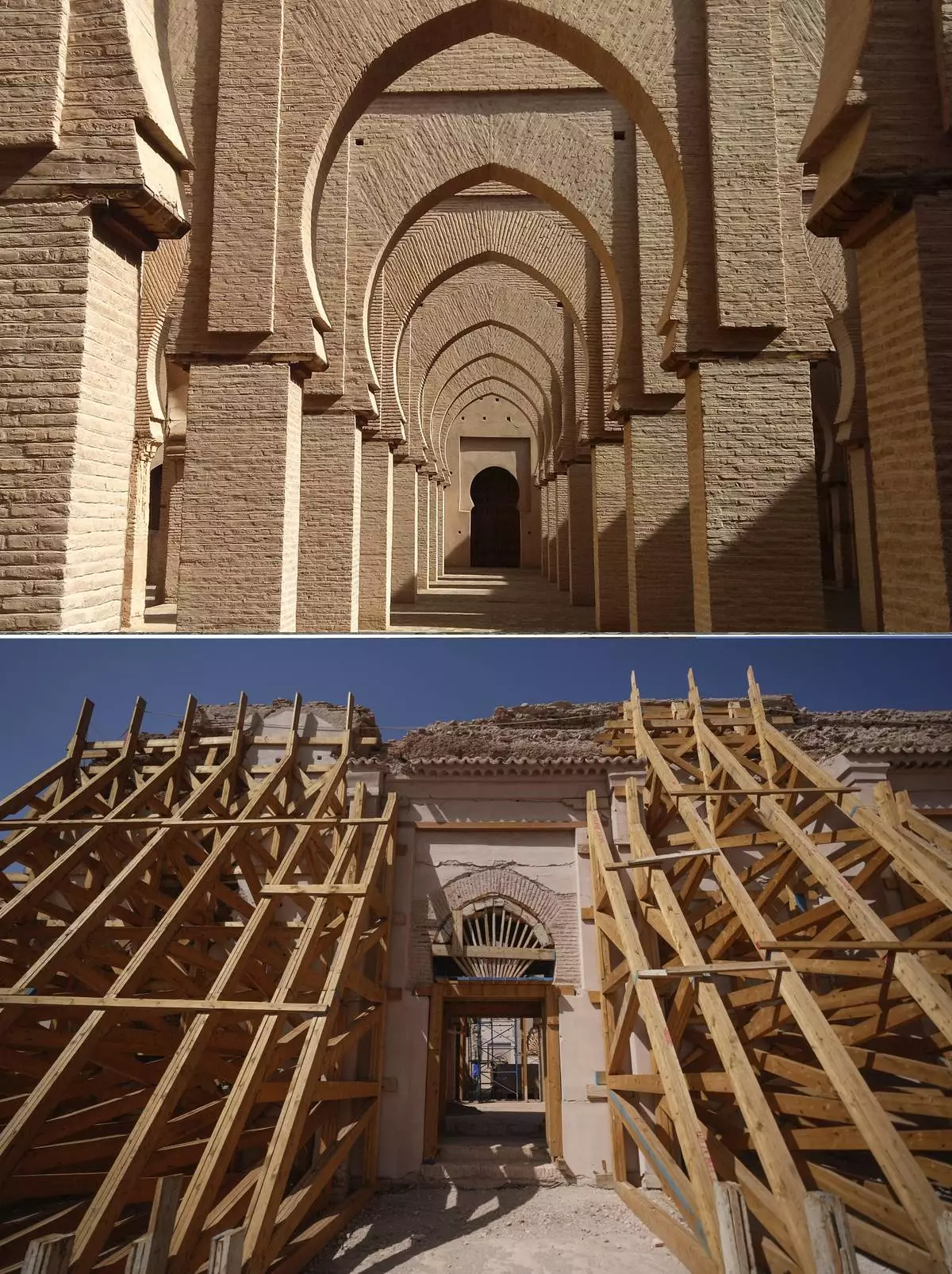
This combination of 2022 and Sept. 5, 2024 photos shows the interior of the Great Mosque of Tinmel which suffered significant damage during a 2023 earthquake in the Atlas mountain village of Tinmel, outside of Marrakech, Morocco. (AP Photo/Mosa'ab Elshamy)
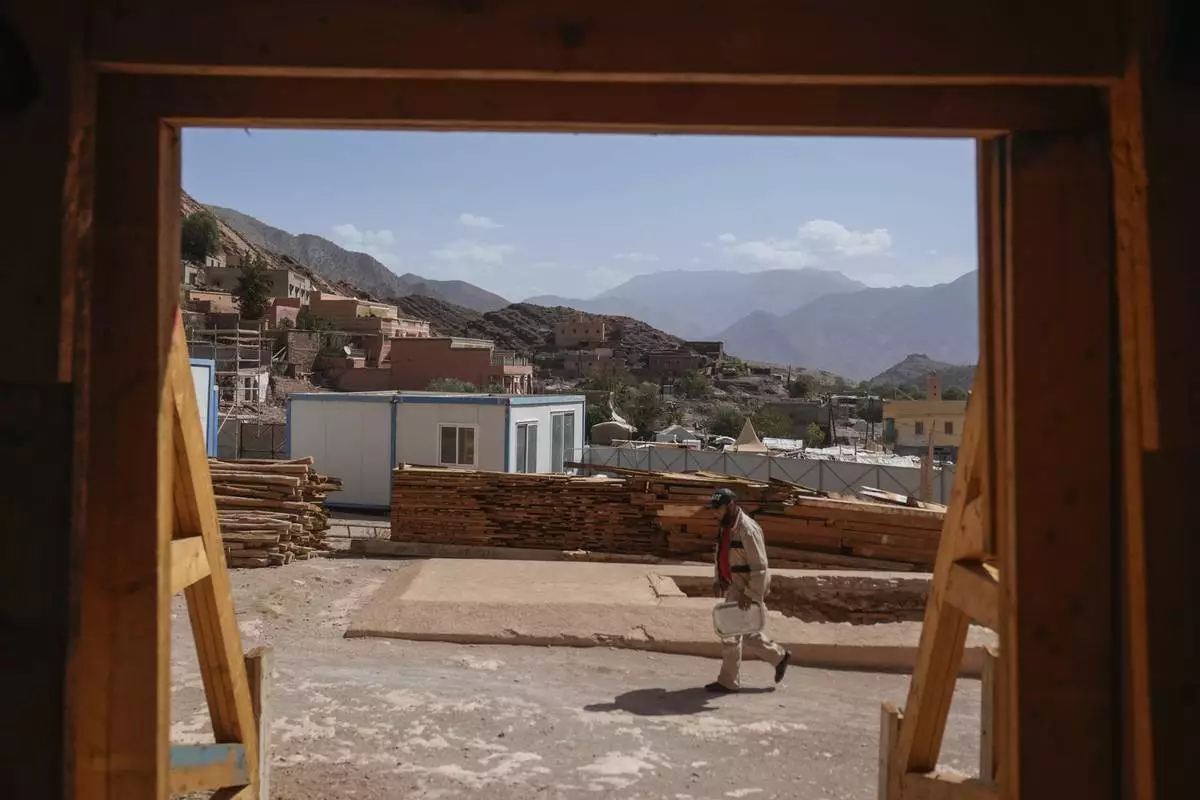
A construction worker walks outside the Great Mosque of Tinmel which dates back to the 12th century and suffered significant damage during a 2023 earthquake, in the Atlas mountain village of Tinmel, outside of Marrakech, Morocco, Thursday, Sept. 5, 2024. (AP Photo/Mosa'ab Elshamy)
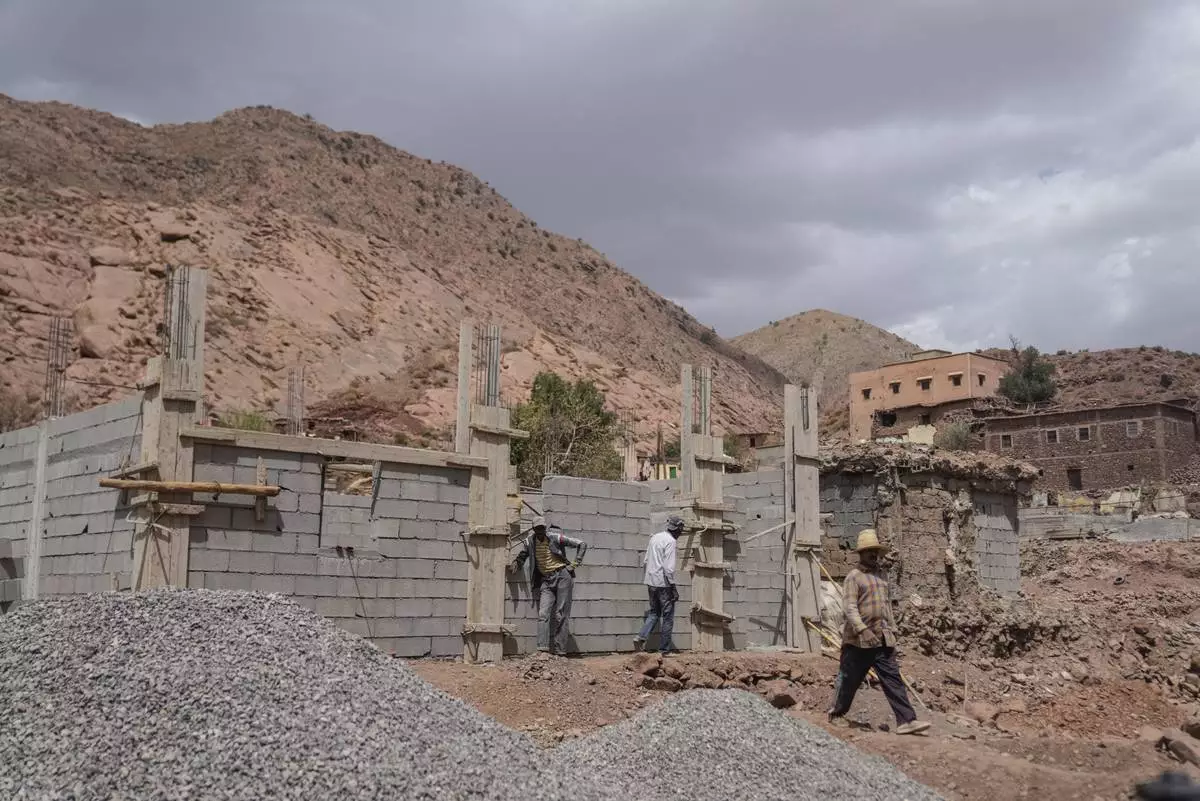
Construction workers build a house in the Atlas mountain village of Tinmel, Morocco, Thursday, Sept. 5, 2024, which was significantly hit during a 2023 earthquake. (AP Photo/Mosa'ab Elshamy)
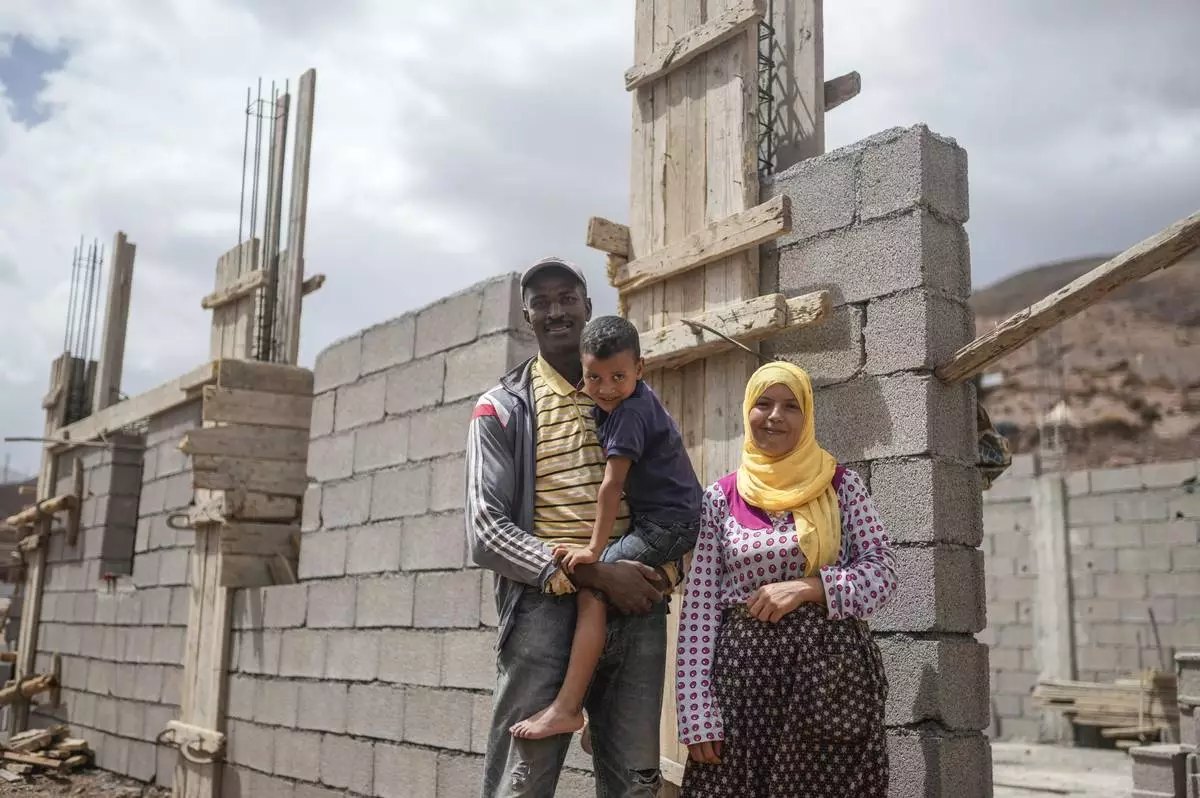
Redwan Ait Salah stands with his son, Tarik, and wife, Khadija Diwan, outside a house they are building, after their home was destroyed in a 2023 earthquake, in the Atlas mountain village of Tinmel, outside of Marrakech, Morocco, Thursday, Sept. 5, 2024. (AP Photo/Mosa'ab Elshamy)
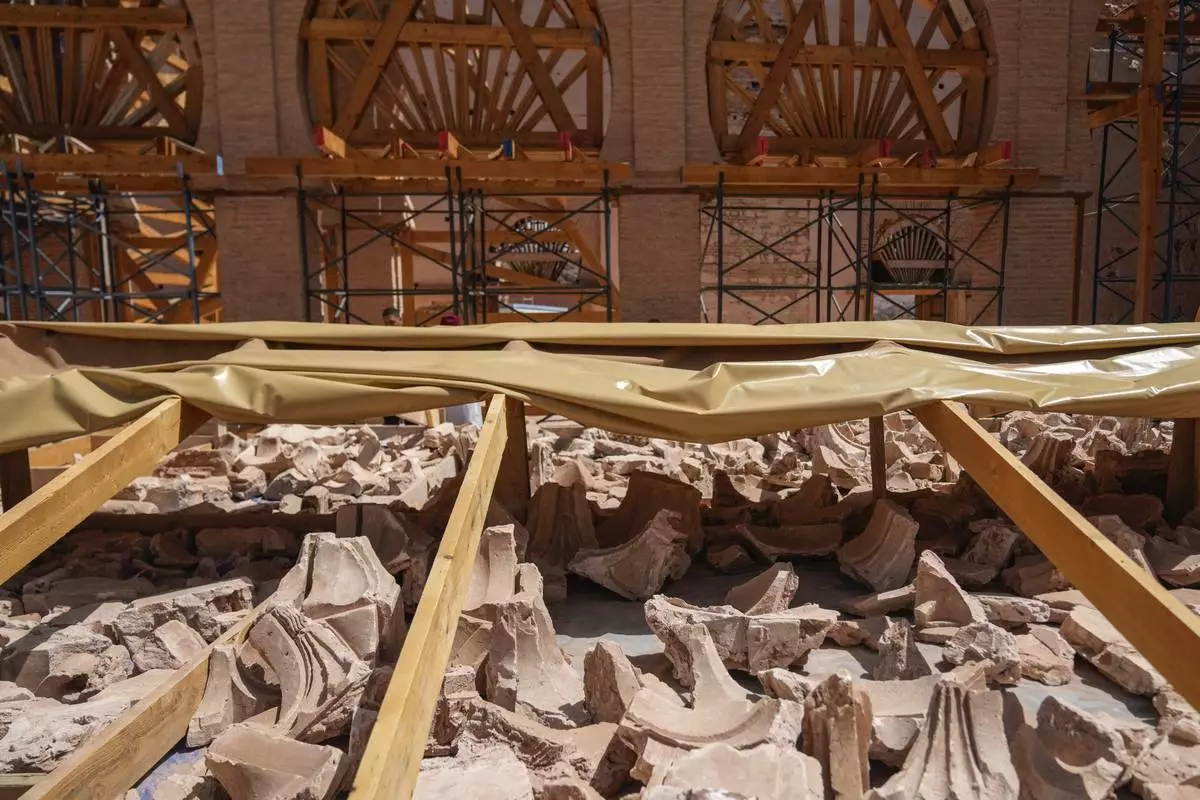
Recovered pieces of the Great Mosque of Tinmel, which suffered significant damage during a 2023 earthquake, are collected in the Atlas mountain village of Tinmel, outside of Marrakech, Morocco, Thursday, Sept. 5, 2024. (AP Photo/Mosa'ab Elshamy)
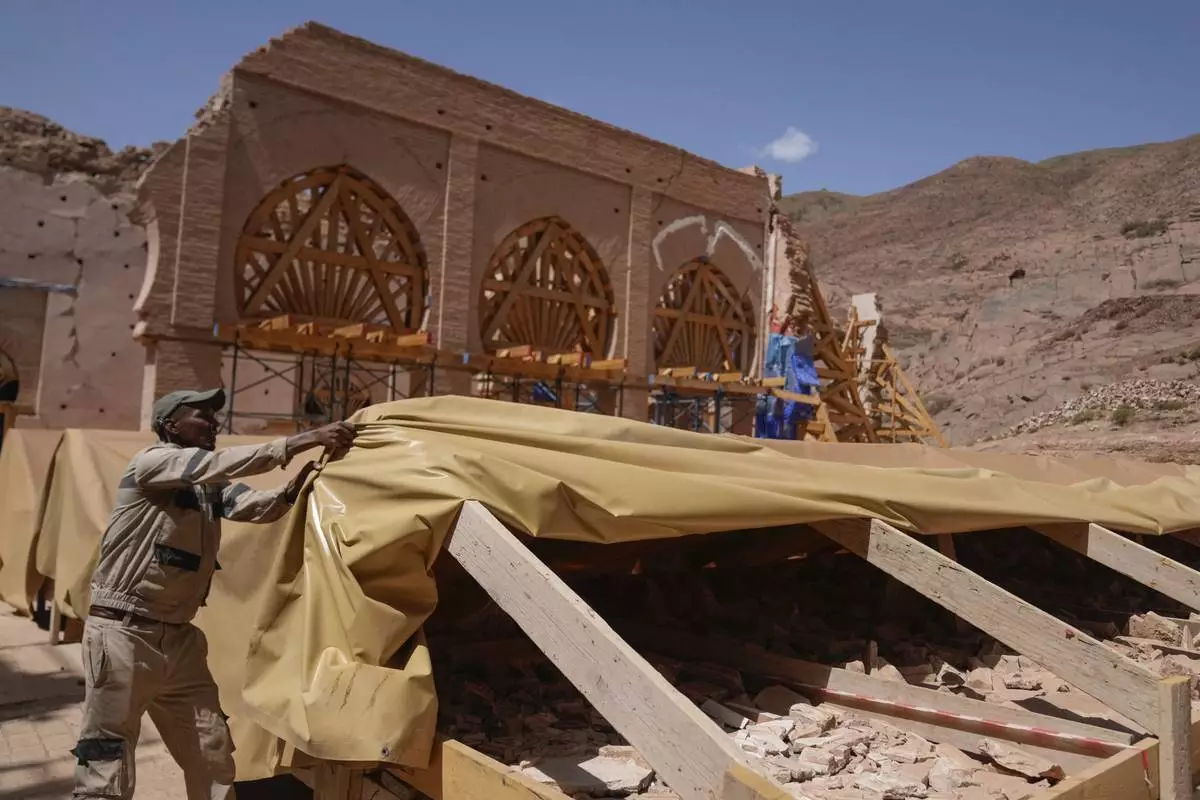
A construction worker unveils recovered pieces from the Great Mosque of Tinmel, which dates back to the 12th century and suffered significant damage during a 2023 earthquake, in the Atlas mountain village of Tinmel, outside of Marrakech, Morocco, Thursday, Sept. 5, 2024. (AP Photo/Mosa'ab Elshamy)
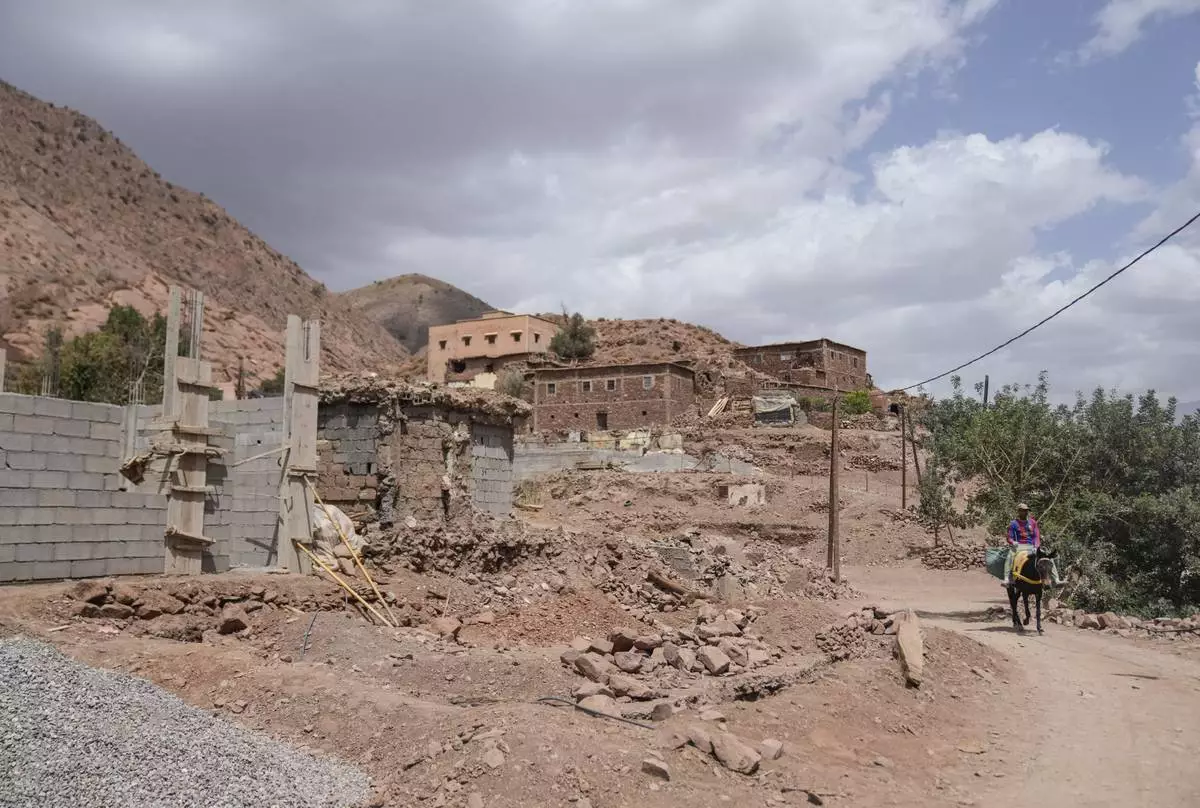
A worker transports construction material on a mule in the village of Tinmel, which suffered significant damage in a 2023 earthquake, in the Atlas mountain village of Tinmel, outside of Marrakech, Morocco, Thursday, Sept. 5, 2024. (AP Photo/Mosa'ab Elshamy)
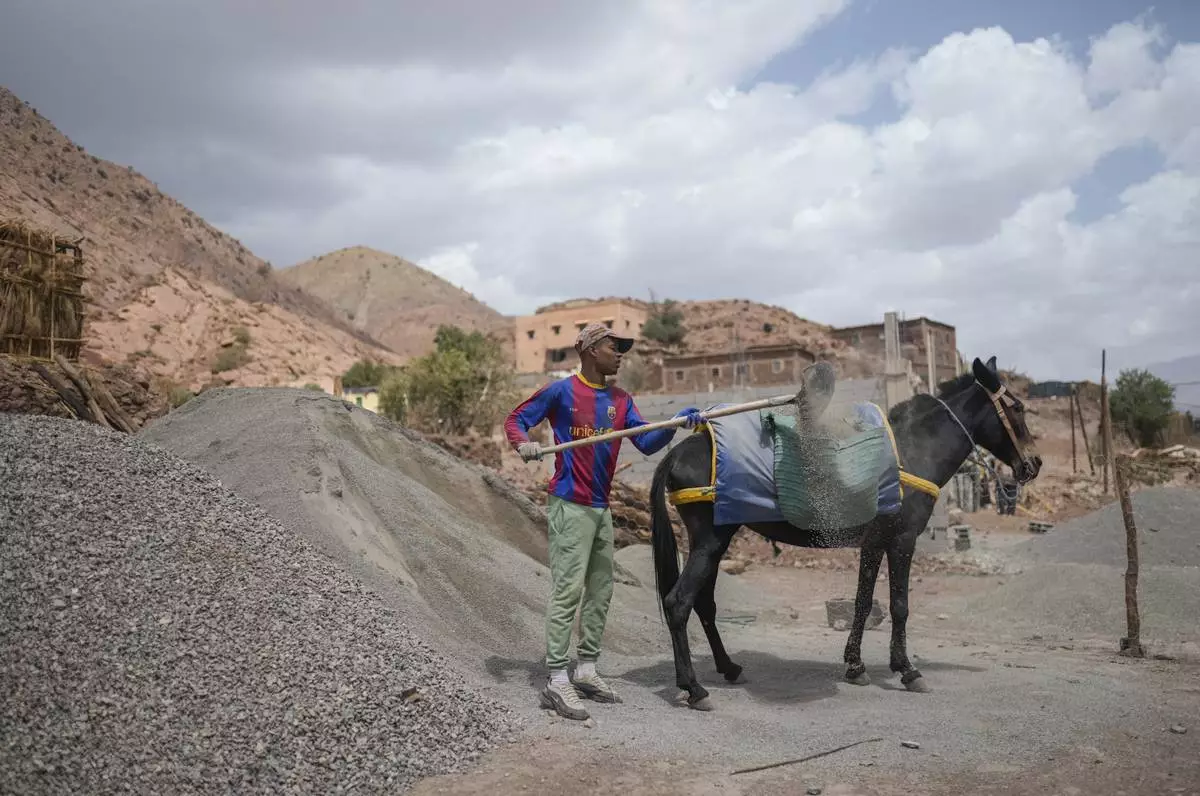
A construction worker loads material on a donkey during reconstruction of a home that was damaged in a 2023 earthquake , Thursday, Sept. 5, 2024, in the Atlas mountain village of Tinmel, outside of Marrakech, Morocco, Thursday, Sept. 5, 2024. (AP Photo/Mosa'ab Elshamy)
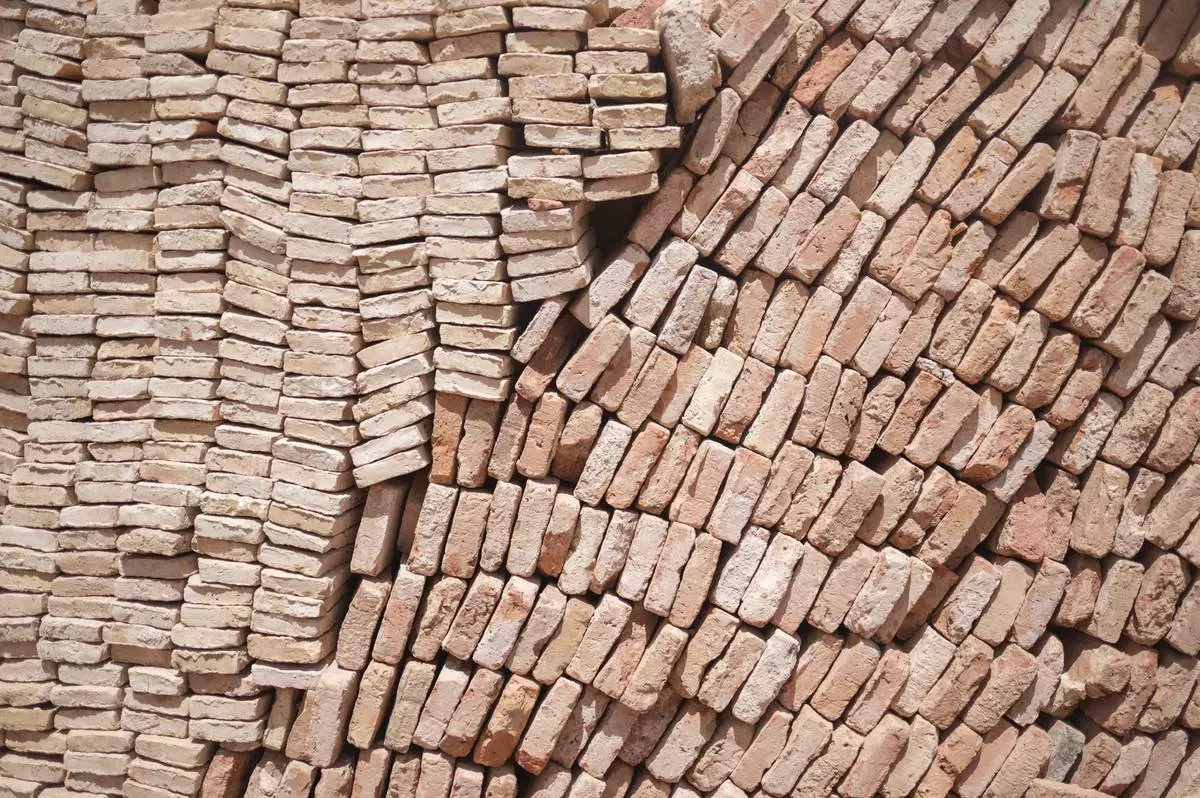
Construction materials are stacked outside the Great Mosque of Tinmel, which suffered significant damage during a 2023 earthquake, in the Atlas mountain village of Tinmel, outside of Marrakech, Morocco, Thursday, Sept. 5, 2024. (AP Photo/Mosa'ab Elshamy)
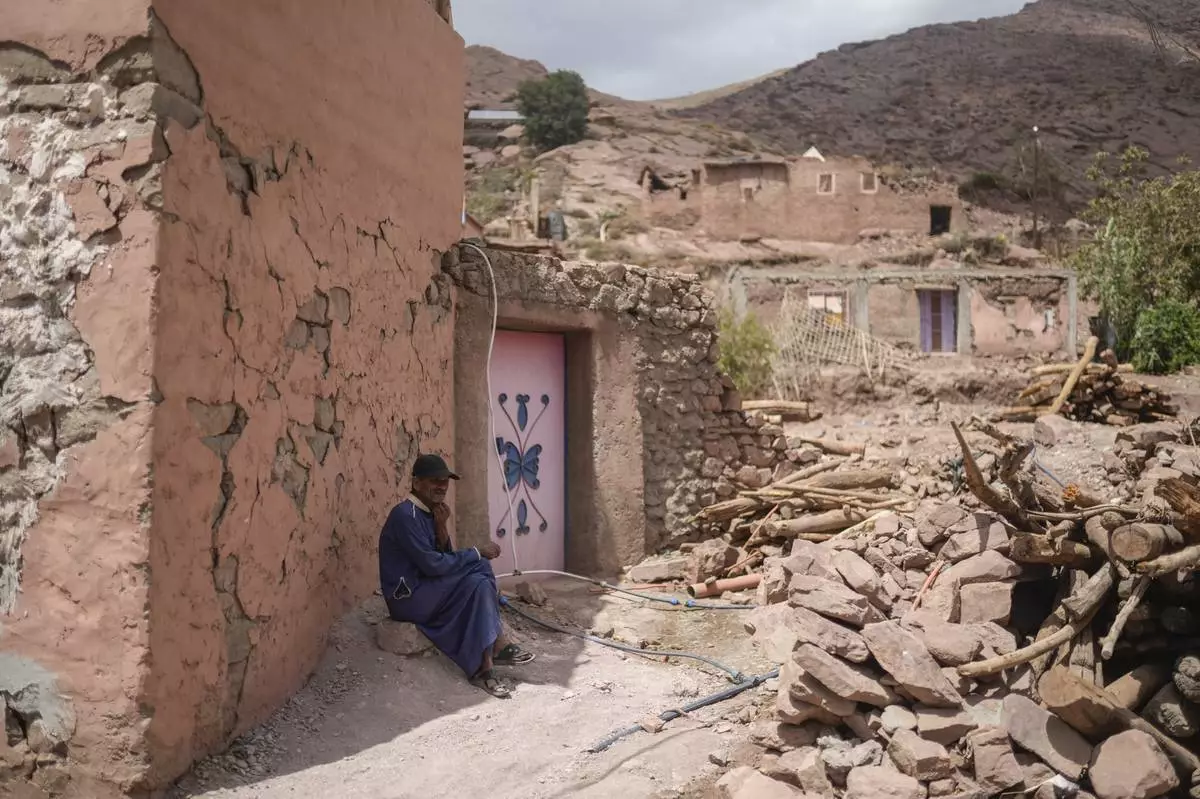
A man sits outside a home which was damaged in a 2023 earhquake, Thursday, Sept. 5, 2024, in the Atlas village of Tinmel, outside of Marrakech, Morocco. (AP Photo/Mosa'ab Elshamy)
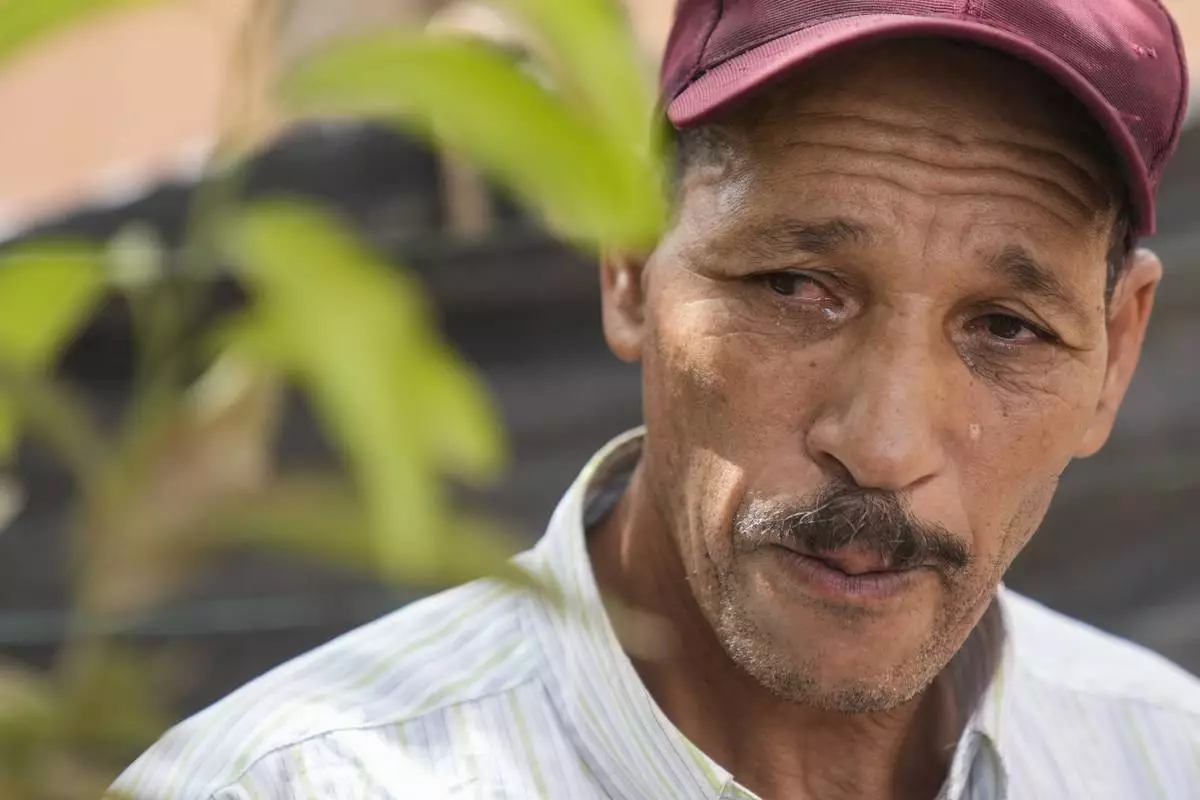
Mohamed Hartatouch, a 52-year-old construction worker, mourns his son Abdelkarim, who died in the 2023 earthquake, during an interview Thursday, Sept. 5, 2024, in the Atlas village of Tinmel, outside of Marrakech, Morocco. (AP Photo/Mosa'ab Elshamy)
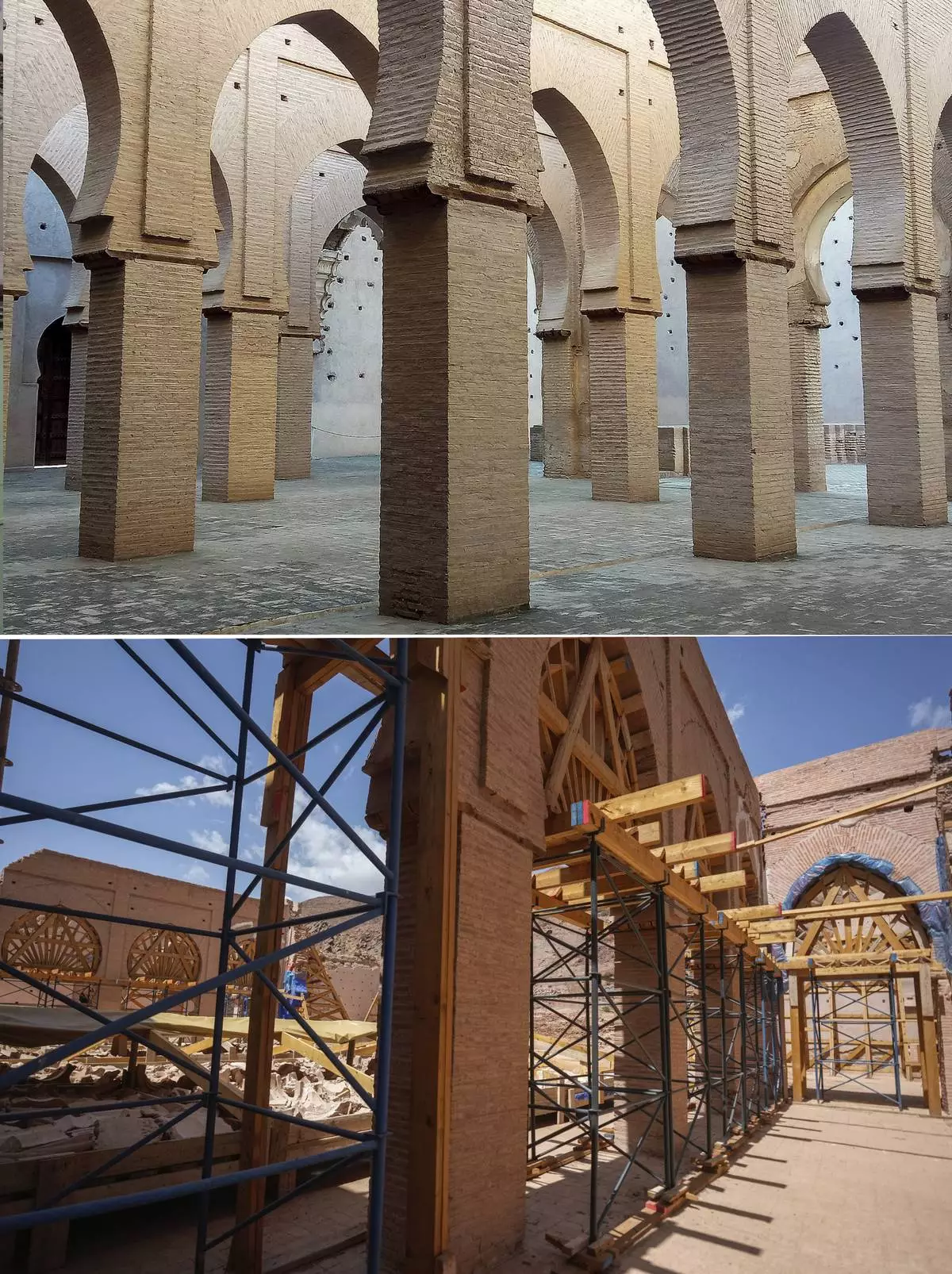
This combination of 2022 and Sept. 5, 2024 photos shows the interior of the Great Mosque of Tinmel which suffered significant damage during a 2023 earthquake in the Atlas mountain village of Tinmel, outside of Marrakech, Morocco. (AP Photo/Mosa'ab Elshamy)
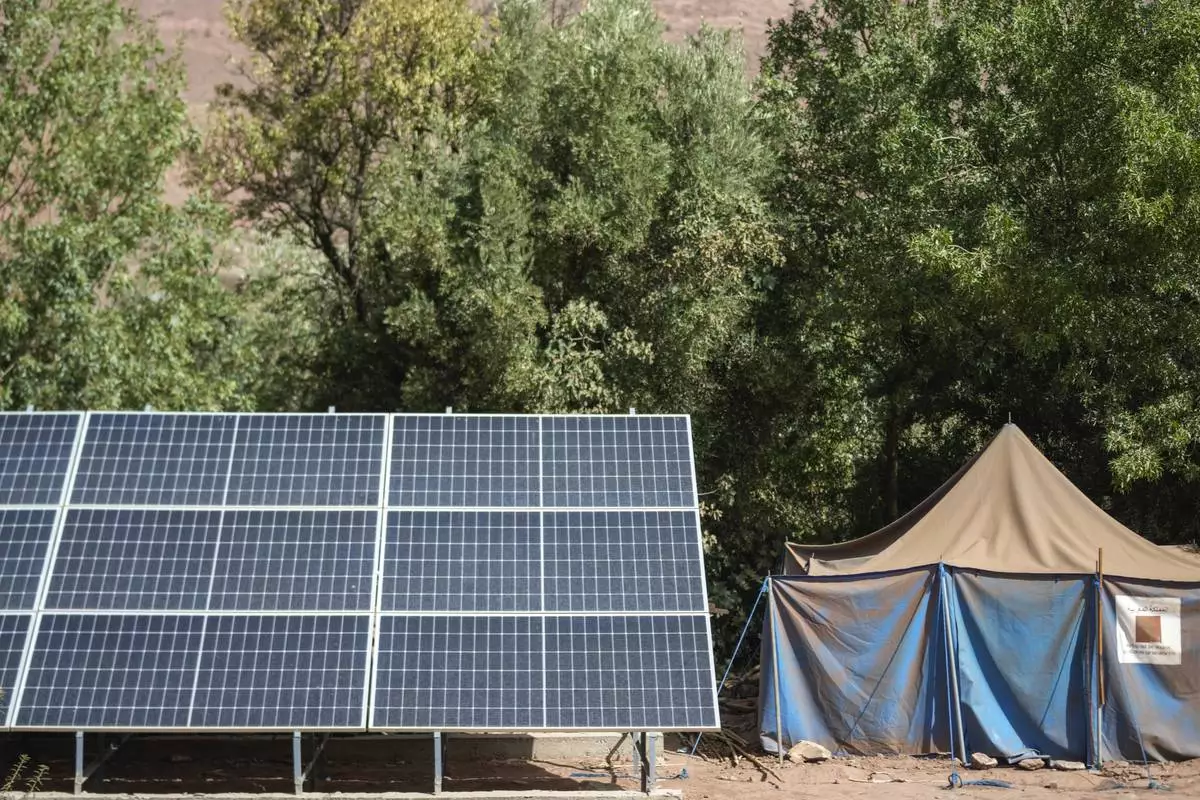
A tent for people displaced by the 2023 earthquake sits next to solar panels, in the Atlas mountain village of Tinmel, outside of Marrakech, Morocco, Thursday, Sept. 5, 2024. (AP Photo/Mosa'ab Elshamy)
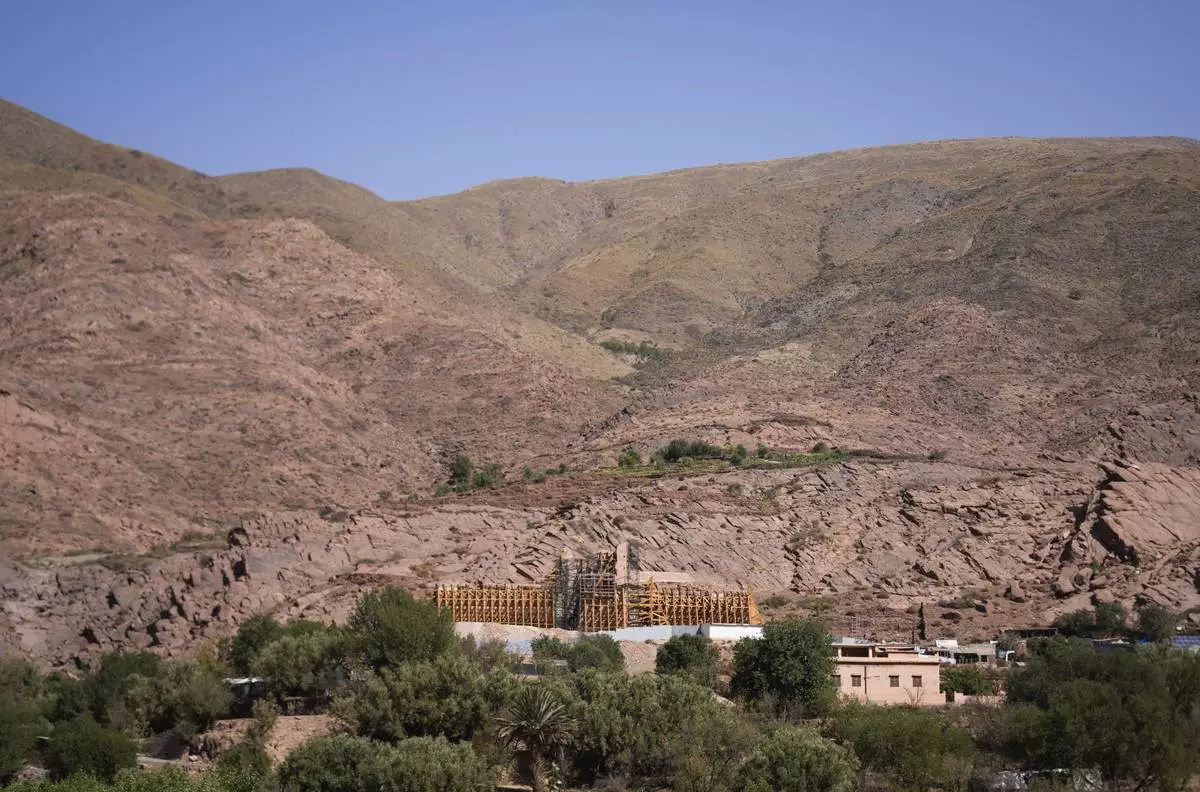
A wooden structure supports the Great Mosque of Tinmel, which dates back to the 12th century and suffered significant damage during a 2023 earthquake, in the Atlas mountain village of Tinmel, outside of Marrakech, Morocco, Thursday, Sept. 5, 2024. (AP Photo/Mosa'ab Elshamy)
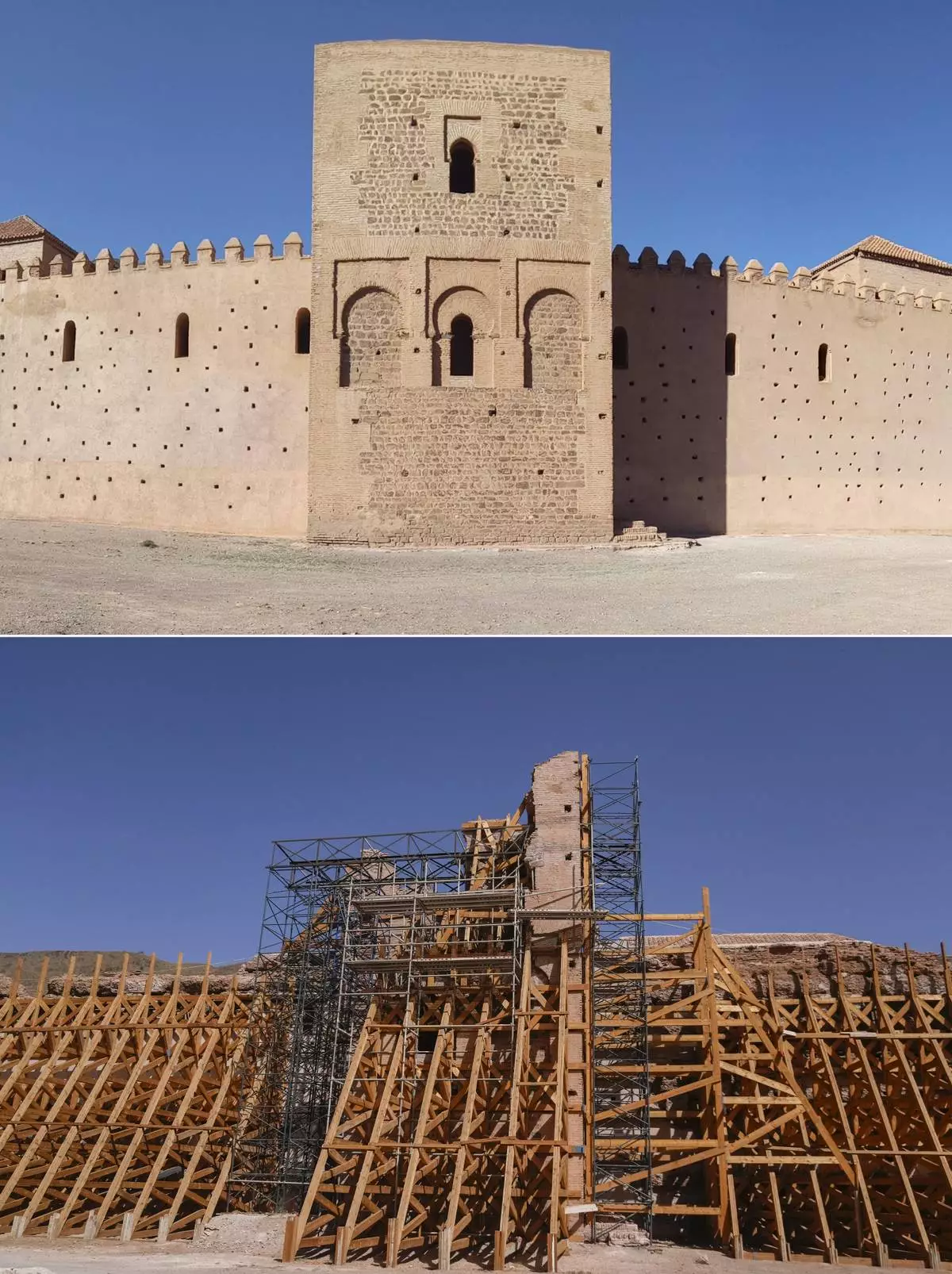
This combination of 2022 and Sept. 5, 2024 photos shows the Great Mosque of Tinmel which suffered significant damage during a 2023 earthquake in the Atlas mountain village of Tinmel, outside of Marrakech, Morocco. (AP Photo/Mosa'ab Elshamy)
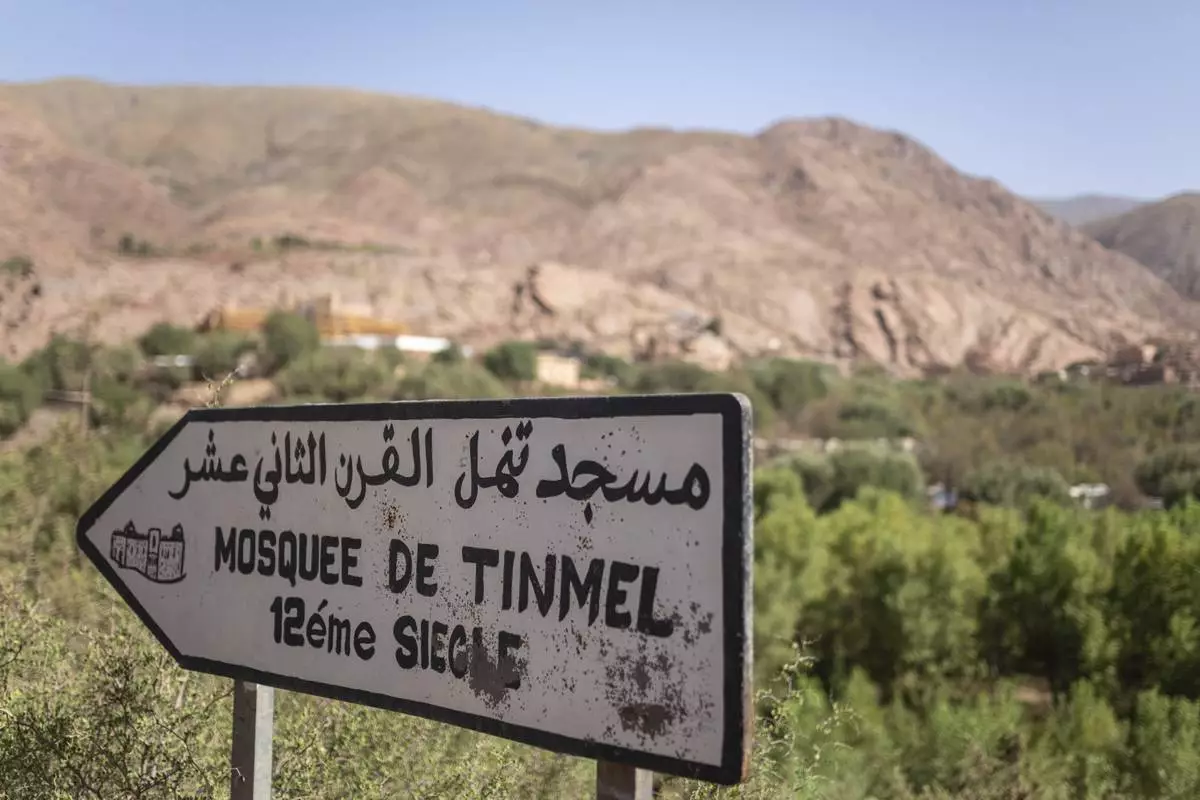
A sign on a road leading to the Great Mosque of Tinmel, which suffered significant damage during a 2023 earthquake, in the Atlas mountain village of Tinmel, outside of Marrakech, Morocco, Thursday, Sept. 5, 2024. Sign reads in Arabic and French "Tinmel Mosque, 12th century." (AP Photo/Mosa'ab Elshamy)
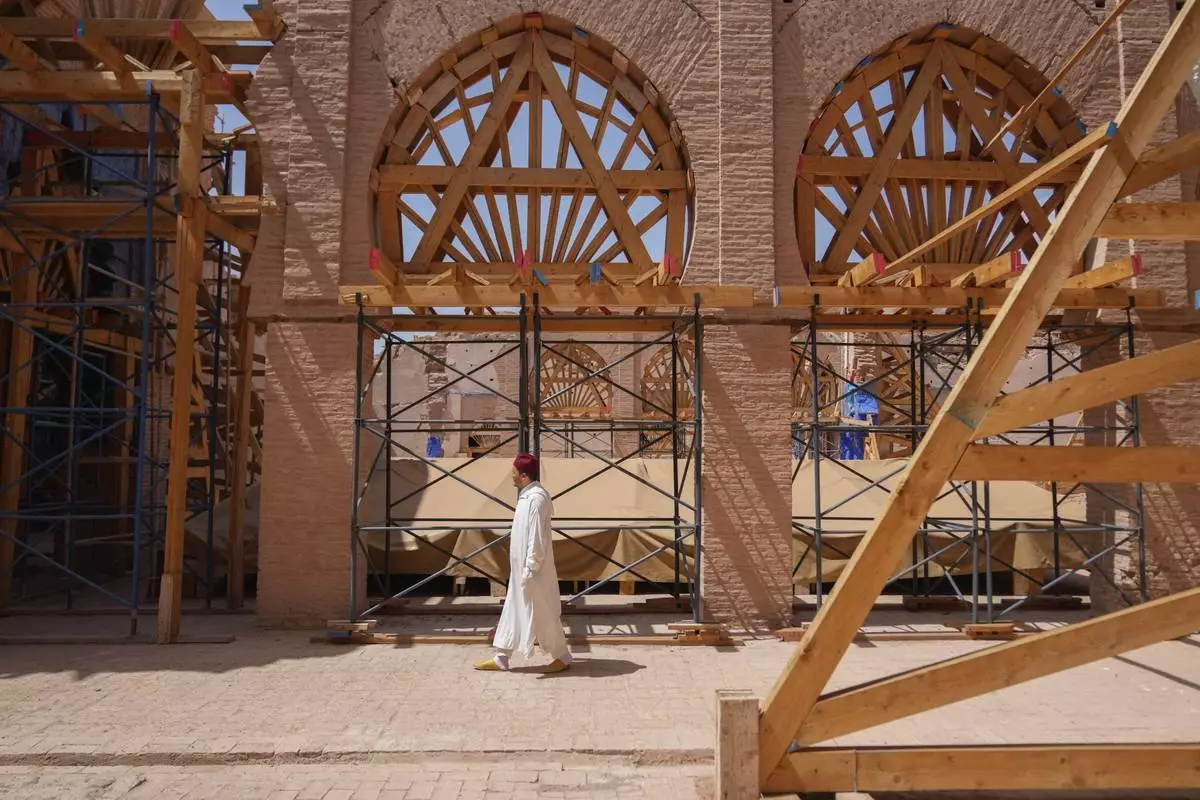
Hassan Ait Ali Ouhamous, a religious scholar from the region of Al-Haouz, inspects restoration works at the Great Mosque of Tinmel, which dates back to the 12th century and suffered significant damage during a 2023 earthquake, in the Atlas mountain village of Tinmel, outside of Marrakech, Morocco, Thursday, Sept. 5, 2024. (AP Photo/Mosa'ab Elshamy)
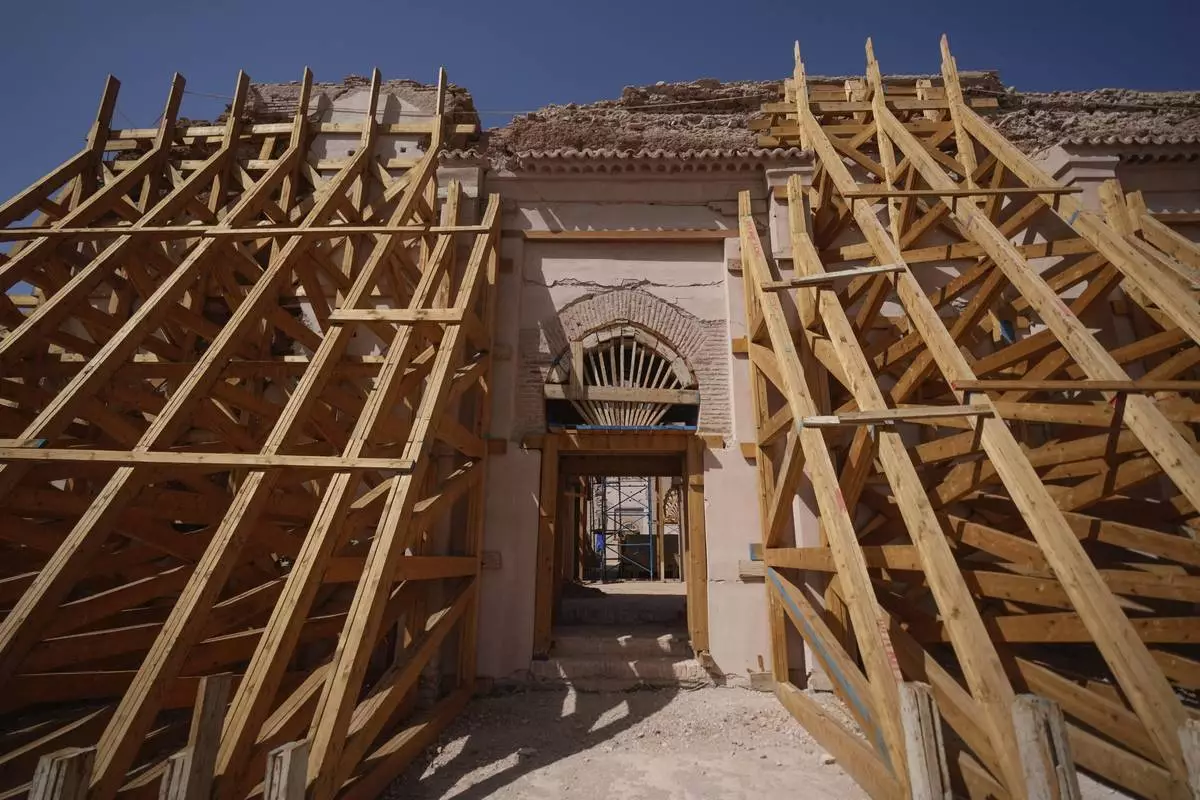
A wooden structure supports the Great Mosque of Tinmel which dates back to the 12th century and suffered significant damage during a 2023 earthquake, in the Atlas mountain village of Tinmel, outside of Marrakech, Morocco, Thursday, Sept. 5, 2024. (AP Photo/Mosa'ab Elshamy)