China's self-developed two-seater electric aircraft RX1E-A made its first flight over a scenic area in the Yanqing District of Beijing on Monday, marking a strong stride in boosting the city's low-altitude economy.
The RX1E-A type, an advanced version of the country's first electric plane RX1E, made its maiden flight in 2017 in northeast China's Shenyang.
The two-seat aircraft is classified as a light sport aircraft, which refers to small, lightweight planes that are easy to fly.
Since it received its type certificate from the Civil Aviation Administration of China in October 2018 and obtained its production license the following April, the RX1E-A has logged over 10,000 hours of safe flight.
The RX1E-A has a flight endurance of 150 minutes, and can be equipped with a parachute designed to safely bring down the entire aircraft in an emergency.
In addition, with a maximum flight distance of 240 kilometers, the aircraft can be used in pilot training, passenger transportation, tourism, and aerial photography.
With the future operation of the new electric aircraft, Yanqing District, a top holiday destination in Beijing, aims to boost its low-altitude economy through greater collaboration with industry leaders and the development of new application scenarios.
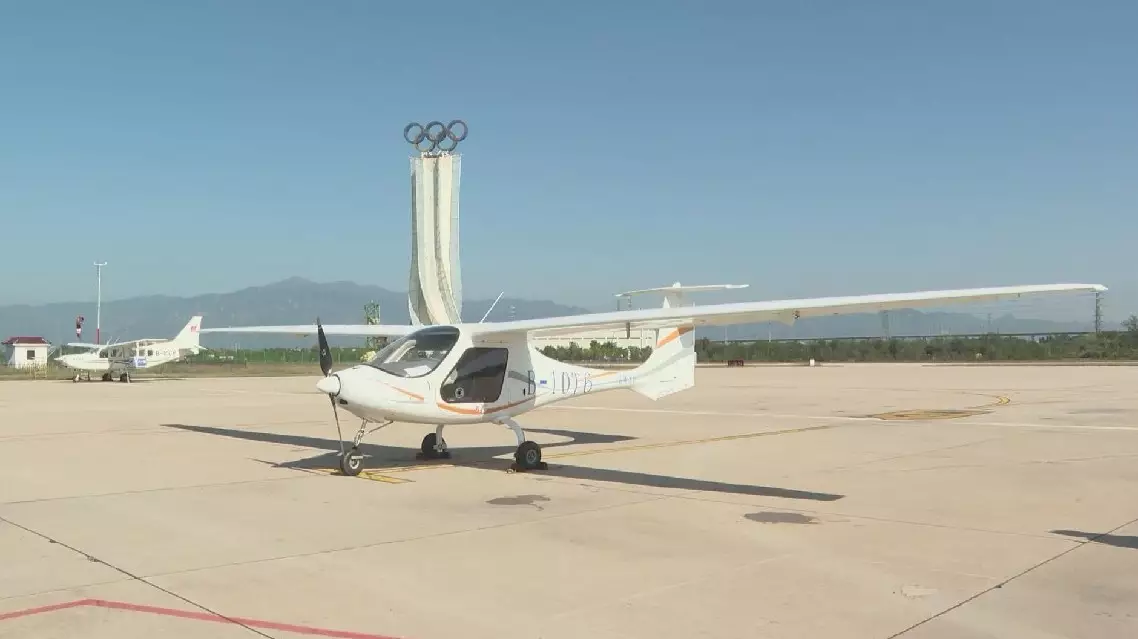
China self-developed electric aircraft powers low-altitude economy
Europe is facing mounting economic pressure as tensions in the Middle East escalate, causing significant fluctuations in global energy markets, a European energy expert has said.
The region's heavy reliance on energy imports has left it vulnerable to soaring oil and gas prices, raising concerns over inflation and economic stability, said Simone Tagliapietra, a senior fellow at Bruegel, a Brussels-based think tank devoted to policy research on economic issues.
"This is putting very tough pressure on the European gas markets. Also, we see rising cost of the gasoline at the pump. So, higher energy costs, which will again have huge impact on the European citizens and which risk to ignite an inflation spiral where all prices rise as a consequence of the rising energy prices," said Tagliapietra, who specializes in EU climate, energy and industrial policy.
Despite Europe's substantial imports of liquefied natural gas (LNG) from the United States, the expert cautioned, U.S. supply remains unstable, which further complicates Europe's energy security outlook.
"Given the volatility in the decisions of the Trump administration and given the trade war that the Trump administration has started against all other countries including the European Union in the past year, we are also very much attentive at any possible attempt by the U.S. administration to limit the exports of this LNG. We do not see this as an imminent risk, but this is something that Europe certainly needs to watch out with great degree of care in the coming months and weeks," he said.
Tagliapietra agrees that Europe must accelerate its energy transition to reduce dependency on single import sources and fossil fuels.
"There is nothing that Europe can do to decouple itself from this vulnerability of fossil fuel dependency, then accelerating the deployment of solar and wind energy sources in Europe. And we need to continue to do a lot of efforts amid this new energy crisis," said Tagliapietra.

Rising tensions in Middle East trigger energy market volatility in Europe: expert