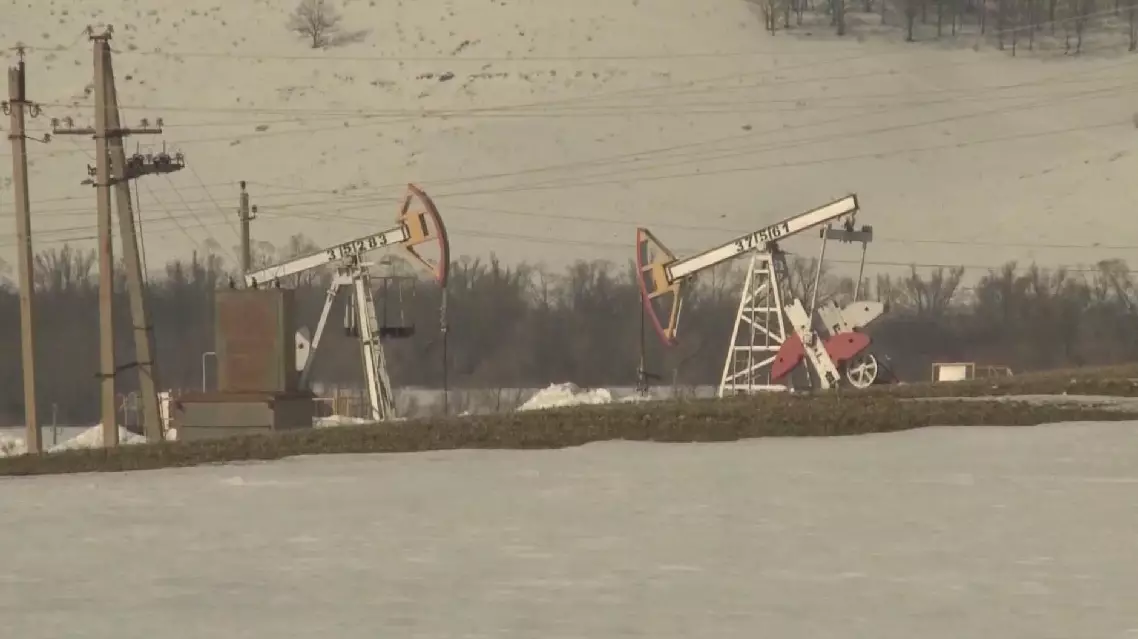
The U.S. decision to temporarily ease sanctions on Russian oil is intended to help stabilize global energy markets, Kremlin spokesperson Dmitry Peskov said Friday.
Peskov said Washington's move aligned with Russia's interests and could help calm energy markets as concerns grow over a worsening global energy crisis.
"Without significant volumes of Russian oil, stabilizing the market would be impossible," Peskov said.
He said the U.S. exemption applies only to Russian oil that was loaded onto ships before Thursday and does not signal a broader rollback of oil-related sanctions on Russia.
The U.S. Treasury Department issued a general license Thursday, allowing Russian oil shipments loaded before Thursday to be sold, delivered or offloaded through April 11, Eastern Time.
Since the United States and Israel launched large-scale military operations against Iran on Feb. 28, shipping through the Strait of Hormuz has been disrupted, sending international oil prices sharply higher. In response, members of the International Energy Agency agreed to release a combined 400 million barrels from strategic petroleum reserves.
U.S. easing of sanctions on Russian oil to stabilize energy markets: Kremlin
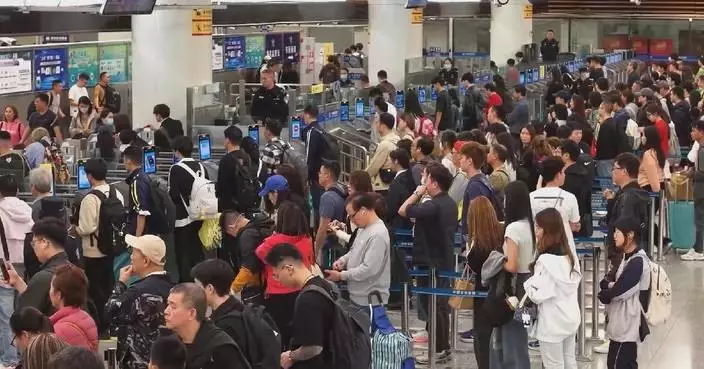
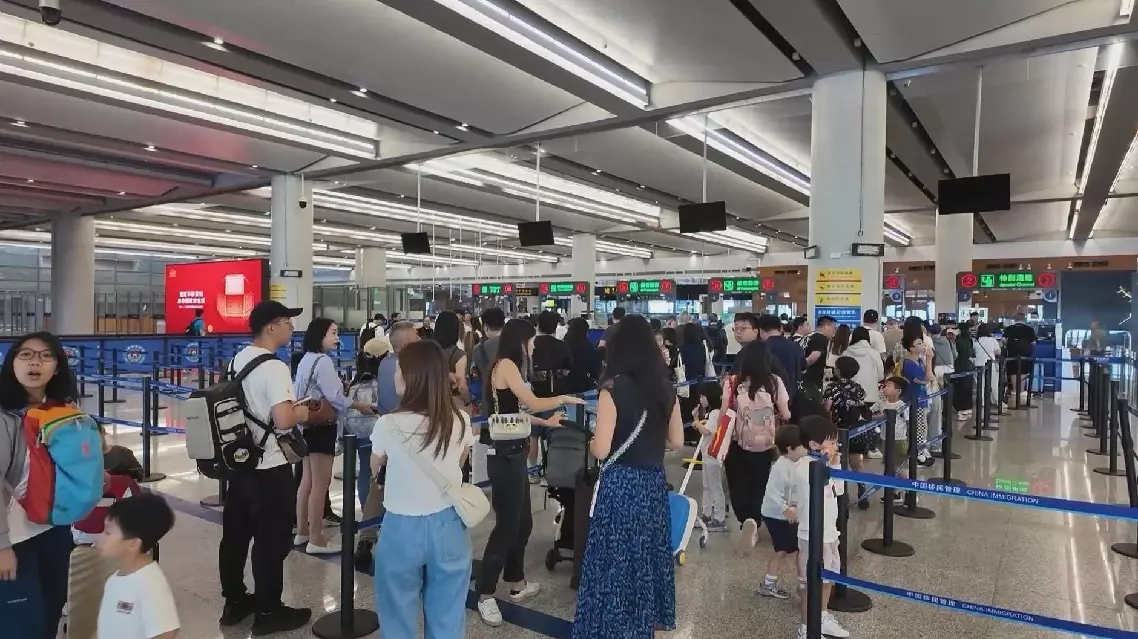
A surge in cross-border travel has swept through the Zhuhai Port of the Hong Kong–Zhuhai–Macao Bridge in south China during the five-day May Day holiday starting from Friday, as growing numbers of residents from the special administrative regions of Hong Kong and Macao head to the mainland for leisure and tourism.
Since April 29, or Wednesday, the border inspection station of the Hong Kong-Zhuhai-Macao Bridge has recorded 226,000 passenger trips and 52,000 vehicle crossings as of 16:00 on Friday. The current flow is primarily inbound, with many travelers choosing to enter the mainland ahead of the official holiday rush.
According to data from the border inspection station of the Hong Kong-Zhuhai-Macao Bridge, the holiday traffic has been predominantly inbound. The port officially entered its peak period on Wednesday, with daily passenger flow averaging around 80,000 people, a 10-percent increase compared to pre-holiday levels. This year's travel boom has come from sharp increase in family tours and parent-child tours.
"Today is the [first day of] May Day holiday, and I'm traveling with my family to Nansha [in Guangzhou] and Zhuhai," said a tourist from Hong Kong.
In addition to Guangdong Province, many other places near Guangdong on the mainland are also among the tourism options of people from Hong Kong and Macao.
"The number of residents from Hong Kong and Macao embarking on in-depth and long-distance tours to provinces on the mainland has seen a significant rise. We've seen an increase of about 20 percent compared to previous periods, with destinations like Yunnan, Sichuan and Guizhou emerging as popular choices," said Bao Haiyang, a customs officer with the border inspection station of the Hong Kong-Zhuhai-Macao Bridge.
According to authorities with the border inspection station of the Hong Kong-Zhuhai-Macao Bridge, the vehicle traffic is projected to hit its peak on May 3, or Sunday, with an estimated 28,000 vehicles expected to cross in a single day.
To cope with the high traffic volume, the border inspection station has implemented a specialized operational plan to manage the traffic influx and ensure a smooth and efficient travel experience for everyone.
Holiday travel surges as Hong Kong, Macao residents flock north during May Day holiday