Skip to Content Facebook Feature Image

NASA, Boeing describe limited roles despite Titan's owner touting aerospace ties

News

NASA, Boeing describe limited roles despite Titan's owner touting aerospace ties
News

News

NASA, Boeing describe limited roles despite Titan's owner touting aerospace ties

2024-09-27 01:48 Last Updated At:01:50

OceanGate co-founder Stockton Rush said the carbon fiber hull used in an experimental submersible that imploded was developed with help of NASA and aerospace manufacturers, but a NASA official said Thursday that the agency had little involvement and a Boeing official said some recommendations were ignored.

NASA intended to play a role in building and testing the carbon fiber hull. But the COVID-19 pandemic prevented NASA from fulfilling its role, other than consulting on a one-third scale mockup, not the submersible Titan that imploded while attempting to go to the Titanic wreckage, said Justin Jackson, a materials engineer for NASA.

More Images
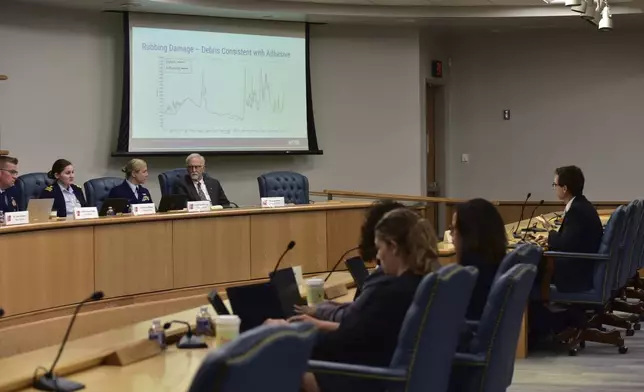
Don Kramer, National Transportation Safety Board engineer, right, testifies Wednesday, Sept. 25, 2024, at the U.S. Coast Guard Marine Board of Investigation hearing into the June 2023 loss of the Titan submersible, in North Charleston, S.C. (Petty Officer 2nd Class Kate Kilroy/U.S. Coast Guard via AP, Pool)
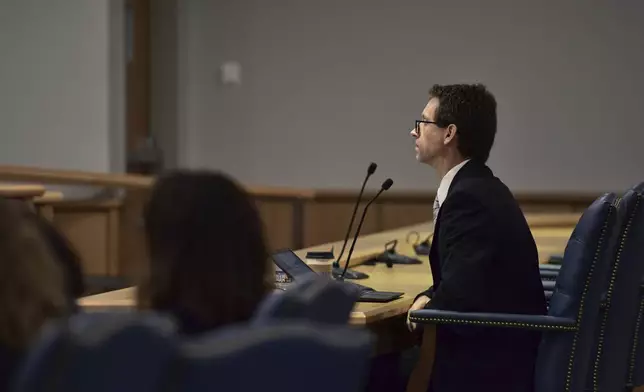
Don Kramer, National Transportation Safety Board engineer, right, testifies Wednesday, Sept. 25, 2024, at the U.S. Coast Guard Marine Board of Investigation hearing into the June 2023 loss of the Titan submersible, in North Charleston, S.C. (Petty Officer 2nd Class Kate Kilroy/U.S. Coast Guard via AP, Pool)
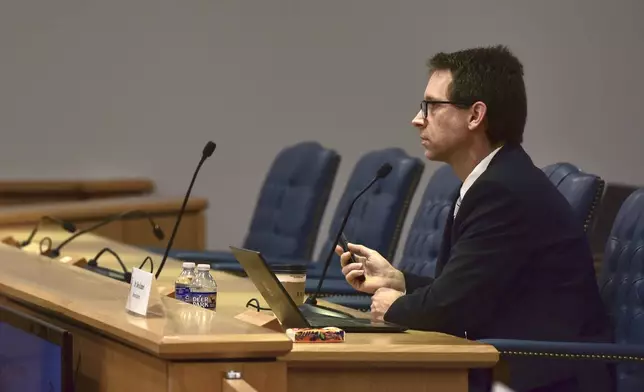
Don Kramer, National Transportation Safety Board engineer, right, testifies Wednesday, Sept. 25, 2024, at the U.S. Coast Guard Marine Board of Investigation hearing into the June 2023 loss of the Titan submersible, in North Charleston, S.C. (Petty Officer 2nd Class Kate Kilroy/U.S. Coast Guard via AP, Pool)
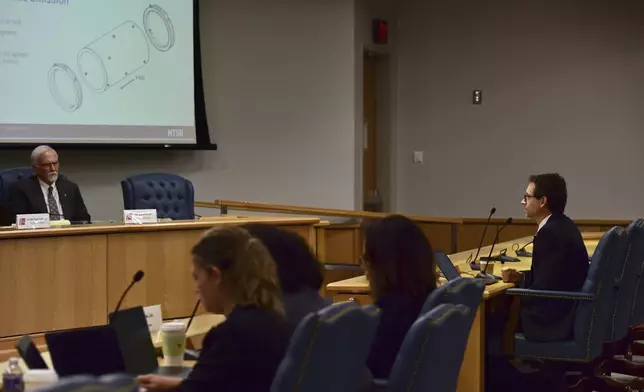
Don Kramer, National Transportation Safety Board engineer, right, testifies Wednesday, Sept. 25, 2024, at the U.S. Coast Guard Marine Board of Investigation hearing into the June 2023 loss of the Titan submersible, in North Charleston, S.C. (Petty Officer 2nd Class Kate Kilroy/U.S. Coast Guard via AP, Pool)

Don Kramer, National Transportation Safety Board engineer, testifies Wednesday, Sept. 25, 2024, at the U.S. Coast Guard Marine Board of Investigation hearing into the June 2023 loss of the Titan submersible, in North Charleston, S.C. (Petty Officer 2nd Class Kate Kilroy/U.S. Coast Guard via AP, Pool)

Don Kramer, National Transportation Safety Board engineer, testifies Wednesday, Sept. 25, 2024, at the U.S. Coast Guard Marine Board of Investigation hearing into the June 2023 loss of the Titan submersible, in North Charleston, S.C. (Petty Officer 2nd Class Kate Kilroy/U.S. Coast Guard via AP, Pool)

Don Kramer, National Transportation Safety Board engineer, right, testifies Wednesday, Sept. 25, 2024, at the U.S. Coast Guard Marine Board of Investigation hearing into the June 2023 loss of the Titan submersible, in North Charleston, S.C. (Petty Officer 2nd Class Kate Kilroy/U.S. Coast Guard via AP, Pool)

Don Kramer, National Transportation Safety Board engineer, right, testifies Wednesday, Sept. 25, 2024, at the U.S. Coast Guard Marine Board of Investigation hearing into the June 2023 loss of the Titan submersible, in North Charleston, S.C. (Petty Officer 2nd Class Kate Kilroy/U.S. Coast Guard via AP, Pool)

Gim Kang, special counsel for the Coast Guard's Titan Submersible Marine Board of Investigation, listens during the formal hearing inside the Charleston County Council Chambers, Monday, Sept. 23, 2024, in North Charleston, S.C. (Laura Bilson/The Post And Courier via AP, Pool)
Gim Kang, special counsel for the Coast Guard's Titan Submersible Marine Board of Investigation, listens during the formal hearing inside the Charleston County Council Chambers, Monday, Sept. 23, 2024, in North Charleston, S.C. (Laura Bilson/The Post And Courier via AP, Pool)

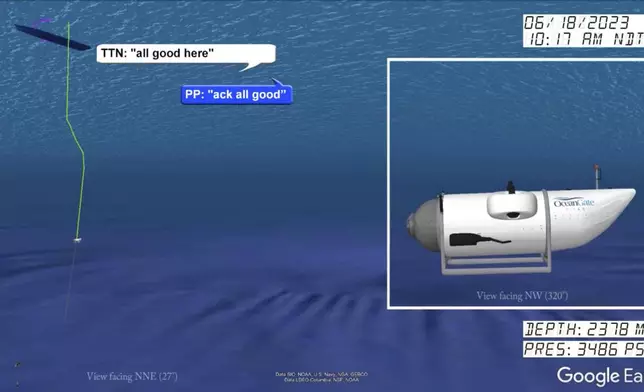
In a still from from a video animation provided by the United States Coast Guard an illustration of the Titan submersible, right, is shown near the ocean floor of the Atlantic Ocean, as June 18, 2023 communications between the submersible and the support vessel Polar Prince, not shown, are represented at left. (United States Coast Guard via AP)
In a still from from a video animation provided by the United States Coast Guard an illustration of the Titan submersible, right, is shown near the ocean floor of the Atlantic Ocean, as June 18, 2023 communications between the submersible and the support vessel Polar Prince, not shown, are represented at left. (United States Coast Guard via AP)

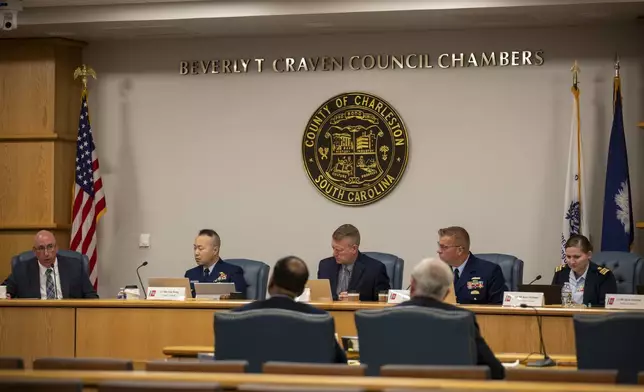
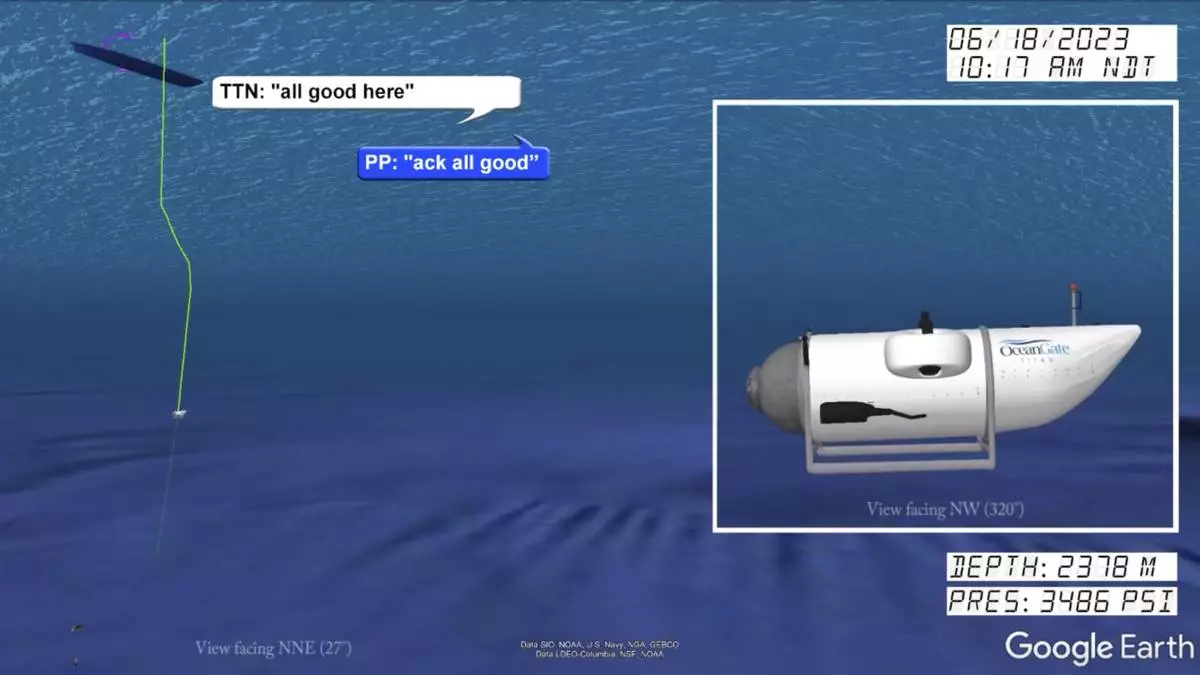
Members of the Coast Guard's Titan Submersible Marine Board of Investigation listen during the formal hearing inside the Charleston County Council Chambers, Monday, Sept. 23, 2024, in North Charleston, S.C. (Laura Bilson/The Post And Courier via AP, Pool)
Members of the Coast Guard's Titan Submersible Marine Board of Investigation listen during the formal hearing inside the Charleston County Council Chambers, Monday, Sept. 23, 2024, in North Charleston, S.C. (Laura Bilson/The Post And Courier via AP, Pool)

NASA, Boeing and Coast Guard representatives to testify about implosion of Titan submersible
NASA, Boeing and Coast Guard representatives to testify about implosion of Titan submersible
NASA, Boeing and Coast Guard representatives to testify about implosion of Titan submersible

NASA, Boeing and Coast Guard representatives to testify about implosion of Titan submersible

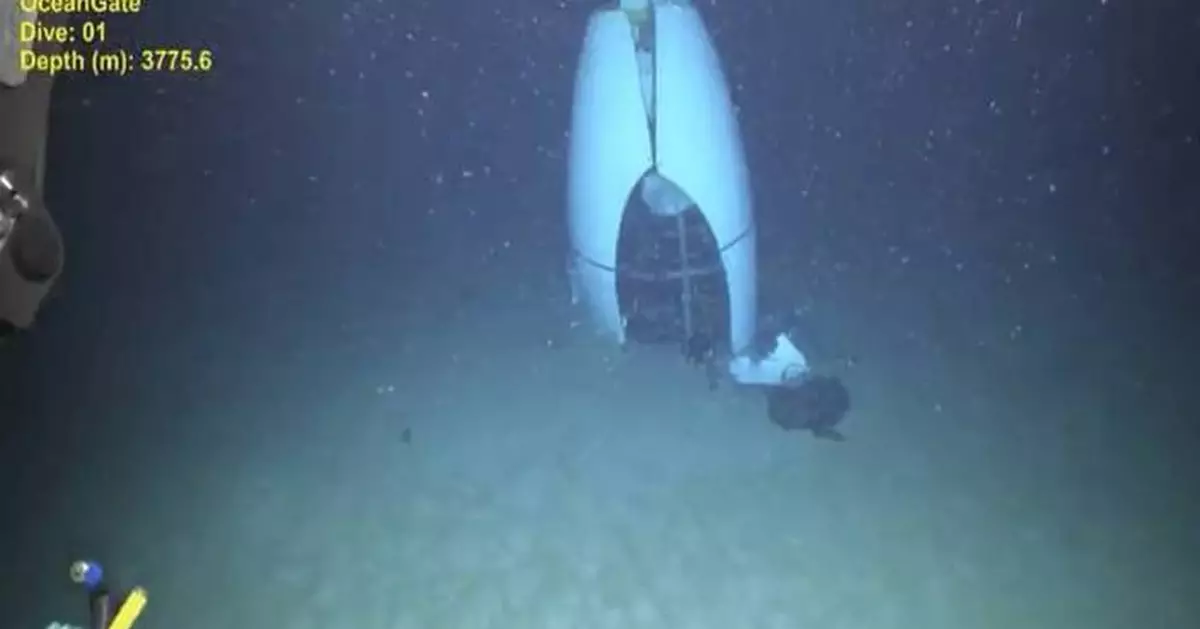
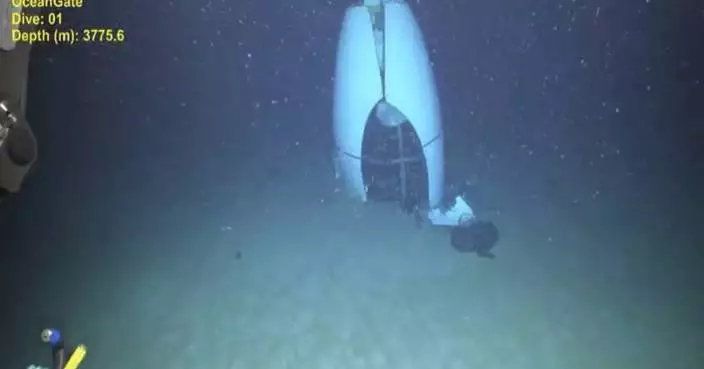
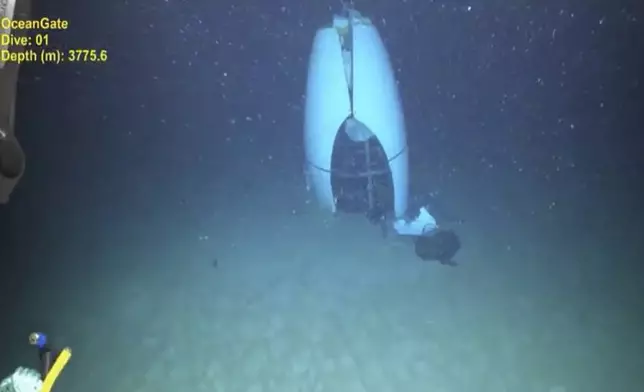
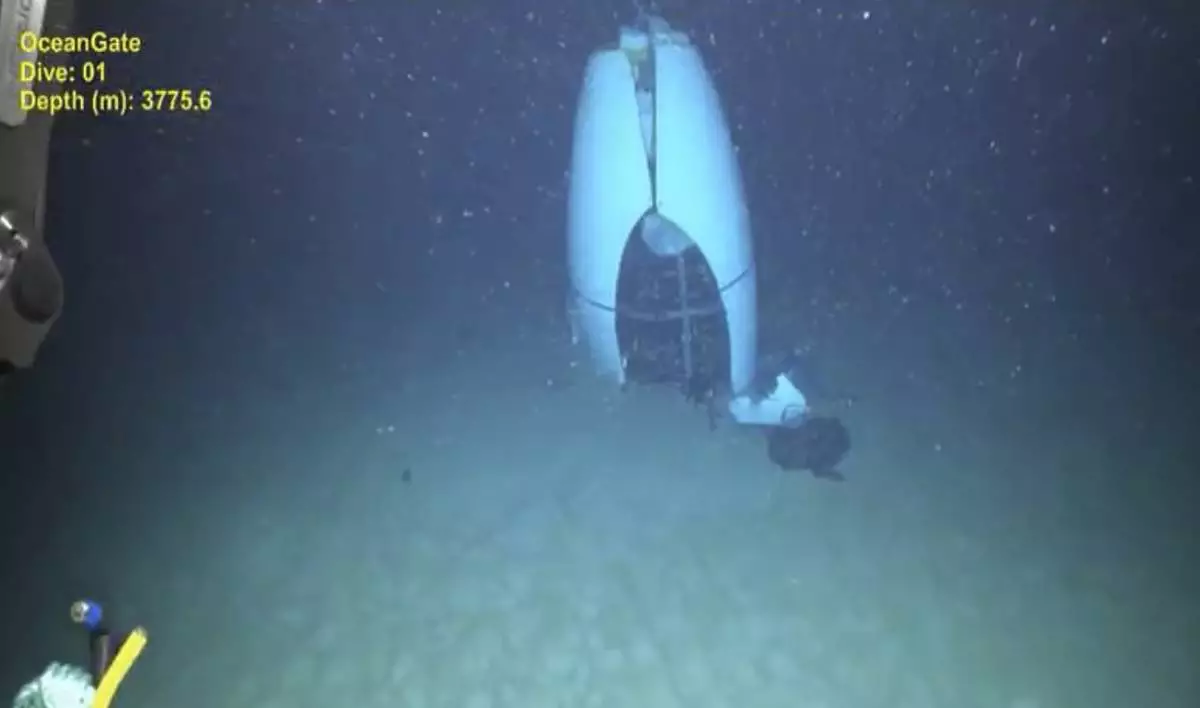
This June 2023 image provided by Pelagic Research Services shows remains of the Titan submersible on the floor of the Atlantic Ocean. (Pelagic Research Services via AP)

This June 2023 image provided by Pelagic Research Services shows remains of the Titan submersible on the floor of the Atlantic Ocean. (Pelagic Research Services via AP)

At one point, Jackson said NASA balked at allowing its name to be invoked by OceanGate. “The language they were using was getting too close to us endorsing, so our folks had some heartburn,” he told a Coast Guard panel.

Boeing was involved in an early feasibility study of the use of carbon fiber for Titan's hull and in OceanGate's acoustic sensors on the hull, but OceanGate departed from recommendations on the hull thickness and orientation of carbon fiber layers for greatest strength, said Mark Negley, material and process engineer at Boeing.

Rush was among the five people who died when the submersible imploded in June 2023.

The Coast Guard opened a public hearing earlier this month that is part of a high-level investigation into the cause of the implosion. Coast Guard officials noted at the start of the hearing that the submersible had not been independently reviewed, as is standard practice. That and Titan’s unusual design subjected it to scrutiny in the undersea exploration community.

John Winters, a Coast Guard marine inspector in Washingon state, testified that Rush railed against regulations that he said stifled innovation but also noted that Rush did not attempt to circumvent any Coast Guard regulations.

He testified Thursday that he was familiar with two other OceanGate submersibles before learning that the company had created a new submersible that could go deeper to reach Titanic. Winters said he was not aware that Oceangate ever notified the Coast Guard of its construction or requested a Coast Guard guidance or inspection.

“We didn’t get into about what standards it was built to, who built it. None of that was discussed,” Winters said. “It was just, 'Hey, we have a submarine. It’s good for 4,000 meters. We have a submarine to do that now,’" he said.

The hearing is expected to run through Friday and include more witnesses.

Earlier in the hearing, former OceanGate operations director David Lochridge said he frequently clashed with Rush and felt the company was committed only to making money. “The whole idea behind the company was to make money,” Lochridge testified. “There was very little in the way of science.”

Lochridge and other previous witnesses painted a picture of a company that was impatient to get its unconventionally designed craft into the water. The accident set off a worldwide debate about the future of private undersea exploration.

OceanGate, based in Washington state, suspended its operations after the implosion. The company has no full-time employees currently, but has been represented by an attorney during the hearing.

During the submersible’s final dive on June 18, 2023, the crew lost contact after an exchange of texts about Titan’s depth and weight as it descended, and concern grew on the support ship Polar Prince. One of the last messages from Titan’s crew before the submersible imploded stated, “all good here,” the Coast Guard said.

When the submersible was reported overdue, rescuers rushed ships, planes and other equipment to an area about 435 miles (700 kilometers) south of St. John’s, Newfoundland. Wreckage of the Titan was subsequently found on the ocean floor about 330 yards (300 meters) off the bow of the Titanic, Coast Guard officials said. No one on board survived.

OceanGate said it has been fully cooperating with the Coast Guard and NTSB investigations since they began. Titan had been making voyages to the Titanic wreckage site going back to 2021.
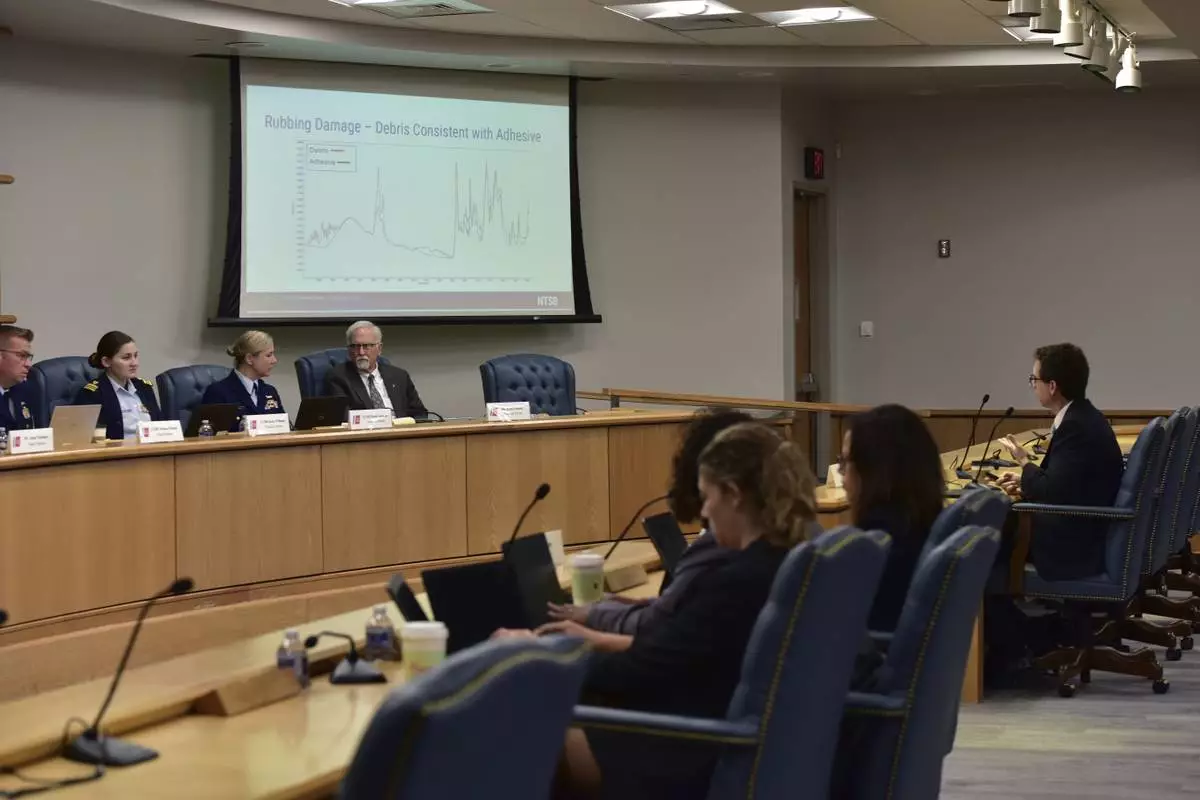
Don Kramer, National Transportation Safety Board engineer, right, testifies Wednesday, Sept. 25, 2024, at the U.S. Coast Guard Marine Board of Investigation hearing into the June 2023 loss of the Titan submersible, in North Charleston, S.C. (Petty Officer 2nd Class Kate Kilroy/U.S. Coast Guard via AP, Pool)

Don Kramer, National Transportation Safety Board engineer, right, testifies Wednesday, Sept. 25, 2024, at the U.S. Coast Guard Marine Board of Investigation hearing into the June 2023 loss of the Titan submersible, in North Charleston, S.C. (Petty Officer 2nd Class Kate Kilroy/U.S. Coast Guard via AP, Pool)
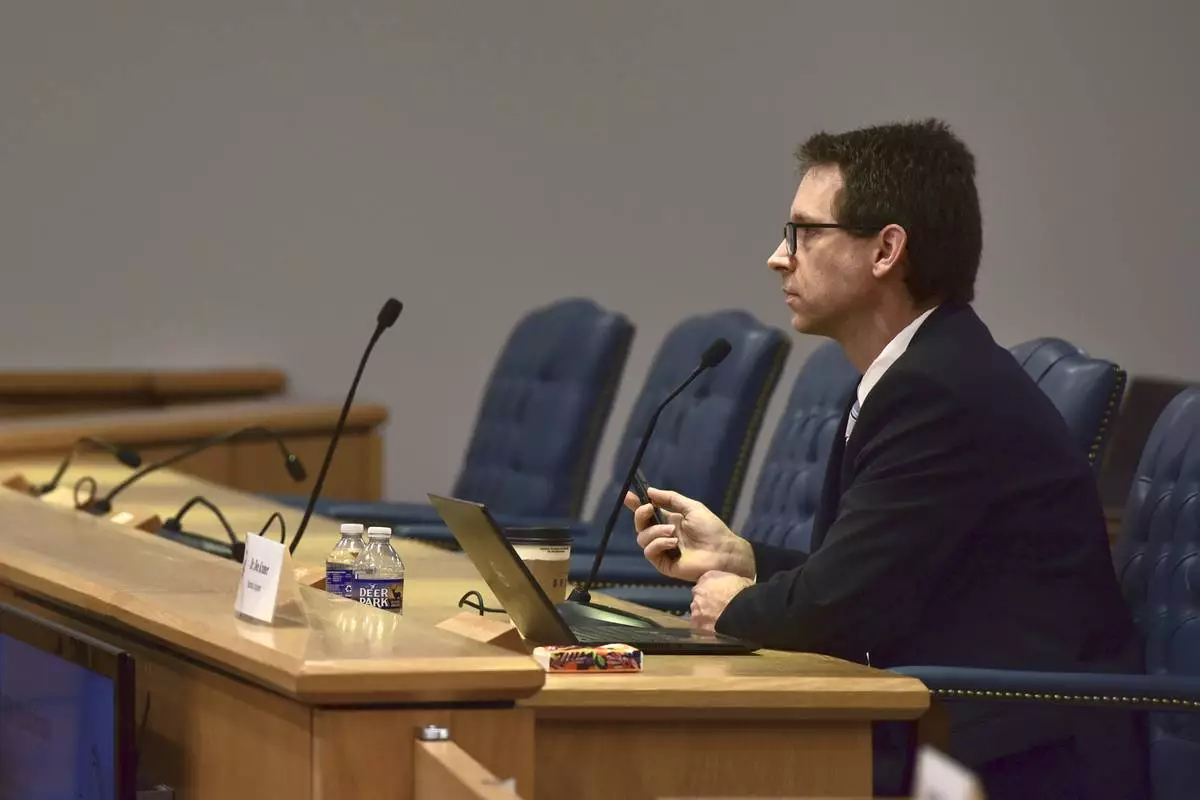
Don Kramer, National Transportation Safety Board engineer, right, testifies Wednesday, Sept. 25, 2024, at the U.S. Coast Guard Marine Board of Investigation hearing into the June 2023 loss of the Titan submersible, in North Charleston, S.C. (Petty Officer 2nd Class Kate Kilroy/U.S. Coast Guard via AP, Pool)
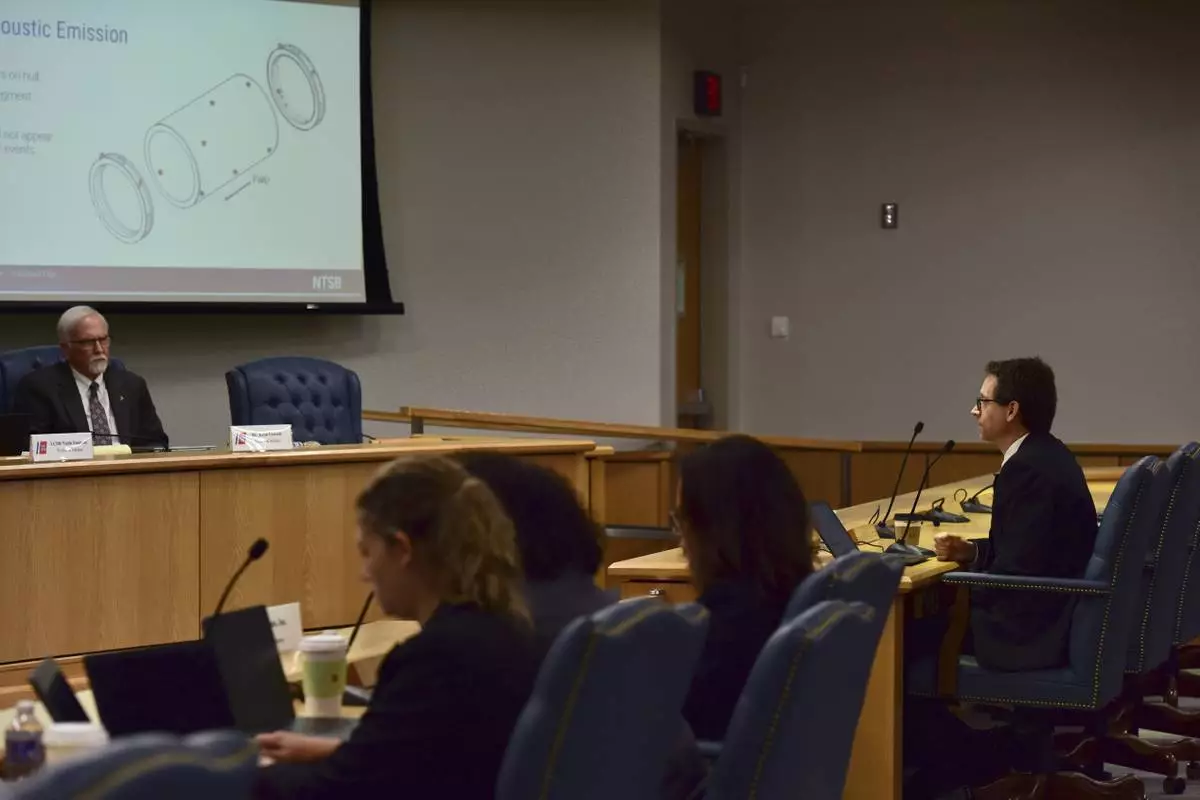
Don Kramer, National Transportation Safety Board engineer, right, testifies Wednesday, Sept. 25, 2024, at the U.S. Coast Guard Marine Board of Investigation hearing into the June 2023 loss of the Titan submersible, in North Charleston, S.C. (Petty Officer 2nd Class Kate Kilroy/U.S. Coast Guard via AP, Pool)

Don Kramer, National Transportation Safety Board engineer, testifies Wednesday, Sept. 25, 2024, at the U.S. Coast Guard Marine Board of Investigation hearing into the June 2023 loss of the Titan submersible, in North Charleston, S.C. (Petty Officer 2nd Class Kate Kilroy/U.S. Coast Guard via AP, Pool)

Don Kramer, National Transportation Safety Board engineer, testifies Wednesday, Sept. 25, 2024, at the U.S. Coast Guard Marine Board of Investigation hearing into the June 2023 loss of the Titan submersible, in North Charleston, S.C. (Petty Officer 2nd Class Kate Kilroy/U.S. Coast Guard via AP, Pool)

Don Kramer, National Transportation Safety Board engineer, right, testifies Wednesday, Sept. 25, 2024, at the U.S. Coast Guard Marine Board of Investigation hearing into the June 2023 loss of the Titan submersible, in North Charleston, S.C. (Petty Officer 2nd Class Kate Kilroy/U.S. Coast Guard via AP, Pool)

Don Kramer, National Transportation Safety Board engineer, right, testifies Wednesday, Sept. 25, 2024, at the U.S. Coast Guard Marine Board of Investigation hearing into the June 2023 loss of the Titan submersible, in North Charleston, S.C. (Petty Officer 2nd Class Kate Kilroy/U.S. Coast Guard via AP, Pool)

Gim Kang, special counsel for the Coast Guard's Titan Submersible Marine Board of Investigation, listens during the formal hearing inside the Charleston County Council Chambers, Monday, Sept. 23, 2024, in North Charleston, S.C. (Laura Bilson/The Post And Courier via AP, Pool)
Gim Kang, special counsel for the Coast Guard's Titan Submersible Marine Board of Investigation, listens during the formal hearing inside the Charleston County Council Chambers, Monday, Sept. 23, 2024, in North Charleston, S.C. (Laura Bilson/The Post And Courier via AP, Pool)

In a still from from a video animation provided by the United States Coast Guard an illustration of the Titan submersible, right, is shown near the ocean floor of the Atlantic Ocean, as June 18, 2023 communications between the submersible and the support vessel Polar Prince, not shown, are represented at left. (United States Coast Guard via AP)
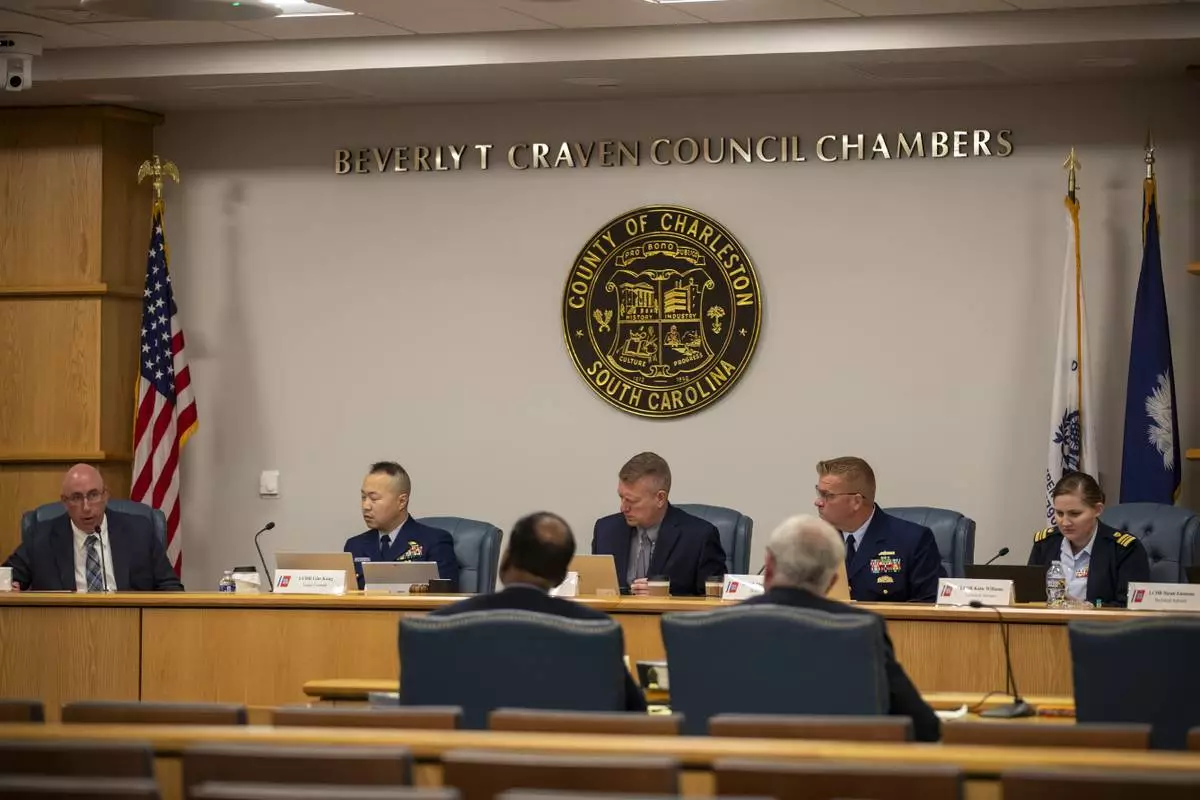
In a still from from a video animation provided by the United States Coast Guard an illustration of the Titan submersible, right, is shown near the ocean floor of the Atlantic Ocean, as June 18, 2023 communications between the submersible and the support vessel Polar Prince, not shown, are represented at left. (United States Coast Guard via AP)

Members of the Coast Guard's Titan Submersible Marine Board of Investigation listen during the formal hearing inside the Charleston County Council Chambers, Monday, Sept. 23, 2024, in North Charleston, S.C. (Laura Bilson/The Post And Courier via AP, Pool)

Members of the Coast Guard's Titan Submersible Marine Board of Investigation listen during the formal hearing inside the Charleston County Council Chambers, Monday, Sept. 23, 2024, in North Charleston, S.C. (Laura Bilson/The Post And Courier via AP, Pool)

NASA, Boeing and Coast Guard representatives to testify about implosion of Titan submersible

NASA, Boeing and Coast Guard representatives to testify about implosion of Titan submersible
NASA, Boeing and Coast Guard representatives to testify about implosion of Titan submersible

NASA, Boeing and Coast Guard representatives to testify about implosion of Titan submersible

This June 2023 image provided by Pelagic Research Services shows remains of the Titan submersible on the floor of the Atlantic Ocean. (Pelagic Research Services via AP)


This June 2023 image provided by Pelagic Research Services shows remains of the Titan submersible on the floor of the Atlantic Ocean. (Pelagic Research Services via AP)
CAIRO (AP) — Iranians began to regain internet access on Wednesday after authorities ended a monthslong shutdown. But users said service was slow and spotty in some areas, with apps like YouTube and Instagram heavily restricted, as they were before the cutoff began during nationwide protests in January.

Authorities justified the outage as a military imperative after the United States and Israel attacked Iran on Feb. 28. Their decision to lift some restrictions this week came as negotiators appeared to be closing in on a more permanent truce. But many Iranians feared access could be cut off again at a moment's notice.

Internet tracking company Netblocks said Iran’s connectivity, which measures the ability of devices to connect to the internet, is at around 86% of capacity from before the cutoff. Internet analysis firm Kentik said internet traffic, which measures the amount of data transferred and is a good illustration of usage, was at around 40%.

Amir Rashidi, an Iranian cybersecurity analyst, said there were still widespread disruptions. “It's too early to say the shutdown is over,” he wrote on X.

Iran’s roughly 90 million people have been cut off from the internet for most of 2026, one of the world’s longest and strictest national shutdowns. Young people with online careers saw their incomes evaporate. Job losses and the closure of online businesses added to the war's steep economic costs.

The cutoff made it difficult for Iranian families to communicate through months of unrest and war. At some points, phone lines were also cut off, though they were later restored.

A woman living in Tehran said that for months she was barely able to speak to her sons living abroad. She couldn't believe authorities had restored access, saying she had assumed they would find some justification to prolong the outage.

A taxi driver said service was restored but weak. He expressed hope it would improve so he could use messaging apps with family and friends. Both spoke on condition of anonymity for security reasons.

Prices spiked during the shutdown, with residents in Tehran at times paying around $7.50 per gigabyte. Prices are back down to around $2.25 for 30 gigabytes, roughly where they were before the protests.

Even then, Iran tightly controlled access to popular social media sites, leading many to rely on virtual private networks, or VPNs. The cost of those workarounds soared during the shutdown, making them unaffordable for many as the economy was battered.

Businesses have started reappearing online, announcing their return with posts on sites like Instagram and Telegram.

A gamer and tech influencer in the central city of Isfahan said the shutdown had caused him to lose a lot of his audience on YouTube and Instagram, where he had spent years building up a large following.

“All my views and interactions are way down. I’ve been erased from the algorithm,” he said in a voice note sent by WhatsApp, adding that his internet connection was still slower than before the shutdown.

“The situation is such that many content producers have had their income reduced to zero, have moved on to other jobs, or have been forced to sell their equipment to survive,” he said. He spoke on condition of anonymity for fear of reprisal.

Iranian authorities first shut down the internet in January during mass anti-government protests that were eventually stamped out in a violent crackdown. Thousands of people were killed and tens of thousands detained.

That cutoff was just starting to ease when the government imposed a complete internet blackout after the start of the war, when U.S. and Israeli strikes killed Iran's supreme leader and other top officials.

The government faced criticism for the prolonged shutdown, which caused even more harm to an economy devastated by inflation, strikes on key industries and a U.S. blockade on Iranian ports.

The internet cutoff cost an estimated $30-40 million daily, with indirect losses likely twice that much, a member of Iran’s Chamber of Commerce, Afshin Kolahi, told a local newspaper last month. About 10 million people have jobs that depend on internet connectivity, according to Communications Minister Sattar Hashemi.

Iranians still had access to a national net, but that has a far narrower reach, and users complained of poor service and heavy censorship. Senior government officials are given SIM cards granting them access to the global internet. Under pressure, the government expanded access to the SIM cards to some professions during the shutdown.

A woman checks her smartphone while sitting on a bench along a sidewalk in northern Tehran, Iran, Tuesday, May 26, 2026. (AP Photo/Vahid Salemi)

A woman checks her smartphone while sitting on a bench along a sidewalk in northern Tehran, Iran, Tuesday, May 26, 2026. (AP Photo/Vahid Salemi)

Recommended Articles