Traditional art forms such as painting, wood carving and yak bone-made porcelain in southwest China's Xizang Autonomous Region have not only been well preserved but also are experiencing a renaissance as artists there blend ancient techniques with modern innovation to enrich the region's cultural heritage and boost artistic vitality.
The Xizang Thangka Art Museum, situated on the south bank of the Lhasa River, is a national-level institution for the protection of Thangka painting, specifically the Miansa style, which is listed as an intangible cultural heritage in China.
In 2016, the museum organized its artists to study traditional Chinese painting, integrating it with the local Thangka art, thus enriching the creative forms of Thangka painting.
"Thanka art not only covers religious subjects, but also includes landscapes, flowers and birds," said Kun Jorgye, deputy curator of the museum.
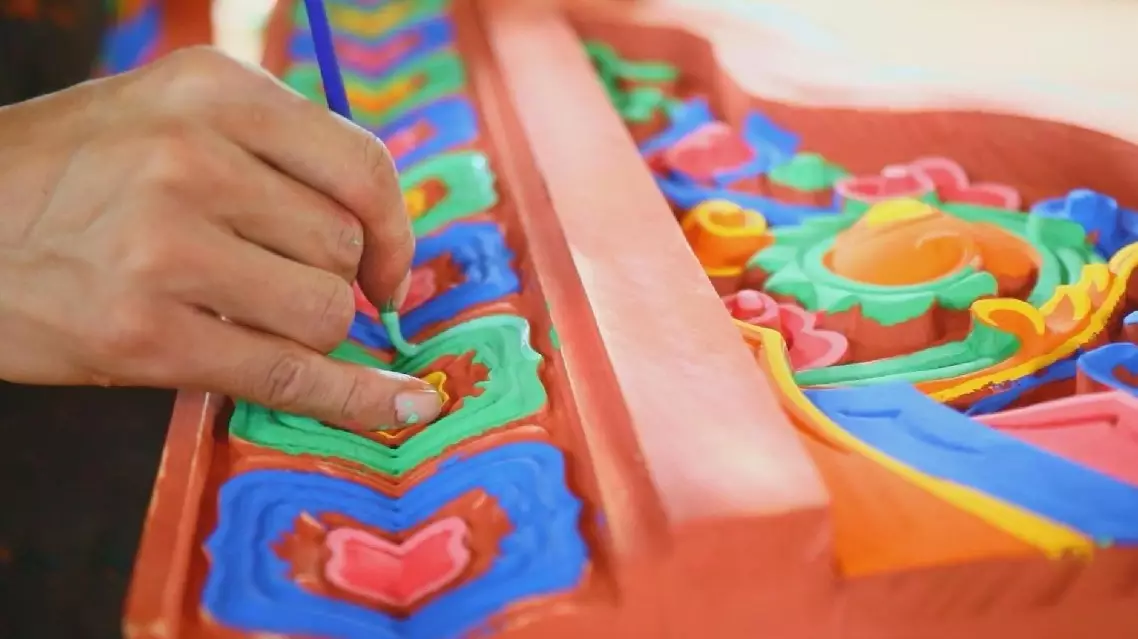
Likewise, thriving with a blend of tradition and innovation is the art of wood carving in Cha'nang County.
With a history of over 300 years, this kind of wood carving represents the exquisite Tibetan craftsmanship -- each piece requires at least 25 different tools to finish.
Padma Dradul, a 63-year-old master, carries on this skill. When introducing one of his artworks in an interview with China Central Television Network, he mentioned a traditional carving pattern that bears meaningful overtones.
"The Four Auspicious and Harmonious Creatures are a traditional design in Xizang. It symbolizes love, respect and unity, and shows the spirit of solidarity among all 56 ethnic groups in China," the inheritor said.
For over 20 years, Dradul has generously shared his skills and experience with the people who wanted to learn this traditional art, training more than 300 apprentices. And the artworks he made have been sold cross the country.
Lhasa City has developed a special production line for porcelain products that combines yak-bone material with Thangka painting.
These products utilize a ceramic made from a specific proportion of yak bone charcoal and clay, resulting in a finish that is over 20 percent whiter than regular ones.
Chogyal, a local who teaches the making of such wares, said the painting process is also different from others.
"On bone-made porcelain products, colors need to be applied individually because some colors can change significantly after burning," he said.
Data shows that between 2012 and 2023, both the central and regional governments invested nearly 61 million U.S. dollars in the protection of representative intangible cultural heritage projects and the organization of inheritance activities.
In 2023, Xizang's cultural industry output value reached nearly 1.3 billion U.S. dollars, a year-on-year increase of 42 percent.
Xizang's traditional crafts revitalized through inheritance, innovation