Shaanxi, a major energy-producing province in northwest China, is rapidly advancing its modern industrial system, focusing on transforming its energy sector for a smarter, greener and more sustainable future.
While maintaining its position as a key player in China's energy sector—ranking third nationally in coal production, fourth in oil, and third in natural gas in 2023—Shaanxi is actively pursuing a low-carbon development strategy by upgrading its coal chemical industry, diversifying its energy portfolio, and establishing itself as a national clean energy base.
The commitment to smart development is evident in the province's advanced mining techniques.
At a major coal mine demonstration project in Yulin City, a state-of-the-art control center allows operators to remotely control mining equipment located 343 meters underground. A single operation can extract 3,500 tons of coal in just 40 minutes—enough to fill 55 railway cars.
This "office-based mining" is a testament to the province's investment in smart mining technology. Thousands of sensors deployed throughout the mine provide real-time data on production conditions. A 5G+ industrial internet network transmits this information at high speed, enabling precise ground-level control of underground operations.
Safety remains paramount in coal mining, and Shaanxi is increasingly relying on robotics to enhance safety protocols.
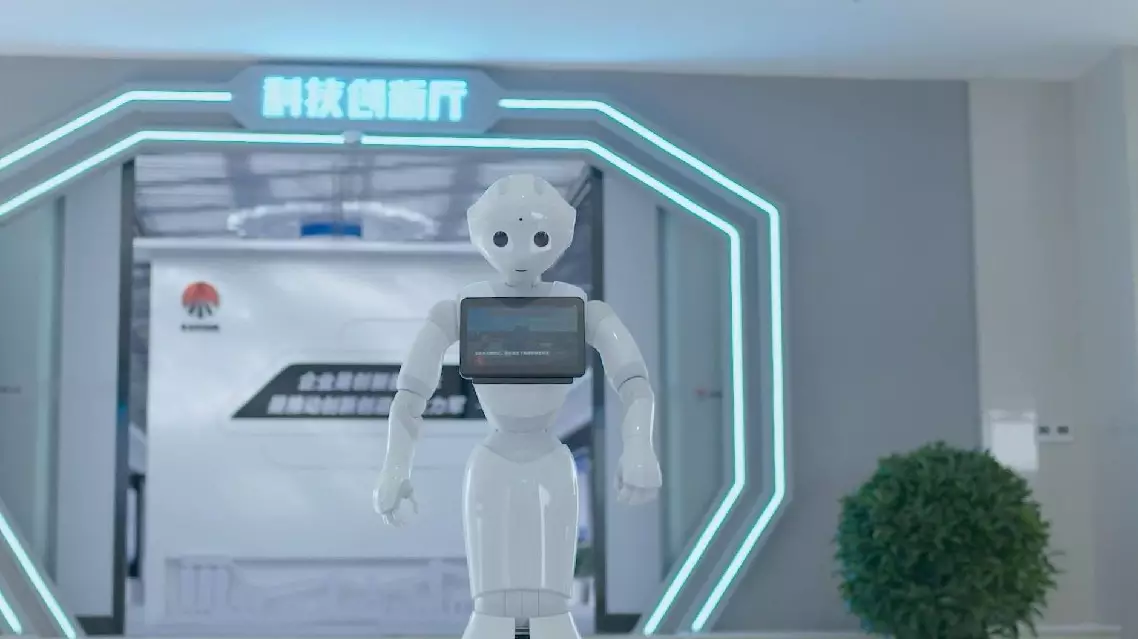
At the Yulin mine, 79 robots perform various tasks, including equipment inspection, power supply monitoring, fire prevention, and material transport.
One such robot, equipped with sound analysis, temperature sensing, and intelligent identification capabilities, continuously monitors the mine's drainage equipment.
Fan Wei, a miner at Shaanxi Coal Group's Caojiatan Coal Mine, highlighted the significant reduction in manual labor and improved safety due to automation.
"Our main work now is to inspect the equipment, which is an additional safeguard on top of the inspection robots. Compared to traditional mining methods, our manpower has been reduced by more than half, and this has freed us from physically demanding labor. After our work is done, we can use the vehicle booking system to arrange for a ride home," he said.
Beyond mining, Shaanxi is leveraging technological advancements to transform coal into a diverse range of products.
A high-throughput catalytic reaction research platform, utilizing artificial intelligence, is optimizing the development of catalysts for coal chemical processes. This allows for the transformation of coal into products such as clothing, plastic bottles, and super-absorbent polymers used in diapers.
The technological advancement is driving significant growth in the coal chemical sector, with Shaanxi accounting for 50 percent of China's coal-to-ethanol production capacity and 40 percent of its coal tar hydrogenation capacity.
Furthermore, Shaanxi is finding innovative ways to repurpose coal mining waste. In Binzhou, over 500 kilometer away from Yulin, coal gangue, a solid waste generated during coal mining and washing, is being transformed into building materials such as wallpaper, cement, and mortar.
The province is also addressing the environmental challenges associated with coal mining as vast areas previously scarred by mining activity are now thriving ecological parks.
One such project, covering over 10,000 mu (approximately 667 hectares), has restored the seven key elements of a healthy ecosystem: mountains, water, forests, fields, lakes, grasslands, and sand. This remarkable transformation is largely attributed to the construction of underground reservoirs within abandoned mine shafts.
This innovative approach involves utilizing the physical space of abandoned mines to create reservoirs, storing mine water and purifying it through natural filtration.
"We have built 35 underground coal mine water reservoirs in this globally unique 200-million-ton coal mining area. The annual water supply exceeds 70 million cubic meters, which is equivalent to the storage capacity of five West Lakes (of Hangzhou). These reservoirs can provide water for mining operations, ecological irrigation, as well as industrial and domestic use in the surrounding towns and cities," said Li Xuejia, an engineer at the National Key Laboratory of Water Resources in the Shendong region.
Shaanxi embraces green development, innovation