Skip to Content Facebook Feature Image

Xinjiang's Kekeya becomes green miracle in China's largest desert

China

China

China

Xinjiang's Kekeya becomes green miracle in China's largest desert

2024-09-28 17:56 Last Updated At:21:27

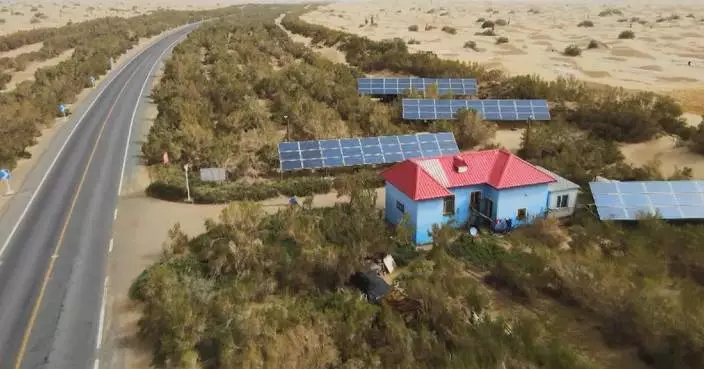
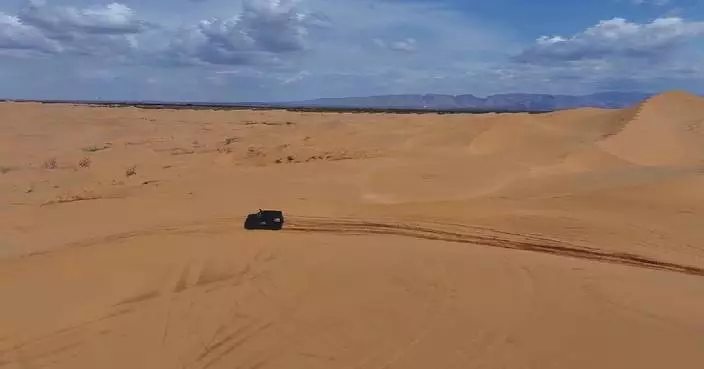
Decades of persistent efforts against desertification in and around Kekeya have paid off, generating economic and ecological benefits for this once-arid land in Aksu Prefecture, located in northwest China's Xinjiang Uygur Autonomous Region. Nestled on the northern edge of the formidable Taklimakan Desert, Kekeya was once notorious for its tumultuous weather and ceaseless sandstorms. Covering a staggering expanse of 337,000 square kilometers, the Taklimakan is China's largest desert and is infamously known as the "Sea of Death".

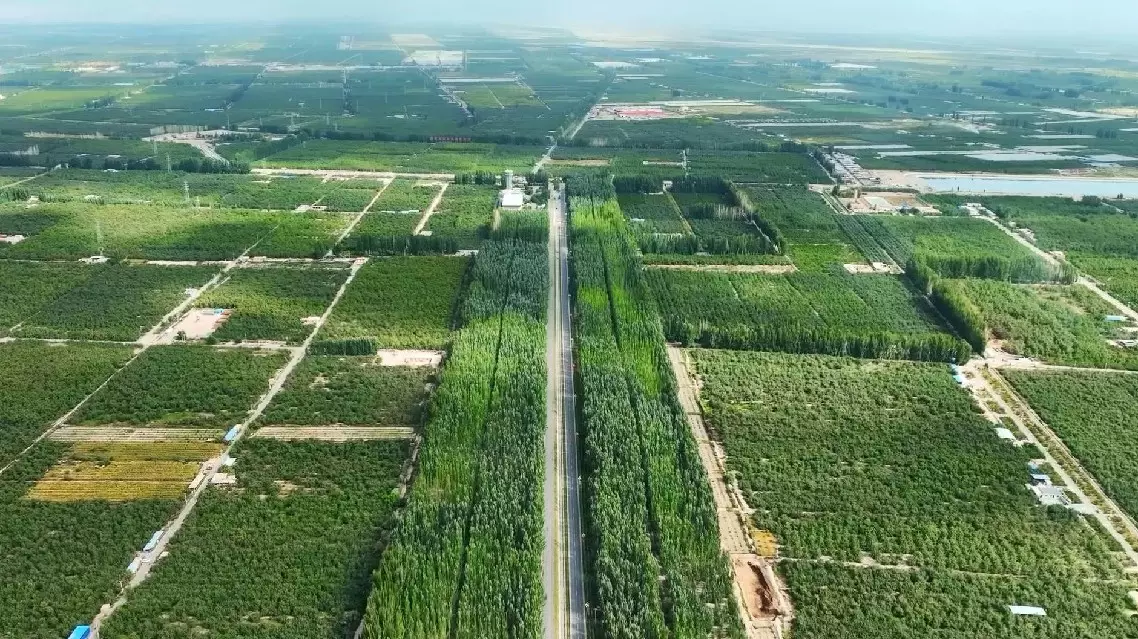
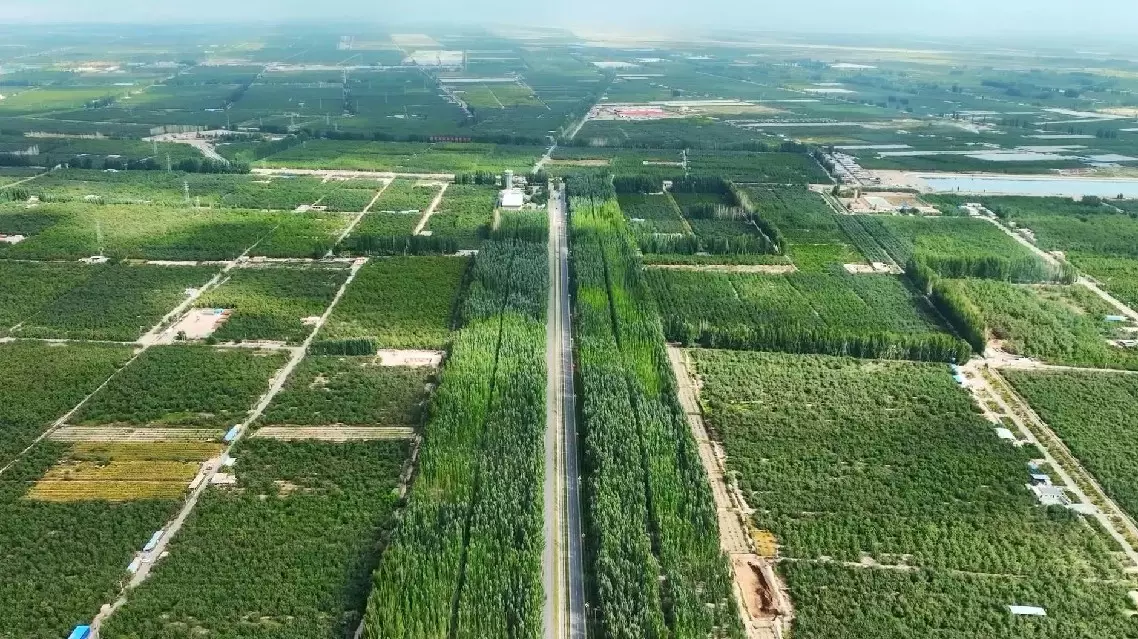
In an effort to combat desertification and alleviate the adverse effects of shifting sands and dust storms on nearby residents, an ambitious afforestation project was launched in Kekeya in 1986. Consequently, what is now known as the "Green Great Wall" has gradually emerged.

Faced with water shortages, high soil salinity, and a lack of heavy machinery, those pioneers who first engaged in the project in Aksu rose to the challenge. They toiled with simple tools to soften the hardened soil, level the ground, and adjust soil alkalinity to create a suitable environment for the growth of trees.

"We were planting trees almost every spring and autumn then," said Song Jianjiang, one of the first forest rangers for the afforestation project.

One year later, the barren land of Kekeya showed its first signs of greenery. Local people saw hope for better living conditions, without sand finding its way into their rice bowls.

"We were planting trees almost every spring and autumn then. Since our shelter-belt forest was planted, it has blocked the wind and sand from afar, helped keep our homes clean," said Song.

In the first decade of the afforestation project, Kekeya saw about 2,200 hectares of artificial forest completed, and another 4,360 hectares in the second decade.

Since 2012, Kekeya has achieved 62,000 hectares of afforestation, and the total afforestation has exceeded 80,000 hectares.

Zhao Hongguang, a local apple grower, said there is a stark difference between growing on the land now as compared to 30 years ago.

"Back then, I planted over 2.6 hectares of land, but only 280 pear and apple trees survived. Now, one mu (one-fifteenth of a hectare) of land can produce 3 to 4 tons of apples. Four tons of apples can sell for over 20,000 yuan (about 2,852 U.S. dollars). Most of my apples are sold to the Yangtze River Delta and the Pearl River Delta regions," he said.

Residents Su Hui and his wife Lu Fang are both photography hobbyists. As the ecological environment improves, more birds and wildlife are captured in their lenses.

"In recent years, as the ecological environment improves, some bird species that we had never seen before have appeared in Aksu, such as kingfishers, red crossbills, and bluethroats. These birds were never seen in Aksu before, but now they can be spotted here," said Su.

After relentless efforts spanning generations, the afforestation project in Kekeya has achieved over 80,000 hectares of afforestation. Kekeya's forest coverage rate rose from 8 percent in 1986 to 73 percent in 2020. Today, green spaces and pocket parks are spreading throughout Aksu's urban areas.

"We have built the shelterbelt forest in Kekeya, and it has brought hope to everyone here," said Song.
Xinjiang's Kekeya becomes green miracle in China's largest desert
Xinjiang's Kekeya becomes green miracle in China's largest desert


Xinjiang's Kekeya becomes green miracle in China's largest desert
Xinjiang's Kekeya becomes green miracle in China's largest desert
The second round of U.S.-brokered talks between Russia and Ukraine concluded in Abu Dhabi, the United Arab Emirates (UAE) on Thursday, with both sides agreeing to a large-scale prisoner exchange but failing to achieve substantive breakthroughs on core issues such as territorial arrangements and a ceasefire.

According to Ukraine, the talks were conducted trilaterally before moving to group consultations. Ukraine's National Security and Defense Council Secretary Rustem Umerov said the Ukrainian delegation sought a "dignified and lasting peace," without disclosing specific outcomes.

Kyrylo Budanov, the head of Ukraine's presidential office, said the trilateral negotiations had been truly constructive, thanking the U.S. and the UAE for their mediating roles.

Russia's presidential special envoy Kirill Dmitriev said on Thursday that there was progress and a positive movement forward in peace talks with Ukraine.

The talks ended with no joint political or security statement, underscoring persistent differences between Russia and Ukraine on key matters, including territorial disputes, ceasefire arrangements, and security guarantees.

U.S. President Donald Trump's special envoy Steve Witkoff said representatives from the three countries reached a consensus on a prisoner swap.

In a readout of the talks he posted on social media, Witkoff described the discussions as constructive and focused on how to create the conditions for a durable peace.

The delegations had wide-ranging discussions over the past two days on the remaining open issues, including methods for implementing a ceasefire and monitoring the cessation of military activities, according to Witkoff.

He added that the United States and Russia had agreed to establish a military-to-military dialogue to be led by commander of U.S. European Command Alexus Grynkewich.

Following the talks, Russia and Ukraine conducted their first large-scale prisoner exchange in nearly five months, with each side returning 157 detainees. Ukrainian President Volodymyr Zelensky said those released included both military personnel and civilians.

Zelensky also said Thursday that the next peace talks with the delegations of the U.S. and Russia will be held soon. "Further meetings are planned in the near future, likely in the United States," Zelensky said in his evening address.

However, no timetable or arrangements for a next round of talks were announced, highlighting continued uncertainty in the political settlement process.

The second round of talks began on Wednesday. The previous meeting of the trilateral working group on security issues took place from Jan 23 to 24 in Abu Dhabi. It marked the first trilateral engagement since the escalation of the conflict in February 2022, although no concrete agreement or joint statement was announced afterward.

In a statement issued earlier, the United Arab Emirates (UAE) Ministry of Foreign Affairs welcomed cooperation between Russia and Ukraine on the prisoner exchange, saying it demonstrated the UAE's role as a reliable mediator in easing the crisis and promoting constructive dialogue.

2nd round of Russia-Ukraine talks ends in UAE with prisoner swap deal, key differences unresolved

2nd round of Russia-Ukraine talks ends in UAE with prisoner swap deal, key differences unresolved

Recommended Articles