Xi Jinping Thought on the Rule of Law is driving significant progress in building a law-based society in China, opening new chapters in this endeavor.
Every step forward in enhancing law-based governance will inject strong momentum into China's development and safeguard the happiness and well-being of the people.
Ma Jing is a deaf person. He was the victim of a fraudulent case.
"I came to Chongqing because of my ex-wife. She scammed me out of hundreds of thousands of yuan. I came here to find her and seek justice for myself, and to get back the money I lost," said Ma, waiter at a hot pot restaurant.
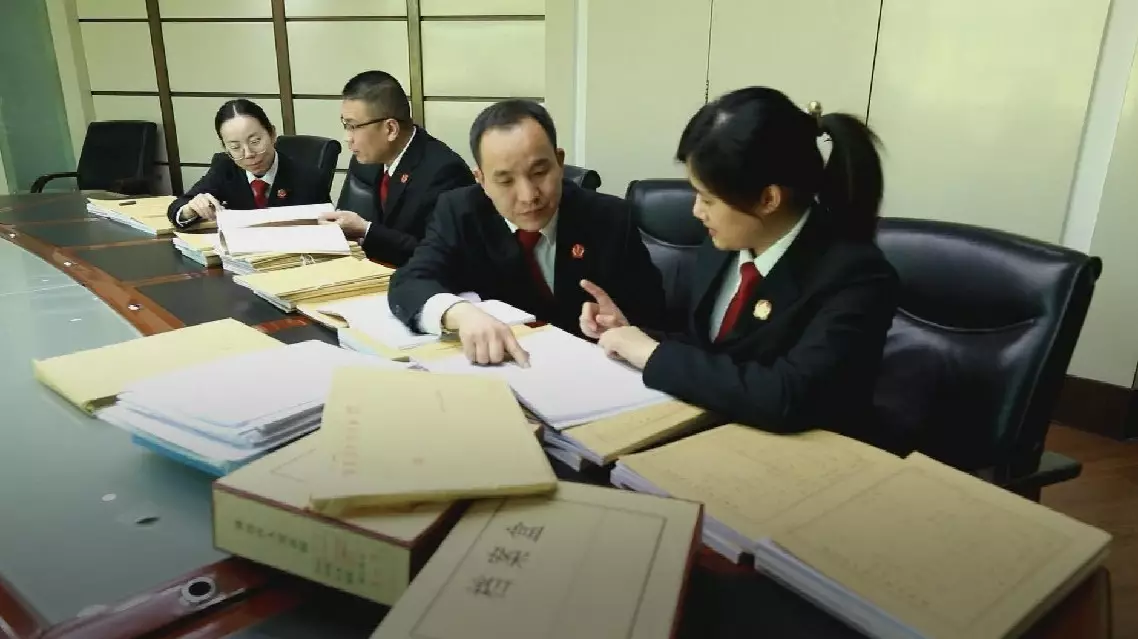
In Chongqing, there is a sign language lawyer named Tang Shuai. He specializes in providing legal services to the deaf community. And he was the only sign language lawyer in China at that time.
"Some criminals prey on the deaf because they know this group often have a limited knowledge of the law and are very gullible," said Tang.
With Tang Shuai's help, Ma Jing finally won his lawsuit after five years of relentless effort.
"After handling Ma Jing's case, we wanted to share this example with the deaf across the country to raise their awareness on self-protection and fraud prevention," said Tang.
"The public legal service system needs to be built step by step, and care for disadvantaged groups reflects a commitment to justice in a meaningful way," said Tan Zongze, dean of the School of Administrative Law under the Southwest University of Political Science and Law.
Equity and justice are what people aspire to. It's also a happiness indicator.
Upholding social fairness and justice is especially important for Chinese President Xi Jinping, also general secretary of the Communist Party of China (CPC) Central Committee and chairman of the Central Military Commission.
"Efforts should be made so that the public feel the fairness and justice in each and every case," said Xi while delivering a report to the 20th National Congress of the CPC on Oct 16, 2022.
"People-centered, comprehensive, systematic, fair, just and equal, these six words summarize aspirations of Xi Jinping Thought on the Rule of Law," said Robert Lawrence Kuhn, Founder and Chairman of The Kuhn Foundation.
Adhering to a people-centered approach is the fundamental stance of Xi Jinping Thought on the Rule of Law. He pointed out, "The people are the broadest and most solid foundation for comprehensively advancing law-based governance."
In Hongqiao Street, Shanghai, one of the first batch of local legislative outreach offices was established. It provides an effective channel for people to express legislative demands and reflect social and public opinions.
"We were deeply encouraged when, on November 2, 2019, General Secretary Xi Jinping inspected the Hongqiao Subdistrict in Shanghai and fully acknowledged the work of local legislative outreach offices of the Standing Committee of the National People's Congress," said Shi Hongli, secondary counsel of the Legislative Affairs Commission of the Standing Committee of the National People's Congress.
Legislation is the precursor of the rule of law, and good law is the foundation of good governance.
In 2020, the Civil Code, known as the "Encyclopedia of Social Life", opened a new chapter in the history of China's rule of law. Its implementation vividly embodies the concept of "whole-process people's democracy" throughout the construction of the rule of law.
"We compiled the first law entitled with the term 'code of laws', the Civil Code, since the establishment of the People's Republic of China (PRC), and promulgated a series of laws and regulations on key fields including food and drugs, public health, ecological environment and security of personal information, that have a direct bearing on people's well-being," said Chong Ruojing, Deputy Director of the Secretariat of the Office of the Commission for Overall Law-Based Governance.
In November of the same year, the central conference on work related to overall law-based governance was held. One of the most important and defining achievements of this conference was the establishment of Xi Jinping Thought on the Rule of Law as the guiding principle for promoting law-based governance across the country.
And law-based governance is a critical foundation for China's national governance system and governance capacity. There has been a nationwide push to build law-based governments, ensuring that all governmental actions adhere strictly to legal standards.
At the end of 2021, a special assessment on law-based governance took place in Huainan City, Anhui Province. The candidates for this assessment were leaders of local government departments, while the examiners were the people. Officials were required to report on their achievements of the rule of law construction on stage.
"As officials, they are required to communicate their work in promoting law-based governance to the public," said Zhu Ruifeng, deputy director of the Judicial Bureau of Huainan City.
Building a law-based government is a crucial part of comprehensively advancing law-based governance in China. Among the 11 key aspects of Xi Jinping's Rule of Law Thought, he emphasizes, "To ensure that leading officials at every level, though few in number, play a key role."
"CPC General Secretary Xi Jinping calls for governance by law, ruling by law and administering by law. He emphasizes, 'Comprehensive rule of law is a systematic project. We must plan as a whole, and pay more attention to systematic coordination, integrity, and synergy,'" said Kuhn.
"If the government leads by example in abiding by the law, it can create a law-abiding environment that encourages its subjects -- citizens, legal entities, and social organizations -- to also follow the law," said Mo Jihong, director of the Law Institute of Chinese Academy of Social Sciences.
To promote comprehensive law-based governance, everyone in society needs to participate, enhance awareness and abide by the law.
"We will promote socialist rule of law and carry forward fine traditional Chinese legal culture, and we will encourage all our people to truly revere, readily observe, and firmly defend socialist rule of law," said Xi in the report to the 20th CPC National Congress.
"When we talk about ruling the country by law, we mean establishing a guiding principle that everyone is bound to follow the law. This principle is elevated to the level of a national strategy, aiming to cultivate a strong sense of legal awareness and respect for the law among the entire population," said Ma Hongjun, professor with the China University of Political Science and Law.
"Xi Jinping Thought on the Rule of Law is the most comprehensive, systematic, and scientifically grounded legal thought framework in the CPC's hundred-year history. It widens the path of socialist rule of law with Chinese characteristics, infuses new meaning into Chinese legal culture, and contributes fresh insights to maintaining the international order based on rule of law," said Chen Yixin, Minister of State Security.
"We must give better play to the role of the rule of law in consolidating foundations, ensuring stable expectations, and delivering long-term benefits, and we must strive to build a modern socialist country in all respects under the rule of law," said the report to the 20th CPC National Congress.
China advances people-centered implementation of rule of law