China on Wednesday completed the installation of all wind turbines of its Datang Basu Wind Power Project, currently the world's highest altitude wind power project.
In a six-month endeavor, the project saw the full installation of 20 wind turbines, marking the commencement of the final equipment configuration phase before the onset of operation.
Situated in the southeastern part of the Xizang (Tibet) Autonomous Region, this pioneering wind power initiative plans to erect 20 units of five-megawatt wind turbines, with the highest unit positioned at the remarkable altitude of 5,200 meters, setting a new global record for high-altitude wind power projects.
Starting from April this year, the project is slated to commence grid-connected power generation by the end of October. This project holds the promise of bolstering the region's energy landscape by bridging gaps in hydropower and photovoltaic generation and ensuring uninterrupted power supply during winter peak demands.
"Upon completion, it can generate 223 million kwh of electricity annually, equivalent to saving 73,100 tons of standard coal and reducing carbon dioxide emissions by 182,800 tons. The annual power generation can meet the consumption demand of 5,700 three-member households throughout the year," said Wang Honglang, general manager of the Datang Basu Wind Power Project.
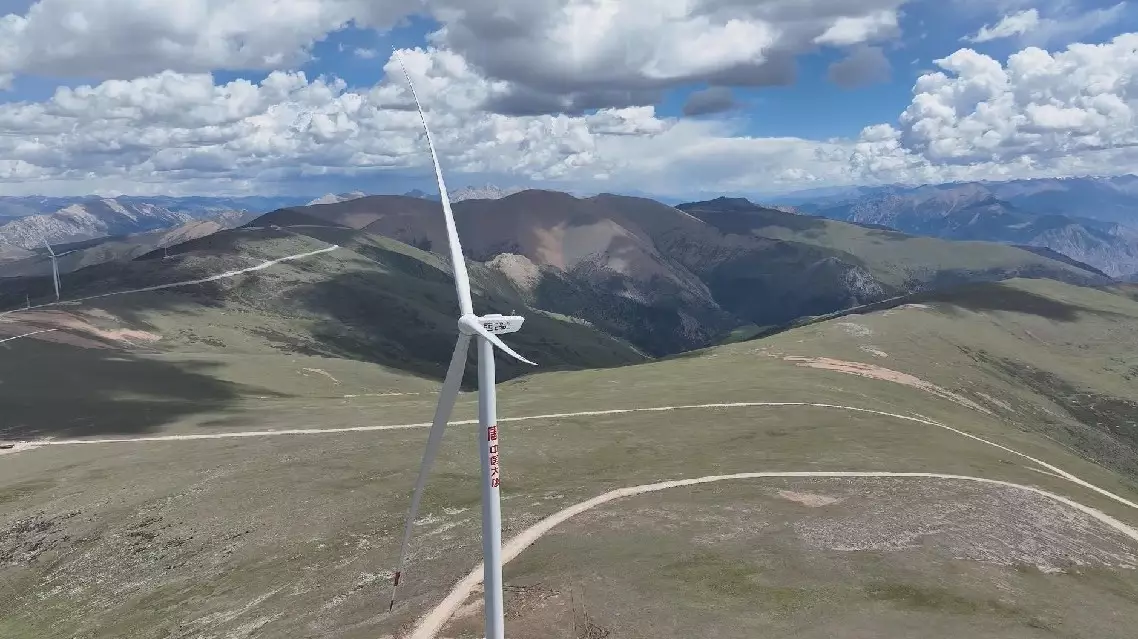
China completes installation of world's highest altitude wind power project
More than 20 films will hit Chinese screens during the three-day Qingming Festival holiday from Saturday to Monday, spanning genres from revolutionary historical dramas, realism movies to suspense thrillers, according to the China Film Administration on Thursday.
Revolutionary historical films such as Blood-Spattered Cliff, Eight Sons, Eight Soldiers, and Half Of The Quilt, will pay tribute to martyrs through the lens.
Three films -- It's OK, Now I Met Her, and Sunshine Women's Choir -- tell moving stories of love, growth, and reconciliation.
It's OK is a contemporary family comedy that follows a mother and daughter navigating their joyful yet turbulent relationship. Now I Met Her tells a rebellious teenager who gets to know his late mother through her old diary. Sunshine Women's Choir, a film from the Taiwan region of China, portrays the "perfect" maternal love of "imperfect mothers."
The suspense film Game of Identity tells the story of two people from different backgrounds who accidentally swap lives, setting off an unexpected adventure. The documentary films Seeking Nature: The Code of Life, and Missions to the Moon (Part One) explore the connection between humanity and science.
Imported films from different countries, including The Super Mario Bros. Movie 2, Project Hail Mary, and Hoppers, will deliver spectacular cinematic experiences to audiences.
The Qingming Festival, or Tomb-Sweeping Day, falls on April 5 this year. It is a traditional Chinese festival for honoring the deceased and paying tribute to ancestors. The holiday also provides a short break for Chinese citizens as they engage in outdoor activities and sightseeing.

Over 20 films expected to hit Chinese screens during Qingming Festival Holiday