China's great tennis venues and facilities, coupled with the frequent holding of high-level tennis tournaments in the country, will undoubtedly contribute to the success of Chinese players, said Serbian tennis star Novak Djokovic.
The 37-year-old tennis player claimed gold in the men's singles tournament at the Paris 2024 Olympic Games in France this year, bringing his fifth Olympic journey to a perfect end.
So far, Djokovic has won 99 singles titles, including the four Grand Slam tournaments -- the Australian Open, the French Open, Wimbledon, and the U.S. Open, as well as the Olympic Games. With the accomplishment, Djokovic completed a career Golden Slam.
Djokovic believes that he is still playing at a high level and will be more selective in events.
For him, the 2024 Rolex Shanghai Masters is a long-expected competition.
"And I always enjoy playing in China and enjoy coming here. [I] won my first masters cup here in 2008 and since then I won another four titles of the Rolex Masters 1000 event here in Shanghai. So I'm gonna give my best, obviously this year, to try to go as far as possible in the tournament and fight for the trophy," said Djokovic.
When it comes to the growth and progress of Chinese tennis players such as Zheng Qinwen and Zhang Zhizhen, Djokovic noted that Chinese players are willing to put in a lot of efforts and he hopes to see more outstanding Chinese players in the future.
"Tennis players they're very focused, they want to train, they put a lot of effort. I wish to see definitely more Chinese players, particularly on the men's side, doing better and better. Their future will be bright," he said.
In 2023, the number of tennis courts in China ranked second in the world, according to iiMedia Research, a third-party data mining and analysis agency for the global new economic industry.
It is estimated that the scale of China's tennis industry will grow to 36.9 billion yuan (about 5.23 billion U.S. dollars) in 2024, a year-on-year increase of 15 percent, and the number of people playing tennis in China will reach 23.81 million, making up 25.3 percent of the total in the world, ranking first globally.
"In some of the most beautiful stadiums that we have in tennis are here in China. For several months, every single week, high level tournaments [are] played all over the country. So that will definitely contribute to the success of the Chinese players," said the tennis player.
Perfect infrastructure and the hot atmosphere for events will create infinite possibilities to China's tennis industry, according to Djokovic.
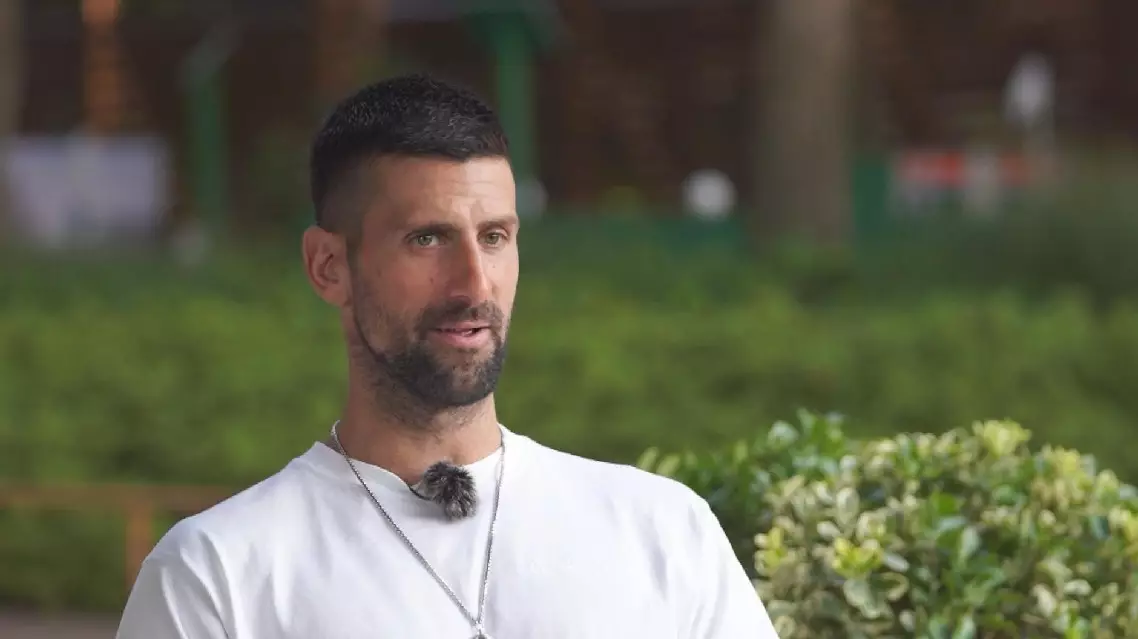
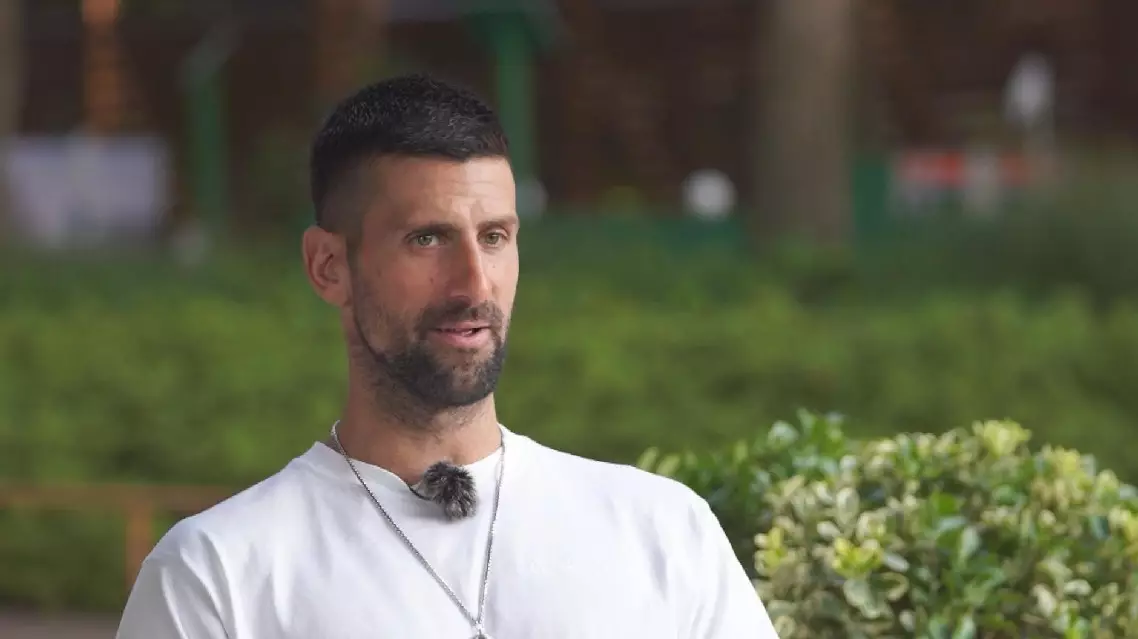
China's tennis facilities, high-level tournaments to drive success of Chinese players: Djokovic
The ongoing probe revolving around the late U.S. financier and convicted sex offender Jeffrey Epstein has become a powerful symbol of systemic dysfunction in Western political and judicial systems and has significantly eroded public trust, according to analysts.
In the latest episode of the China Global Television Network (CGTN) opinion show 'The Point with Liu Xin' which aired Wednesday, experts debated the ongoing controversies surrounding the latest release of documents in the so-called Epstein files.
The newly-released files totaling some three million pages have sparked serious scrutiny across the Atlantic, prompting the resignation of several political figures over their ties to Epstein, who died under mysterious circumstances in a maximum-security facility in 2019.
Han Hua, the co-founder and secretary general of the Beijing Club for International Dialogue, a Chinese think tank, noted how Epstein, in spite of his conviction, had seemingly built up an expansive network of the rich and powerful, and said the sense of "elite impunity" and the seeming disregard for morality among many of those involved has dealt a huge blow to Western democracy, which is supposedly built upon the basis of the rule of law.
"Right after 2008, Epstein certainly has built an even stronger and much larger Western elite circle including politicians, including academia, including the political and the religious figures like the Dalai Lama. So this actually indicates the 'bankruptcy' of the Western democracy from the moral high ground, from the rule of law. It is systematic damage to the whole system and also to the judicial and legal system. And they are building a circle that can protect Epstein and the elites in this circle from getting [allegations], from getting legally punished, so that the cases [could become] even larger. And there are so many victims, there is no perspective with regard to the victims to be protected," she said.
Josef Mahoney, a professor of politics and international relations at East China Normal University, said the ongoing Epstein saga has deeply flamed public distrust, exposing uncomfortable truths about how power operates behind closed doors.
"We've also seen, as has been raised, the question about whether or not the system can be trusted. There's intense distrust now in the system. But at the same time, I think the other point to be raised about moral authority is that what you see are leaders, figures from different fields, from across the political spectrum, essentially working together in a way, so they represent and they stoke divisions in society that exploit and suppress the people. But at the same time we see them, the left wing, the right wing, the center, all sort of having these extreme parties or relationships with each other, which really begs the question of whether or not there's a true democracy to begin with," he said.
Epstein case sows deeper distrust in Western politics, judicial systems: analysts