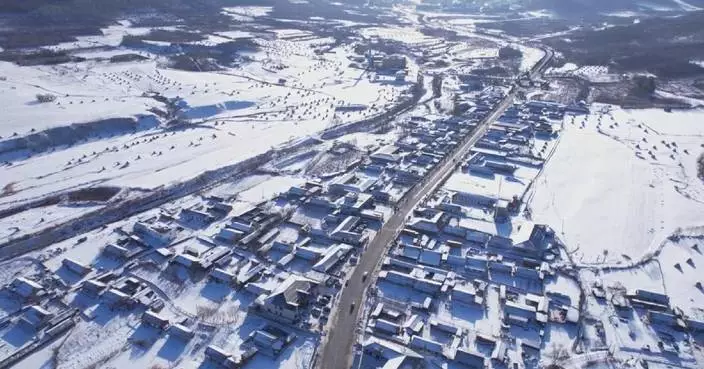
The Sebei Gas Field in northwest China's Qinghai Province has produced more than 100 billion cubic meters of natural gas in total, the Qinghai branch of PetroChina, China's largest oil and gas producer, said on Tuesday.
Located in the eastern part of the Qaidam Basin, one of China's major hubs for energy and mineral resources, the Sebei Gas Field is the highest-altitude gas production area in the country, facing harsh conditions for natural gas exploitation.
Since starting trial production in 1995, the Sebei Gas Field has gradually overcome output bottlenecks through technical upgrades and automation.
The gas field has maintained a stable annual production of 5 billion cubic meters of natural gas for 15 consecutive years, supporting the supply to provinces and regions in northwest and southwest China, including Gansu, Qinghai, the Ningxia Hui Autonomous Region, and the Xizang Autonomous Region.
Currently, the Sebei Gas Field produces nearly 14 million cubic meters of natural gas per day as part of its efforts to stabilize and actively increase production, thereby making greater contributions to maintaining China's energy security.
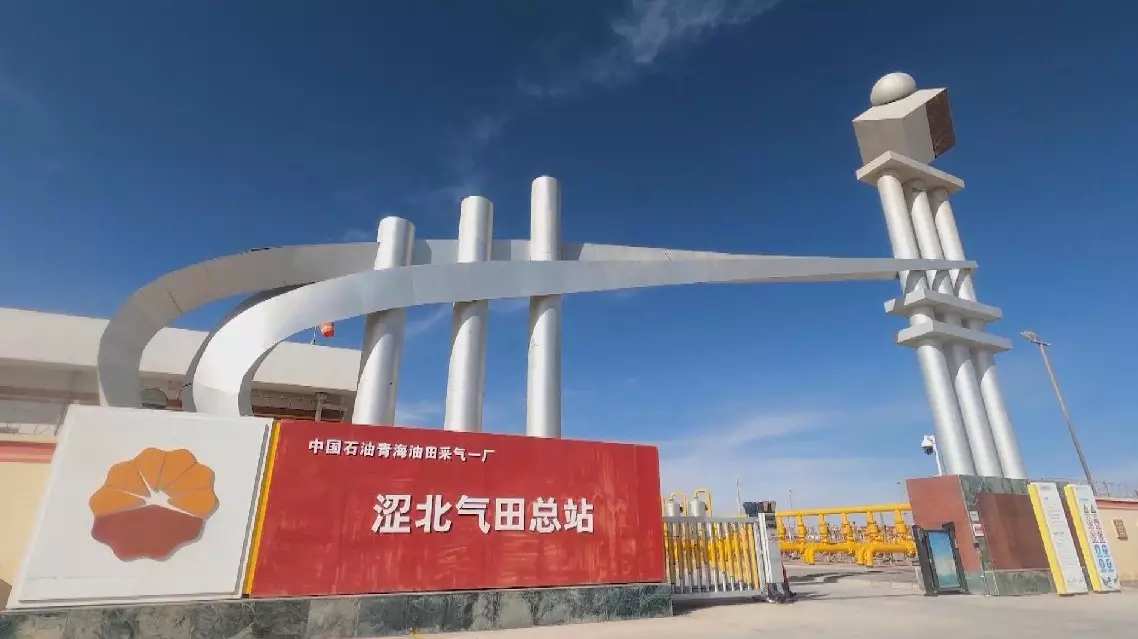
China's highest-altitude gas field produces over 100 billion cubic meters of natural gas
U.S. stocks sank on Thursday as an escalating conflict in the Middle East and a renewed surge in oil prices weighed heavily on Wall Street.
The Dow Jones Industrial Average fell 1.61 percent to 47,954.74. The S and P 500 sank 0.56 percent to 6,830.71. The Nasdaq Composite Index shed 0.26 percent to 22,748.99.
Eight of the 11 primary S and P 500 sectors ended in the red, with consumer staples and materials leading the laggards by dropping 2.43 percent and 2.27 percent, respectively. Energy and technology led the gainers by adding 0.59 percent and 0.39 percent, respectively.
Oil prices jumped significantly after Iran announced it had struck an oil tanker with a missile. U.S. benchmark West Texas Intermediate crude futures for April delivery surged 8.51 percent to settle over 81 U.S. dollars per barrel, reaching their highest level since July 2024. International benchmark Brent crude futures for May delivery advanced 4.93 percent, trading above 85 dollars per barrel. These sharp upward movements in energy markets drove major swings across equities throughout the trading session.
As Iran is the fourth-largest producer in the Organization of the Petroleum Exporting Countries, concerns are mounting that the conflict's impact on production capabilities could have wide-ranging effects across global commodities. The soaring energy prices have also sparked fears among investors that persistent inflationary pressures might force the Federal Reserve to re-evaluate its anticipated interest rate cuts in an already volatile market environment.
In the bond market, the yield on the benchmark 10-year U.S. Treasury note climbed to near 4.14 percent, up from Wednesday's close of approximately 4.1 percent. The yield, which heavily influences consumer borrowing costs across the broader economy, has risen consecutively every day this week after ending the previous week at 3.95 percent.
In corporate developments, Advanced Micro Devices lost 1.3 percent following a report that the U.S. government drafted rules restricting AI chip shipments without its approval.
Conversely, telecommunications equipment provider Ciena dropped 12.88 percent, and StubHub retreated 12.39 percent. Costco Wholesale, which is scheduled to report its quarterly results after the market closes, fell 2.4 percent during regular trading hours.
On the economic calendar, Friday features a highly anticipated monthly jobs report, offering investors another read on the labor market's health.
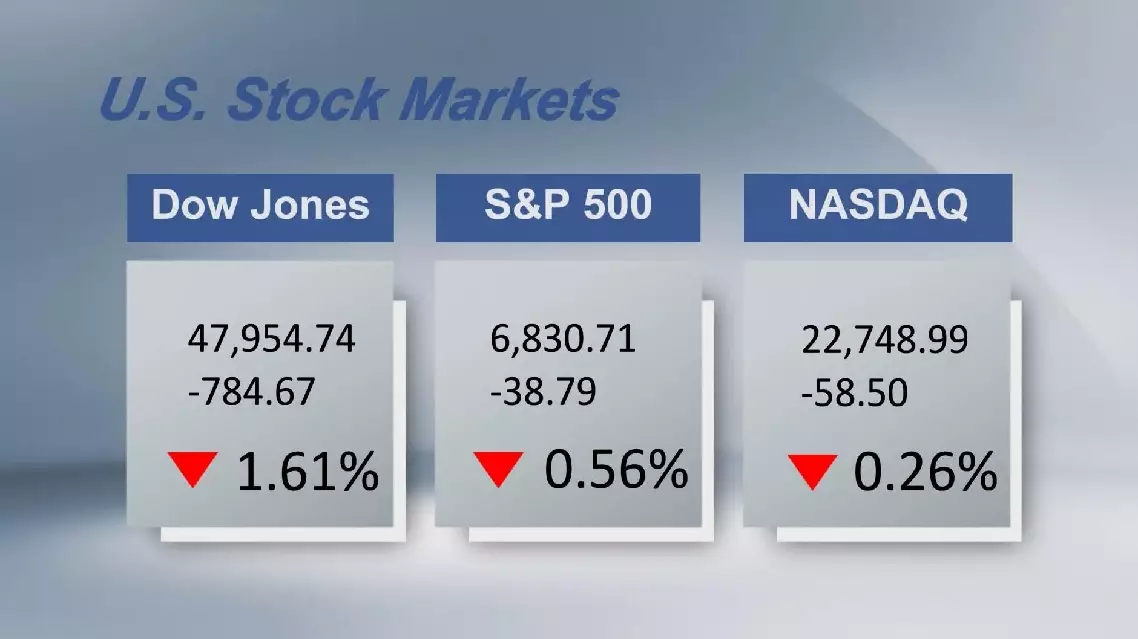
U.S. stocks sink as Middle East tensions trigger oil price surge