China is embracing a bountiful harvest of autumn grain this year, with nearly 40 percent of the crops reaped, according to the latest official data released by the Ministry of Agriculture and Rural Affairs.
Since the beginning of this month, most areas of the country have seen crisp autumn air and favorable weather, which is conducive to the harvest of autumn grain and the sowing of wheat and rape in the fields, with the three autumn farming jobs of harvesting, sowing and field management proceeding smoothly.
As autumn brings ideal harvesting conditions, farmers in east China's Jiangxi Province are busy mobilizing harvesting machineries to pick up the newly repened medium rice.
In the provincial capital city of Nanchang alone, there are 950,000 mu (63,333 hectares) of ripened rice crops awaiting busy harvest.
"The yield per hectare is more than 9,750 kilograms. The rice quality is also very good, so it sells well on the market. The proceeds per hectare is 22,500 yuan (3,200 U.S. dollars)," said Sun Longxing, a local grain farmer in Anyi County, Nanchang City.
Meanwhile, Gucheng County in north China's Hebei Province is turning market demands into opportunities for farmers. The county government is leading farmers to shift from sporadic crop growing onto large-scale farming to generate higher efficiency and income.
Focusing on crops with high economic value and high added value, the local farmers have chosen to grow a large number of high-oleic peanuts, which not only boast an oleic acid content well above that of regular peanuts, but are also of advantages such as antioxidant properties and better storability.
"Based on the market price of 8 yuan (1.1 U.S. dollars) per kilogram, the estimated unit income is 49,500 yuan (7,050 U.S. dollars) per hectare," said Wei Lizhi, Party secretary of Weijiayuan Village, Gucheng County.
With the combination of effective agricultural practices and innovative approaches, Kaixiangong Village in Suzhou City of east China's Jiangsu Province has launched a new revenue model by integrating rice, crab, and mulberry farming.
According to Xia Zhixiao, Party secretary at Kaixiangong Village, this approach not only preserves traditional farming practices but also contributes to local culture and sustainability.
"Our rice field serves as a practical and educational base for agricultural practices. In the future, we aim to explore practical market-oriented operations for our educational tour programs related to agriculture, culture, and tourism through a series of activities," he noted.
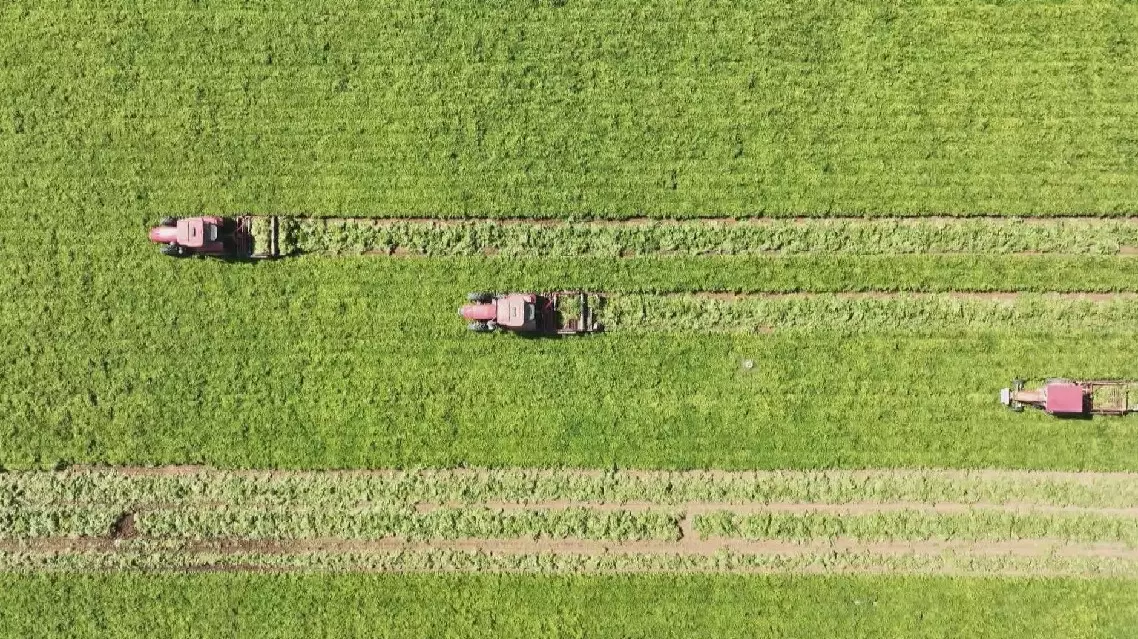
China embraces bumper harvest of autumn grain with nearly 40 percent of crops reaped
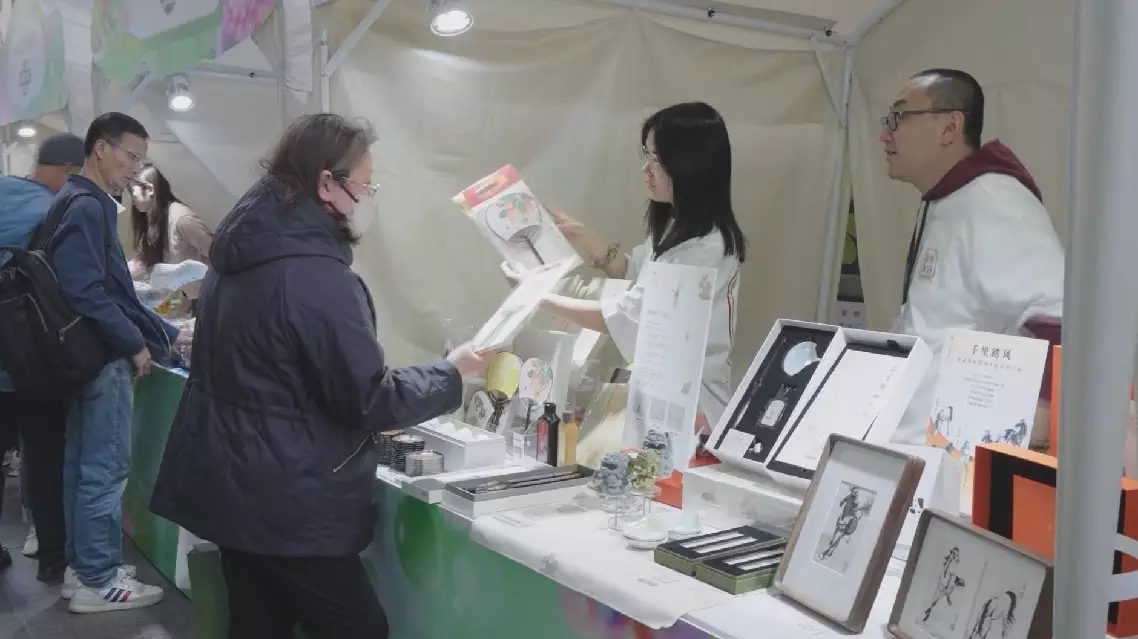
China's commitment to its path of opening up will continue as a long-term national strategy and should increasingly be defined by inclusiveness, a national political advisor said Friday.
Zhou Hanmin, a member of the Standing Committee of the National Committee of the 14th Chinese People's Political Consultative Conference (CPPCC) and president of the Shanghai Public Diplomacy Association, made the remarks in an interview with China Media Group (CMG) during the annual political "two sessions" underway in Beijing.
"Opening-up is and has been a long-term national policy and a strategy ever since China opened itself up (to the world) some 48 years ago. Ever since China joined WTO (World Trade Organization), you could see it has fundamentally changed the formats of economic movements. So opening-up is a reference and also a driving force," he said.
Zhou stressed China must also invite less privileged nations to share in the prosperity of a more open world.
"Inclusiveness is one word that should be used to modify China's opening-up. I (previously) submitted a bill in CPPCC for the zero tariff for those least developed nations' exportation to China. Because for each and every China International Import Expo, you can see quite a large number of exhibitors coming from the least developed countries. We need to give them very genuine help. We are just in the situation of that. We just try to do not only with developed nations, but the Global South and rest of the countries, all together," he said.
Zhou's comments come amid the ongoing "two sessions", the annual meetings of China's top legislature, the National People's Congress (NPC), and the top political advisory body, the National Committee of the CPPCC. Both bodies serve a five-year term and hold a plenary session each year, generally in March.
The fourth session of the 14th NPC and the fourth session of the 14th National Committee of the CPPCC kicked off in Beijing on Thursday and Wednesday, respectively. A main focus is the adoption of the country's 15th Five-Year Plan (2026-2030), a key blueprint guiding China's drive toward modernization. When asked about key signals from the plan that the international community should closely watch, Zhou outlined several key issues.
"We are now carrying on this Five-Year Plan in the most crucial period of time. We are going to generally modernize the country (in) another 10 years. In this five-year period of time, we need to focus more on creation. Creation not necessarily in the field of technology. Creation means the modernization of the governance, create lots of new things in the system and methods of governance. This is also important," Zhou said.
"The modernization of industrial systems, the further expansion of the ability of consumption, and we try to know very well the longevity, whatever solves people's daily needs. The last but not least, we try to understand fully international collaboration. Opening-up is still a driving force," he said.
China's opening-up should continue path of inclusiveness: political advisor