Relying on its unique natural scenery of the Pamir Plateau and ethnic culture, Taxkorgan Tajik Autonomous County in northwest China's Xinjiang Uygur Autonomous Region has vigorously developed its tourism industry, ushering in a new chapter of rural revitalization and the integrated development of culture and tourism.
Taxkorgan Tajik Autonomous County, as a hot destination in Xinjiang, fascinates the visitors with famous scenic spots such as the Pamir Plateau and the winding highway, along with more than 10 intangible cultural heritages such as the Tajik Eagle Dance.
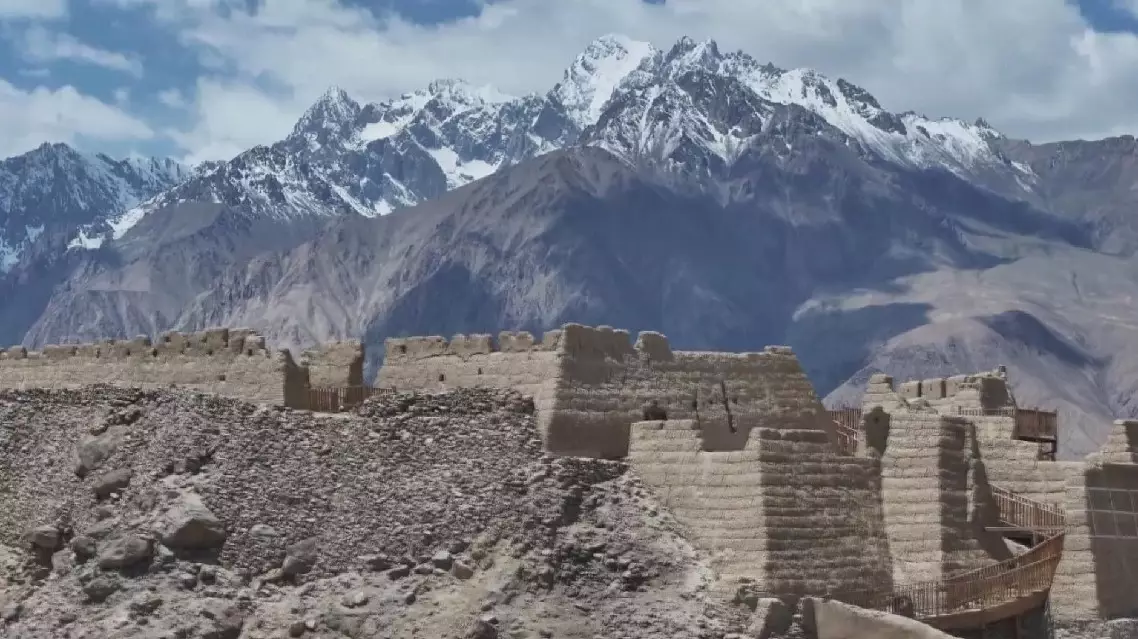
The Stone City ruins in Taxkorgan are in a unique position surrounded by mountains, where tourists can immerse themselves in the unique architectural landscape and natural scenery.
The Stone City was a pivotal point where the middle and southern routes of the ancient Silk Road converged, serving as a crucial thoroughfare for communication between the various dynasties of the Central Plains and countries in Central Asia, West Asia, and South Asia at that time.
Many Tajik dancers often perform the traditional Tajik Eagle Dance, vividly expressing the Tajik people's fervent yearning for freedom and their relentless pursuit of a better life.
"As we Tajik people live on the plateau like eagles, watching the eagles fly since childhood, we incorporate the movements into our own dances. Therefore, we Tajik people, like eagles, guard the borders of our motherland," said Baihetila Jumahan, a local dancer.
With a total length of 30 kilometers and more than 600 hairpin turns, the Panlong Ancient Road is famous for its dizzying turns and stunning scenery.
Located in the Kashgar region, the road looks like a huge dragon snaking across the Pamir Plateau. Also known as the Waqia Highway, this magical and heavenly road is a great choice for travelers from all over the world looking to take a self-driving tour.
Nowadays, relying on the road, the local area has vigorously developed the tourism industry, greatly increasing the income of local villagers.
"Many tourists come to the Panlong Ancient Road, to our Waqia Township. We take this opportunity to promote the development of cultural tourism industry through the culture of local minority ethnic group," said Duolaitiman Kaimike, a deputy to China's National People's Congress (NPC).
Tourists flock to Xinjiang's Taxkorgan Tajik Autonomous County for unique scenery, cultural heritage