The European Commission's latest move to impose controversial punitive tariffs on Chinese battery electric vehicles (EVs) will make the European carmakers lose competitiveness, said Csaba Kilian, CEO of the Association of the Hungarian Automotive Industry (AHAI).
On Oct 4, representatives from EU member states voted to approve the final ruling on the EU anti-subsidy case presented by the European Commission, the executive arm of the bloc, which proposes the imposition of punitive duties on EVs imported from China.
In a recent exclusive interview with the China Global Television Network (CGTN), Kilian pointed out that auto manufacturers in Europe will not invest in new technologies in the near future if they are not as competitive as those auto enterprises in Asia.
"Maybe they have got some time to adjust and to be more competitive. But generally, I would say that if the European carmakers will not be competitive enough, they will not invest into new technologies in the next very short period of time, relatively. In that case, they could lose the competition," the Hungarian car chief said.
"A lot of suppliers moved also to Hungary, from China, from Korea, from Japan, from Asia, practically. And they introduce these new technologies. Practically, there are several such kinds of technologies which doesn't exist [in Hungary]. For example, if we are talking about some components, some raw materials, we don't have that. So these components are also brought by foreign and mainly Asian companies to Hungary. And a lot of such kind of investment were made also in the past two years in the country. That will affect the Hungarian supplier industry," said Kilian.
Kilian further noted that Hungary needs to take robust measures and strengthen cooperation with Asian countries, especially China, to tap into the automobile market.
"The big question, I think for us, that whether the Hungarian suppliers will be able to supply these companies, but we have to understand the Chinese culture, we have to understand the Asian culture and then we have to build this kind of cooperation," added Kilian.
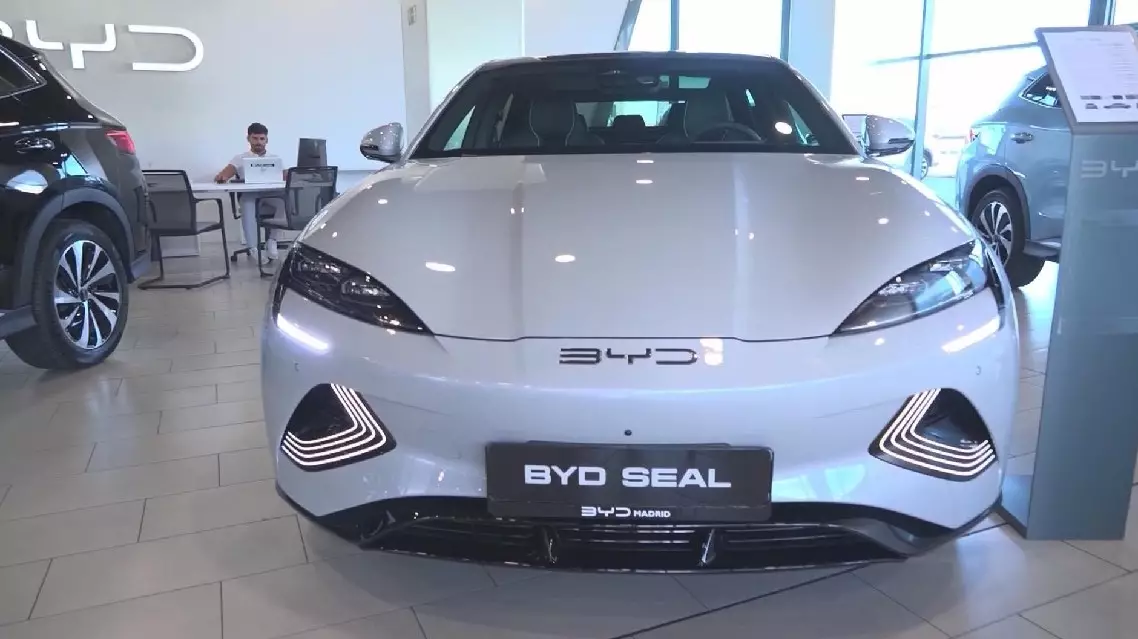
EU's punitive tariffs on Chinese EVs to make European carmakers lose competitiveness: Hungarian car chief
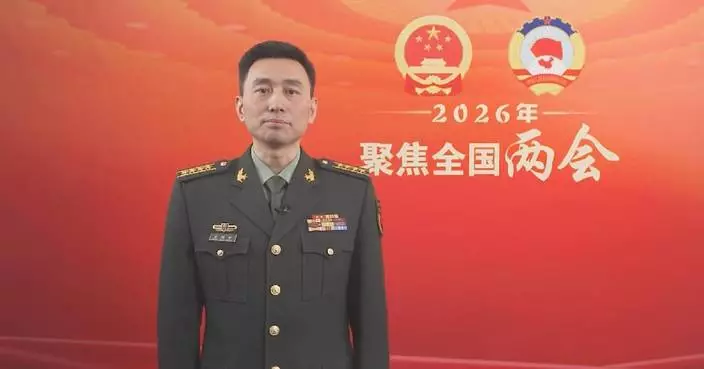
Highlighting the "Future Energy" as a key direction for China's strategic emerging industries, the country's nuclear energy development, guided by its three-step strategy, has seen major strides in the past year, said a member of the 14th National Committee of the Chinese People's Political Consultative Conference (CPPCC).
In a recent press briefing, Xin Feng, also deputy general manager of China National Nuclear Corporation (CNNC), updated the media on the progresses China has achieved under the strategy.
"China's three-step strategy for nuclear energy development -- from the thermal reactor to the fast reactor and the fusion reactor -- was formulated in 1983 as a medium- and long-term plan. For the thermal reactor, over the past year, our 2.0 version of the Hualong One technology has been approved. This is a unified and fully self-owned intellectual property based third-generation nuclear power technology solution. And the Linglong One small modular reactor also successfully completed its cold-state functional test last year and is expected to be put into commercial operation this year," he said.
For the second and third steps, Chinese researchers and engineers have achieved milestones in the past year with the government support, Xin noted.
"Then for the fast reactor, last year, a closed-cycle system for an integral fast reactor successfully achieved preliminary standard design. We will continue to solve its engineering technology challenges. As for the fusion reactor, in 2025, with national support, we established the China Fusion Energy Company in Shanghai. And our Huanliu-3, a platform for conducting research and development of fusion technology, made a big stride, with an iron temperature in it achieving 117 million Celsius and an electron temperature reaching 160 million Celsius. We will continue to adhere to the development strategy and focus on technological research and engineering technology development," Xin said.
The fourth session of the 14th NPC and the fourth session of the 14th National Committee of the CPPCC kicked off in Beijing on March 5 and March 4, respectively.
The "two sessions" -- which refer to the annual meetings of China's supreme organ of state power, the National People's Congress (NPC), and its top political advisory body, the National Committee of the CPPCC -- are a key event on the country's political calendar and offer a window into the country's development direction.
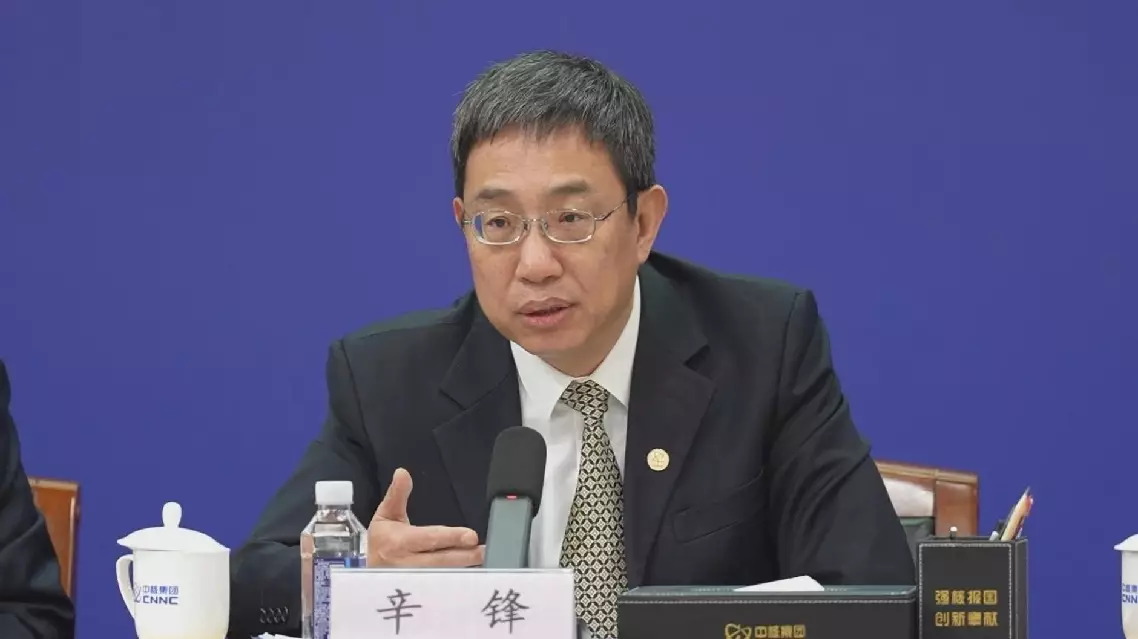
China's nuclear energy development makes great strides with three-step strategy: CPPCC member