The Chinese mainland has delivered its "clear and consistent" message to the Democratic Progressive Party (DPP) authorities led by Lai Ching-te, leader of Taiwan authorities, that the Taiwan question concerns China's core interests and can therefore never be challenged, a Chinese expert said Thursday.
In a speech on Thursday, Lai continued to propagate the "two states" theory and fabricate "Taiwan independence" fallacies, with the intention of exacerbating tensions across the Taiwan Strait.
In response to Lai's rhetoric, the Chinese Foreign Ministry and the State Council Taiwan Affairs Office both made stern statements reiterating the one-China principle and the inevitability of China's reunification.
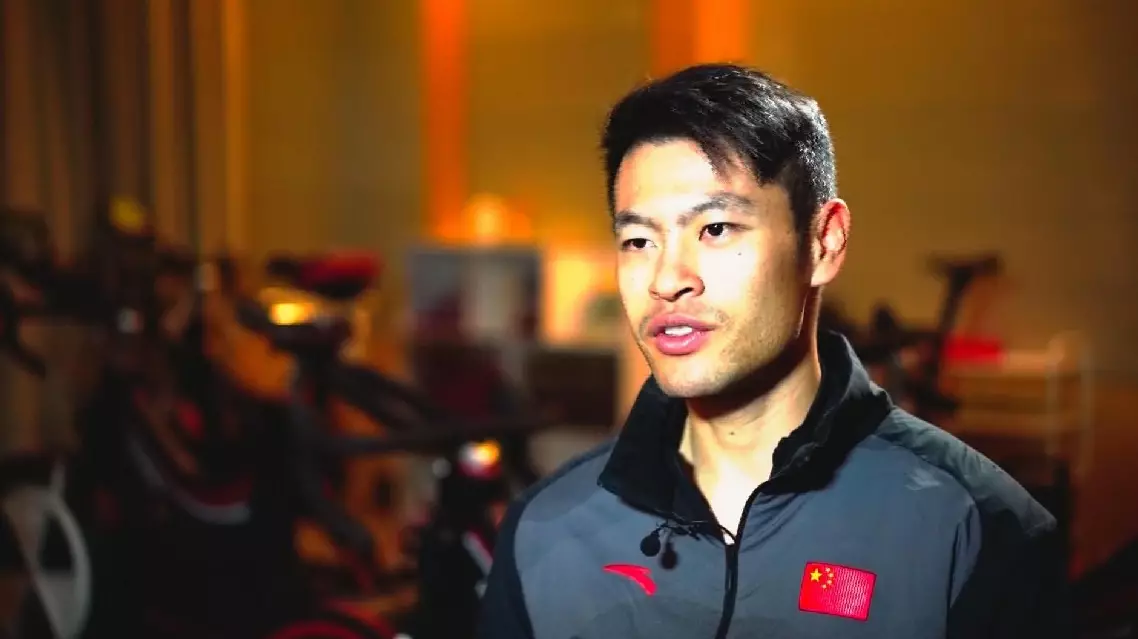
In a phone interview with China Global Television Network (CGTN), Su Xiaohui, deputy director of the Department for American Studies at the China Institute of International Studies, said the mainland has once again made its position loud and clear.
"The signals from the Foreign Ministry as well as other government branches are always clear and consistent. First of all, it is impossible for a country to make compromise on its core national interests. And as with China, we have made it very clear that sovereignty and territorial integrity are part of our core national interests. And China reaffirms again and again that the Taiwan issue is related to the core national interests. This is a consistent position," she said.
"And at the same time, the signal from the Foreign Ministry means that Beijing is aware of the intention of Lai Ching-te, especially the signals sent from his speeches. So, it is quite important for the mainland to make [take] countermeasures," she continued.
"The one-China principle is challenged, so it is a dangerous moment of the situation across the Strait. At the same time, China would like to send our signal to the United States that the country will not accept interference of the [in its] domestic affairs and ask the United States to be consistent with its commitment to the one-China principle," Su said.
Su also shared her insights into the global ramifications of Taiwan secessionist activities and why the international community should understand the gravity of the situation.
"Lately I noticed that a lot of countries, like the European countries, watch closely about peace and stability of [across] the Taiwan Strait. It is related to the global economy as well as transportation, and a lot of countries believe that cross-Strait dialog should be carried out. But from my perspective, it is quite important to set out the precondition for the dialog or to try to manage the crisis. The Taiwan authority should accept the 1992 Consensus -- this is the precondition. It is quite clear," she said.
"The key question is that who is the troublemaker. So, if the 'Taiwan independence' activities [activists] always make trouble for [across] the Taiwan Strait, the international community should focus on the situation and to understand that why the Chinese government emphasizes again and again that 'Taiwan independence' activities pose danger to the situation," Su said.
Also on Thursday, Daniel Joseph Kritenbrink, U.S. Assistant Secretary of State for East Asian and Pacific Affairs, said that the United States, as always, stands against so-called "Taiwan independence".
"We do not support 'Taiwan independence' and we expect cross-Strait differences to be resolved peacefully," he said in a phone interview with the CGTN.
China's core interests not to be challenged: expert