East China's Wuyishan National Park has identified 17 new insect species, as the area’s three-year biological survey has just been completed, enhancing the understanding of this vital biodiversity hotspot.
Wuyishan National Park, known for its comprehensive forest ecosystem representative of the mid-subtropical zone, is often termed the "World of Insects." This unique habitat fosters a diverse array of insect species, making it an important area for biological research.
Since the biological survey began in April 2021, researchers have documented 34 new species so far, including 17 previously unidentified insects. Among these discoveries are five new species from the genus Elaphropeza.
Experts emphasized that the new discovery is not only essential for further understandings of the Elaphropeza genus but also crucial for effective biological pest control.
According to official data, Wuyishan National Park now boasts 7,925 recorded insect species with seven classified as national key protected wildlife, including the first-class protected Teinopalpus aureus.
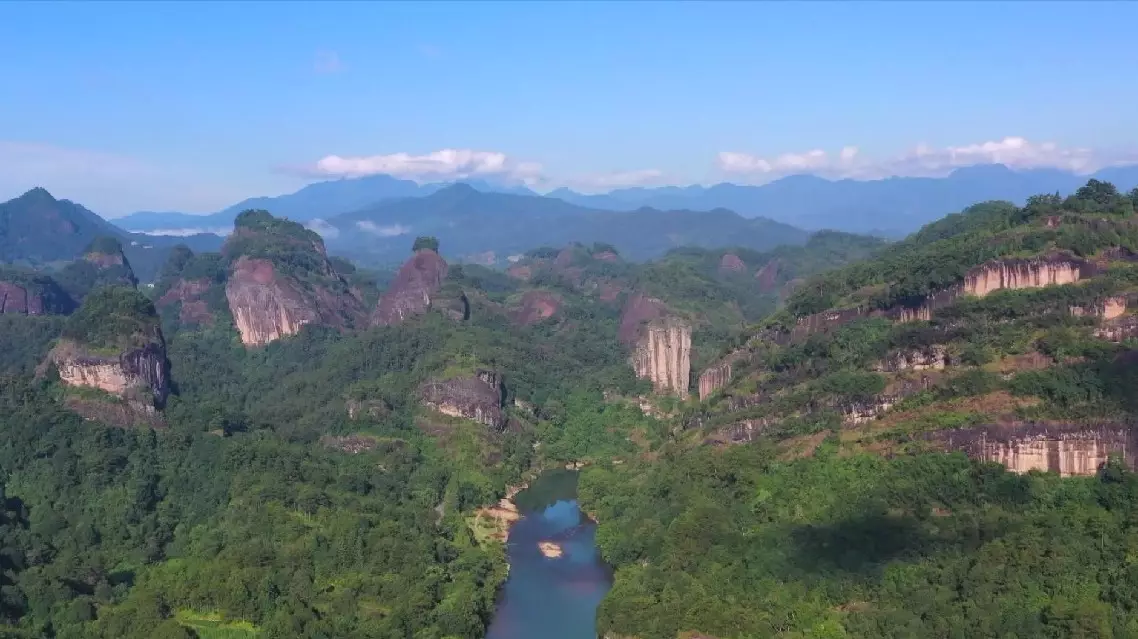
17 new insect species discovered in east China's Wuyishan National Park
China stands ready to work with the Association of Southeast Asian Nations (ASEAN) in forging closer cooperation for the well-being of the region's peoples and in reinforcing unity to tackle new challenges and uncertainties, Chinese Foreign Minister Wang Yi said on Wednesday.
Wang, also a member of the Political Bureau of the Communist Party of China Central Committee, made the remarks when attending the China-ASEAN Foreign Ministers' Meeting in Pasay City in the Metro Manila area, the Philippines.
While lauding the fruitful outcomes of China-ASEAN cooperation, Wang expressed China's readiness to work with ASEAN to ensure their partnership continues to serve as an engine for Asia's development and revitalization, a model for Asia-Pacific regional cooperation, and a benchmark for the solidarity and self-strengthening of the Global South.
Wang put forward four proposals during the meeting:
First, to safeguard the regional environment for peace and development. Wang said all sides should champion the Asian values of peace, cooperation, openness and inclusiveness, firmly reject unjustified external interference, oppose patching up exclusive small groupings, refuse to be drawn into camp-based confrontation, and never allow militarism to stage a comeback.
Second, to bolster the resilience of regional development. Wang said that all sides should stay committed to open cooperation, deepen development integration, advance the China-ASEAN Free Trade Area 3.0, and implement the Regional Comprehensive Economic Partnership at a high standard, while enhancing food, energy security, and supply chain stability in the region.
Third, to advance green and innovation-driven development. Wang said that all sides should expand cooperation in emerging areas such as the digital economy, artificial intelligence, and submarine cables.
Efforts should be made to explore synergy with the ASEAN Digital Economy Framework Agreement, and step up collaboration in climate response, clean energy, green agriculture, and the blue economy, he added.
Fourth, to remain people-centered. Wang said that all sides should promote inclusive and equitable development to ensure that the outcomes of China-ASEAN cooperation are tangible and accessible and deliver greater benefits to the people of all countries.
China stands ready to enhance exchanges and cooperation with ASEAN in poverty reduction, public health, education, youth, think tanks, tourism, media, culture, and other fields, he noted.
On the South China Sea, Wang urged regional states to strictly honor the Declaration on the Conduct of Parties in the South China Sea.
He called on regional countries to resist external attempts to stoke tensions, reject any nation's efforts to stir trouble in the South China Sea, and keep the initiative for safeguarding regional peace and stability firmly in their own hands.
Stressing that a critical window for finalizing the Code of Conduct in the South China Sea is now open, Wang called on all parties to seize the opportunity, fend off interference, and deliver on that objective.
All parties concurred that China is one of ASEAN's most important neighbors and dialogue partners, as well as its largest trading partner.
In the face of a turbulent international landscape, ASEAN countries look forward to closer strategic coordination with China to bolster their own development resilience and advance high-quality connectivity.
They also seek to deepen cooperation in trade and investment, the digital economy, artificial intelligence, climate change, clean energy, and the fight against transnational crime.
All sides expressed the hope of reaching a Code of Conduct in the South China Sea as early as possible this year, in a joint effort to uphold peace and stability in the region.
The meeting adopted the joint statement of the China-ASEAN foreign ministers on addressing the impact of the evolving situation in the Middle East on the region and strengthening regional energy cooperation.
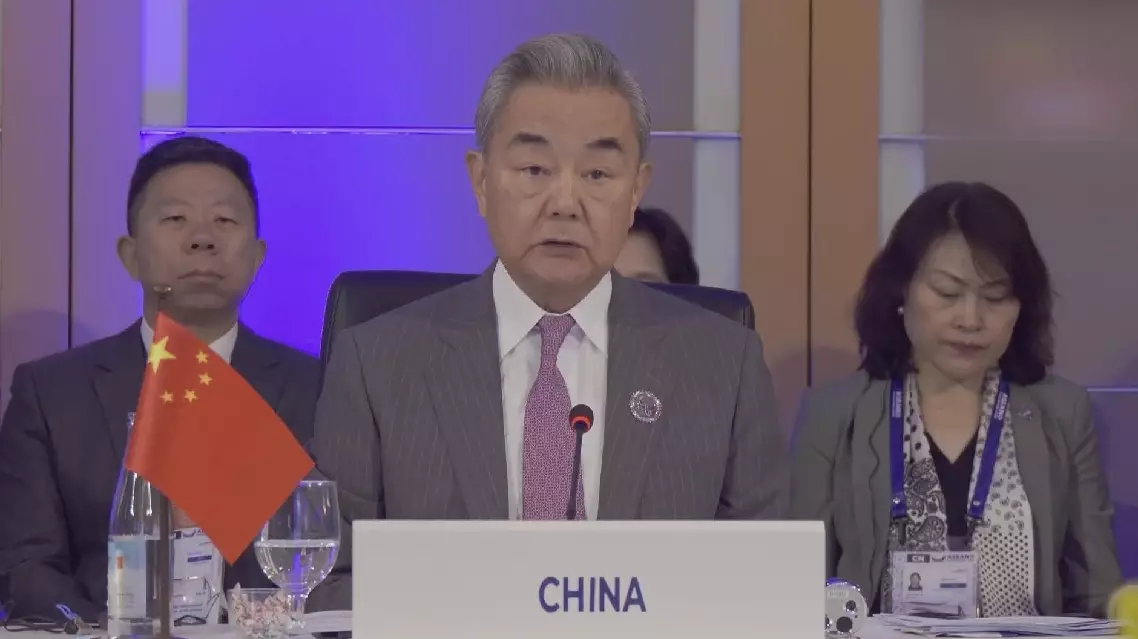
China stands with ASEAN in reinforcing unity against new challenges, uncertainties: Chinese FM