China's trade with the five Nordic countries is projected to surpass 50 billion U.S. dollars by the end of this year, the Chinese Ministry of Commerce told a press conference on Tuesday.
The 6th China-Nordic Economic and Trade Cooperation Forum is set to open on Thursday in the central Chinese city of Wuhan. Despite global headwinds, China-Nordic trade has continued to grow steadily.
In the first eight months, trade between China and the five Nordic nations - Denmark, Finland, Iceland, Sweden and Norway - expanded by 5.7 percent from the same period of last year, according to Wang Yupeng, deputy director of the ministry's Department of European Affairs. Among them, trade with Sweden and Denmark each exceeded 10 billion U.S. dollars.
High-value-added products such as computer and communication equipment, pharmaceutical goods, ships, automobiles, and auto parts were key drivers of the growth.
"China's direct investment in Nordic countries reached one billion dollars in the first eight months of 2024, accounting for more than one-fifth of our total investment in Europe during the period," Wang told reporters in Beijing.
The China-Nordic Economic and Trade Cooperation Forum is China's first and only long-term mechanism dedicated to economic collaboration with the Nordic region. Nearly 100 cooperation projects worth a combined total of over 160 billion yuan (about 22.5 billion U.S. dollars) have been signed during the previous five editions.
The Nordic region is an important source of foreign investment for China. The commerce ministry encourages Nordic companies to establish research and development centers in China and to explore new cooperation opportunities in sectors such as electric vehicles and renewable energy.

China-Nordic trade expected to exceed 50 bln USD in 2024
Hong Kong's Hang Seng Index ended slightly higher on Monday while Japan's Nikkei 225 saw a decline, according to Timothy Pope, a market analyst for China Global Television Network (CGTN).
The Hang Seng Index went up 0.06 percent to close at 26,765.52 points on Monday and the benchmark Nikkei stock index, the 225-issue Nikkei Stock Average, dropped by 1.79 percent to end at 52,885.25 points.
"The Hang Seng managed to claw back some earlier losses and end the session flat. The big supporting factor in Hong Kong was also Chinese energy and metals stocks. I said miners were going gangbusters, well, Zijin Mining surged to a record high at one point today, adding 7.8 percent, but closed 4.4 percent higher, paring those gains a little bit. Zijin mines copper as well as gold and announced today that an expansion of a Chinese copper mine project was now up and running. Its Hong Kong shares have risen almost 18 percent since the start of this year, and its Shanghai stock has also made some pretty comfortable double digit gains. The downside in Hong Kong today was also the same story as the Chinese mainland - it was tech. The Hang Seng Tech Index shed 1.2 percent by the end of the session," he said.
Popo said the decline in the Tokyo market was caused by fears of a joint Japanese-US currency intervention.
"Over in Tokyo the Nikkei 225 was down 1.8 percent as investors were on guard for a potential joint Japanese-US currency intervention. The Japanese Prime Minister said all necessary steps would be taken to act against abnormal market moves, but she was fairly non-specific. The yen surged on Friday after the New York Fed reportedly conducted a rate check, and it was up again today to a more than three-month high. The intervention would be to stem yen declines, but it's not clear if that threat has been averted as yet. But Japan's exporter heavy markets were down on the currency gains today, automaker stocks like Nissan and Honda traded significantly lower, as did the tech investor Softbank, it was one of the Nikkei's heaviest decliners. Conversely, of course, it was good for importer stocks, but those gains didn't do nearly enough to outweigh the very broad-based losses that we saw in Monday's session in Tokyo," he said.
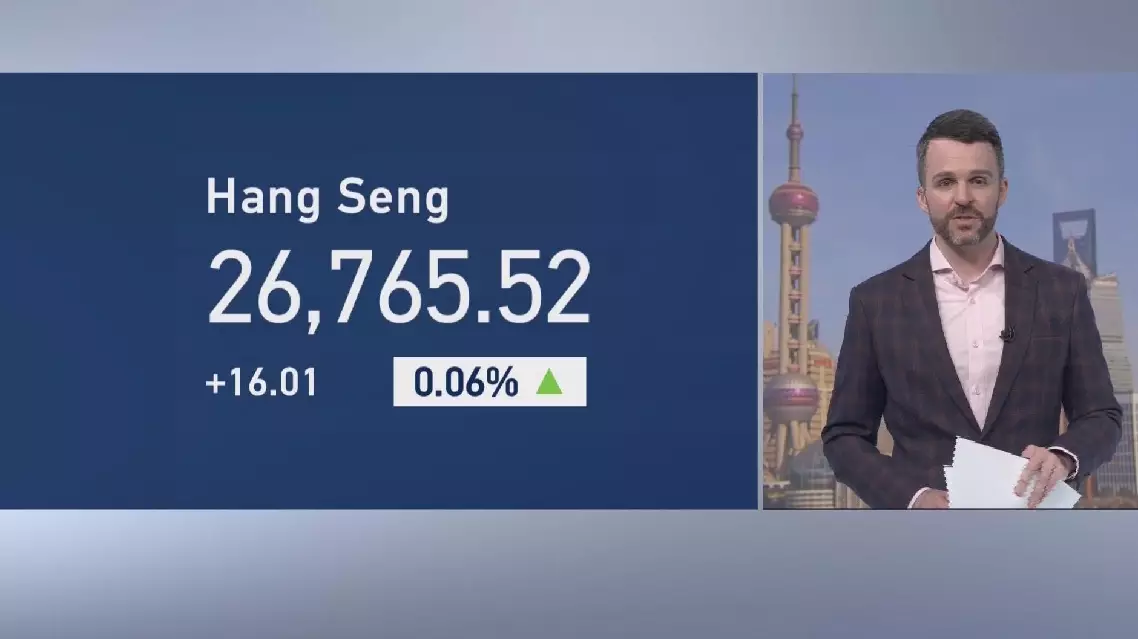
Hong Kong stock markets edge higher, Tokyo stocks decline amid currency fluctuations: analyst