China's first five-star 5G factory has integrated 5G technology throughout its production operations, bolstering efficiency while cutting down on carbon emissions.
In August 30, Chinese tech company Zhongxing Telecommunication Equipment Corporation (ZTE)'s Nanjing Smart Binjiang 5G Factory was certified by the China Academy of Information and Communications Technology.
It is an intelligent manufacturing base that produces 5G base stations, servers, and storage devices. The factory has a full coverage of 5G network. Material transport, product assembly, quality inspection, and equipment maintenance are all automated through the use of 5G network.
"The Binjiang 5G Factory has over 120 5G innovative applications across 24 categories, spanning the entire production process. All equipment on-site is connected on the basis of 5G technology. The use of 5G has supported the full production process of 5G base station products," said Meng Xiaobin, chief planning engineer of the industrial digitalization department at ZTE.
According to Meng, thanks to the 5G upgrade and transformation, the factory has seen substantial improvements in its automation efficiency, process level, and production management.
The total output value of the factory has increased by 41 percent, and the per capita output value has risen by 81 percent. The product delivery cycle has decreased from the previous 20 days to 14 days, and carbon emissions have decreased by 29 percent.
Shen Bin, deputy secretary-general of the Alliance of Industrial Internet, said that there are multiple requirements for the factory to become a five-star 5G factory.
"The construction of a five-star 5G factory requires that the 5G network coverage within the factory should not be less than 99 percent. The connectivity rate of critical equipment connected to the 5G network should stay above 80 percent. Production services need to make full use of artificial intelligence technology, while the deployment of 5G+industrial Internet application scenarios should be comprehensive and fully covered," said Shen.
According to Shen, the assessment of a 5G factory includes five key categories: infrastructure construction, on-site upgrades, critical process applications, network security measures, and overall construction value.
Apart from factors like 5G network coverage and connectivity rates, evaluations of 5G factories also prioritize the utilization of 5G in essential production processes, said Shen.
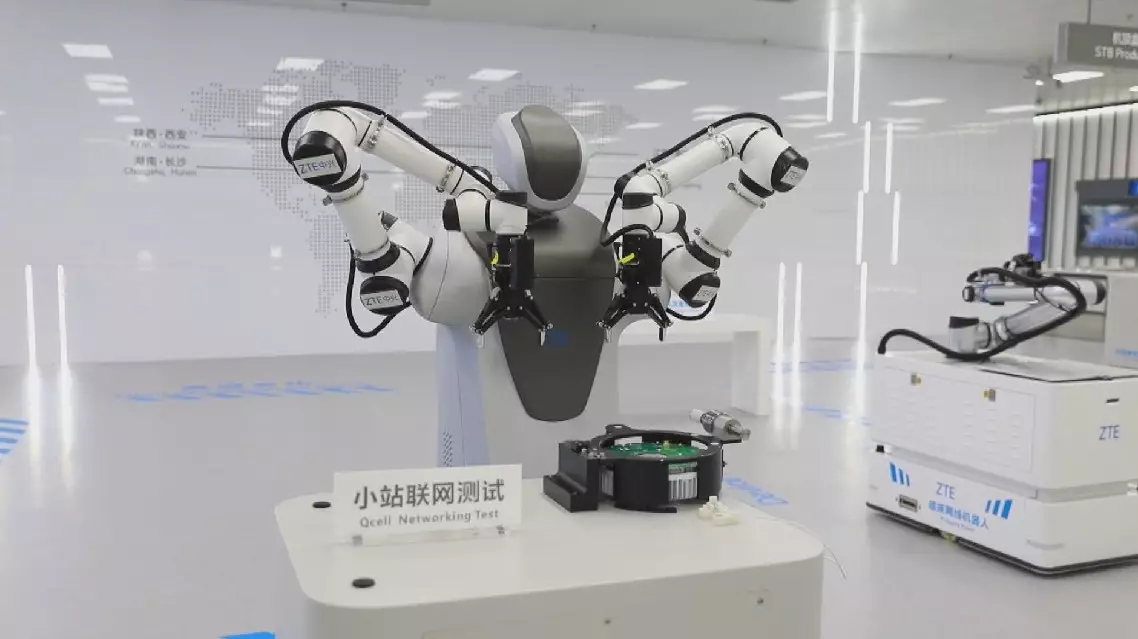
China’s first five-star 5G factory improves productivity, lowers carbon emissions