Turing Award laureate Leslie Gabriel Valiant has recalled how his proposed model helped shape machine learning to become the behemoth technology it is today.
Valiant, who won the Association for Computing Machinery's A.M. Turing Award in 2010, is worldwide renowned for his contribution to theoretical computer science.
In 1984, Leslie Gabriel Valiant proposed the probably approximately correct (PAC) learning framework for mathematical analysis of machine learning, which laid solid foundations for current AI-powered machine learning scenarios. He discussed the model in an exclusive interview with China Central Television (CCTV).
"Because you have to start somewhere by saying what does machine learning program has to do to be successful. It's the definition of saying, if you do this, then you succeed in your learning program. And so what this definition says, is that you are given examples of concepts, like a concept of an elephant, or just maybe some relabeled as elephant, and some relabeled as not elephant. Now, giving many examples, you train the program, and this program, this learning algorithm will generate a second learning algorithm, which will classify new examples whether the elephants or not. And on top of this, there is a quantitative requirement that you should be able to do this with reasonable effect. With this much effort, you get 90 percent accuracy, and if you do 10 times of that effort, maybe you get 92 percent accuracy, and another 10 times more effort you should get even more accuracy," he explained.
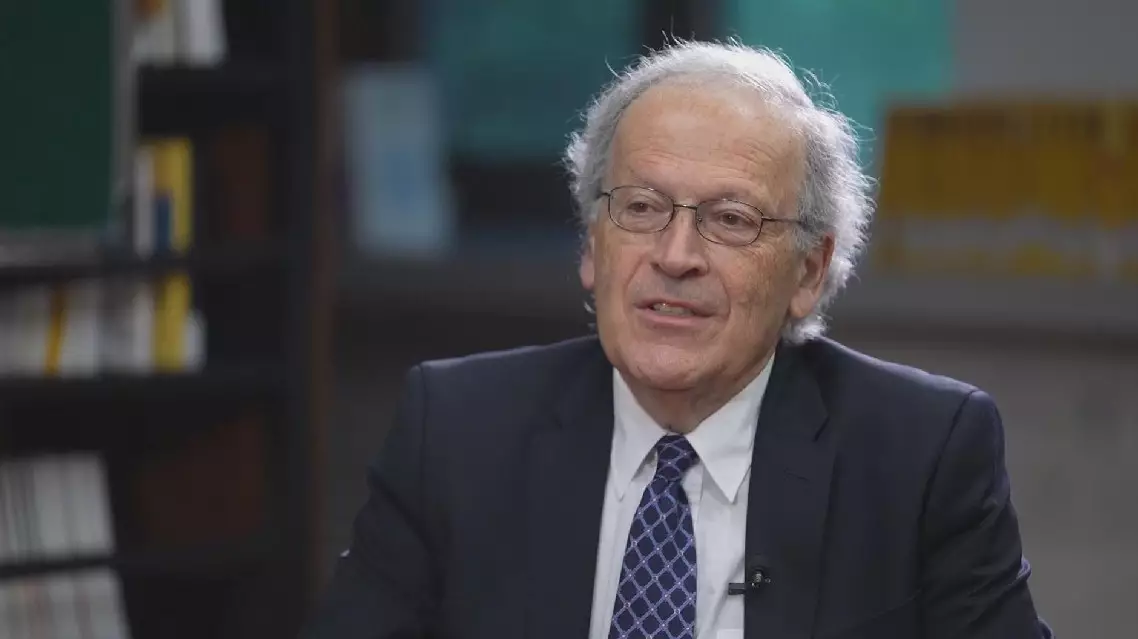
Turing Award laureate recalls contribution to accuracy improvement in machine learning