The stocks in Hong Kong rebounded on Monday, and Japanese shares hit record-highs as the ruling coalition of the Liberal Democratic Party (LDP) and the Japan Innovation Party (JIP) secured a majority in the House of Representatives, said Wang Yin, a market analyst for China Global Television Network (CGTN).
Hong Kong's stock market ended higher on Monday with the benchmark Hang Seng Index up 1.76 percent to close at 27,027.16 points.
The Hang Seng China Enterprises Index hiked 1.52 percent to 9,168.33 points, and the Hang Seng Tech Index climbed 1.34 percent to 5,417.60 points.
"Asian equity markets started the week on a brighter note. Hong Kong shares posted strong performances, with the Hang Seng Index rallying 1.72 percent, rebounding from prior weakness after Wall Street's strong upturn on Friday pushed the Dow above 50,000 for the first time. Adding to positive sentiment also was fresh data showing Hong Kong's forex reserves hit a three-year high in January. Gains were broad-based, led by financials, property and tech, in line with mainland gains, though caution lingered ahead of China's CPI and PPI data later this week and the coming Spring Festival holiday, and the Hang Seng Tech Index added 1.31 percent," said Wang.
"Montage Technology skyrocketed more than 60 percent in its Hong Kong debut, after raising 7.04 billion Hong Kong dollars in a share sale, underscoring strong demand for the world's largest memory inter-connect chip supplier and its shares listed in Shanghai rose 6 percent at the close today," said Wang.
Tokyo stocks ended higher on Monday, with the benchmark Nikkei index closing at a record high on hopes for the government's expansionary fiscal policy after Japan's ruling coalition won a lower house majority in Sunday's election.
The 225-issue Nikkei Stock Average ended up 2,110.26 points, or 3.89 percent, from Friday at 56,363.94.
"The Nikkei 225 index surged 3.89 percent on Monday, with Japanese shares hitting fresh record highs after the ruling Liberal Democratic Party secured a two-thirds majority in the lower house in a historic victory. The outcome reinforced expectations for looser fiscal policy and possible tax cuts, which have rattled Japanese financial markets in recent weeks amid concerns over Japan's growing debt burden. Japanese stocks benefited from Wall Street gains as well, as tech stocks rebounded after several days of heavy selling. Heavyweights such as Advantest, SoftBank Group and Hitachi all rallied in today's trading session," said Wang.
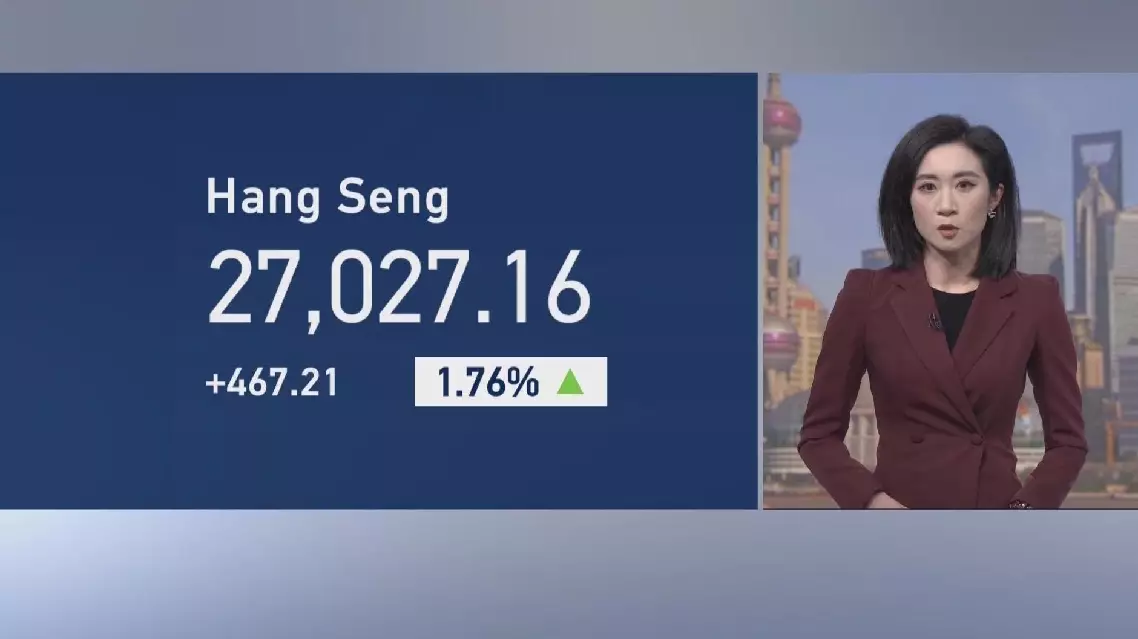
Hong Kong stocks rebound while Japanese shares end higher on Monday