A wide variety of equipment with advanced technologies have made debut at the sixth Grain Trading Conference which opened in Wuhan, central China's Hubei Province, on Friday, offering technological support for food security in the country.
The trading conference captures visitors' attention as more than 3,000 companies showcase their latest products incorporated with cutting-edge technologies.
From the digital cloud platform monitoring of paddy rice fields and automatic AI equipment checking grain condition to smart robots stacking, loading and carrying goods at warehouse, new equipment showcased at the trade conference suggests that the digitalization of the whole industrial chain of grain including the production, purchase, storage, processing and sales processes of grain is becoming a new trend which will contribute to stronger food security of the country.
"Applying digital technologies can enable people to monitor grain conditions, temperature, and pest infestations in real-time, which will help reduce grain spoilage," said Shao Hui, the person in charge of Inspur Electronic Information Industry Co., Ltd., a leading server manufacturer in China.
The application of digital technologies will also reduce excessive waste and loss of grain to offset the cost of post-production loss of grain, Shao said.
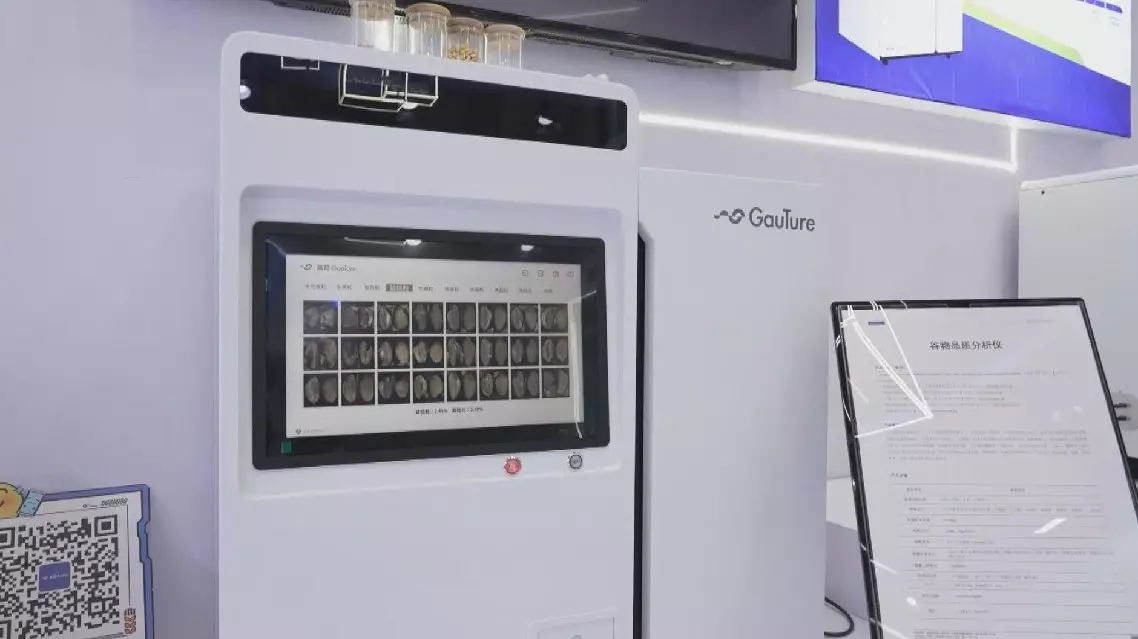
High-tech equipment supporting food security debuts at Grain Trading Conference
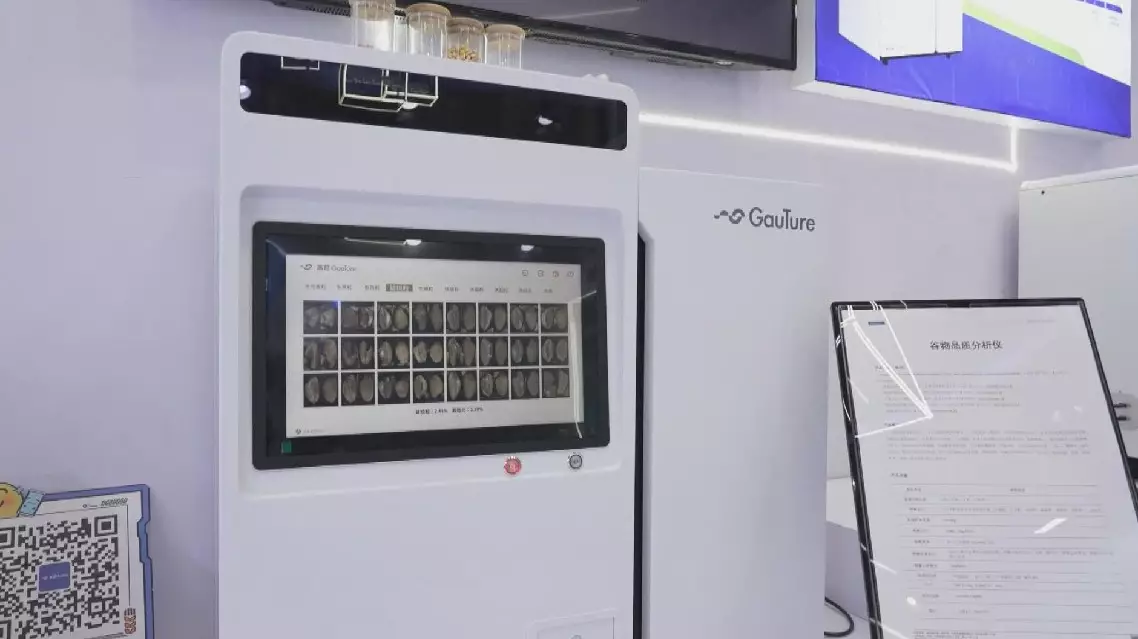
High-tech equipment debuts at Grain Trading Conference, protector of food security
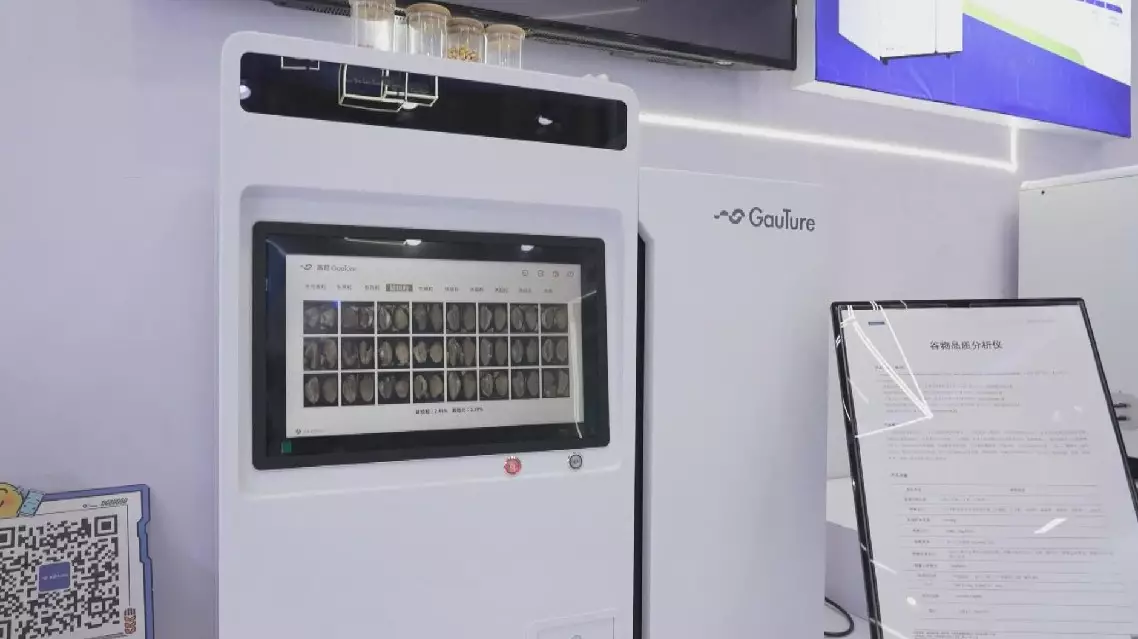
High-tech equipment debuts at Grain Conference, protector of food security
One person died and nine remain missing after a pickup truck plunged into a river Saturday night in Huanjiang Maonan autonomous county, Guangxi, local authorities said Sunday.
According to the statement, a report was received at 9:08 pm that a pickup carrying 15 people had fallen into the water while crossing a low-water bridge in a village. By 2 am, rescuers had pulled six people from the river. Five were reported to be out of life-threatening danger, while one was confirmed dead.
The rescue operation involved 65 fire rescue personnel and 12 vehicles. Teams were equipped with sonar detectors, diving gear, and mobile lighting, China Central Television reported.
Searches were coordinated across 12 locations along the river. The bridge where the pickup plunged measures roughly four meters wide by 100 meters long, according to personnel on site, it added.
Local public security, emergency management, firefighting, and maritime affairs departments have been mobilized for the all-out rescue effort. The forward command center designated the core search zone based on rapid water flow conditions and rising water levels caused by heavy rainfall in the area. The incident took place after an employer had organized 28 workers to plant sweet potatoes locally. After work concluded, 13 workers returned independently, while the remaining 15 boarded the pickup truck.
Relevant individuals to the incident have been placed under legal control. The cause of the accident remains under investigation.
The Office of the State Flood Control and Drought Relief Headquarters on Sunday dispatched a working group to Guangxi to assist with and guide the ongoing search and rescue operations.
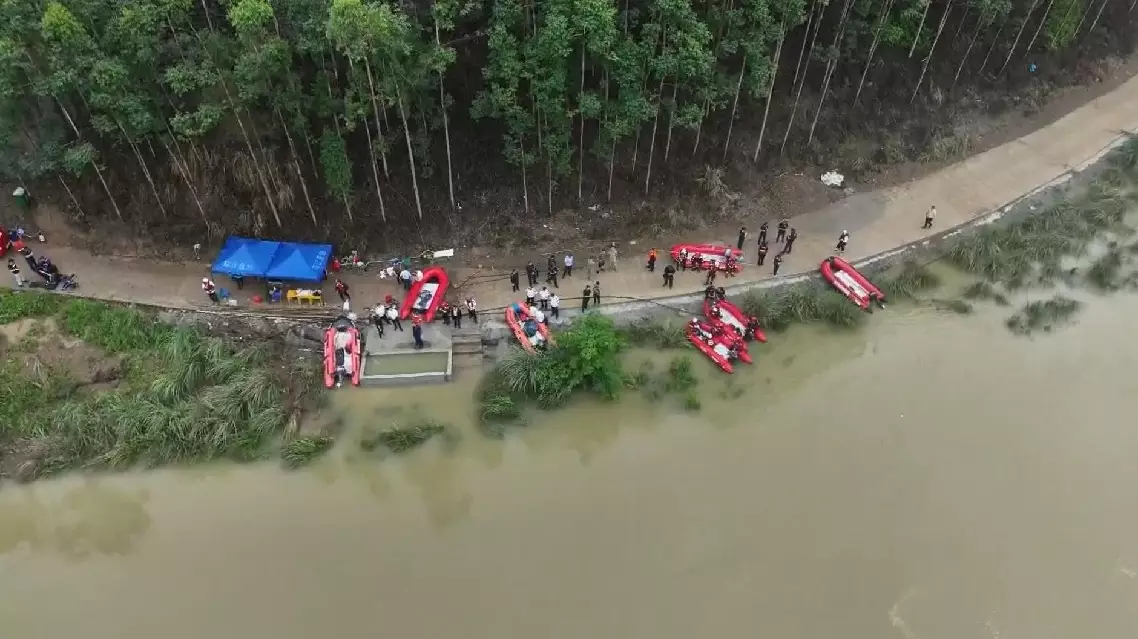
Search and rescue underway after pickup truck plunges into river