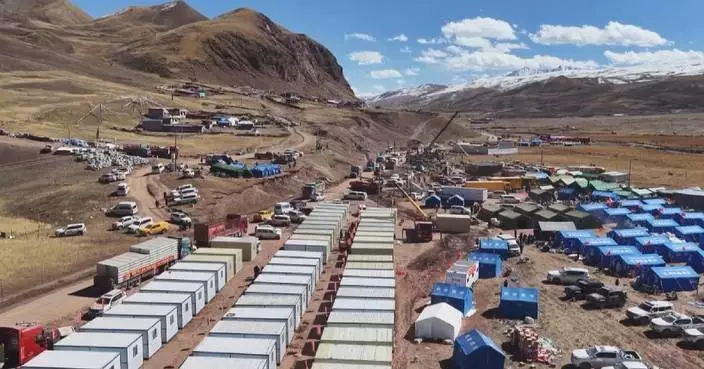
Cold spells have swept through parts of China recently, bringing unexpected snowfall to various regions.
In Gannan Tibetan Autonomous Prefecture of Gansu Province, a section of National Highway 248, known as the "Locke Road," was hit by a sudden snow, with local authorities responding swiftly to ensure safety and smooth traffic on the road. The Locke Road, starting from Zhuoni County and ending at Zhagana scenic area in Diebu County, experienced continuous snowfall from Saturday night. Heavy snow accumulation and ice on the road disrupted traffic.
Most of the snow melted before Monday morning, but some road sections still had black ice. Traffic police issued warnings, reminding tourists and drivers of following weather forecasts and road information before heading to those sections.
In Shanxi Province, falling temperatures with a mix of rain and snow hit Taiyuan City. Experts say that it is the earliest first snowfall of a year recorded since 1951 in the region.
The wintry weather also affected expressways running through the city, prompting the deployment of police officers to ensure smooth traffic flow. Meanwhile, the first snow of the season blanketed Shanxi's Mount Wutai scenic area, one of four sacred Buddhist mountains in China, painting the landscape in a shimmering white coat.
To ensure the safety of visitors and motorists, local authorities also mobilized traffic police to guide vehicles and provide help at icy sections of the road.

Early snowfall hits China’s Gansu, Shanxi Provinces
Gaza's health authorities said Sunday that since a ceasefire between Hamas and Israel took effect in October 2025, the cumulative death toll has risen to 1,551, with 5,573 wounded.
That brings the total since the outbreak of the Israeli-Palestinian conflict on Oct. 7, 2023, to 74,544 dead and 175,692 injured.
At least seven Palestinians were killed on Sunday in a series of Israeli airstrikes across the Gaza Strip, according to Palestinian medical and security sources.
In western Gaza City, medical sources at Al-Shifa Hospital said that the hospital received three bodies after an Israeli airstrike targeting the campus of the Islamic University, where buildings were sheltering displaced people.
Security sources said an Israeli drone first targeted the entrance to one campus building, wounding five people, one critically, then returned hours later and struck the same location, killing three.
In northern Gaza City, one Palestinian was killed and three others, including a child, were wounded in an Israeli drone strike near Hamad Hospital, according to medical sources at Al-Shifa Hospital.
In the southern Gaza Strip, Nasser Medical Complex said in a statement that two Palestinians were killed and five others wounded in an Israeli airstrike targeting the coastal area of al-Mawasi, west of Khan Younis.
In the central Gaza Strip, Al-Aqsa Hospital said one Palestinian was killed in an Israeli drone strike in Deir al-Balah.
The Israeli military has not commented on the reported strikes.
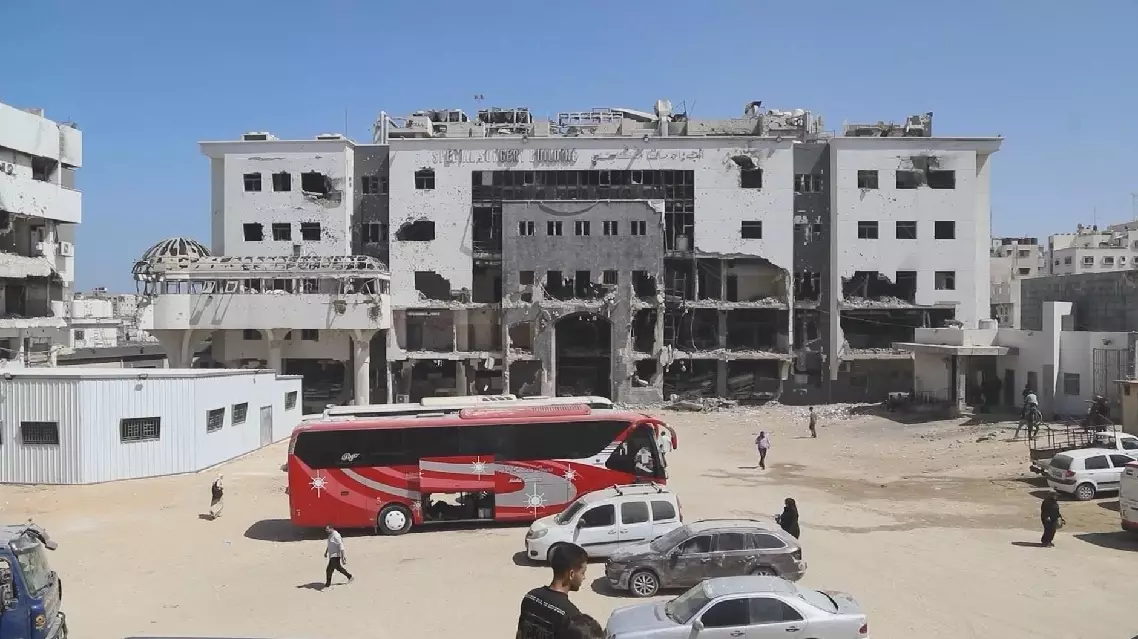
Over 1,550 killed in Israeli strikes in Gaza since ceasefire takes effect