Chinese President Xi Jinping received a warm welcome from senior Russian officials upon his arrival on Tuesday at the Kazan International Airport in the capital city of Russia's Republic of Tatarstan.
Xi is in Russia to attend the 16th BRICS Summit at the invitation of Russian President Vladimir Putin.
Among the officials greeting Xi at the airport were Rustam Minnikhanov, head of Russia's Republic of Tatarstan, Alexey Pesoshin, prime minister of Tatarstan, and Kazan Mayor Ilsur Metshin.
A group of Russian women presented Xi with local specialties to welcome the Chinese head of state, who was given a Guard of Honor as he made his way on the red carpet.
Xi is set to attend small- and large-group leaders' meetings and the BRICS Plus leaders' dialogue, and will deliver important speeches. Xi will also have in-depth exchange of views with other state leaders on the current international situation, practical BRICS cooperation, the development of the BRICS mechanism and other important issues of common concern.
Xi's entourage, including Cai Qi, member of the Standing Committee of the Political Bureau and director of the General Office of the Communist Party of China (CPC) Central Committee, and Wang Yi, member of the Political Bureau of the CPC Central Committee and foreign minister, arrived on the same plane.
BRICS is an acronym for Brazil, Russia, India, China and South Africa. The upcoming summit is the first to be held after the BRICS expansion in January when Iran, Egypt, Ethiopia, Saudi Arabia and the United Arab Emirates were included into the bloc.
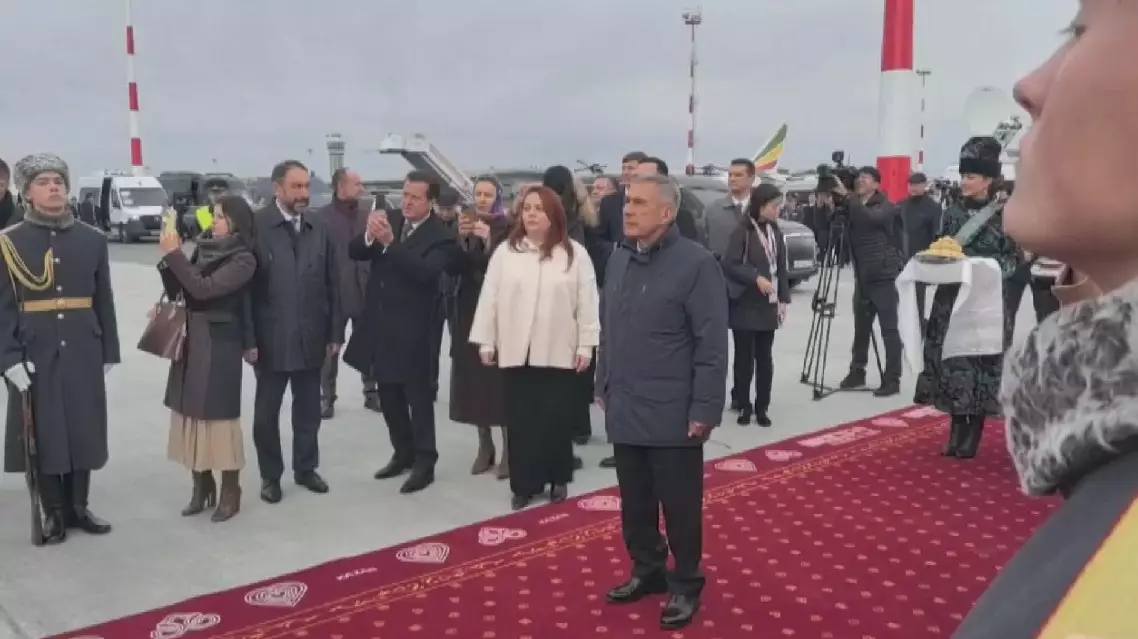
Xi receives warm welcome from senior Russian officials at airport
As the United States prepares to review the United States-Mexico-Canada Agreement (USMCA) amid renewed tariff pressures and rising political tensions with its North American neighbors, a Washington-based apparel entrepreneur says small businesses are being squeezed by higher costs across the regional supply chain, urging policymakers to consider the impact of trade decisions on firms that form the backbone of the U.S. economy.
JC Smith's T-shirts and hats couldn't be more Washington D.C., celebrating and poking fun at the U.S. capital. But his supply chains are anything but local.
"So, yes, right now we get them from U.S. companies, but they say they are U.S. made, assembled in the Central American countries, Nicaragua, Honduras, things like that. But they are technically U.S.-made companies," said Smith, founder of DC-based Bailiwick Clothing Company.
What Smith is describing is the North American supply chain.
His merchandise comes across the U.S. border with Mexico, the United States' biggest trading partner to the south.
This year, the trade agreement, once known as NAFTA - renamed the United States-Mexico-Canada Agreement (USMCA) in 2020, is up for renegotiation.
The review comes at a fraught time. The Trump administration has imposed tariffs on Mexico and its neighbor to the north Canada, even suggesting Canada should become part of the U.S.
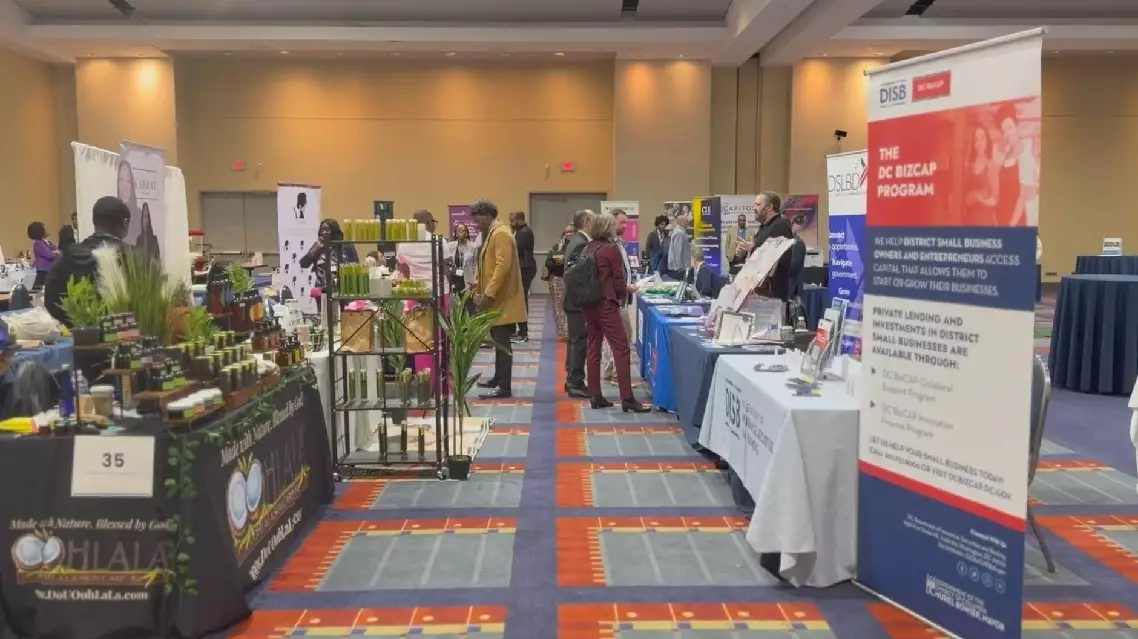
Behind the geo-political positioning, small businesses have been caught in the crossfire.
"In the past few years with some tariffs, whatnot, yes, prices have been going up, the cost of everything, raw materials and then transportation as well. And so yeah, we have some decisions to make as far as pricing goes and knowing that we are going to have to potentially raise prices," said Smith.
As the U.S. president returned to Washington after his meetings in China, accompanied by some very high-profile business leaders, Smith's message to the administration is to think of the smaller firms, the small businesses that, with a bit of a break, could become bigger and continue to power the economy.
"There are more small businesses out there than big businesses, right? It's the heartbeat of America. So, think about the little guy when they make their decisions and think about the cost of gas, cost of transportation, cost of raw materials that all squeezes us. And yes, they want to help the economy, the best way is to help small businesses," said Smith.
US small business owner warns tariffs, rising costs squeeze supply chain