China has made significant contribution to promoting justice and reforming global governance through BRICS and other multilateral mechanisms, an expert said on Thursday.
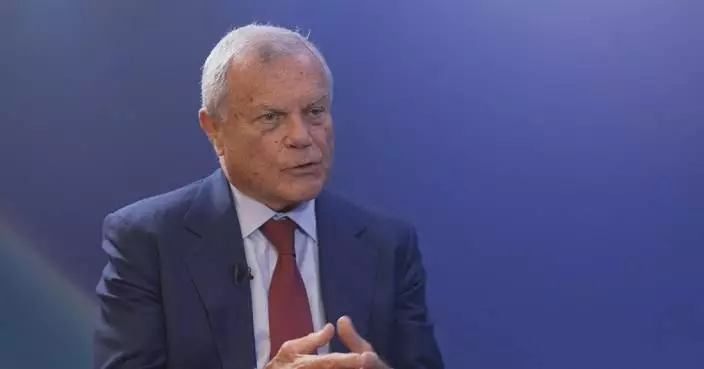
Zoon Ahmed Khan, a research fellow at the Center for China and Globalization, discussed the role of China, and Chinese solutions in promoting justice and reforming global governance, in an interview with China Global Television Network.
"One of the major contentions between the Global South and the status quo powers, so to speak, has been how institutions, how the framework in financial institutions, development institutions et cetera, limit some countries to the benefit of others. And China's role in these last years, especially I would say since the Belt and Road Initiative, we see China proactively engaging individual countries bilaterally and multilaterally through the GDI (Global Development Initiative), through SCO (Shanghai Cooperation Organization), BRICS, et cetera, proposing tangible solutions to challenges that they face," said Khan.
She emphasized that China is addressing the needs of developing countries and filling the void left by traditional powers with tangible solutions to global challenges.
"I often don't like to, we're not having the China versus U.S. conversation, but the fact is there was a major vacuum when it came to real solutions that developing countries were facing, with respect to how Western countries, that would traditionally posture to help developing countries move forward, there was a vacuum in interest. And these conversations have not been happening in those parts of the world. But China has been actively helping countries find solutions. So, I think when we talk about justice in the international institutions, when we talk about justice in financial institutions, it is firstly, obviously, a conversation of better representation to represent the evolution of the world, with greater economic presence, with greater populations, with greater presence overall," said Khan.
By enabling these nations to set their own agendas, China is reshaping conversations around justice and representation in international institutions.
"But at the same time, it is also a conversation about setting the agenda and countries and organizations that are able to find their own solutions and act on them are in a better position to set the agenda. So, I think, I mean, for China, obviously, when we talk about justice, it is a much deeper conversation. Justice connects security, safety, agriculture, development, socioeconomic development, technology. China's doing a lot within BRICS and beyond to work on that. But at the same time, justice is a conversation about helping, enabling that part of the world, which was usually on the receiving end, set the agenda. And this is where China's role contribution is a game changer, really, for different parts of the world that were not able to set the agenda. And I think in the end, that is what BRICS is also about," said Khan.

China makes significant contribution to promoting justice, reforming global governance: expert