Skip to Content Facebook Feature Image

Latest Turkish developed UAVs displayed at defense exhibition

China

China

China

Latest Turkish developed UAVs displayed at defense exhibition

2024-10-25 15:21 Last Updated At:17:17

Latest Turkish developed unmanned aerial vehicles (UAVs) were unveiled at the on-going fourth edition of Türkiye's leading international defense and aerospace exhibition in the capital city of Istanbul.

Organized by SAHA Istanbul, one of the largest clusters of the European Aerospace Cluster Partnership, the five-day Saha Expo Defense and Aerospace Exhibition that started on Tuesday has attracted more than 300 delegations from 120 countries and is attended by 1,400 companies, according to the expo's official website.

As one of the world's most important defense exhibitions, this year's event showcased over 300 high-tech products, covering cutting-edge technologies such as drones, warships, and aerospace equipment. Breakthroughs in drone technology became the focal point of the exhibition.

A major highlight of this exhibition was the debut of the Bayraktar TB3, a significant upgrade from the earlier TB2 model. The TB3's standout feature is its capability to take off and land on aircraft carriers, making it more versatile. It's more than just a reconnaissance drone; with advancements in AI autonomous technology, the TB3 can now independently execute precise strike missions in addition to autonomous flight.

The Bayraktar TB3 UAV not only continues the TB2’s capabilities in precision strikes, long-range flights, and strong stealth on the battlefield but also represents a technological leap forward.

With a wingspan of 14 meters, the TB3 UAV is designed for carrier-based operations, enabling it to take off from aircraft carriers and amphibious assault ships. This capability significantly extends its combat radius and enhances its operational flexibility. Additionally, the TB3's payload capacity has been increased to 280 kilograms, allowing it to carry more powerful weaponry systems for various missions.

Also draws visitors' attention at this year's exhibition is the Talay UAV, designed specifically for maritime operations.

Meaning "Ocean Warrior" in Turkish, Talay's standout feature is its exceptional stealth capability. This drone can cruise at altitudes as low as 3 to 5 meters and even as low as 30 centimeters above sea level, allowing it to evade radar detection effectively. This unique low-altitude flight capability makes Talay particularly suitable for maritime missions.

Talay UAV boasts a flight speed exceeding 200 kilometers per hour and a flight endurance of 3 hours. Therefore, the Talay UAV is described as a "sharp blade" for sea operations as it is capable of executing high-speed strike operations.

"Its low altitude. Stabilization is based on the AI actually. Second subject is target locating, [it is] using AI visual process. Lastly, it uses the AI in the present point, returning the present point," said Esad Ceker, UAV development specialist.

The use of AI technology enable both the new-generation carrier-based UAV Bayraktar TB3 and the Talay UAV to not only fly but also combat as AI allows these UAVs to analyze data in real time, optimize tactical decisions, and improve combat efficiency while minimizing the need for human intervention.

"Communication, and decision-making algorithms that work together that can replace each other. Then for example, they navigate from point A to navigate to point B they don't need any interference from human being. They solve all the problems. This is part of the combat experience," said Ozgur Eksi, defense industry expert.
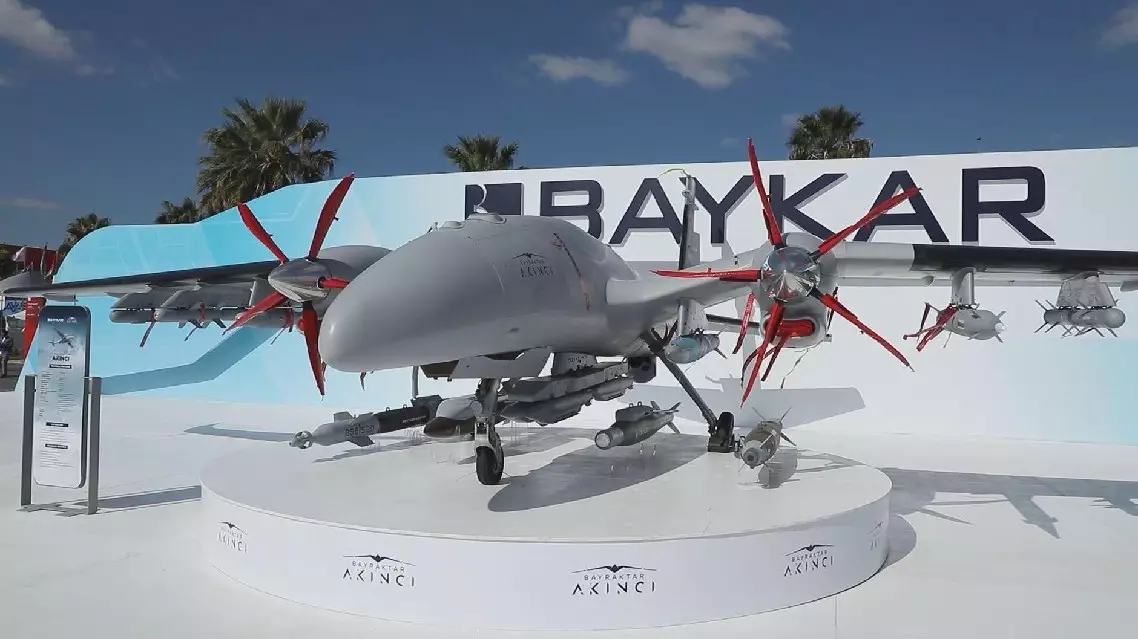
Latest Turkish developed UAVs displayed at defense exhibition
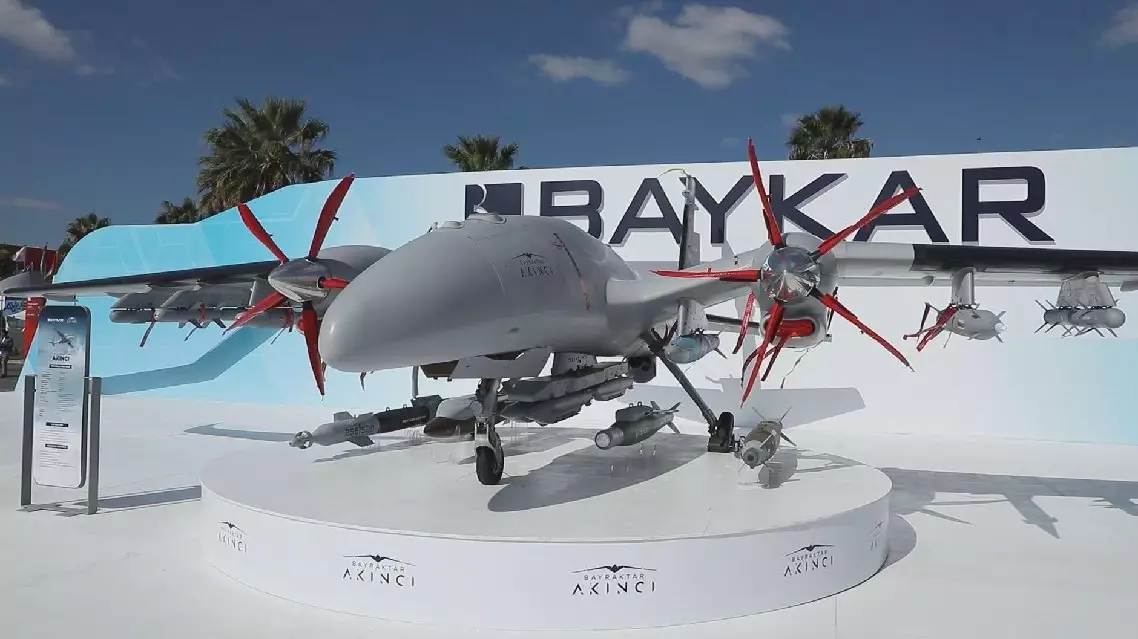
Latest Turkish developed UAVs displayed at defense exhibition
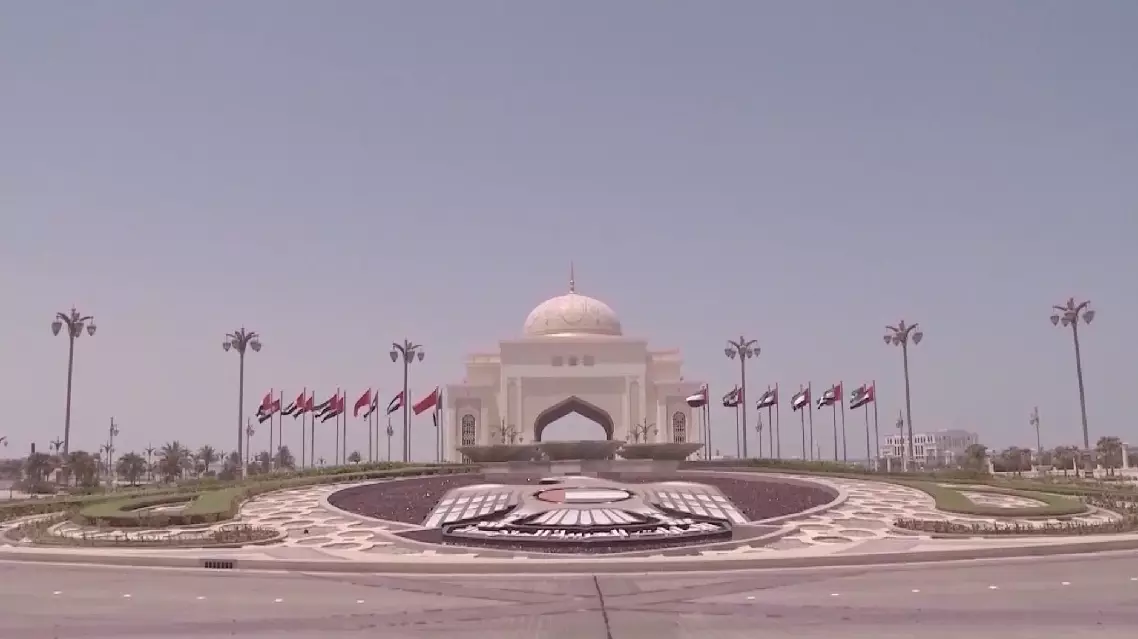
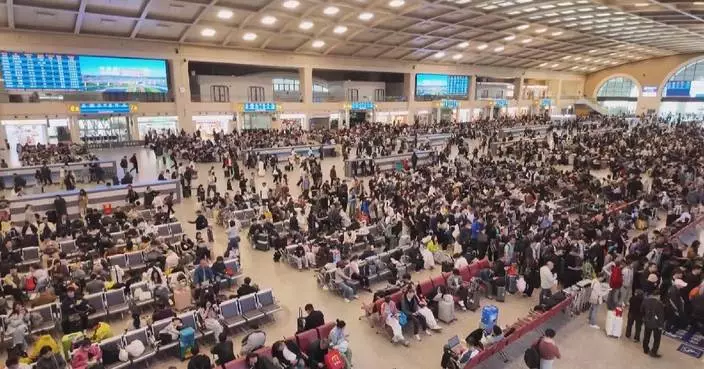
Latest Turkish developed UAVs displayed at defense exhibition

Latest Turkish developed UAVs displayed at defense exhibition

The Guangdong–Hong Kong–Macao Greater Bay Area (GBA) is emerging as a key engine for China's fast-growing low-altitude economy by leveraging its dense industrial networks, efficient logistics systems, and rapid innovation capacity.

From logistics and manufacturing to urban services, the region is building an integrated industrial chain that allows low-altitude industries to scale up at unprecedented speed, thus turning drone-based applications from isolated trials into large-scale, commercial operations.

China's 15th Five-Year Plan, covering 2026 to 2030, calls for the cultivation of new pillar industries and the accelerated development of strategic emerging industrial clusters, including the low-altitude economy.

At a drone operations center in Bao'an District, Shenzhen City in south China's Guangdong Province, a dozen logistics drones take off and land within minutes. Urgently needed production parts, documents, and small parcels are dispatched from here to cities in the province including Dongguan, Zhongshan, and Zhuhai.

Behind these high-flying aircraft lies what observers describe as an "invisible industrial chain", built on speed and efficiency.

"Look at this aircraft. About 90 percent of its components come from nearby areas. Relying on Shenzhen's strong logistics capabilities and its complete supply chain, these parts can be delivered to our factory within half an hour for assembly, processing, and production," said Li Kunhuang, person-in-charge of Shenzhen GODO Innovation Technology Co., Ltd.

Once a new product is unveiled, testing and calibration begin immediately at the drone testing field. As soon as the process is completed, the new models can be put into real-world operation, realizing almost “zero delay” from research and development to application.

Supported by a robust industrial chain, low-altitude routes in Shenzhen are effectively connecting the urban landscape. From its Bao'an District to Songshan Lake in Dongguan City, production components can be delivered within one hour. Supplies are transported between Zhuhai City's Xiangzhou Port to Dong'ao Island in just 25 minutes. And light industrial goods can travel round-trip within a single day between Guzhen Town in Zhongshan City and Xinhui District in Jiangmen City.

More low-altitude application scenarios are expected to be implemented in the near future.

In Qianhai District, Shenzhen is accelerating the construction of a pilot demonstration zone of low-altitude integrated three-dimensional transportation hub.

"We have built the country's first low-altitude integrated three-dimensional transportation hub, and are gradually developing a pilot flight zone that integrates multiple scenarios such as inspection, logistics, and cultural tourism. This will provide technical support for the next step of commercializing cross-border logistics and emergency rescue services across the Guangdong–Hong Kong–Macao Greater Bay Area," said Wu Xuemin, head of the Shenzhen Qianhai Low-Altitude Integrated Three-Dimensional Transportation Hub Pilot Demonstration Zone.

Integrated supply chains propel Greater Bay Area's low-altitude economy growth

Integrated supply chains propel Greater Bay Area's low-altitude economy growth

Recommended Articles