A Chinese economic analyst expressed confidence that China will achieve its GDP growth target of around 5 percent for 2024, despite an International Monetary Fund (IMF) report projecting a growth rate of 4.8 percent.
In the newly released World Economic Outlook on Tuesday, global economic growth is expected to remain "stable yet underwhelming," reaching 3.2 percent for 2024 and the following year.
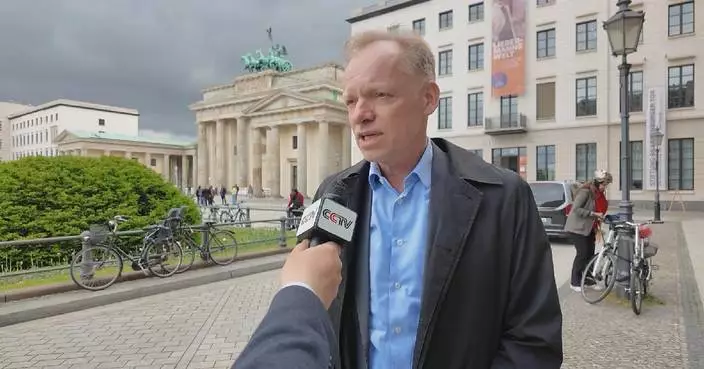
During an interview with China Global Television Network (CGTN), Tu Jun, an economic analyst from the prestigious Shanghai Jiao Tong University, called this a "static situation during recovery."
"There are several issues. One of that is the global reorganization of the supply chain, or even the disruption of certain parts of it. For example, the rise of protectionism in international trade. Then, there are regional conflicts, for example, in Europe and the Middle East. Another issue is long-term oriented, which is the decline in total factor productivity, also known as TFP," said Tu.
With China recording a 4.8 percent GDP growth in the first nine months of the year, the final quarter will be crucial in reaching its "around 5 percent" growth target, Tu noted.
"I think it's still very possible for China's economic growth to be around 5 percent for 2024, especially since the first three quarters have reached an average of 4.8 percent. If we keep up with the various policies that the country has been implementing to promote, for example, infrastructure investment and consumption, in the last quarter, I think a 5 percent target can still be achieved," said Tu.
Tu emphasized that GDP growth shouldn't be considered as the only measure of a country's economic performance; other indicators like inflation, unemployment and total factor productivity should also be considered.
Tu further pointed out that China's low inflation rate provides ample room for the country to implement its monetary policies effectively.

Analyst confident about China's "around 5 pct" annual GDP growth target
As the United States prepares to review the United States-Mexico-Canada Agreement (USMCA) amid renewed tariff pressures and rising political tensions with its North American neighbors, a Washington-based apparel entrepreneur says small businesses are being squeezed by higher costs across the regional supply chain, urging policymakers to consider the impact of trade decisions on firms that form the backbone of the U.S. economy.
JC Smith's T-shirts and hats couldn't be more Washington D.C., celebrating and poking fun at the U.S. capital. But his supply chains are anything but local.
"So, yes, right now we get them from U.S. companies, but they say they are U.S. made, assembled in the Central American countries, Nicaragua, Honduras, things like that. But they are technically U.S.-made companies," said Smith, founder of DC-based Bailiwick Clothing Company.
What Smith is describing is the North American supply chain.
His merchandise comes across the U.S. border with Mexico, the United States' biggest trading partner to the south.
This year, the trade agreement, once known as NAFTA - renamed the United States-Mexico-Canada Agreement (USMCA) in 2020, is up for renegotiation.
The review comes at a fraught time. The Trump administration has imposed tariffs on Mexico and its neighbor to the north Canada, even suggesting Canada should become part of the U.S.
Behind the geo-political positioning, small businesses have been caught in the crossfire.
"In the past few years with some tariffs, whatnot, yes, prices have been going up, the cost of everything, raw materials and then transportation as well. And so yeah, we have some decisions to make as far as pricing goes and knowing that we are going to have to potentially raise prices," said Smith.
As the U.S. president returned to Washington after his meetings in China, accompanied by some very high-profile business leaders, Smith's message to the administration is to think of the smaller firms, the small businesses that, with a bit of a break, could become bigger and continue to power the economy.
"There are more small businesses out there than big businesses, right? It's the heartbeat of America. So, think about the little guy when they make their decisions and think about the cost of gas, cost of transportation, cost of raw materials that all squeezes us. And yes, they want to help the economy, the best way is to help small businesses," said Smith.
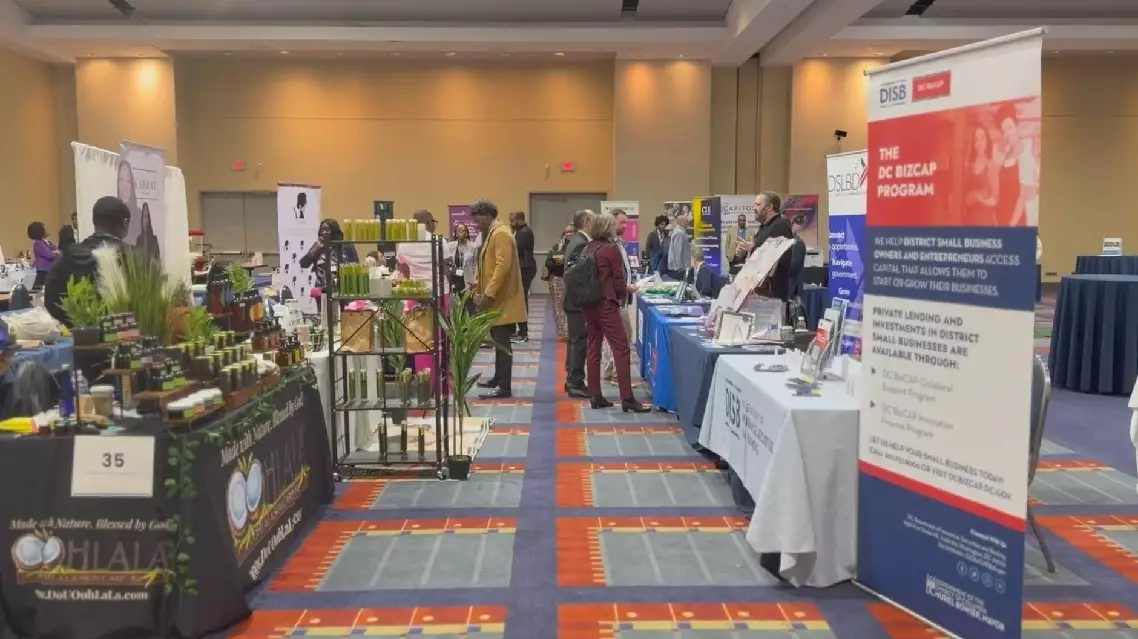
US small business owner warns tariffs, rising costs squeeze supply chain