Chinese farmers are turning agricultural straw waste into valuable resources through innovative recycling and processing methods, benefiting the environment while increasing rural residents' incomes.
In Anlu City, central China's Hubei Province, a variety of animal-shaped crafts made from recycled straw waste are packaged and stored in warehouses, ready to be sold nationwide.
In addition, the city has introduced a cooperative model designed to assist local farmers in effectively utilizing their agricultural waste. With the support of rural collective economic organizations and agricultural service providers, the value of straw waste has risen, leading to increased incomes for local farmers.
"Each year, I can sell the harvested straw for about 1,400 to 1,500 yuan (196 to 210 U.S. dollars). Straw recycling solves the disposal problem and increases my income," said Xu Zhaoping, a local farmer.
After the recent autumn harvest in Yuanjiang City, central's China Hunan Province, the leftover rice straw in the fields has been sent to processing plants. Some of it will be transported to the northwest for sand control use, and the rest of it will be processed into raw materials for animal feed or organic fertilizer.
Currently, there are 13 service providers in the city who specialize in recycling and reusing straw waste.
"Straw is sent to factories for processing. Now, just one piece of straw can be turned into nine different products," said Sheng Jianmin, deputy director of Yuanjiang Bureau of Agriculture and Rural Affairs.
In the northeastern part of China, crushed straw becomes an important fuel source for biomass power generation.
In Suibin County, Hegang City, round balers, rotating ploughs, and transport vehicles were actively working in harvested fields. Leftover straw is crushed on-site, becoming organic matter for the soil, or packed and sent to factories for processing into animal feed or biofuel. These methods effectively manage agricultural waste while providing farmers with an additional source of income.
"We will continue to promote comprehensive utilization of straw, mainly focusing on returning straw to the fields, along with off-field utilization for other purposes," said Wang Guichen, deputy director of the agricultural machinery service center of Suibin County.
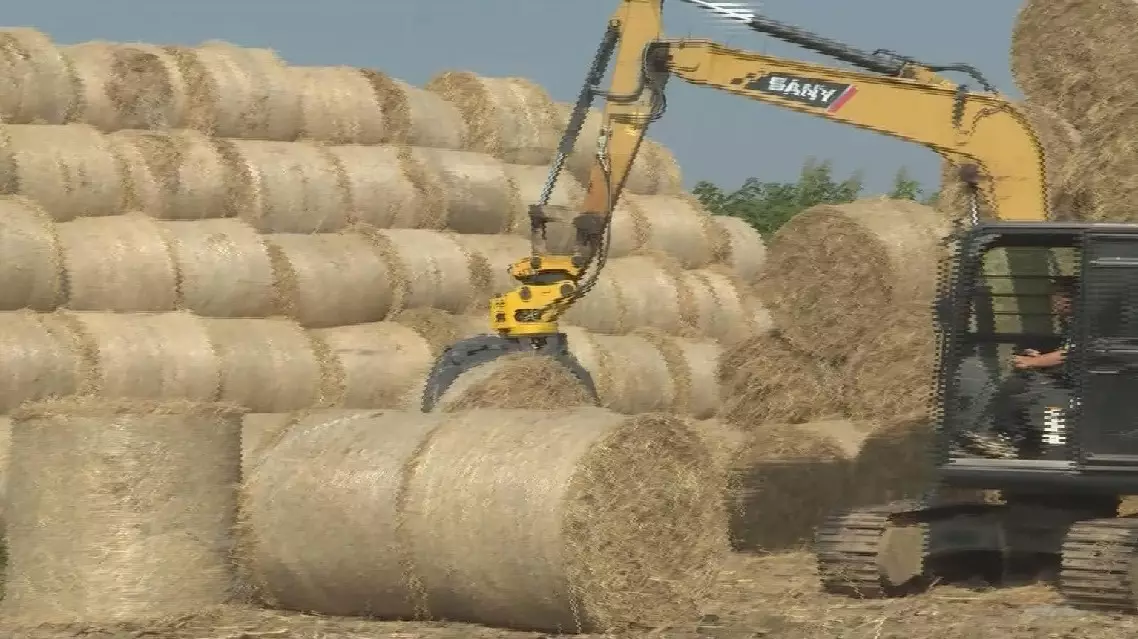
Chinese farmers turn straw waste into wealth through innovative recycling, processing methods
China's shipbuilding industry is stepping up efforts to move towards greener and higher-end production, as national plans emphasize upgrading manufacturing capabilities to strengthen global competitiveness.
The sector, regarded as a key national strategic industry, is seeing coordinated moves by both state-owned and private enterprises to accelerate technological upgrading, particularly in advanced and environmentally friendly vessels.
Dalian Shipbuilding Industry Co., one of China's oldest state-owned shipbuilders, has made progress in recent years in high-end ship types such as liquefied natural gas (LNG) carriers. Its expanding order book reflects the success of a broader shift toward more sophisticated production.
"We now hold orders for 144 ships, up nearly 60 percent from about 70 ships at the start of the 14th Five-Year Plan (2021–2025)," said Jiang Hongliang, production director of Dalian Shipbuilding Industry.
Under the 15th Five-Year Plan, which covers the period from 2026 to 2030, China is aiming for significant expansion of production for green and advanced vessels, including large LNG carriers, ultra-large container ships, and offshore engineering equipment. Dalian Shipbuilding Industry is advancing these goals through upgrades in technology and production efficiency.
"In the future, our shipbuilding model will be like building blocks; breaking work into smaller, standardized modules, forming specialized production lines and assigning workers to specific tasks, which improves overall efficiency. Through cost reduction and efficiency gains, our broader goal is to shorten production cycles and raise operational efficiency," Jiang said.
Private enterprises are also playing a growing role in the sector's transformation. Hengli Group, a major private shipbuilding player, completed construction of a modern ship production base in Dalian in just 150 days, setting a new benchmark for domestic shipyard development.
The facility is designed to support both high-quality manufacturing and rapid capacity expansion, aligning with national plans that encourage private enterprises to participate in industrial upgrading.
"I knew shipbuilding was hard, but I never realized it was this hard. It is labor-intensive, capital-intensive and technology-intensive," said Chen Jianhua, chairman of Hengli.
Hengli plans to refine its production strategy further by moving toward large-scale, batch manufacturing, a shift aimed at improving efficiency and strengthening competitiveness in the global market.
"So we want to transform the industry and lead it. In the future, it will no longer be about building ships one by one to specific specifications. We will build 10, 20, 30 or even more ships in batches. Our goal is to build ships we can price ourselves," Chen said.
From state-owned enterprises advancing high-end vessel production to private firms rapidly building intelligent manufacturing bases, China's shipbuilding industry continues to move forward under the 15th Five-Year Plan, with a focus on integrating intelligent manufacturing with green production to enhance core competitiveness and sustainability.
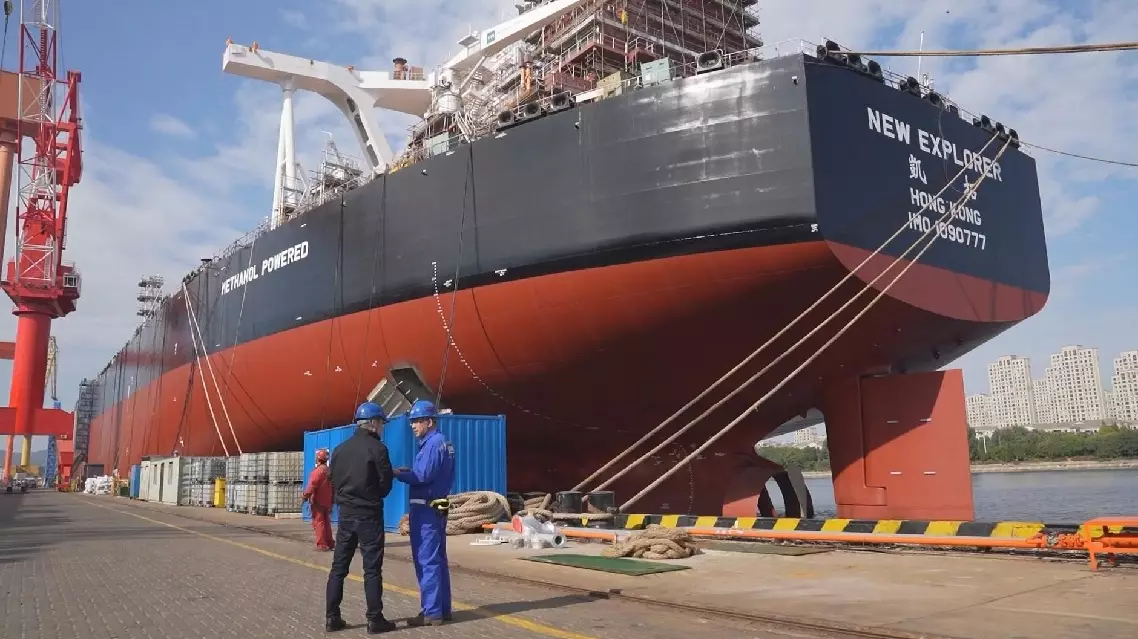
China's national plans for shipbuilding industry target green, high-end growth