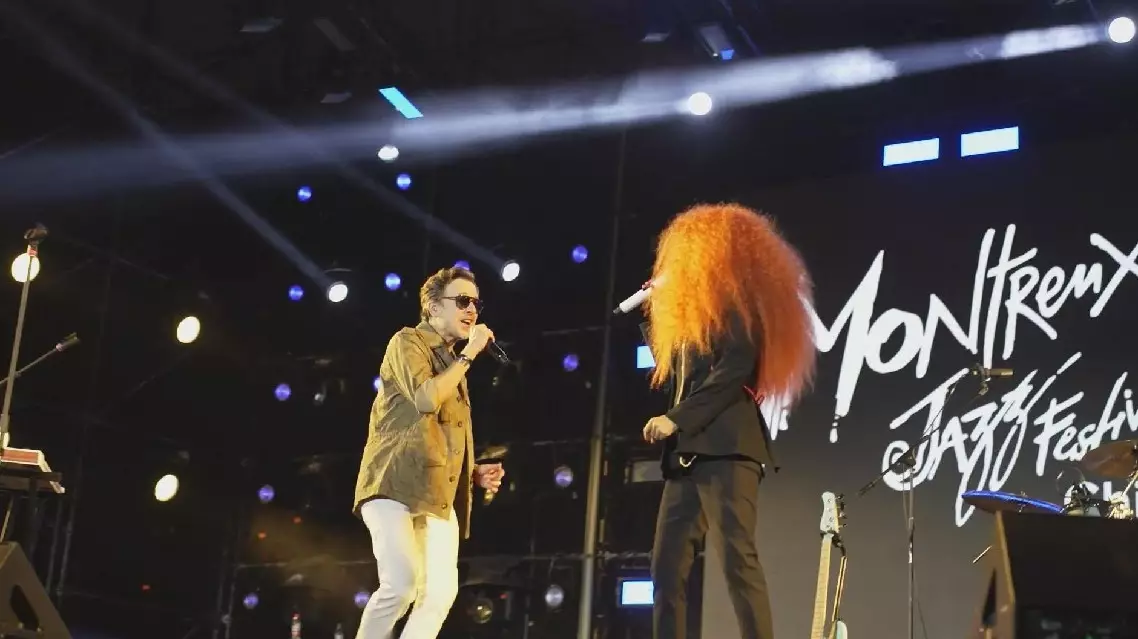
The Montreux Jazz Festival China opened on the shore of Jinji Lake in Suzhou on Friday, providing an audio-visual feast to jazz fans that flocked there and bridging the cultural exchange between the East and the West.
This is the third time for the event to be held in China, with this edition themed "When West Meets East".
Upward of 100 Chinese and foreign musicians staged more than 20 performances during the three-day event, covering various music styles such as jazz, rock, electronic music, and pop, creating a cultural feast for the audience.
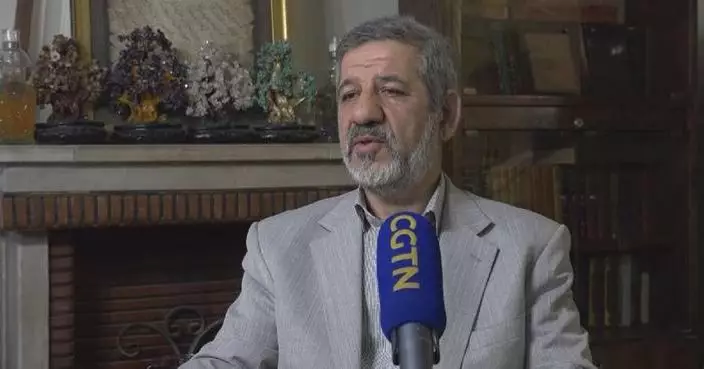
"It's great to discover a small part of China, because in three days -- I won't see a lot, but I really like to see how Chinese people are enjoying music. Yesterday evening during the concert of 'Earth, Wind and Fire', everyone was dancing. It was really lively , and really nice to enjoy this music together. Through music, we can understand each other. Sometimes it's very difficult to understand each other through the languages, and also sometimes with cultural gap. But through music we gather everyone around the emotions and the pleasure to share this kind of moment. This is why we promote the cultural exchange, in Montreux in Switzerland and also here, of course, in Suzhou. So we are very happy, and we hope to, maybe, welcome emerging musicians from China in Montreux," said Viviane Rychner Raouf, secretary general of Montreux Jazz Artists Foundation.
The concert "Earth, Wind and Fire Experience" mentioned by Raouf was given by Al McKay, one of the world's best Rhythm and Blues groups, and it provided a swing party to spectators.
Swiss music promoter Claude Nobs, who died in 2013, founded the Montreux Jazz Festival in 1967 and built it into an international festival and event platform for music lovers.
Since its creation, the festival under its slogan "Where Legends Are Born" has seen many iconic live music performances.
World-renowned music festival held in Suzhou
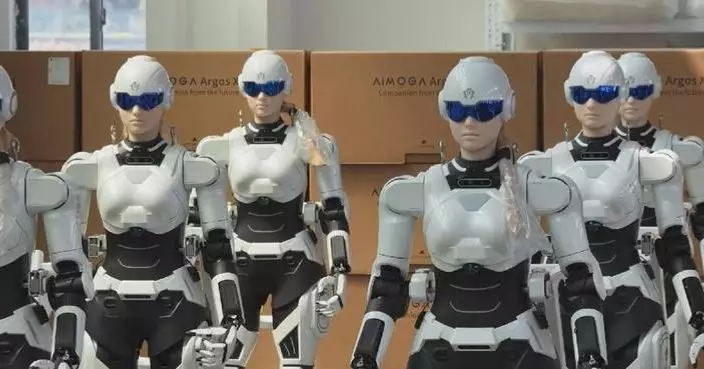
Honor's humanoid robot, Lightning, which swept the 2026 Beijing E-Town Humanoid Robot Half-Marathon on Sunday, is a natural extension of years of accumulation in consumer electronics technology, said its developers.
A leading smart device provider in China, Honor independently developed the model, which dominated the podium at the event as it was used by all three teams whose autonomous navigating robots ran the fastest times.
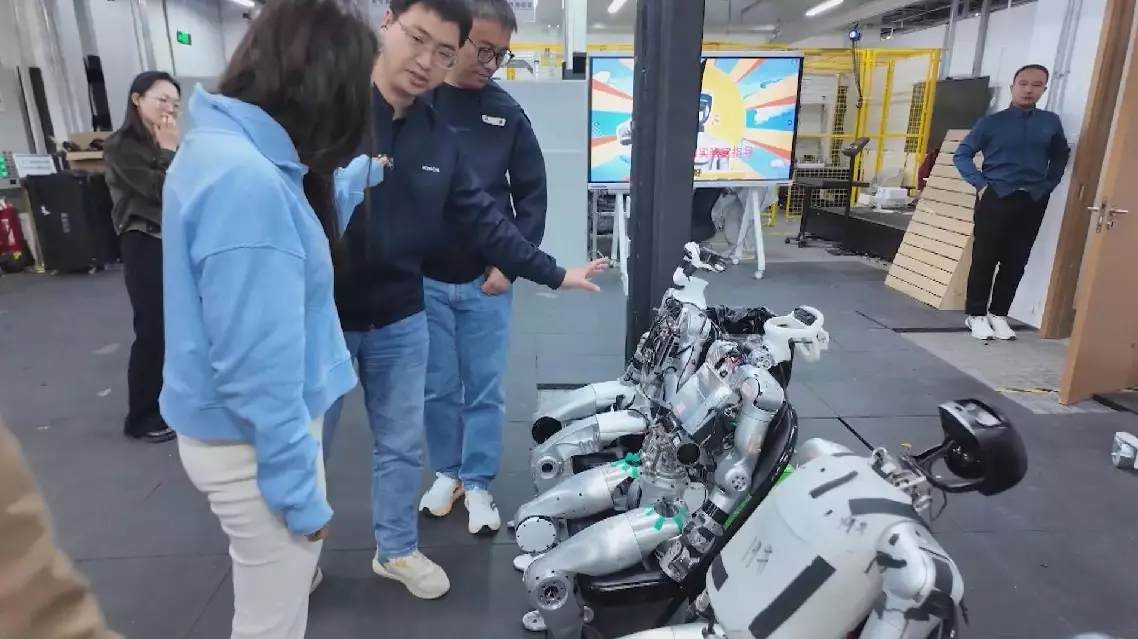
At the Honor factory in Pingshan District in Shenzhen City, south China's Guangdong Province, where robotics engineers developed Lightning. They said the robot's body design incorporates a simulation system that, through artificial intelligence algorithms, can iterate nearly 30,000 design schemes of varying sizes over three months. Complete and mature systems are also in place for battery, communication, and reliability verification.
"We built a simulation lab from scratch. For the robots, we digitize the entire design and put it into a computer. We have our own material library, which can meet the force, thermal, and chemical property demands for each component, under different environments and speeds. We've accumulated about 1000 kinds of materials. For example, if there's a risk with the robot's neck, we just need to change the material code from 001 to 002. Now, through our simulations, we only need one day to perform parallel calculations on 10 different designs, before creating a mold and verifying it in the lab," said Li Zheng, a senior engineer at Honor.
An autonomous robot capable of completing a half-marathon involves a complete industry chain, with core components including high-precision sensors, LiDAR, motors, operating systems, and control algorithms. The development of robotic marathoners have driven an increasing number of component enterprises to get involved.
Manifold, a tech firm established by newly-graduated PhDs, has developed a 3D spatial memory module, which can model an environment in real time and transform it into images that robots can understand. They said several robots running the half-marathon this year adopted their solution.
"Our device can operate within a one-kilometer tunnel with an error margin of only tens of centimeters. For robots, especially in the absence of GPS, this allows them to accurately determine their location. The underlying technology is a multi-sensor fusion technology that we developed in-house," said Qin Youming, CEO and founder of Manifold.
The Beijing Humanoid Robotics Innovation Center set up a training camp for the marathon event. Many university students came a month ahead of the event to develop and debug their technologies and algorithms based on open-source robot bodies, databases, and training platforms.
"These high-quality databases and highly open-source control algorithms are actually very helpful to us. We no longer need to build the house from the ground up, but can skip the most basic part," said Sun Jingyu, a student from Shandong University.
"Through this racing event, I believe we can make our robots more reliable and stable, while also supporting high-dynamic, high-load movements. This is crucial for robots' future application in both industrial, commercial and domestic scenarios," said Guo Yijie, head of the innovative humanoid department and the Marathon project of Beijing Humanoid Robot Innovation Center.
Engineers share development story behind Beijing humanoid half-marathon champion model