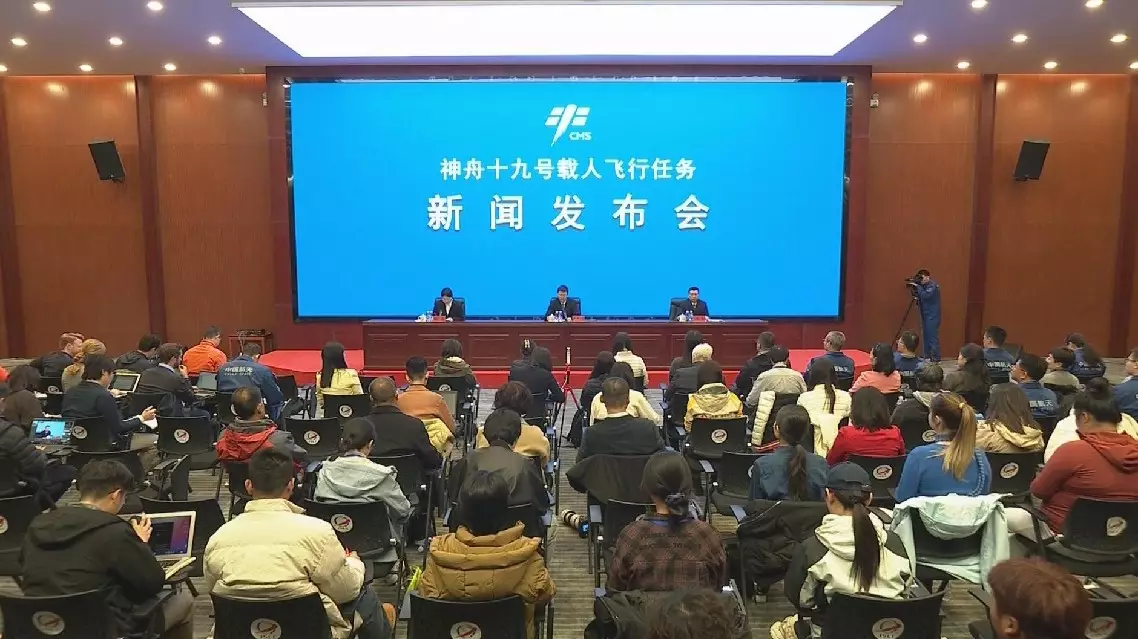
China is pressing ahead with its mission to land astronauts on the moon by 2030, moving quickly with development and construction efforts to turn this goal into reality, the China Manned Space Agency (CMSA) announced at a press conference on Tuesday.
Production and ground tests of prototypes of the Long March-10 carrier rocket, the manned spacecraft Mengzhou, the lunar lander Lanyue, the spacesuit to be worn by astronauts and the manned lunar rover are underway as planned, said Lin Xiqiang, spokesman for the CMSA.
Lin also revealed the latest progress in the development of manned lunar rover during the press conference.
"In the selection process for the manned lunar rover plans, after two rounds of preferential choice, the teams from Shanghai Academy of Spaceflight Technology of the China Aerospace Science and Technology Corporation and the China Academy of Space Technology secured the top two spots. Each team showcased unique characteristics in innovation and advancement. Both have won the contract for the prototype development of the lunar rover, and are progressing with their respective projects. Following the completion of the preliminary development phase, a competition will be held to determine the team responsible for the lunar rover in China's first manned lunar mission," said Lin.
Lin said that they will also launch a call for suggestions concerning the rover's name.
China has already initiated the lunar landing phase of its manned lunar exploration program -- with a goal to achieve a manned lunar landing by 2030. The plan is to launch two carrier rockets to send a manned spacecraft and a lunar lander, respectively, into lunar orbit. The spacecraft and lunar lander will rendezvous and dock with each other, after which the astronauts will enter the lander.
According to Lin, a batch of ten astronauts will be engaged in a training regimen aimed at manned lunar landing missions.
These astronauts are scheduled to acquire skills in maneuvering spacecraft and operating lunar rovers, and will be trained to master techniques for identifying celestial bodies and conducting geological surveys. During their training they will also be exposed to the unique conditions of space, such as weightlessness in orbit, and the challenges of moving in lunar gravity on the moon's surface.
China releases latest development of manned lunar rover

China's Global Governance Initiative (GGI) has gained the support from over 150 countries since it was put forward in September 2025, Chinese Vice Foreign Minister Sun Weidong said at a seminar on Monday in Beijing.
The seminar, which focused on maintaining multilateralism and improving global governance, brought together diplomats from multiple countries and international experts on global issues. "As a permanent member of the UN Security Council and a responsible major country, China has been active in practicing true multilateralism and promoting global governance reform. GGI has gained the support of over 150 countries. We are ready to work with all parties to deepen and consolidate implementation of the initiative," he said.
However, Sun also issued a warning about certain countries' attempts to revive militarism and challenge the post-World War II international order.
"The international community needs to stay on high alert against certain country leaders who blatantly challenge the post-World War II international order and seek to revive militarism. These moves will undoubtedly face firm opposition from peace-loving and just forces around the world. China will work with relevant countries to develop a model of security for Asia featuring security for all, seeking common ground while shelving differences, and upholding dialogue and consultation. It would not tolerate any forces that seek to disrupt regional peace and stability, and not allow any country to initiate war and conflict at China's doorsteps. China is ready to work with other countries to strengthen cooperation in counterterrorism and in countering foreign interference and sanctions to safeguard peace and security in the world," Sun said.
Sun emphasized that international relations should be regulated by institutional rules, urging all parties to stand against wielding power to bully the weak.
In today's world, hegemonism has no future, and major powers in particular should lead by example in upholding the rule of law and respecting international regulations, he said.
"The more turbulent and complex the world is, the more important that we stay committed to the international system centered on the UN and the international order underpinned by international law. We should vigorously promote international rule of law, strengthen the authority and effectiveness of multilateral institutions, oppose the 'law of the jungle' where the strong prey on the weak, and resist hegemonic acts such as military coercion," he said.
Global Governance Initiative receives support from over 150 countries: Foreign Ministry